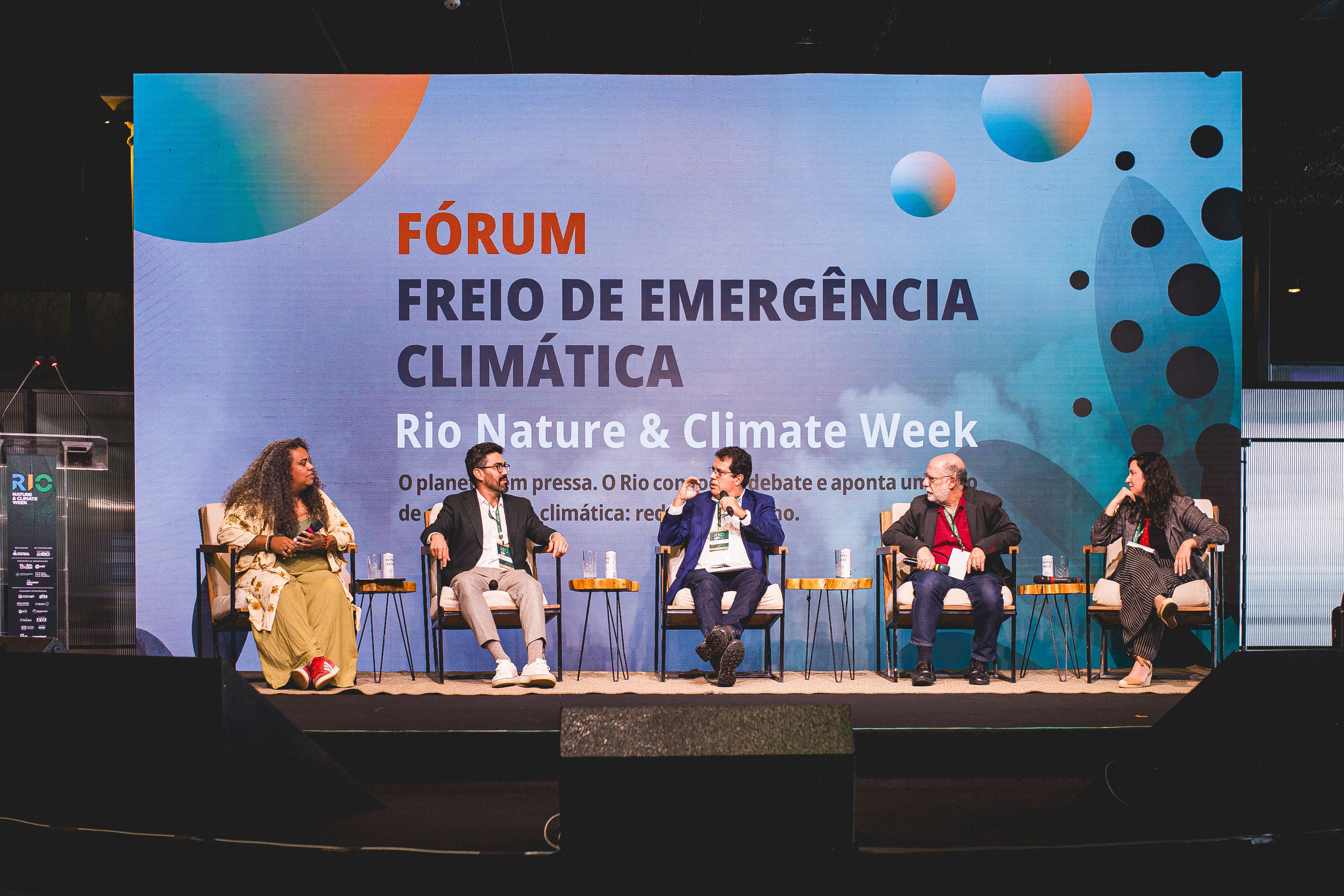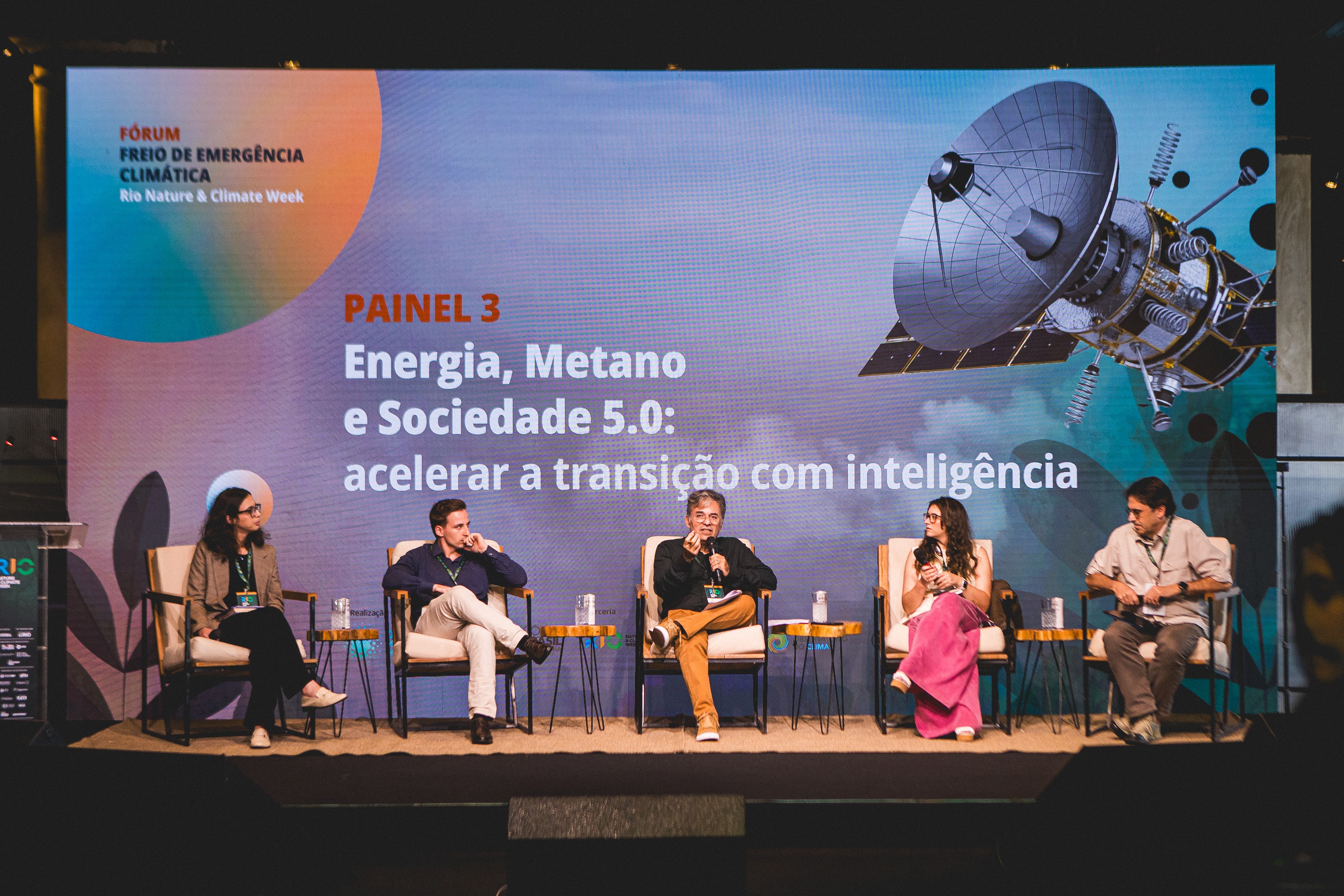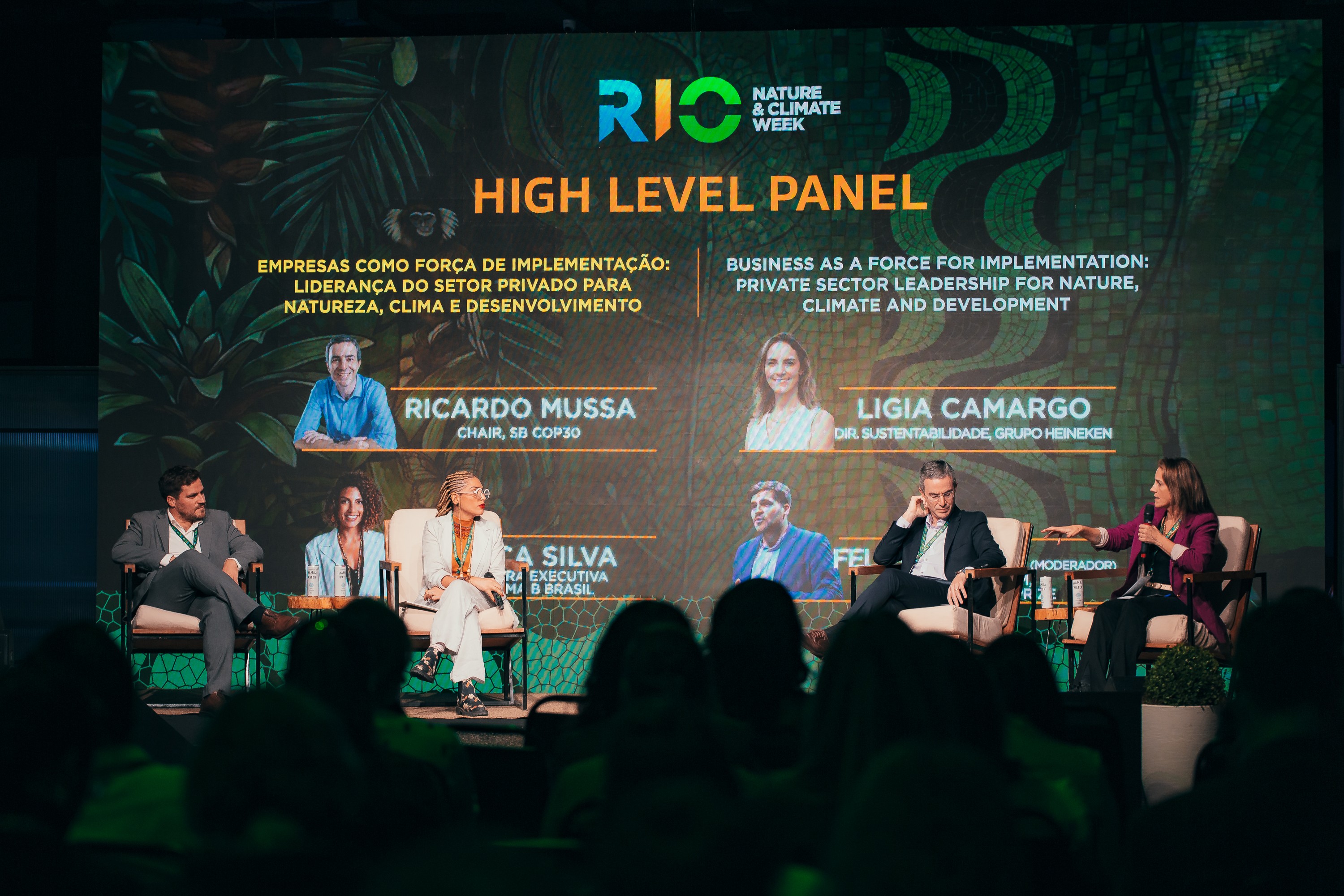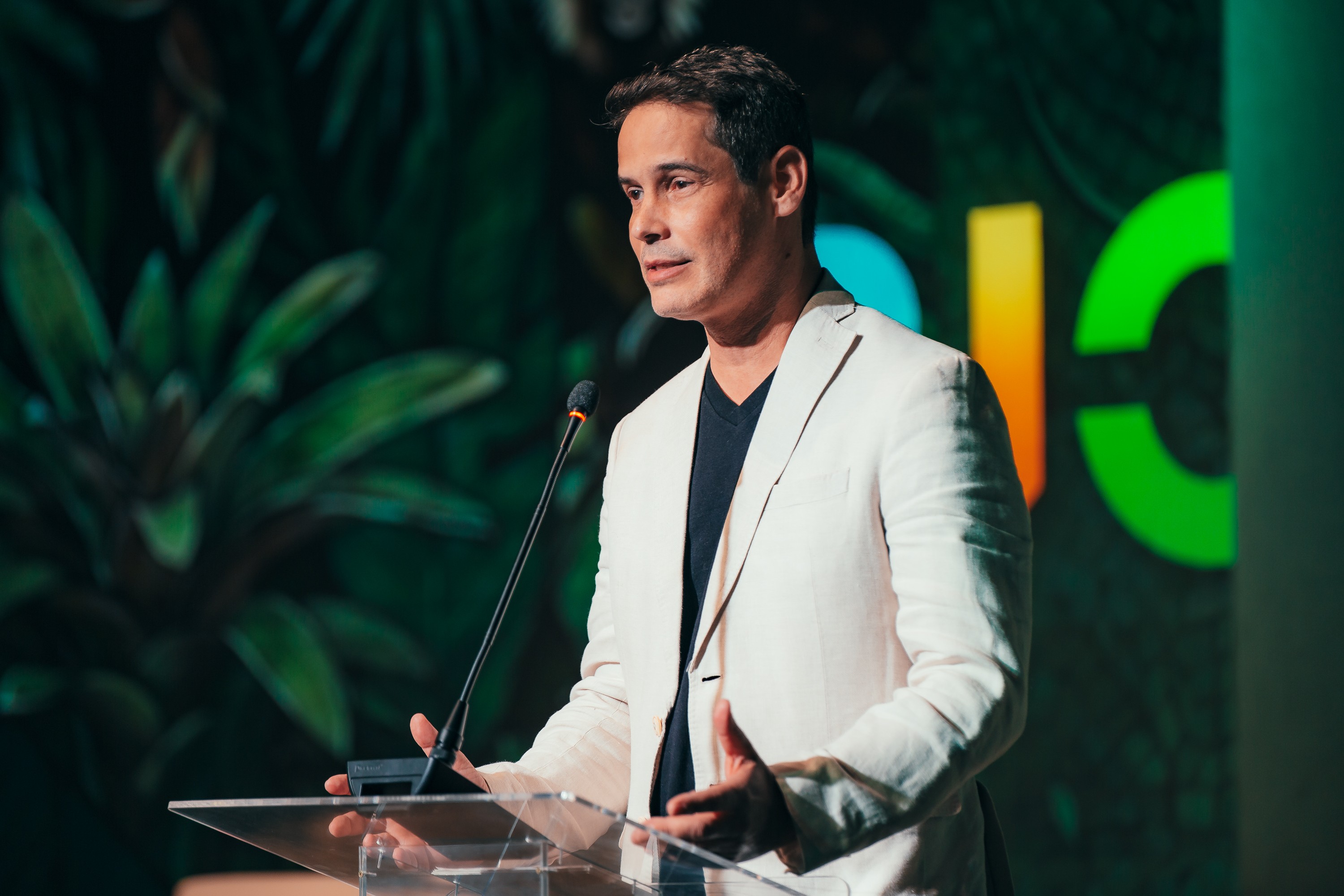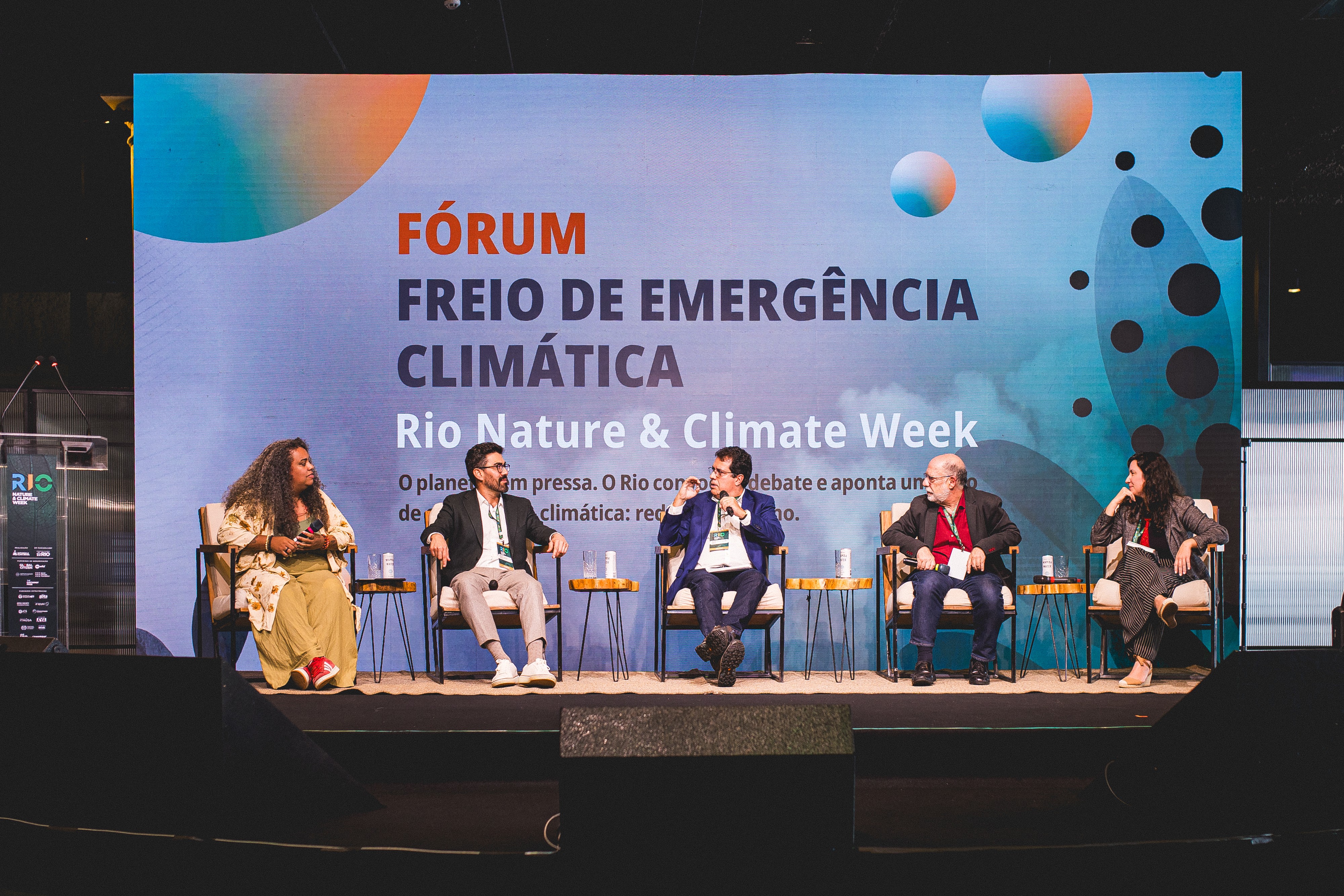
Panelists at Rio Nature & Climate Week cited short-term interests and failures in public communication, warning about the cost of inaction 0.5x 1x 1.25x 1.5x 2x 00:00 00:00 Kamila Camilo, Henrique Bezerra, André Trigueiro, Sérgio Besserman, and Stela Herschmann open the Emergency Climate Brake Forum in a panel at Rio Nature & Climate Week. — Foto: Publicity photo The impacts of the climate crisis are already affecting cities, economies, and production systems worldwide. However, sectors that directly rely on climate stability remain far from supporting measures that would mitigate the risks they will face in the future. The contradiction between the crisis scenario and the actions arising from it was discussed at the opening of the Climate Change Brakes Forum, held last Wednesday, the second day of the Rio Nature & Climate Week in Rio de Janeiro. - There is a huge disconnect between what we are practically doing and what needs to be done, according to science. We are experiencing successively hotter years. We are already the generation facing the impacts of climate change. We are the generation that needs to adapt and suffers from extreme weather events - said Stela Herschmann, a climate policy expert at Observatório do Clima. - And the pace of decisions does not match this reality. On the contrary: we continue to bet on the wrong path. The debate, mediated by journalist André Trigueiro, also included participation from Henrique Bezerra, leader of the Global Methane Hub in Latin America; economist Sérgio Besserman; and Kamila Camilo, founder of Instituto Oyá & CriaRaiz. According to Besserman, there is currently "a kind of climate denialism 5.0." Some argue that the worst-case scenarios have been dismissed because emissions have not reached maximum levels. However, recent years show that some of the extreme scenarios have approached reality more quickly than anticipated. Events expected to occur in 15 to 30 years are already happening, and more researchers are advocating that climate sensitivity—how much the temperature rises when carbon concentration doubles—may have been underestimated by the IPCC. - We are facing a much more serious situation than we usually admit, and inertia persists - he said, highlighting that the incentives for fulfilling the Nationally Determined Contributions (NDCs), the climate commitments of each country under the Paris Agreement, are "practically nonexistent." - Which prime minister, president, governor, or mayor is willing to forgo immediate political gains because of a problem that will have its most severe effects in ten or twenty years? Economist Sérgio Besserman speaks during the Emergency Climate Brake Forum at the Rio Nature & Climate Week. — Foto: Publicity photo As an example, Trigueiro mentioned the approval by the Chamber of four projects that provide benefits to environmental offenders. These include prohibiting oversight bodies from imposing fines based on satellite monitoring and changing protection rules for unconsolidated forest areas—a move that Environment Minister João Capobianco described as an "unimaginable setback." For Herschmann, these measures signify impunity—which, she emphasized, will have a cost: - This predatory model ultimately harms the productive sector itself. Agriculture depends on climate stability. By supporting measures that exacerbate the crisis, the sector becomes more vulnerable. We see producers increasingly relying on insurance and public support to offset losses. Moreover, this path closes markets. International buyers are increasingly attentive to environmental issues. In practice, Congress is functioning as an instrument for validating illegality and a national project incompatible with the challenges of the new climate. Economist Sérgio Besserman speaks during the Emergency Climate Brake Forum at the Rio Nature & Climate Week. — Foto: Publicity photo Amid recent tensions involving the Strait of Hormuz, a vital route for global oil and gas trade, Besserman stated that the need for more decentralized energy systems with greater sovereignty and less external dependency has become evident. At the same time, he noted, a recurring argument resurfaces: the "alleged unbearable cost" of abandoning fossil fuels. For the economist, the calculation is incomplete because it disregards the other side of the coin: the cost of continuing to use these resources. - That cost is much higher. This dispute is political and will only be resolved when the real costs of global warming are incorporated into fossil fuel prices. That's why I emphasize the importance of reducing methane emissions - he declared, citing the gas responsible for about a quarter of global warming, which can yield much quicker results with emission reductions. - There is still time to avoid scenarios in which billions of people face levels of suffering today difficult to imagine. In the oil and gas sector, for example, studies show that it is possible to reduce about 75% of methane emissions using already available technologies—and, in many cases, with a positive financial return for companies, Bezerra highlighted. According to the specialist, there are also solutions related to solid waste: about half of what is sent to landfills, he said, is organic matter that could be treated through composting. If applied, this would reduce transportation costs, decrease emissions, and could generate social benefits. - We are talking about practices that also increase climate resilience. An example is more efficient pasture management. Today it is possible to use satellite data or other tools to identify where pasture is more nutritious and manage the property more efficiently. This is climate adaptation, but it is also methane mitigation - he stated. Henrique Bezerra, the leader of the Global Methane Hub in Latin America, speaks during the Climate Emergency Brake Forum at the Rio Nature & Climate Week. — Foto: Publicity photo However, Camilo argued that the climate debate still faces difficulties in mobilizing society. The challenges are many: first, competing with oil, mining, or other sectors with abundant resources for communication. Then, convincing the scientific community that simplifying the message does not mean misinformation. Finally, the idea that information alone is not enough: there must also be public infrastructure to make the necessary changes feasible. - In São Paulo, less than 3% of waste undergoes selective collection. In other words, even if I want to act in an environmentally responsible way, the city's infrastructure is not designed to help me do that - she said. - That's why I believe our main mission is to mobilize people to make better choices, both when selecting their representatives and in their everyday decisions. Henrique Bezerra, the leader of the Global Methane Hub in Latin America, speaks during the Climate Emergency Brake Forum at the Rio Nature & Climate Week. — Foto: Publicity photo Besserman was emphatic in highlighting that, after 30 years of negotiations, discussions still revolve around transferring billions for climate financing while, at the same time, fossil fuels receive trillions in subsidies every year. The modus operandi, for him, is already established: "we are using public money to accelerate global warming when what we need is a historic transformation," he stressed. - The way of life developed during the most recent phase of human history is no longer compatible with the planet's limits. This doesn't mean the end of markets, money, or economic activity. But it means that the model based on the unlimited appropriation of natural resources as if they were free has reached its limit - he said. - This transformation will be economic, social, and political. It is up to us to understand this and help build the pathways for this transition. The translation of this text into english was carried out by Project Irineu, O GLOBO's initiative to develop artificial intelligence tools. Here is the link to the original report.
Contradiction between climate dependence and resistance to the environmental agenda harms the productive sector, experts say
Panelists at Rio Nature & Climate Week cited short-term interests and failures in public communication, warning about the cost of inaction
TL;DRAI
Agricultural and energy sectors resist climate measures despite 75% methane cuts being profitable; policy inertia and absent incentives delay action. International buyers enforce ESG standards, progressively restricting market access—a growing supply chain risk.
1,266 words~6 min read