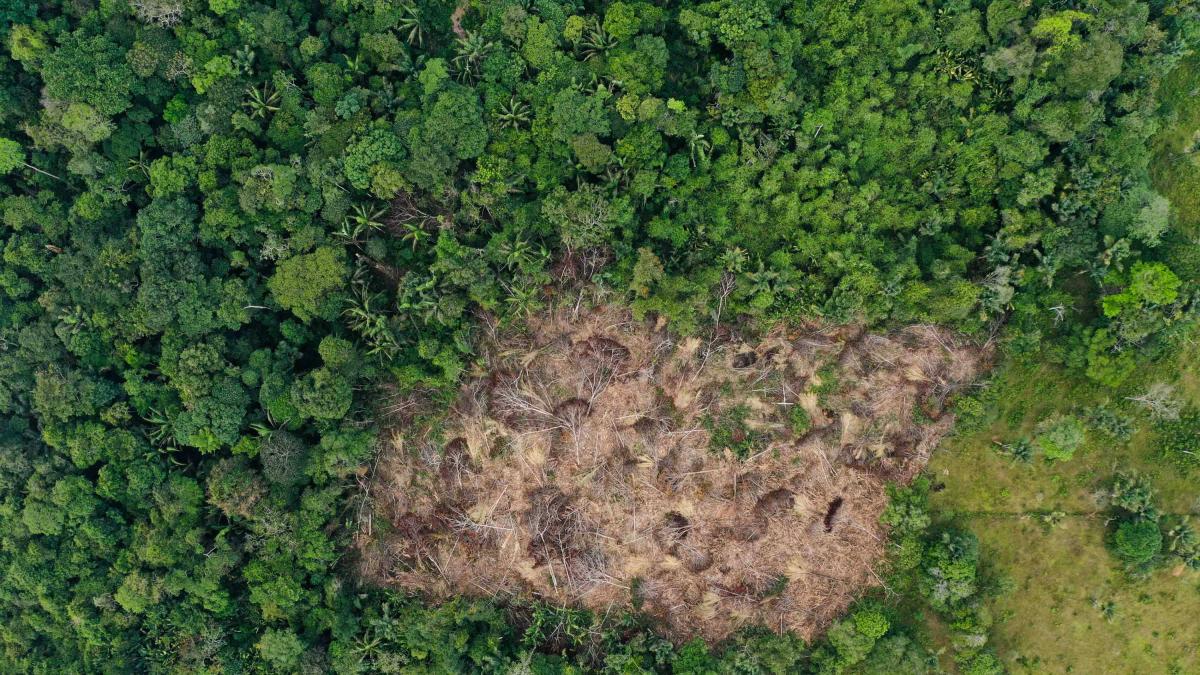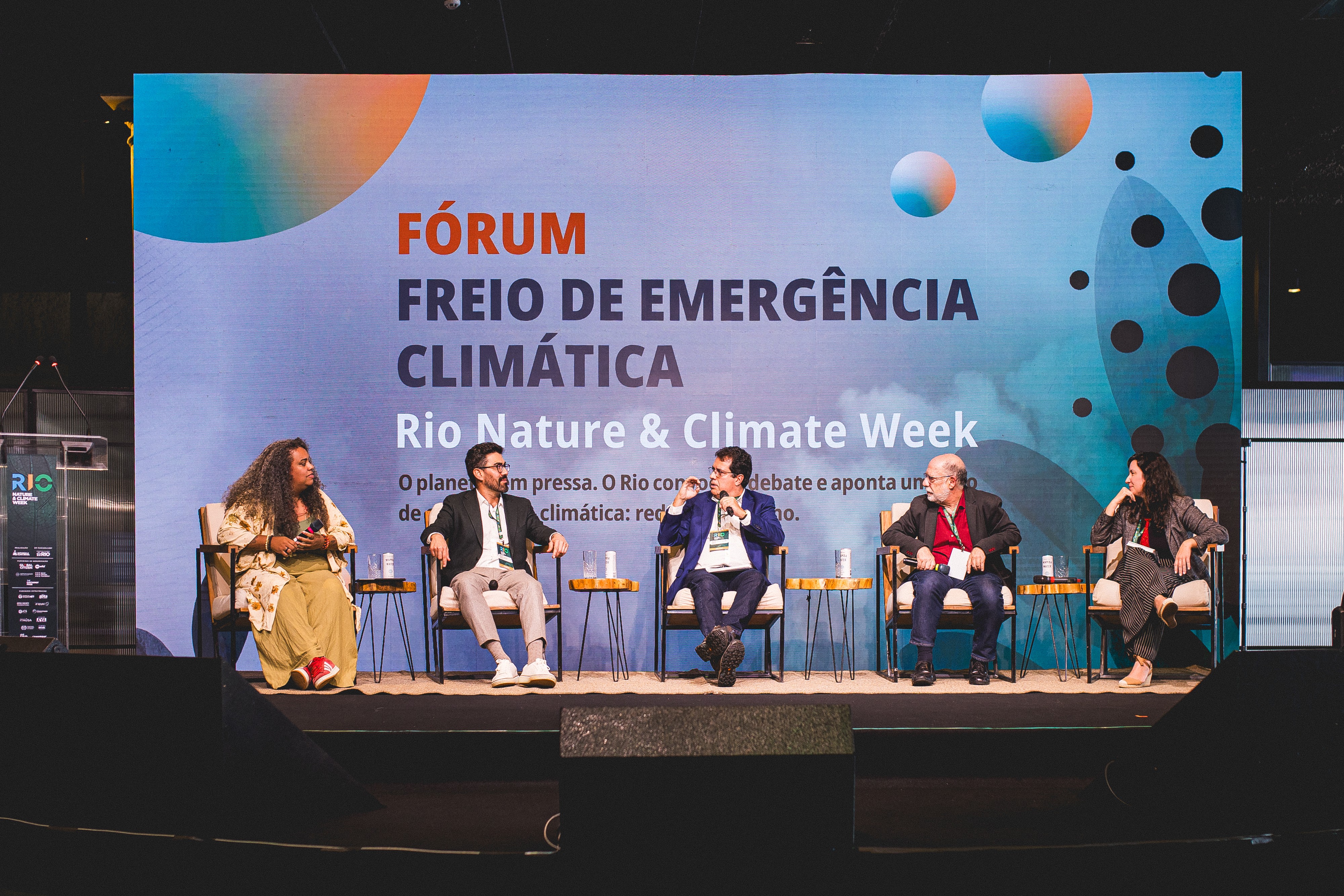
At a panel during Rio Nature & Climate Week, experts called for a coordinated enforcement model to punish offenders and hold them accountable for environmental damage 0.5x 1x 1.25x 1.5x 2x 00:00 00:00 Panel at Rio Nature and Climate Week on Combating Environmental Crime — Foto: Publicity photo As political and economic changes threaten agreements and mechanisms for ecosystem protection and greenhouse gas emission prevention, one of today's primary global tasks is ensuring that existing regulations are strictly adhered to. This is not only to meet a set of targets but also to demonstrate to the public that these measures are effective and that violations will not be tolerated. - Combating environmental crimes goes beyond mere commitments; it's about implementing these commitments. Credibility depends on integrated data, transparent institutions, and a certain degree of public trust - stated Robert Muggah, co-founder of the Igarapé Institute and the SecDev Group, who moderated the panel on the Rule of Law and environmental crime during Rio Nature and Climate Week. Brazil's scenario is among the most challenging. In addition to local gangs specializing in illicit environmental activities, such as logging from protected areas or gold mining on indigenous lands, international criminal organizations have begun to see illegal exploitation as a source of income. Researchers point to an increasing connection between groups like Comando Vermelho (CV) and Primeiro Comando da Capital (PCC) with miners and loggers operating outside the law, alongside the establishment of the Amazon as a drug transportation route, particularly to Europe. - The threat is more than ecological. It fuels social instability, crimes feed corruption and conflicts, and illegal resource extraction affects communities and trust in the system - said Thomas Ungerbuehler, Assistant Director of Environmental Security at Interpol. Renato Agostinho (R), former director of Ibama, speaks during a panel at the Rio Nature and Climate Week, alongside Thomas Ungerbuehler, assistant director of Environmental Security at Interpol (C). — Foto: Publicity photo According to Ungerbuehler, the fact that these criminal organizations have a transnational footprint—a recent report from the São Paulo Public Prosecutor's Office showed that the PCC has expanded to 28 countries—makes monitoring their activities more challenging. Renato Agostinho (R), former director of Ibama, speaks during a panel at the Rio Nature and Climate Week, alongside Thomas Ungerbuehler, assistant director of Environmental Security at Interpol (C). — Foto: Publicity photo - Criminals operate across borders. A crime can start in one country and end in another. This global dimension allows them to operate outside the law - he stated. - And since these networks are adaptable, we need a holistic approach, emphasizing that environmental commitments are more than mere pledges. In his intervention, Rodrigo Agostinho, president of Ibama from 2023 to 2026, highlighted the importance of coordinated efforts in combating environmental crimes. Data sharing among Amazon countries, for example, helps dismantle routes used by criminal organizations to transport illicit substances or distribute illegally extracted products—recent cases involved the seizure of drugs and uncertified wood in the same shipment. - Cooperation needs to occur both horizontally and vertically, not only at the top of the command and control chain. In the case of forest fires, for example, if we have information on where they are happening, we can inform states and municipalities for initial control - he explained. - We need everyone to work appropriately, and cooperation can greatly assist. Ibama, for example, does not conduct investigations; that's the Federal Police's task. The solution lies there. Last year, the International Police Cooperation Center was inaugurated in Manaus, a transnational effort coordinated by the Federal Police, bringing together nine countries and working in partnership with cooperation networks like Interpol and Europol. - We need to move towards a more global sharing of information. Criminals do not respect borders, and the solution lies with interconnected teams and intelligence units. This is the only way to close institutional gaps exploited by these individuals - pointed out Ungerbuehler. Civil society, Agostinho noted, plays an important role in holding authorities accountable and, like the Igarapé Institute, revealing the money trail from illegal gold mining to the bank accounts of criminal organizations. The private sector, he explained, is crucial in financing initiatives and also needs to pressure their suppliers to ensure they do not offer products linked to illicit activities. - In Brazil, people do not understand that environmental crimes are crimes. People normalize deforestation and the keeping of trafficked animals - he highlights. - Society does not see it that way, and we need to confront it. For the States, obligations go beyond monitoring and signing international agreements. - Law enforcement is the most important factor to ensure the public does not lose faith. Penalties for environmental crimes are sometimes insufficient, and it is important that they are punished like other crimes - commented Ungerbuehler. - It's important to show the public that arrests and trials are happening. When we ensure that timber traffickers will be punished, we are showing that the law is being enforced. Muggah agreed. - This is a fundamental issue. Trust will only be built when it leads to results. The translation of this text into english was carried out by Project Irineu, O GLOBO's initiative to develop artificial intelligence tools. Here is the link to the original report.
Without tackling environmental crimes, climate action is unlikely to succeed
At a panel during Rio Nature & Climate Week, experts called for a coordinated enforcement model to punish offenders and hold them accountable for environmental damage
TL;DRAI
Criminal networks including PCC (28 countries) launder Amazon resources; experts demand coordinated enforcement to prove climate commitments are credible. Transparent prosecution prevents ESG supply-chain risk and rebuilds public trust in environmental governance frameworks.
892 words~4 min read