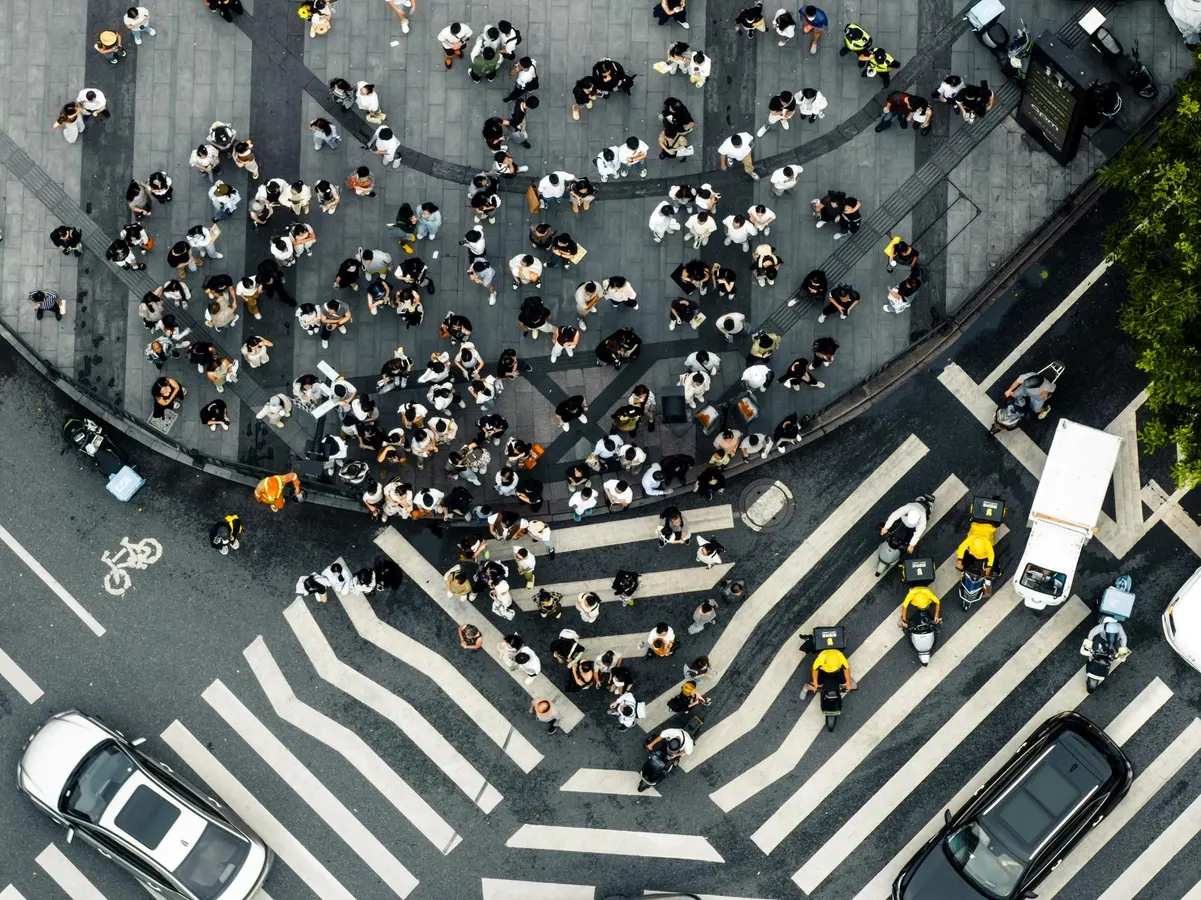
Bryan Mistele, Co-founder and CEO of INRIX.gettyThis summer, millions of people across the globe will watch the World Cup. But some observers will be watching U.S. host cities for something other than corner kicks and penalty shoot-outs.The 2026 World Cup will be one of the largest real-world tests of human mobility ever conducted.The last two FIFA World Cups in Qatar and Russia saw upwards of 1 million and 3 million visitors, respectively. The U.S. is expecting anywhere from 1.25 to 10 million visitors in June and July. Millions of fans, most of them international visitors, will move through unfamiliar cities, making decisions without the habits, routines or local knowledge that transportation systems typically rely on to run smoothly.Moving people through transportation networks efficiently isn’t just a problem of numbers. It depends on predictable behavior. This year’s World Cup is a moment when our understanding of mobility will radically change.The Core Shift: Behaviors Change MobilityMost urban transportation systems are built around predictability. Everyday commuters follow repeatable patterns. Cities can predict peak travel times. These static assumptions form the basis for cities’ infrastructures and planning models.But large events like concerts or games can disrupt predictability. An event on the scale of the World Cup will all but shatter it.World Cup visitors behave differently from commuters. They travel to stadiums at unusual times, cluster unpredictably and rely heavily on navigation tools, ride-hailing and walking—all in unfamiliar environments. Fans navigate a new city, and their decisions will be shaped by uncertainty rather than routine. This creates a fundamental challenge.Urban mobility systems are designed to handle volume. But when systems encounter behavior that does not match the models used to manage them at the massive scales, those systems break down quickly.Traditional Planning Falls ShortCities typically plan large events using historical data and predefined scenarios—but those models break down when demand becomes global, unfamiliar and unpredictable.Depending on match schedules, travel demands will fluctuate wildly, outside of traditional peak windows. Massive numbers of people will try to navigate a new city, often while dealing with language and cultural barriers.Cities that design their planning on past events and historical data will be caught reacting to conditions that historical data could not predict.Despite these challenges, most U.S. host cities already have a critical advantage. They have access to advanced mobility data and analytics with real-time visibility into traffic conditions and travel patterns.These systems can help cities redefine how we think about mobility by using existing data more dynamically. Rather than relying on static plans and historical data, cities such as Los Angeles, Seattle, Houston and Philadelphia can use real-time data to adapt to each unique condition as it unfolds. Cities will be able to shape their transportation networks to the way people are using them in real time without having to rely on questionable predictions.Stress Points For SystemsAs millions of fans flood U.S. cities, they will put stress on nearly every part of those cities’ transportation networks. The most significant breakdowns, though, are likely to occur at the local level. Small disruptions ripple out, affecting the larger network. The ability to monitor and adjust conditions in real time will be critical.A major share of event-related congestion will start at the curb. Pickups, drop-offs, deliveries and short-term parking will surge at abnormal times around stadiums and fan zones. Static curb rules are not designed for this level of demand. Without active management, curbside interactions will be flashpoints for congestion and cascade throughout surface streets, intersections and highways. This is why curbside rules need to match real-time travel conditions. Cities that treat the curb as dynamic infrastructure will be better positioned to maintain traffic flow and reduce congestion.Intersections will also play critical roles in maintaining flow, and signal performance will define how well cities manage World Cup traffic. Cities will need the ability to monitor and adjust signals and intersection performance in real time. A dynamic, proactive approach will have a greater impact than large-scale infrastructure changes.From Infrastructure To InsightThe World Cup highlights a larger shift already underway in many cities. Mobility is no longer just a question of physical infrastructure. Mobility depends on how well cities understand and respond to human behavior in real time.Physical infrastructure like roads, signals and transit systems are essential. But cities cannot continue to rely solely on historical data and outdated understandings of behaviors. They need to interpret and act on real-world conditions as they change. Cities will look to prioritize these actions. For industry leaders, be ready for these demands:• Build real-time operational visibility. Cities need continuous insight into how networks are performing moment to moment rather than relying on historical data and predictions.• Invest in creating a dynamic system. Static traffic systems no longer work. Dynamic traffic signal management, reversible lanes, dynamic bus schedules, etc. are critical to enabling cities to respond to dynamic changes in demand. • Design for unfamiliar users. Cities need to plan for unfamiliar users. They should design systems to accommodate visitors who lack local knowledge and may behave unpredictably.• Treat the curb as critical infrastructure. Cities need the ability to dynamically manage curb activity. Doing so improves both traffic flow and safety.• Measure and prove performance. Cities need real-time data and insights to demonstrate how conditions are managed and improved.Mobility, RedefinedThe 2026 World Cup will test whether they can respond when predictability disappears. It is the same test that all cities will face in the coming years.The cities that succeed will not be those with the most infrastructure but those with the clearest, most actionable insight into how people behave in real time across their networks. It is a test, ultimately, of how well cities understand how people actually move.Forbes Technology Council is an invitation-only community for world-class CIOs, CTOs and technology executives. Do I qualify?
The World Cup Will Redefine How U.S. Cities Understand Mobility
The 2026 World Cup will test whether they can respond when predictability disappears. It is the same test that all cities will face in the coming years.
958 words~4 min read