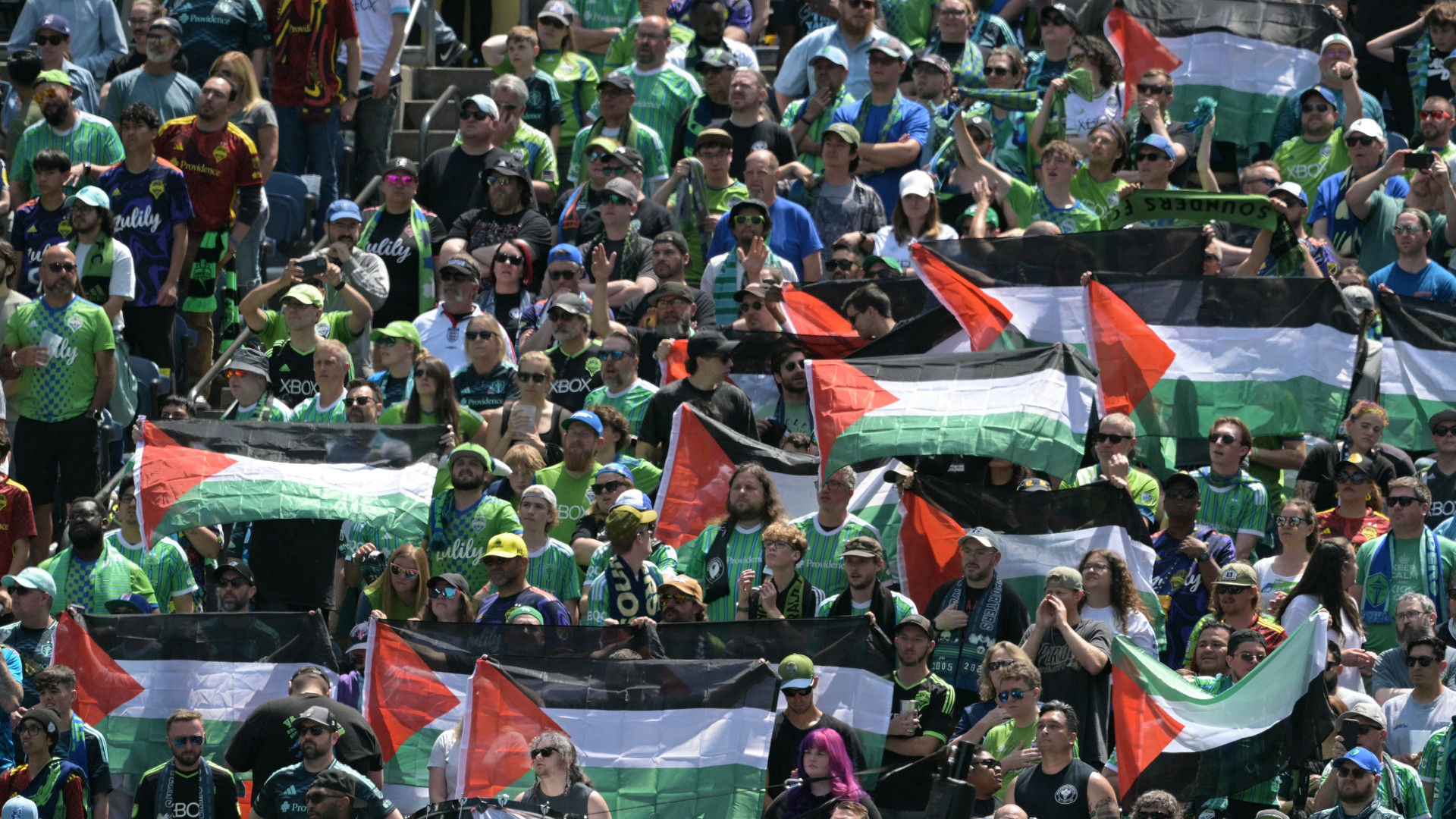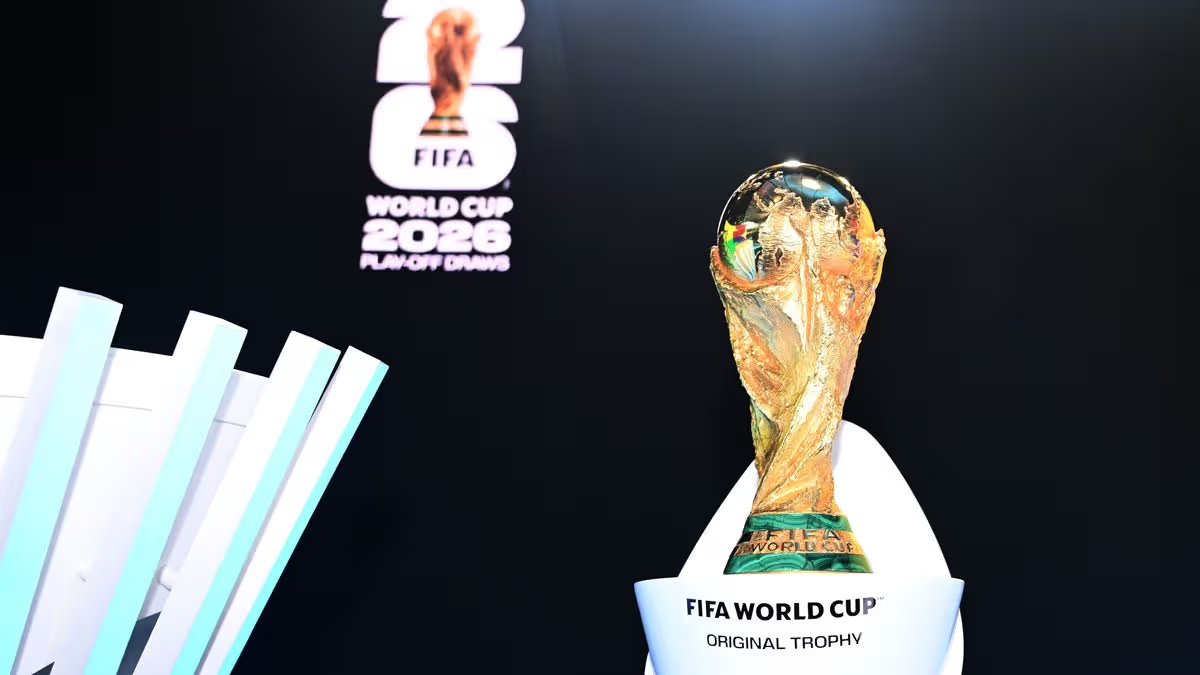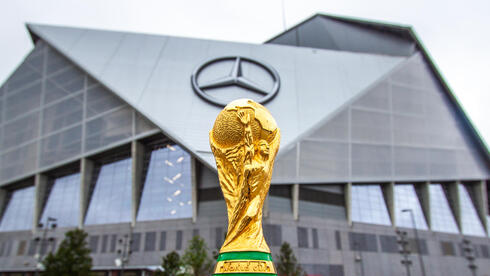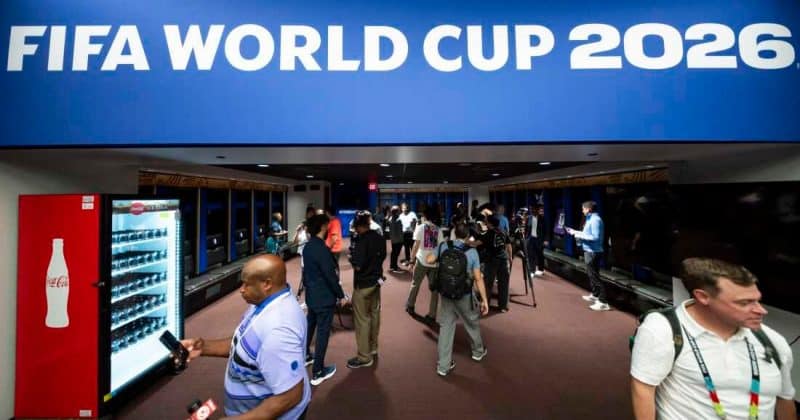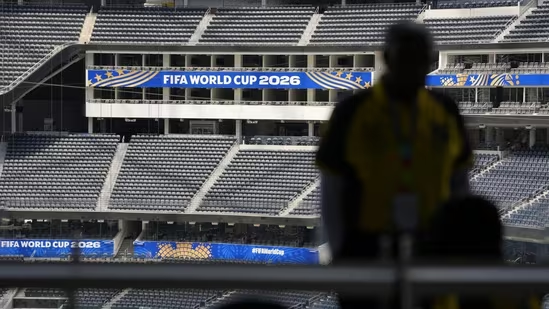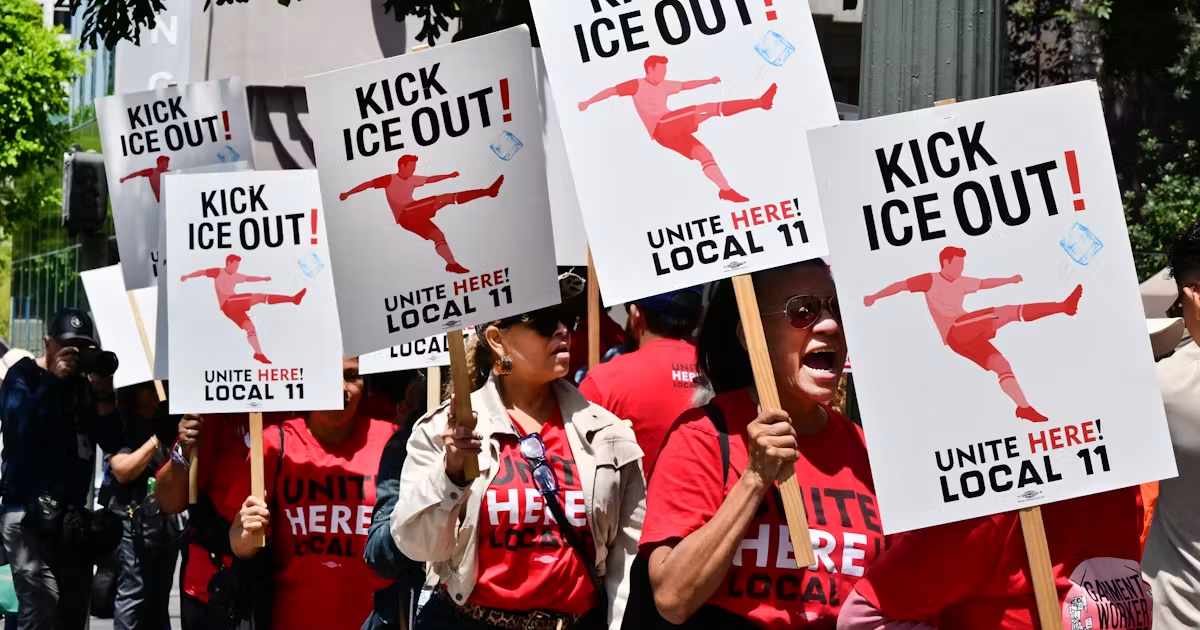
The 2026 FIFA World Cup tournament is projected to break every conceivable record: It will likely be the most-watched sporting event ever—bringing in an estimated five million visitors to 16 host cities across Canada, Mexico, and the United States, atop a global viewership of six billion throughout the course of competition; more than one billion viewers are projected to watch the final match itself. And the coffers will be full to bursting: The global sport’s governing body is expecting a record $11 billion in revenue. But with hours before the first kickoff, there are problems afoot. FIFA’s ticket inventory remains vastly undersold (due in large part to its exorbitant prices), hotel block bookings have been canceled due to low visitorship, and other superlatives have all but overtaken any event excitement: This World Cup is expected to be the most expensive, the hottest on record, the most emissions-producing, and, potentially, the one that will be remembered for anything other than the game.For months ahead of the tournament, international human rights groups and U.S. civil society organizations alike had been sounding the alarm over the impending human rights nightmare that awaited, largely (if not entirely) perpetrated by the principal host: the United States, where most of the record 104 games will be played, including the final.Far from keeping politics out of play, the Trump administration has wasted no opportunity to use this global stage to debut a new American image, on the eve of the nation’s 250th anniversary, one that is exclusive, exclusionary, and vainglorious. As many had already anticipated, the political tenor of the U.S.-hosted World Cup is set to eclipse the tournament itself.“The prospects of this World Cup being remembered for reasons other than football are very high, and it should be that way,” said Shaista Aziz, co-founder of The Three Hijabis and a member of the U.K.-based Stop Trump Coalition’s “Football Against Fascism” campaign. But that doesn’t seem to be of particular concern to the tournament’s presiding host and FIFA head Gianni Infantino’s close friend, U.S. President Donald Trump, who stole the spotlight at last year’s Club World Cup and quite literally refused to leave the stage. Trump has already playfully rebranded this World Cup as the “MAGA-FIFA World Cup,” with FIFA’s passive consent, and rights advocates and fan groups expect him to host the event accordingly.The official FIFA fan zone in Washington, D.C., for example, will be co-organized by Freedom 250, a project by the Trump administration to celebrate the nation’s semiquincentennial, which is also the organizer for the “America is Back” rally on June 24 at the same location on the National Mall, in which the president will be the headliner.“Trump and the MAGA project are going to stamp themselves all over this tournament to burnish MAGA via soccer,” said Nicholas McGeehan, program director at the rights group FairSquare. “And given the power of the game and the way it’s going to be broadcast around the world, it’ll be effective.”It’s not the first time that the World Cup has been used for soft-power purposes, but seeing it done so flagrantly has rights advocates no less concerned for its consequences, not only in host cities but also abroad.Looming over the proceedings is the fact that the U.S., aided by Israel, is actively at war with Iran. The fact that Iran is competing in the World Cup hosted by its aggressor will not be lost on anyone, but hostilities that take place during the tournament might.“This cannot be used as an attempt to sportswash Donald Trump’s regime, and indeed all of [its] horrific foreign policy interventions (or lack of interventions),” said Aziza, who is particularly concerned that the tournament will be used to veil Israel’s ongoing assault on the occupied West Bank and Lebanon—as mega sporting events have been utilized as cover in the past—with the support of the U.S. “There should be no normalization of [it] in relation to this World Cup.”While Trump has previously stated that “fans from all over the world will be welcome,” few have ever actually believed that the first ever World Cup in which the host nation is at war with a qualified nation will be as hospitable as advertised. Currently, Iran’s national team has only been issued visas under express warning by U.S. officials that they do not “abuse this system to sneak terrorists into the United States under false pretenses,” while key staff have been denied entry. The team must also leave U.S. soil on the same day as their matches. The Football Federation Islamic Republic of Iran now says that its ticket allocation has been revoked, effectively stranding fans who already paid to see their country compete.The Trump administration’s unfriendliness has also extended to other tournament participants: Two players—one from Switzerland and one from Morocco—had their visas denied until the eleventh hour, and one source alleges that the latter’s refusal was due to his father’s appearance (particularly his beard). Meanwhile, an Iraqi player was questioned for seven hours at Chicago O’Hare Airport upon arrival for the tournament, and the Iraqi team’s photographer was denied entry due to “vetting concerns,” according to a spokesperson for U.S. Customs and Border Patrol. Moreover, both the Senegalese and Uzbek teams were forced to undergo unusually strict security protocols when they arrived in the U.S.Most recently, FIFA referee Omar Artan, from Somalia, was denied entry into the U.S.—after being detained for 11 hours at Miami International Airport and repeatedly questioned about whether he’d ever met anyone from the Al Shabab militant group—just days before the start of the tournament, despite having a valid travel visa. Somalia is listed among several countries on the Trump administration’s travel ban list—which has also shut out fans from competing nations Haiti, Iran, Senegal, and Ivory Coast. FIFA initially left Artan, who was named Africa’s best referee just last year, high and dry before finally providing him with some “behind the scenes” support.Fans from Scotland, too, have reported last-minute changes to their travel permits to the U.S., moving from “approved” to unauthorized within a week of the tournament’s opening game. One Scottish fan, in fact, had his visa revoked an hour before his flight. Acting Assistant Secretary of Homeland Security Lauren Bis explained more recent rejections as, simply, “the Trump administration is enforcing immigration laws.”At this point, fans are more than comfortable referring to the U.S. as a regime, as most decisions determining who is welcome and who isn’t appear to be at the whim of the administration in the moment.“This World Cup won’t be remembered as ‘the most inclusive World Cup,’ but as the World Cup that actually kept the world outside,” said Andrea Florence, executive director of the Sport and Rights Alliance. It may surprise people to know that this was meant to be the first ever human rights–focused World Cup in the tournament’s history, one in which specific human rights metrics were applied to the bidding evaluation process. Nine years later, “we’re still having this conversation,” said former Australian National Team captain and broadcaster Craig Foster, in a virtual press conference recently held by the Sport and Rights Alliance.Given how quickly FIFA abandoned its own human rights policy—which, if it worked in the first place, would have been deployed to protect players and support staff from harassment by the host’s immigration enforcement agencies—it’s hard to believe that the global sports body’s commitments ran particularly deep. “FIFA has said, ‘We will conduct football in the way that Trump sees fit,’” said Foster. “Anything that is not consistent with what Trump thinks is right in the world places you at risk.”Perhaps the most worrying thing for fan groups and rights advocates is that they have no idea what to expect at this tournament, in terms of what the rules are and how consistently they’ll be applied.Take, for example, the role of Immigration and Customs Enforcement, the most contentious element of the tournament’s security apparatus. The Department of Homeland Security has assured that every agency will be on-site at the stadiums but that they are not expected to be deployed for immigration enforcement—messaging that contradicts what DHS Secretary Markwayne Mullin told CBS News only last month: “ICE always says immigration enforcement. We’re always going to do that. But we’re not there for solely that purpose.”“ICE has never been known to color inside the lines,” said Jennifer Li, director of the Center for Community Health Innovation at Georgetown Law. “We know that ICE will be at stadiums, period. The question is whether ICE will actually be conducting enforcement operations [there].”How roles between law enforcement agencies will be delineated is also unclear.“We don’t know,” said Julia Roig, one of the lead organizers for No ICE in the Cup, a group of civil society members across the political spectrum who are organizing actions around the tournament for community safety. “That’s kind of the nature of the threat right now—to keep everybody distracted and feeling fragmented with the chaos.”FIFA has offered little more than a boilerplate statement in response to fears about fans entering the host government’s hostile human rights environment. “Any journalist should attempt to get FIFA staff to say the word ‘ICE’ out loud,” said Minky Worden, director of global initiatives at Human Rights Watch, who was also in the press conference. “They won’t do it, and that means that they are not addressing the direct risks to fans, players, journalists, communities, and workers.”Between American overreach and FIFA’s abdication of any responsibility over its own event, said McGeehan, “this is, quite obviously, the most problematic World Cup in history.”FIFA does have a grievance mechanism to report on human rights abuses, but Worden said it’s very poorly publicized. What’s more, said Florence from the Sport and Rights Alliance, “it’s not functional.” Abuse reports are handled internally by FIFA, which may not have capacity to address the issue and may also choose not to, especially if it involves FIFA itself.“It’s a World Cup without rules, without any commitment from FIFA,” said Ronan Evain, executive director of Football Supporters Europe, at the same press conference. “Once you arrive in the U.S., you’re on your own.” It’s fallen to local activist organizations to fill the vacuum left by FIFA. Danny Navarro, the D.C.-based content creator behind the TravelFutbolFan Instagram account, has been giving guidance to visiting and local fans, as well as informing them of the political overtures of the tournament.“Best-case scenario is no one gets detained or deported from a soccer match, [or] we don’t have anyone dying at the stadium,” said Navarro. “That’s probably the best I’m hoping for.”The onus, then, is on the fans to keep themselves safe. “Fans have to come ready and absolutely not depend on FIFA, because FIFA is not there to protect them,” said Navarro. “FIFA is there to make money, end of story.”But local community groups have their own contingency plans—which have been battle-tested over the last year.In the U.S., “we do not suffer from a lack of civil society oversight or nonprofit organizations,” said Li, who also leads Dignity 2026, a coalition of civil society organizations across labor, sports equity, and civil rights, coordinated through Georgetown Law’s O’Neill Institute.For the past few years, Li has been helping organize local stakeholders in host cities to prepare for the tournament. “We actually have a robust, rich culture of grassroots groups across all these cities, who have a good idea of what they want and what they need, and what are the missing pieces from their cities.”In lieu of any real assurances from FIFA on the safety of fans and local communities, civil society organizations have stepped in to effectively absorb the occasion of the World Cup into their battle-worn rapid response infrastructure. Volunteer immigration lawyers across the country are standing by, including at airports, ready to avail themselves to traveling fans in need of legal support. A mass Know Your Rights effort is also underway, both digitally and on-site in and around stadiums in World Cup host cities, to inform fans of their constitutional rights, for instance via the Immigrant Legal Resource Center’s campaign distributing wallet-size “red cards” for fans and community members to carry in case they are confronted by law enforcement.“Local supporters and civil society organizations feel like we have a duty to help educate and welcome people into our cities during this tournament and, with that, to help them stay safe,” said Bailey Brown, president of the U.S.-based Independent Supporters Council, or ISC, a collective of North American soccer supporter groups and a member of Dignity 2026.Brown also directs fans to Frontline FC, a joint effort by ISC and Dignity 2026 that connects visitors to “fan embassies” in host cities and provides city guides created by local soccer fans to visitors. The site also provides Know Your Rights information for visitors and workers, as well as important local and national hotline information, including what visiting fans need to know about immigration enforcement, encampments or unsheltered community members, and emergency medical needs.No ICE in the Cup has also organized a series of trainings, on Know Your Rights, de-escalation, and political violence and repression in host cities in the lead-up to the tournament. During the tournament itself, the organization will be hosting watch parties in friendly restaurants and other locations across the country to establish safe zones for fans to gather. “We want it to be a celebration,” said Roig.Realistically, fan groups and civil society organizations have virtually no ambitions for this tournament beyond protecting as many people as possible. “We’re talking about mitigation—not even prevention—at this point,” said Li.Trump has previously stated that “reasonable” protest would be permitted during the tournament, but what is considered reasonable is as mutable as anything else in this tournament’s planning. The ambiguity has left a lot of room for doubt, especially without any assurances from FIFA that fans and tournament participants will have their right to protected speech honored. (FIFA only recently restored its anti-racism and anti-discrimination campaign messaging after quietly removing them for last year’s Club World Cup.)Germany’s sporting director has already warned the squad against making political statements at this tournament, encouraging them to keep sports and politics “somewhat separate”—a notable departure from their collective political gesture in Qatar four years ago, in protest of FIFA’s threat to sanction players for wearing “OneLove” armbands.“Four years ago, we didn’t have a climate in Qatar whereby if athletes made a statement during the World Cup, [they] would be removed from the country or publicly attacked by the president of that country,” said Foster, the former captain for Australia. “That’s certainly the case now.”“For these foreign athletes, I do not expect them to be as vocal, especially if they’re having to play here in the States,” said Navarro. “I think it’s more important for them to just show up on the field and let the football do the talking, because that’s just gonna be more meaningful, perhaps, than speaking out.”There are other ways for players to protest too, whether that’s by wearing pins with political messages or petitioning FIFA for stronger safety measures against extreme heat.As for fans, no one expects their compliance, even with Trump’s veiled threat of deploying the attorney general to police them. “Resistance looks different for everybody,” said Navarro, who anticipates acts of defiance as discreet as bringing a reusable, collapsible water bottle to the games. But we should also expect more verbose displays of resistance, as well. Protest is already somewhat of a World Cup tradition, and advocacy groups expect this tournament to be no different. “We are [watching] this World Cup at a time when dissent is being cracked down on in ways we’ve not witnessed before in the West—ways that Western nations lecture so-called ‘third-world countries’ [about],” said Aziz. “This is the backdrop, but without a doubt, people will protest.”“Trump understands the power of spectacle to influence his project,” said McGeehan of FairSquare. But, try as he might to curate it in his favor, the spotlight won’t only be on Trump—and when it is, he cannot guarantee adulation (despite his belief to the contrary).“The World Cup happening in the USA is not a win for Donald Trump,” said Aziz. If anything, she said, it will put the U.S. under his leadership under more global scrutiny. “This is not going to be Trump’s coronation.”
The World Descends on an Inhospitable World Cup
As players and fans arrive in an unfriendly United States for the quadrennial soccer spectacle, civil society organizations are mounting an effort to keep visitors safe.
2,708 words~12 min read