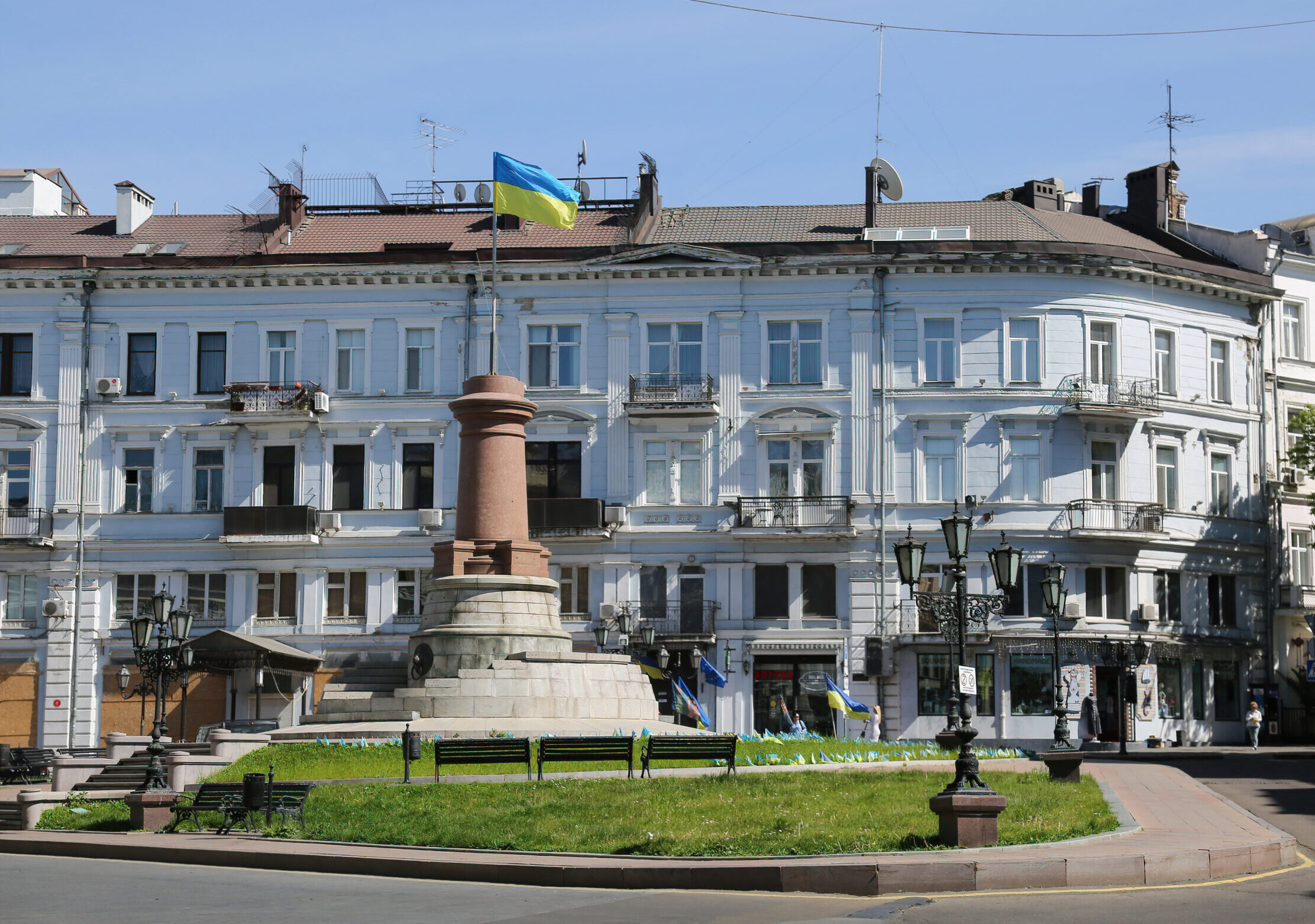
When Ukraine renames a city or tears down a Soviet-era monument, international media coverage tends to treat it as an understandable act of symbolic housekeeping by a nation at war. But this framing badly undersells what is actually happening.
Ukraine’s campaign to strip Soviet and Russian imperial place names from the country’s towns and cities is not a reaction to the current war so much as the leading edge of a region-wide rejection of Moscow’s cartography. From the Caucasus to Central Asia, former Soviet states are shedding the names and symbols imposed on them as they seek to assert their own national identities.
Ukraine’s decommunization and derussification drives began long before the full-scale invasion of February 2022. Initial renaming efforts started in the early 1990s, with streets across the country stripped of overtly Soviet names. This was accompanied by the removal of many but not all Communist monuments. Indeed, a giant Soviet hammer and sickle loomed over Independence Square in central Kyiv until the early 2000s.
A second major wave began in the wake of Ukraine’s 2014 Revolution of Dignity. Two years later, the city of Dnipropetrovsk became Dnipro, shedding a name that honored Bolshevik functionary Grigory Petrovsky, a man associated with the machinery of Soviet rule during the artificial famine of the early 1930s that killed millions of Ukrainians. Nearby Dniprodzerzhynsk reverted to its historic Kamianske, erasing the name of Felix Dzerzhinsky, founder of the Soviet secret police. Ordzhonikidze became Pokrov, dropping a Soviet revolutionary’s name entirely.