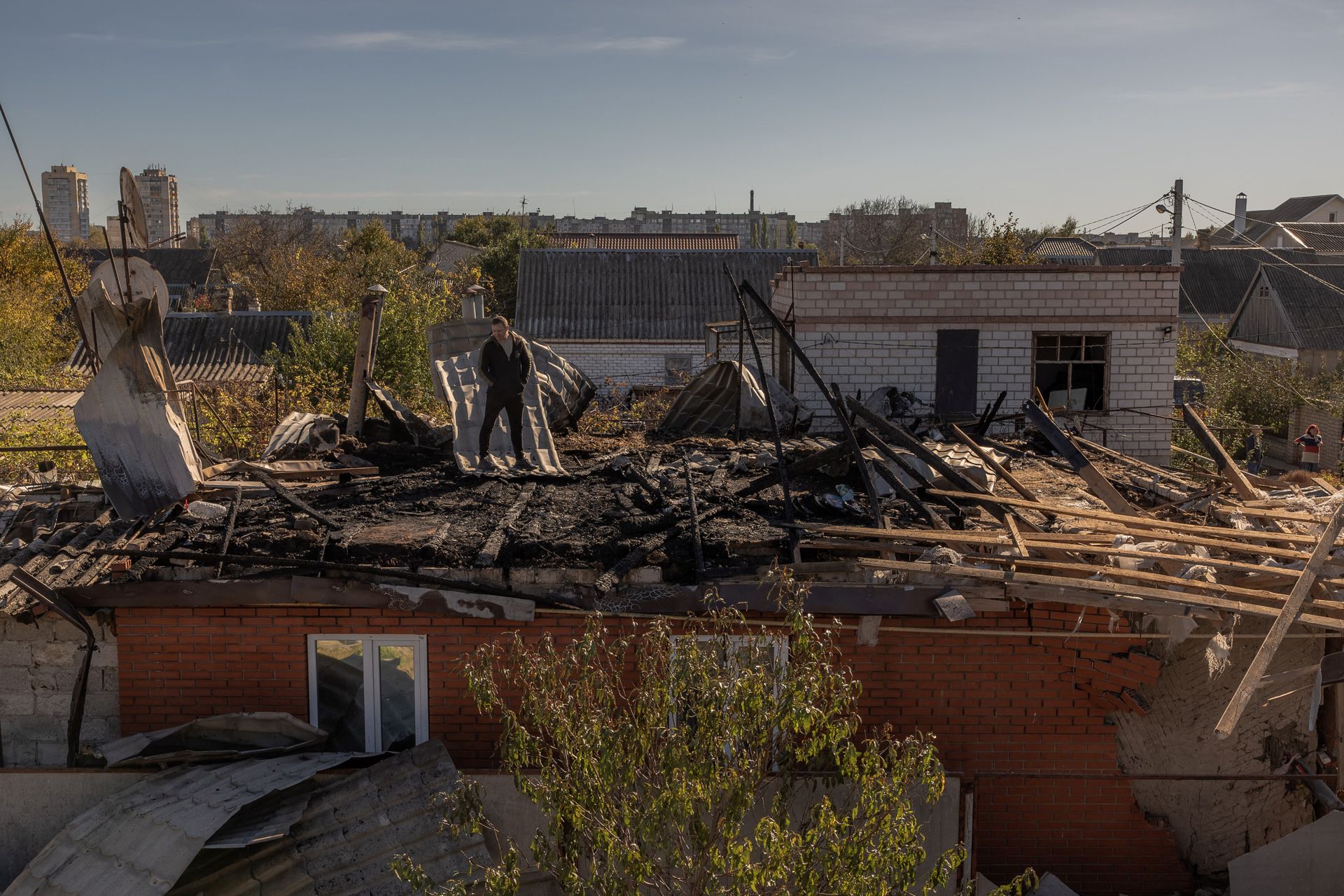
A man stands on the roof of a house damaged during an overnight Russian attack in Kherson, Ukraine, on October 30, 2023. (Roman Pilipey / AFP via Getty Images)Some names have been changed to protect the identities of those featured in the storyAs a war crimes researcher at the Reckoning Project, my job was to listen to Ukrainians who had fled the occupation. What they had to say reshaped how I understand life in Russian-occupied territories.Simplistic outside judgments about people living under occupation often feel deeply unfair to Ukrainians who escaped it. From a safe distance, it is easy to say, "Why didn't they stay and resist?" or "Why didn't they leave earlier? That must mean they are pro-Russian." But neither one of these options is easy or safe.Ihor Serdiuk, a 60-something educational worker from occupied Kherson Oblast, refused to switch the college he directed to the Russian curriculum. For that, he spent two weeks in prison.In the same facility, there was a young man brutally beaten by occupation forces for throwing a grenade at military personnel, though no one was injured, and a woman who had refused to give a haircut to a Russian soldier. Serdiuk was released only after agreeing to apply for Russian citizenship, which he did, and immediately fled abroad."If you disagree with them (Russian forces), you'll simply die in prison — that's it… Either you leave, or you'll rot here, or they'll make sure you rot here. Because you can't live like this for long," Serdiuk says when asked if he had a real choice whether to stay or to leave.Staying often means either openly supporting the occupation authorities or giving up your freedom of speech and expression to increase your chances of survival."You mimic the majority because you never know what might trigger an unwanted reaction — when all you're trying to do is live normally, to exist," says Vadym from Crimea, who was 13 when Russia annexed the peninsula."My inability to remain silent and my clear position could lead to problems for me personally, for my wife, and for my relatives."For those who are trying to escape occupation, the journey out is long, complicated, and often dangerous.Since late 2022, the only viable route has been through Russia. A ticket with a private carrier can cost several hundred dollars, and volunteer evacuation capacity is limited. Travelers pass through multiple checkpoints where Russian forces search, interrogate, and sometimes detain people on fabricated charges.Crossing from occupied Kherson Oblast to Crimea, Serdiuk recalls 500–800 people standing for hours in the heat waiting for inspection by border officers. The only relief was a nearby bucket of water."Right in front of your eyes, they turn someone's suitcase inside out and kick it with their feet. Younger men are taken away — where to, nobody knows. Sometimes soldiers simply come and take people," he says.Those who make it out and find safety must now deal with the trauma of occupation and start over from nothing.
Ukrainians under occupation don't have a real choice whether to stay or to leave
Some names have been changed to protect the identities of those featured in the story As a war crimes researcher at the Reckoning Project, my job was to listen to Ukrainians who had fled the occupation. What they had to say reshaped how I understand life in Russian-occupied territories. Simplistic outside judgments about people living under occupation often feel deeply unfair to Ukrainians who escaped it. From a safe distance, it is easy to say, "Why didn't they stay and resist?" or "Why didn'
1,002 words~5 min read