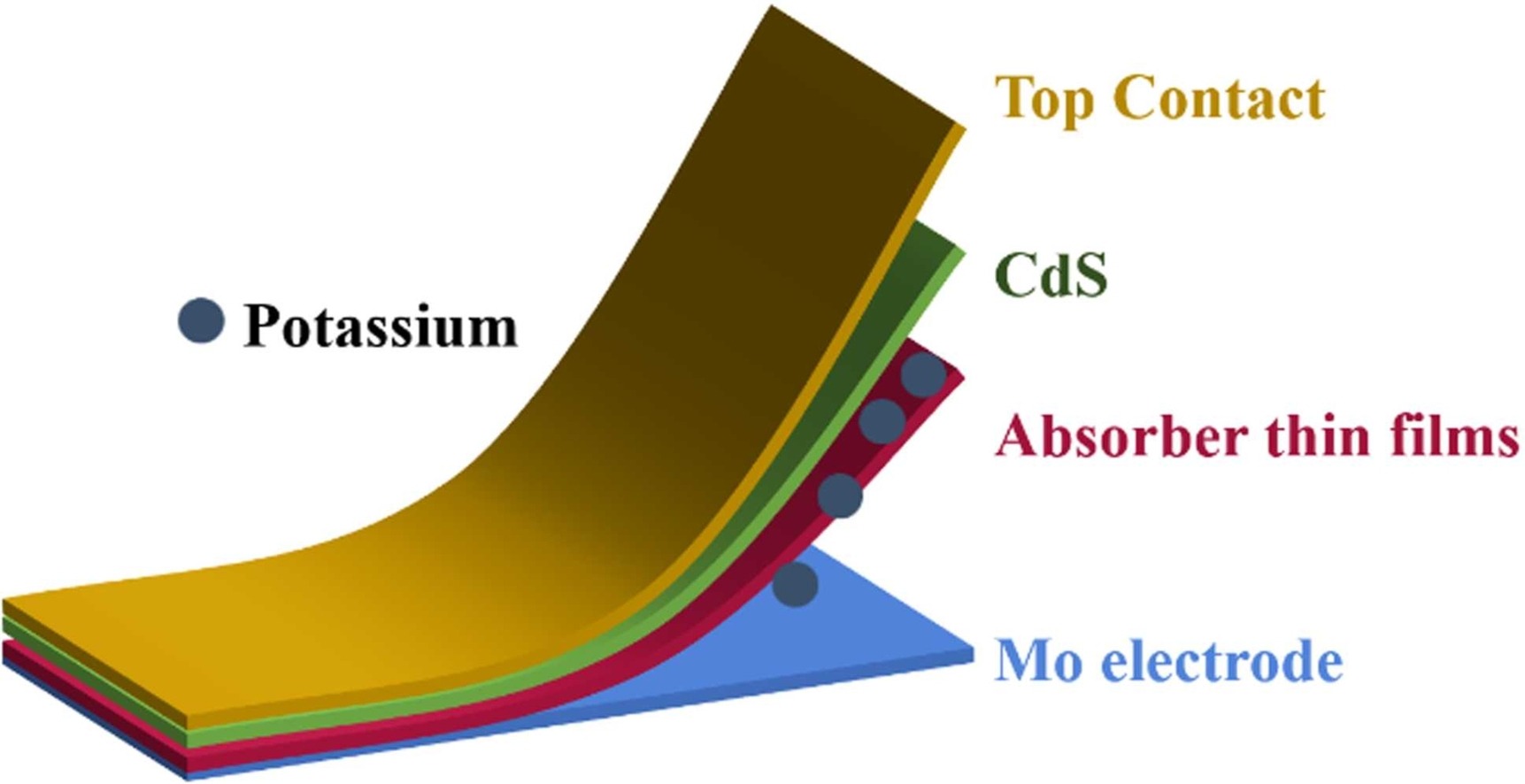
A Chinese team improved kesterite solar cell efficiency using potassium fluoride (KF) treatment to optimize absorber quality and interface properties. The best device reached 8.04% efficiency, with gains driven by reduced interface defects and improved carrier management.
A research group from China’s Shandong Police College has developed a novel soft chemical treatment to improve the efficiency of kesterite-structured copper–zinc–tin selenide (CZTSe) solar cells.
“At present, the mechanism of alkali metal treatment of kesterite solar cells still needs to be further studied,” the researchers explained. “Sodium (Na) or potassium (K) treatment can significantly boost the performance of thin-film solar cells. Alkali metal treatment can passivate the absorber surface, reduce grain-boundary defects, optimize crystal quality, and increase carrier concentration. The process of alkali metal treatment of the solar cell absorber layer also has a very important impact on the solar-cell device.”
With the proposed method, the absorber layer was prepared using a potassium fluoride (KF) solution.
The team fabricated the CZTSe solar cells on soda-lime glass (SLG) substrates coated with a molybdenum (Mo) back contact. Metallic copper (Cu), zinc (Zn), and tin (Sn) precursor layers were deposited via magnetron sputtering and adjusted to a copper-poor, zinc-rich composition. The precursors were then immersed in KF solutions at concentrations of 0, 3, 6, or 9 mmol/L for 20 minutes, followed by drying at 80 C for 20 minutes.