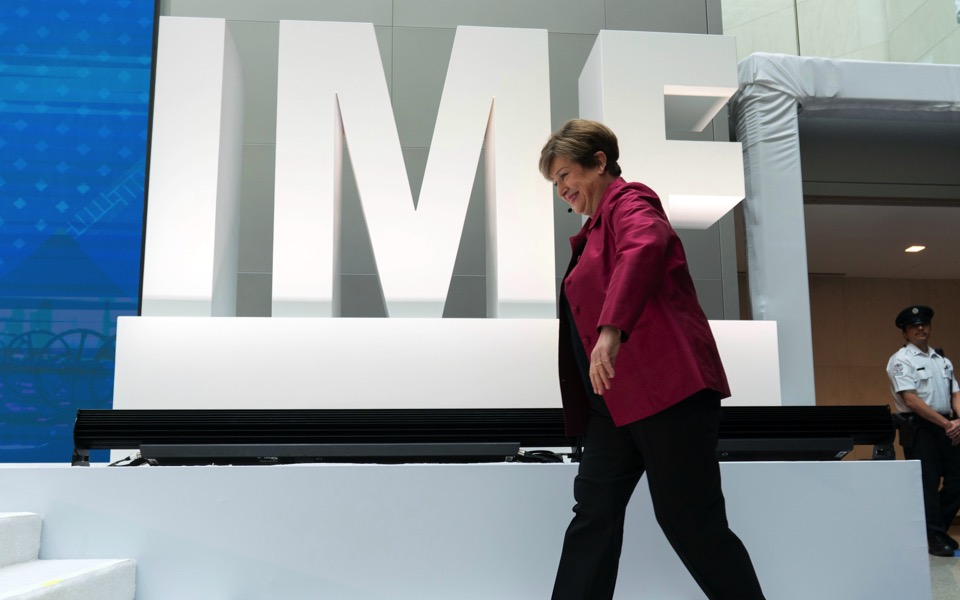
The International Monetary Fund has published an assessment of the Greek banking sector as part of its annual country report for the first time since 2006. In this report, the Fund analyzes three serious vulnerabilities in the system: the quality of its capital, the quality of its credit expansion and the management of private debt, which is an issue that has escalated into a major public grievance.
On this last matter, the IMF reminds us of a fact that we tend to forget: that while banks may have cleared their balance sheets of nonperforming loans, the economy most certainly has not. It continues to be burdened by a mountain of 2.9 million loans with an initial value of €72.6 billion, which are keeping 2.4 million borrowers hostage in a state of limbo.
In the meantime, the foreign investors who control the loan servicers – having funneled billions in tax-free profits abroad thanks to preferential regulations under Greece’s bailout agreements – are underinvesting in personnel and systems. Consequently, they are exacerbating the problem, along with the looming fiscal risks that come with it.
As for credit expansion, the Fund points out that Greece’s four systemic banks have a high loan exposure to the exact same clients. Their 10 largest shared corporate exposures account for 81% of their Tier 1 capital. Aside from echoing the half-joking cliche that the banking system only lends to those who don’t need it, this concentration conceals significant risks: If one or more large conglomerates face financial trouble, the risk will instantly infect the entire banking system.