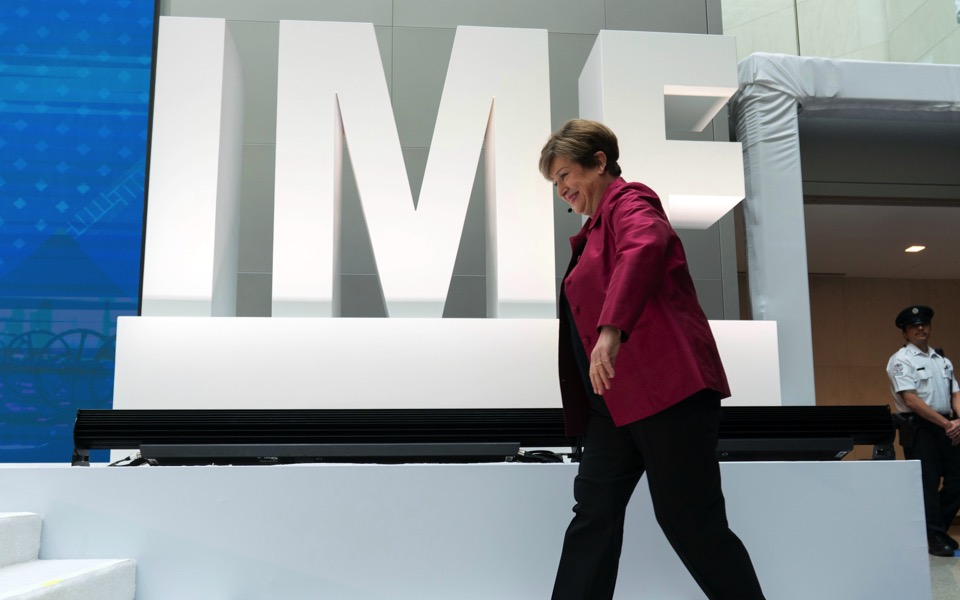
Greece has weathered the economic shock caused by the war in the Middle East with “strengthened fiscal sustainability and financial stability,” the International Monetary Fund said following its Article IV consultation with the country.
In its concluding statement published on Wednesday, the IMF said strong investment activity and structural reforms linked to the European Union’s Next Generation EU recovery framework were helping support growth despite the impact of higher energy prices and weaker external demand stemming from the conflict.
The IMF projected Greece’s economy would grow by 1.8% in 2026, supported by increased public investment and measures aimed at boosting household income. Recent reforms targeting tax evasion have broadened the tax base and reduced informality, creating fiscal space for support measures while also accelerating public debt reduction, the report said.
The Fund’s projection tallies with that of the European Commission, which forecasts Greece’s GDP growth at 1.8% in 2026 and 1.6% in 2027, down from 2.1% in 2025, as higher energy costs reduce households’ real disposable income and dampen private consumption.
The IMF added that the 2026 Financial Sector Assessment Program – the first conducted for Greece since 2006 – found systemic risks in the country’s financial sector had remained manageable despite the war.