Fiscal cracks are beginning to appear in the Greek economy, with the burden of the energy crisis increasing with each month that the war in the Middle East drags on. While there is no risk of derailment from fiscal targets so far, the risks are intensifying, with the economy’s defenses and households’ resilience gradually being limited.
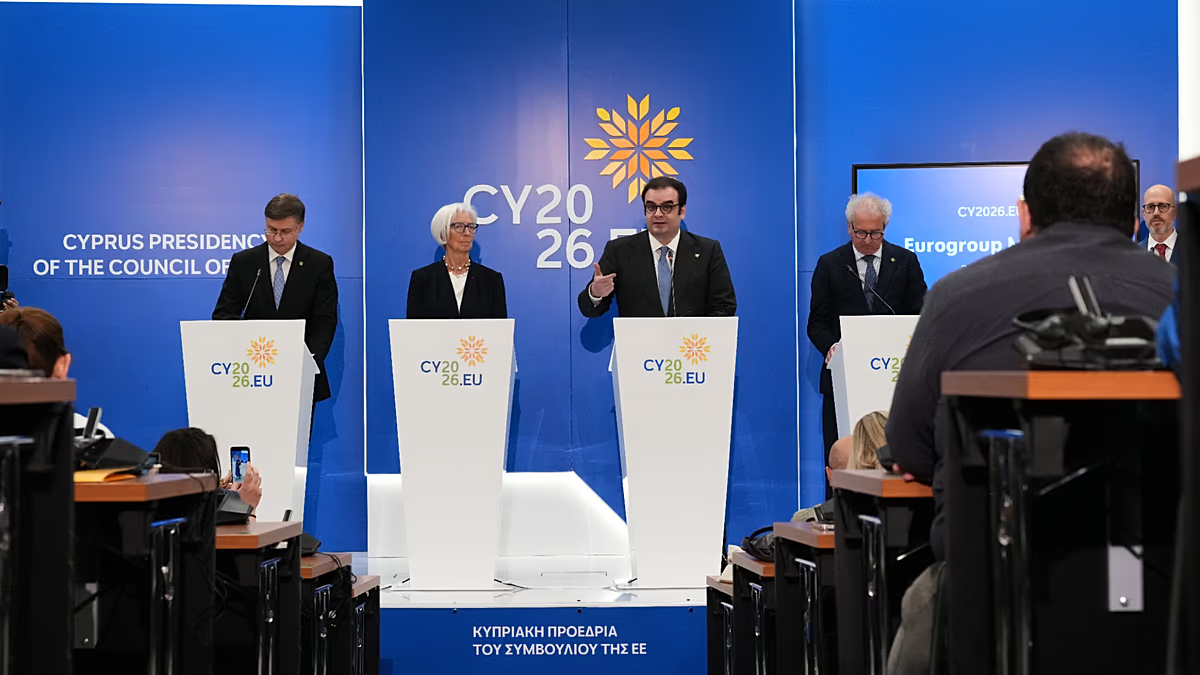
“If the Straits of Hormuz do not open in June, June will be worse than May and July will be worse than June” for the eurozone, said Greek Finance Minister and Eurogroup President Kyriakos Pierrakakis, arriving at a meeting of eurozone finance ministers in Nicosia on Friday.
In its spring forecasts published this week, the European Commission revised downwards its estimates for this year’s Greek growth to 1.8%, and upwards its inflation estimates, to 3.7%. A further revision cannot be ruled out.
“If there is a revision, it would be upwards for inflation, depending on the course of energy prices, developments in the Strait of Hormuz and the ability of the EU to replenish its oil and gas reserves. The duration of the crisis will of course also be a determining factor,” Alpha Bank chief economist Panagiotis Kapopoulos said.