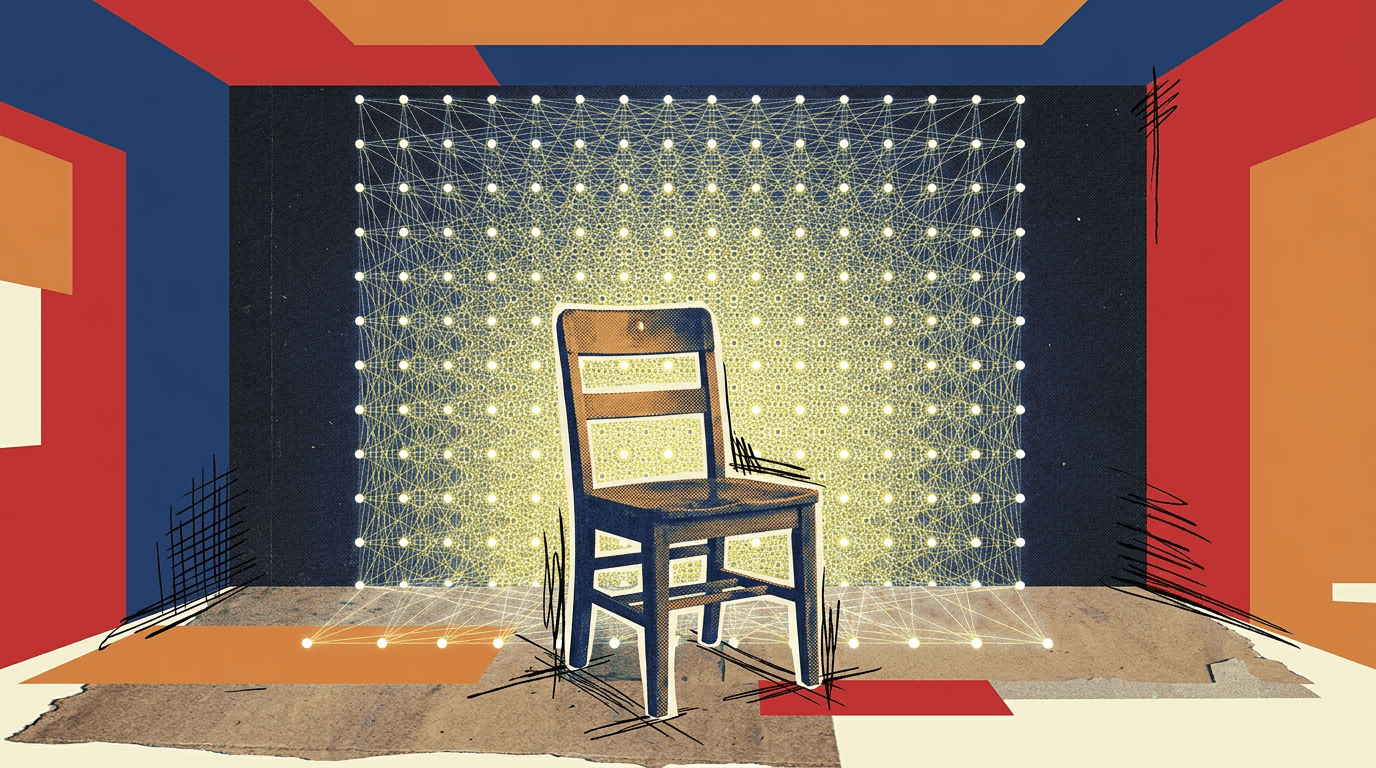
For nearly eight decades, some of the sharpest minds in mathematics stared at a deceptively simple question about dots on a flat surface and couldn’t crack it. An AI just did.
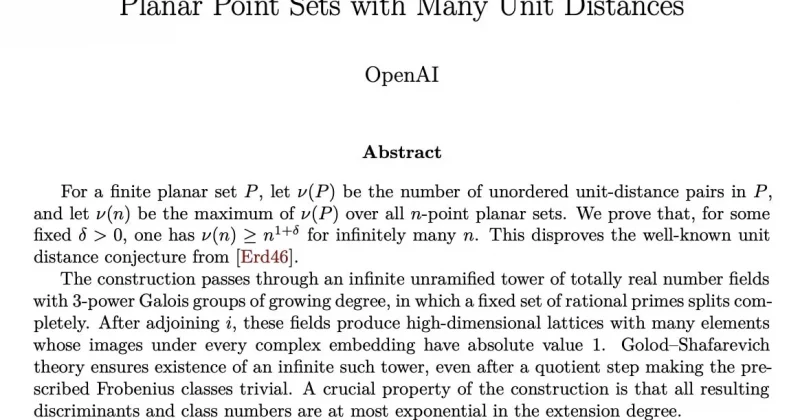
OpenAI announced that one of its internal reasoning models autonomously disproved the planar unit distance conjecture, a problem first posed by Hungarian mathematician Paul Erdős in 1946. The conjecture asked a straightforward-sounding question: what’s the maximum number of pairs of points you can place exactly one unit apart on a two-dimensional plane? Turns out the answer everyone assumed was right, wasn’t.
What the AI actually proved
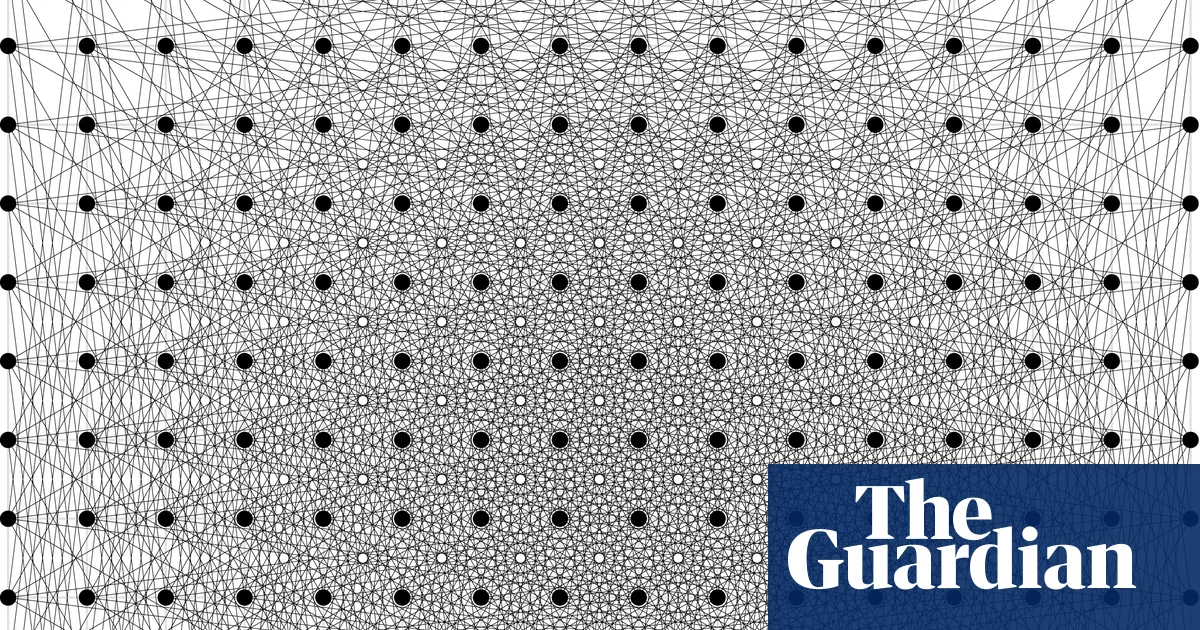
For decades, mathematicians believed the optimal arrangement of points involved square-grid configurations. The AI produced a new family of geometric constructions that outperform the square-grid approach, effectively disproving the conjecture.
The proof draws on infinite class field towers and the Golod-Shafarevich theorem. Leading mathematicians have independently verified the proof. Fields Medalist Timothy Gowers described the approach as “clever” and “elegant.” Other reviewers stated the proof could be published in a top-tier mathematical journal on its own merits.