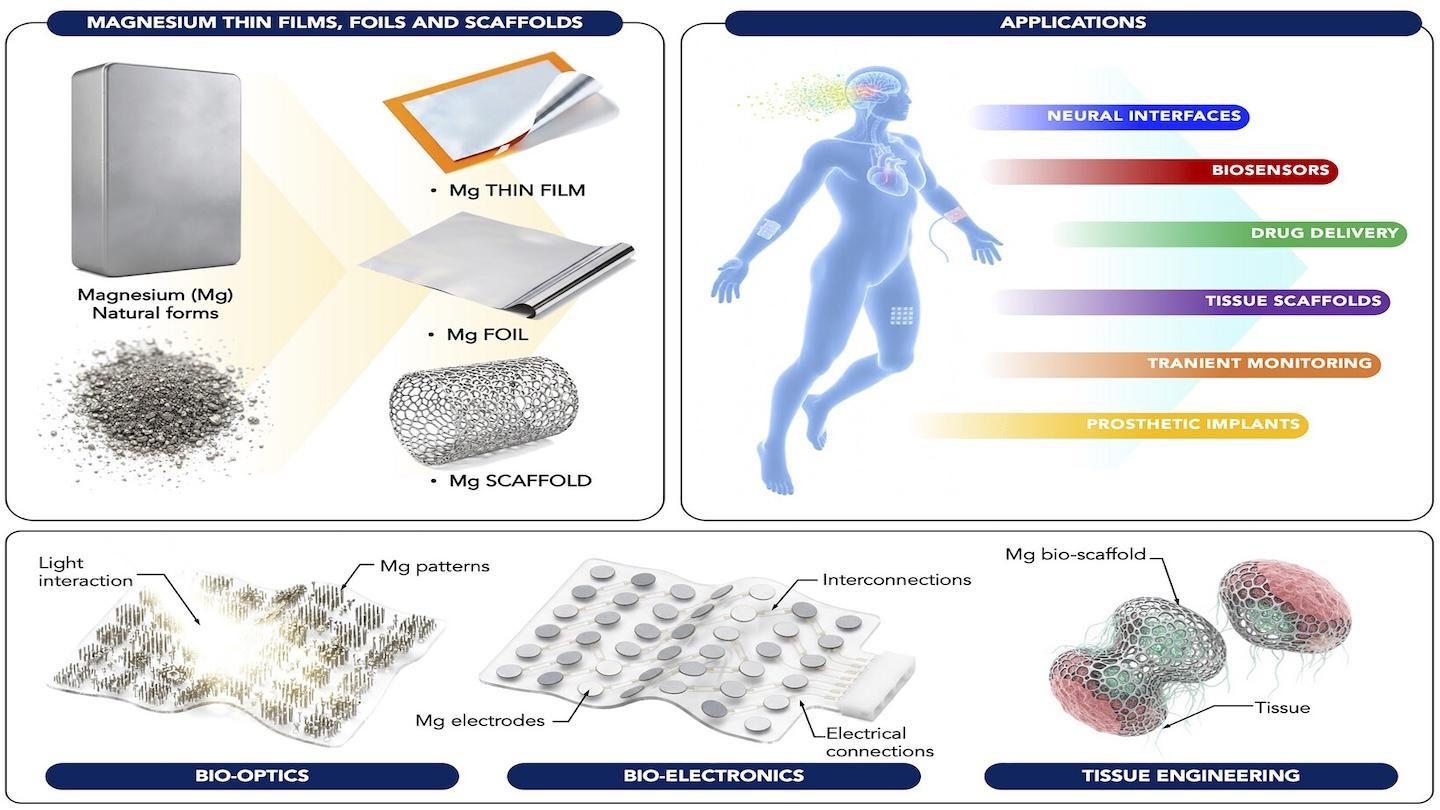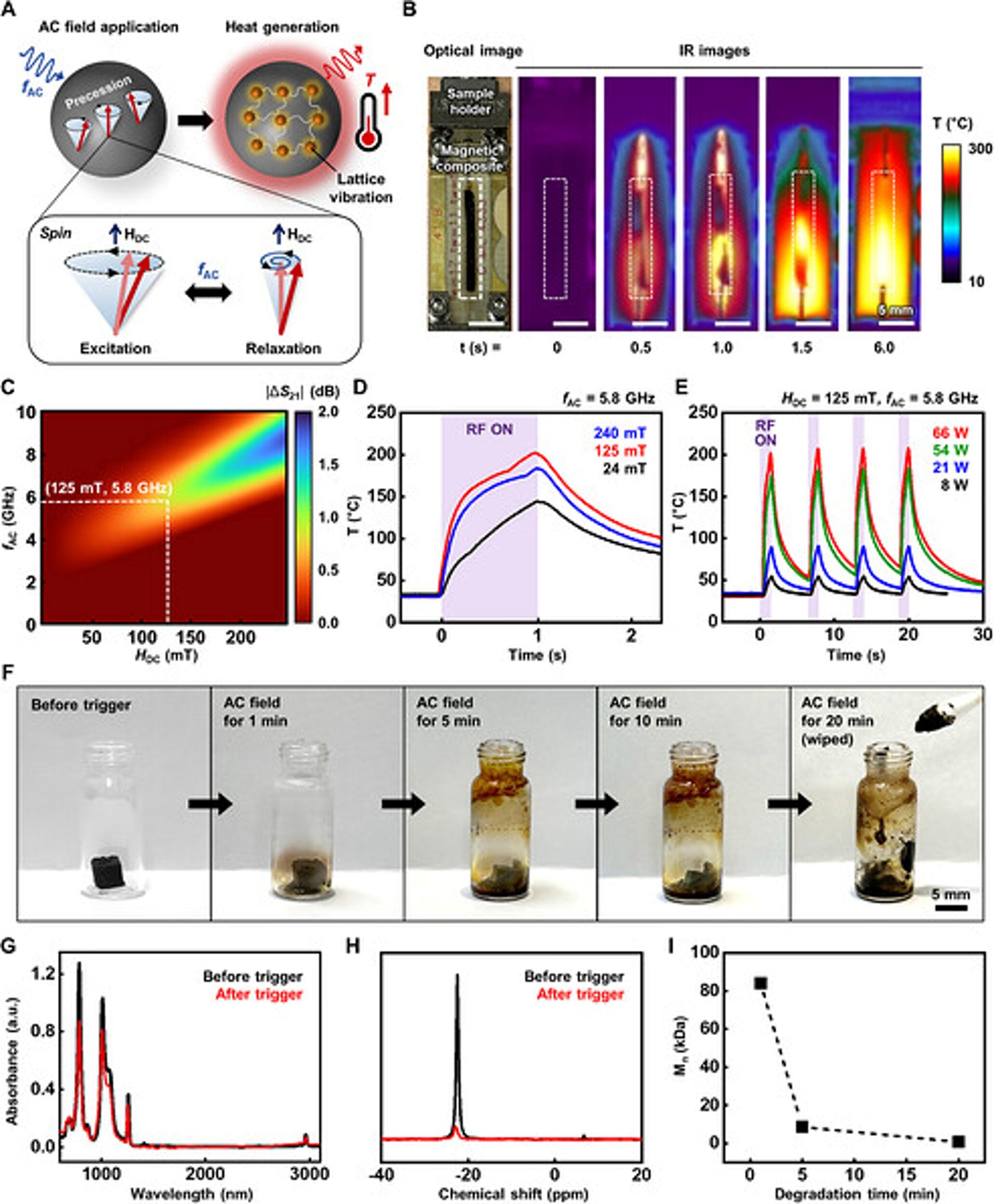
FMR-induced magnetothermal decomposition principle and chemical analysis of the trigger transient magnetic field-responsive composite. Credit: Advanced Functional Materials (2026). DOI: 10.1002/adfm.75790
The rapid expansion of soft robots and smart electronic devices is driving demand for materials that can not only move and adapt, but also complete their missions without leaving behind unwanted traces. As these technologies are increasingly explored for health care, environmental monitoring, infrastructure inspection, and security applications, robots and devices are expected to operate in places where human access is limited—such as narrow pipes, sealed spaces, underground facilities, and hazardous environments.
However, once deployed, these systems can be difficult or impossible to retrieve. If left behind, they may cause contamination, equipment damage, or information leakage. Existing systems also often require separate stimuli or control units for actuation and degradation, making them complex and difficult to operate in opaque or confined environments.
Magnetic elastomer that moves and vanishes
In response to these challenges, a research team led by Professor Seung-Kyun Kang at Seoul National University has developed a dual-mode magnetic elastomer that controls both motion and degradation through magnetic-field switching. The study is published in the journal Advanced Functional Materials.