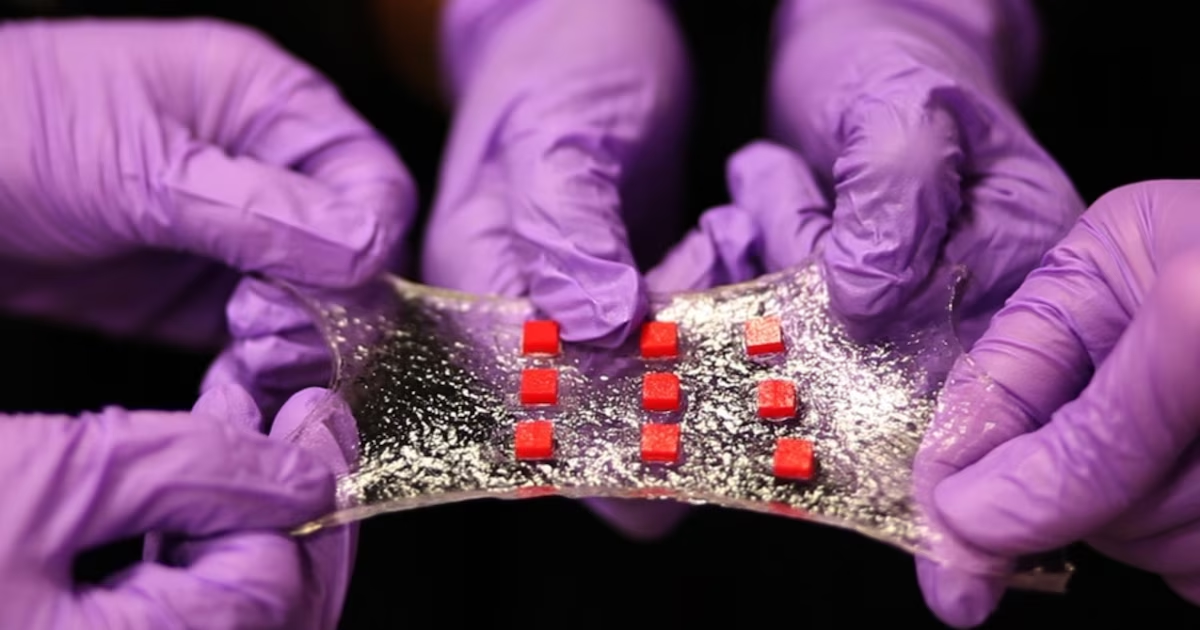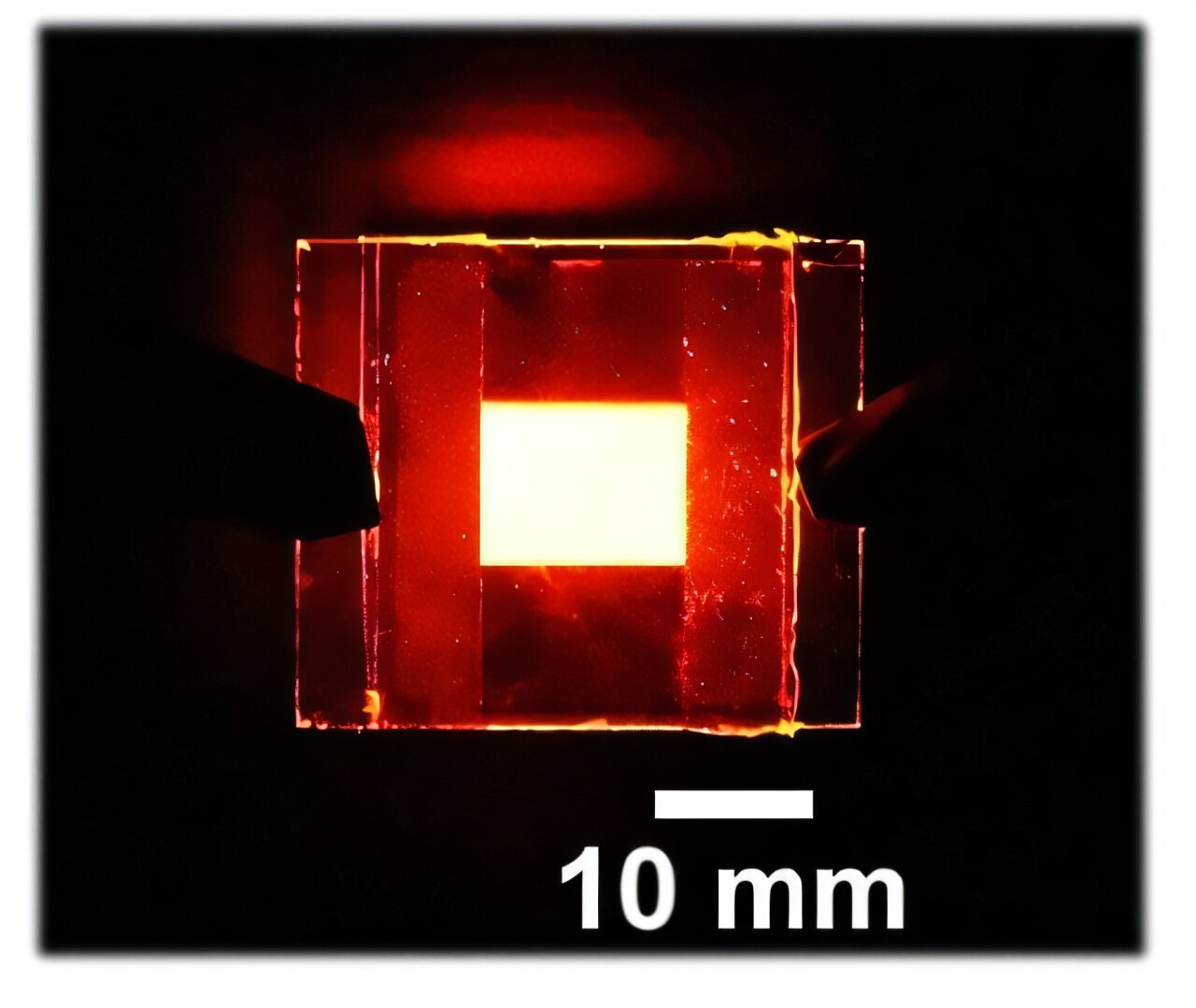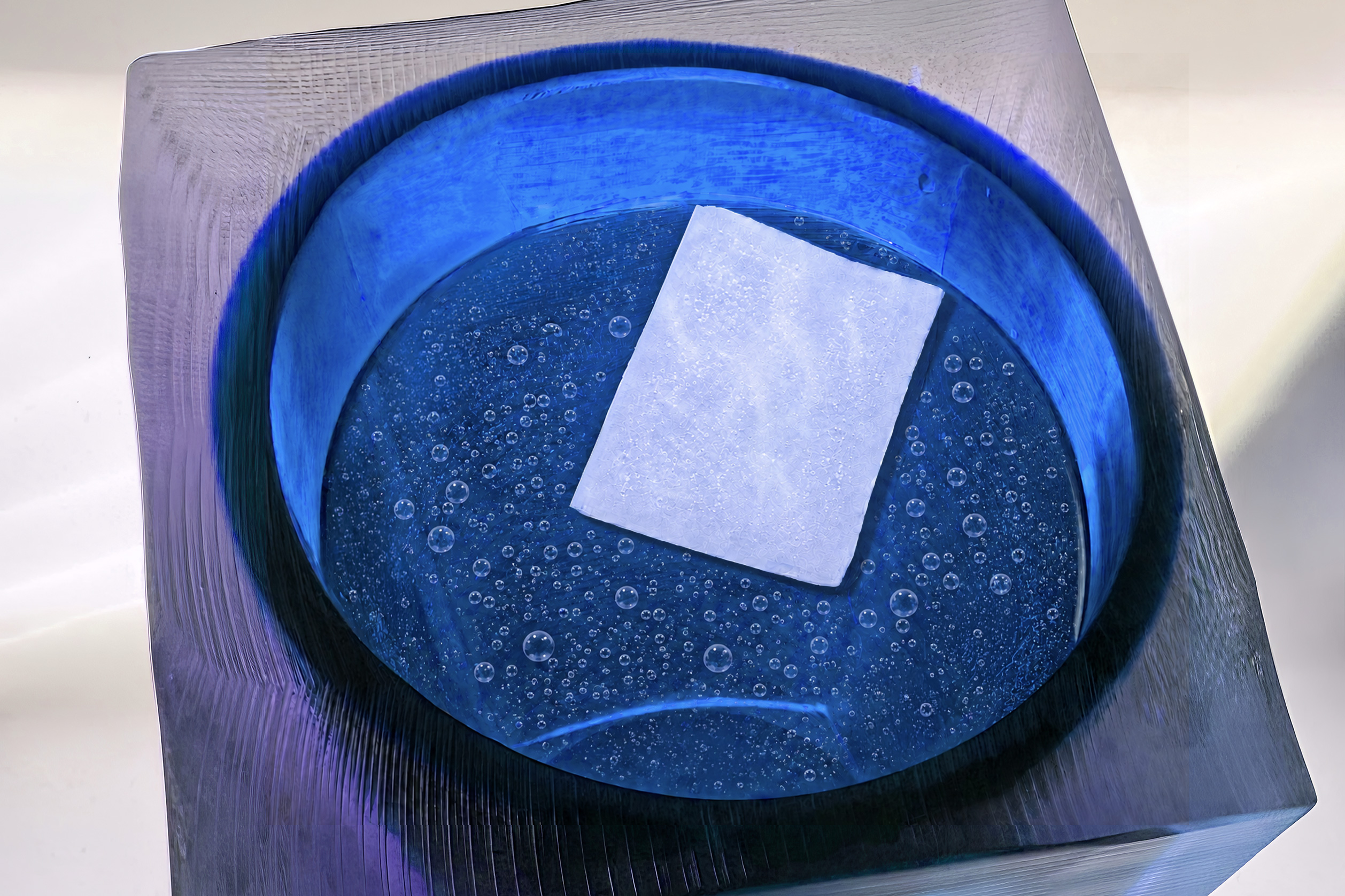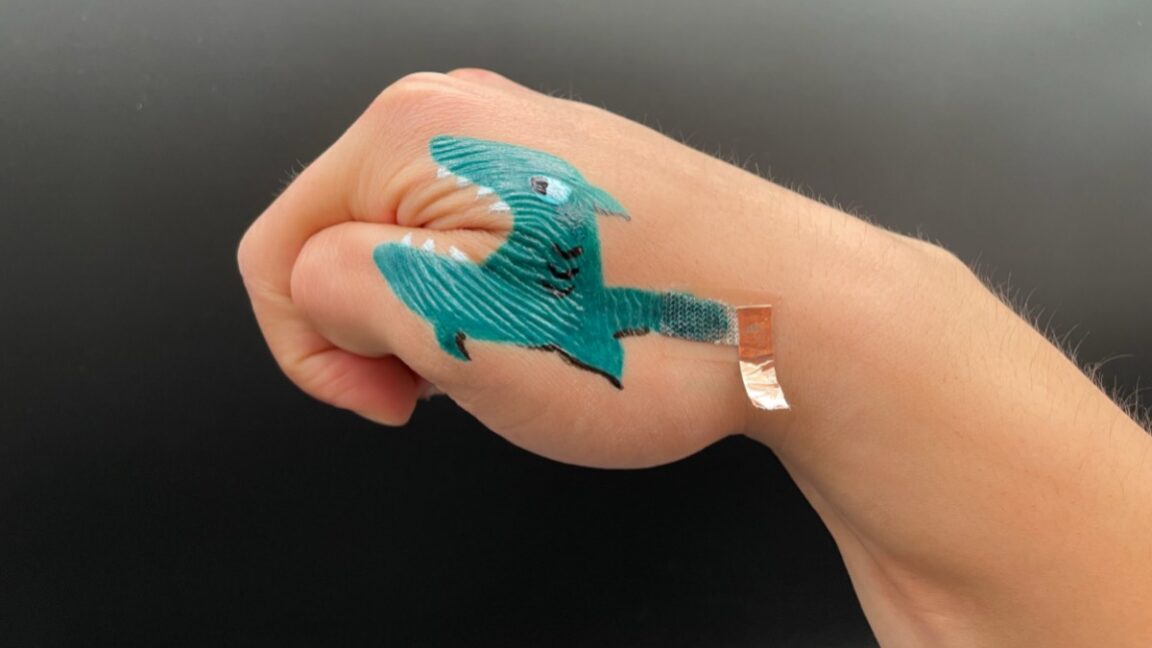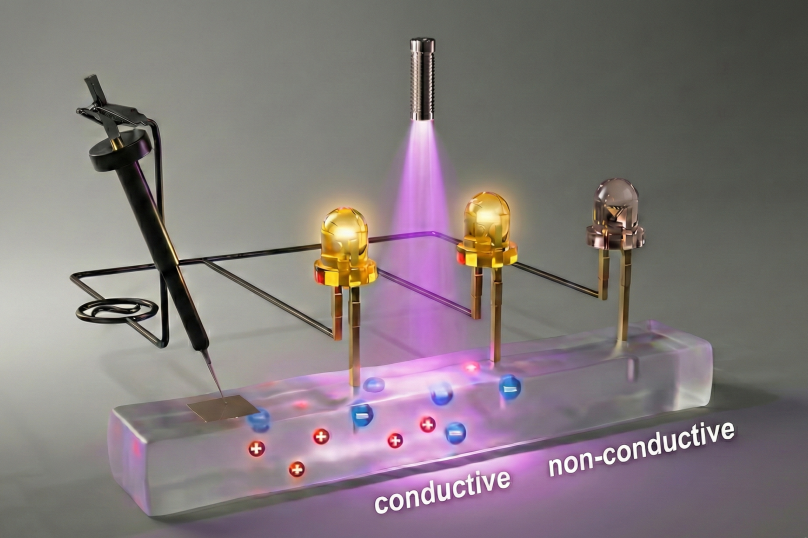
MIT engineers and colleagues have developed a soft, flexible gel that dramatically changes its conductivity upon the application of light. This figure shows a soft, stretchable circuit created with a rectangular bar of the gel. A copper electrode is attached to the left. A stylus and associated metal network connects the electrode to three “stations” on the bar. Light has been shone on the first two stations, creating conductivity that turns on each station’s lightbulb. Because the third station has not been exposed to light it is nonconductive and the bulb is off. Credits: Image courtesy of the Wallin lab.
Consider the chief difference between living systems and electronics: The first is generally soft and squishy, while the latter is hard and rigid. Now, in work that could impact human-machine interfaces, biocompatible devices, soft robotics, and more, MIT engineers and colleagues have developed a soft, flexible gel that dramatically changes its conductivity upon the application of light.
Enter the growing field of ionotronics, which involves transferring data through ions, or charged molecules. Electronics does the same, with electrons. But while the latter is well established, ionotronics is still being developed, with one huge exception: living systems. The cells in our bodies communicate with a variety of ions, from potassium to sodium.