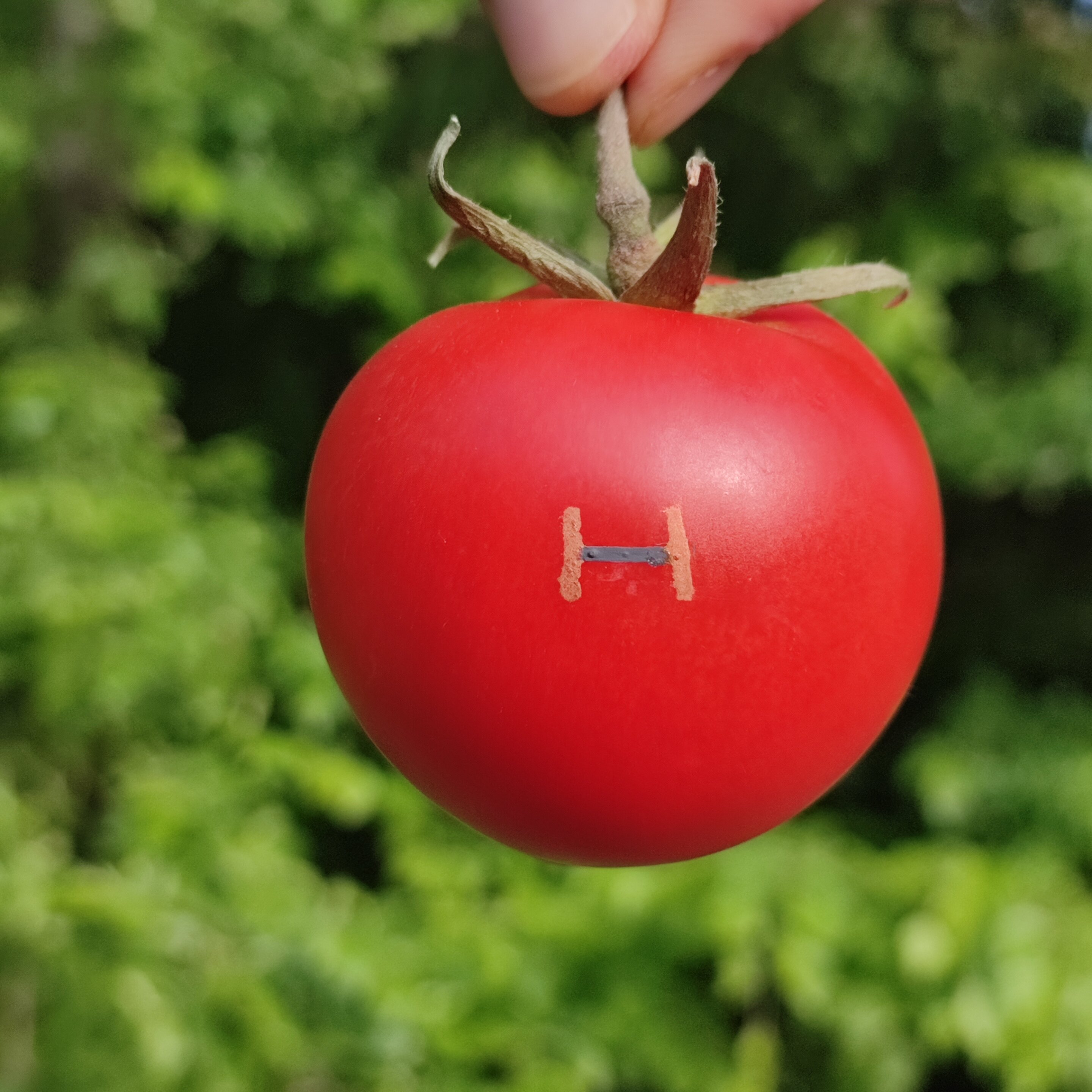
Biodegradable magnetic field sensor printed on a tomato—an example of sustainable bioelectronics. Credit: Lin Guo
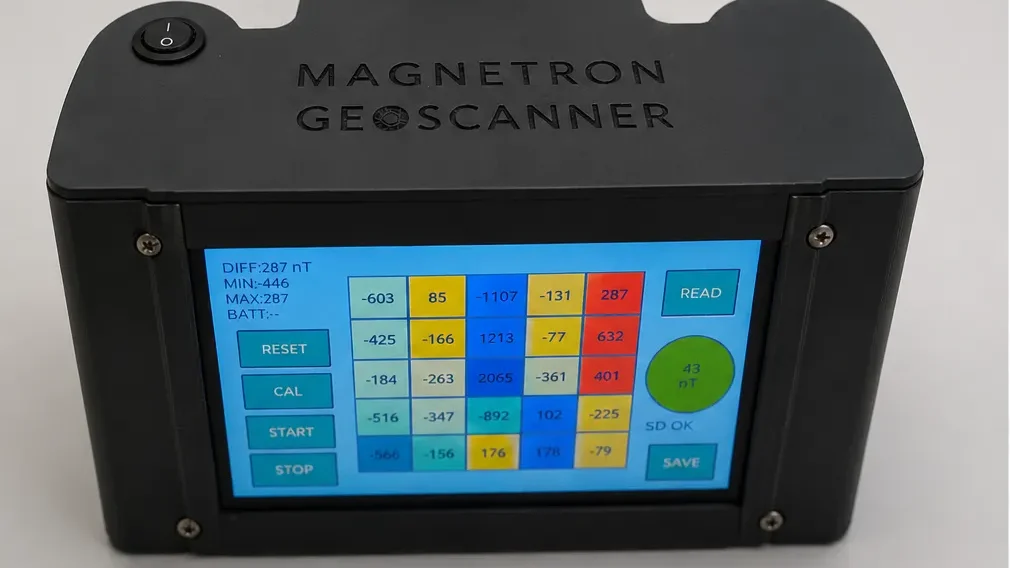
Today, magnetic field sensors are one of the invisible mass-produced products in the electronics industry. They measure movement, positions or distances and can be found in window contacts, steering wheels, hard disks, packaging and cell phones. Billions of these components are manufactured every year.
"Many of these sensors contain materials like nickel or cobalt," says Dr. Denys Makarov, head of the Intelligent Materials and Systems Department at the Institute of Ion Beam Physics and Materials Research at HZDR. "These are materials that can harm the environment and health when not properly disposed." At the same time, producing them often requires energy-intensive processes and complex manufacturing steps.
The development of sustainable sensors is a technical challenge. While iron is easily available and biocompatible, on its own, it does not achieve the sensitivity required for many of today's magnetic field sensors. The research team therefore combined iron with iron oxide and developed special core-shell particles in which the iron core is surrounded by a thin layer of oxide. The research is published in the journal Nature Communications.