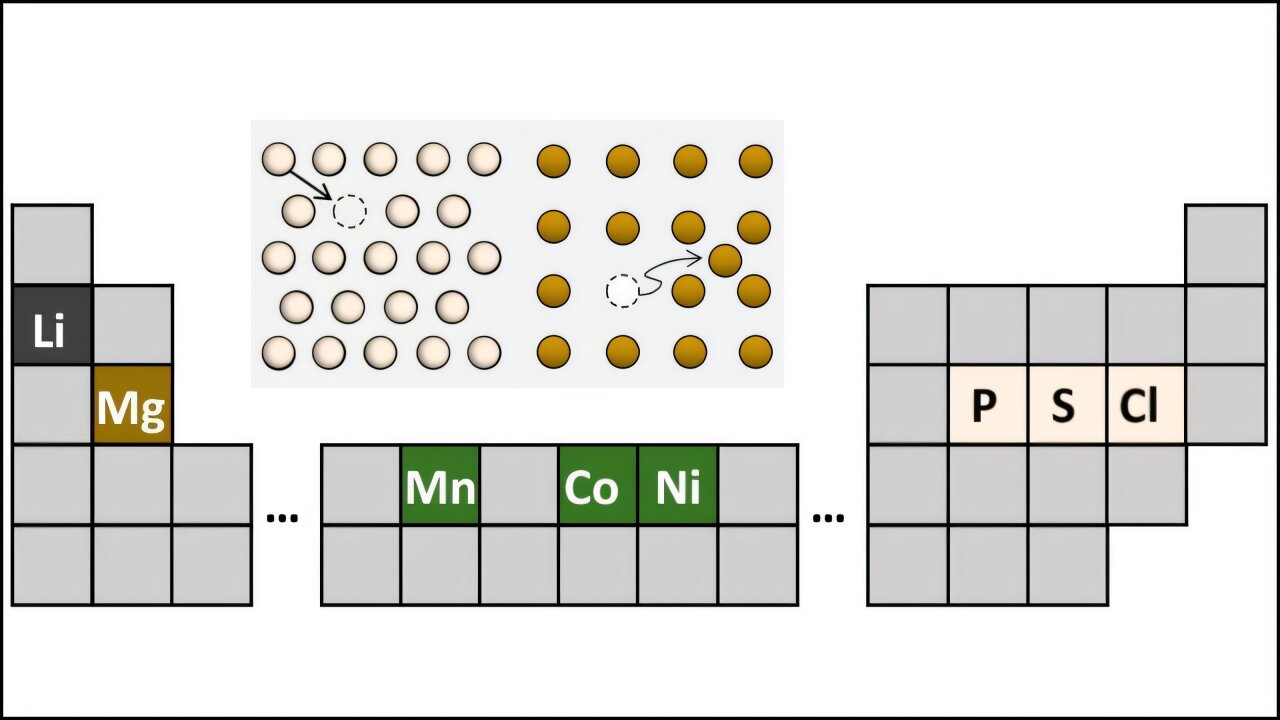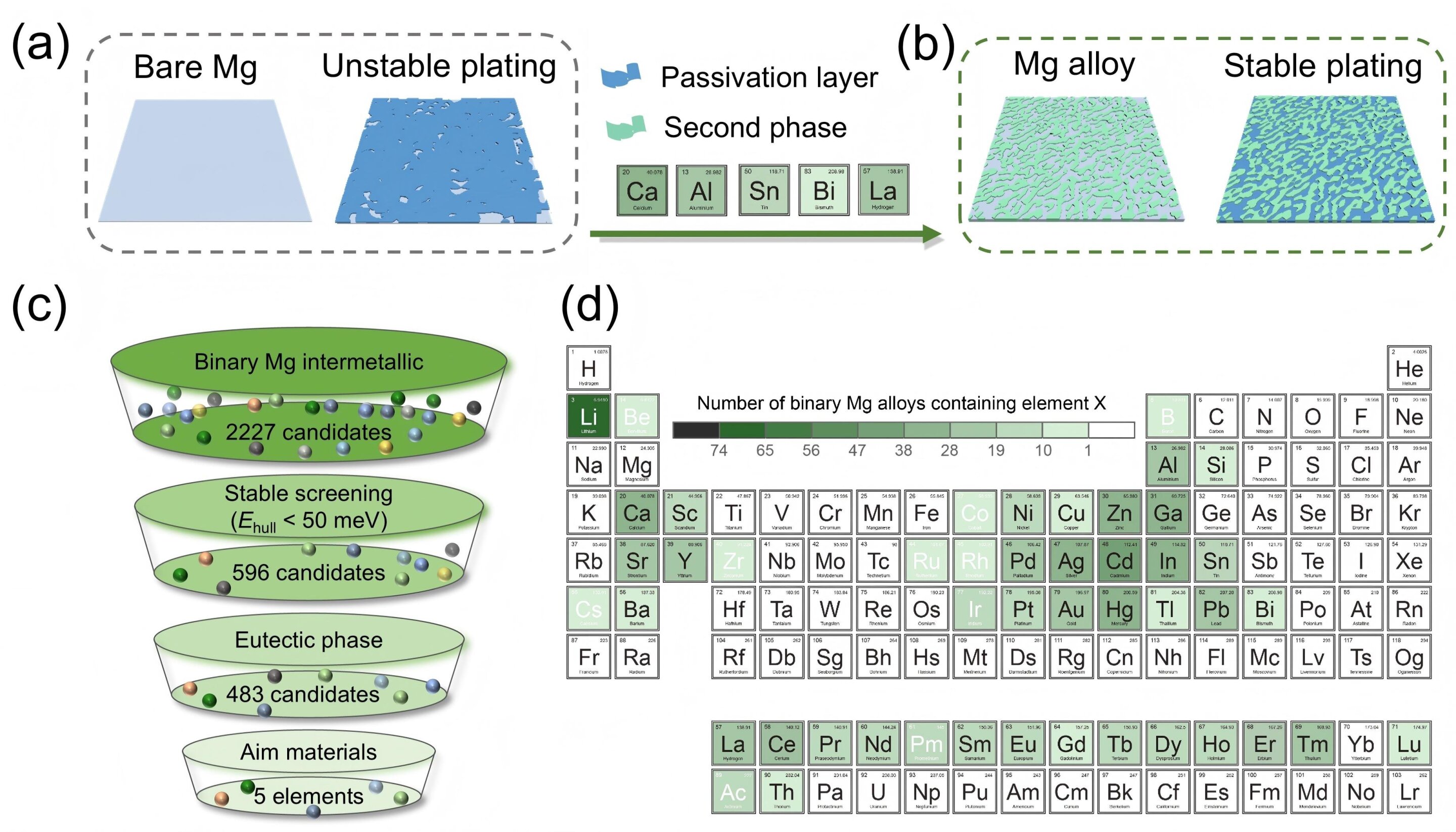
High-throughput analysis. Schematic illustration of the plating/stripping behavior of bare Mg (a) and Mg alloys (b). (c) Workflow for high-throughput screening of Mg binary compounds. (d) Number of Mg binary compounds formed with element X in the Materials Project database. Green boxes indicate systems with larger numbers of stable intermetallic phases, while white boxes indicate systems unable to form a stable second phase. Credit: ACS Energy Letters (2026). DOI: 10.1021/acsenergylett.6c00909
The modern world runs on invisible energy. Hidden inside smartphones, laptops, and electric vehicles, are batteries that quietly power everyday life. As society becomes increasingly dependent on portable and sustainable energy, the development of compact and reliable battery technology has become one of the most important technological challenges of our time.
Lithium-ion batteries currently dominate the battery industry, but alternatives that could offer improved safety, lower cost, and higher energy density are being actively explored. Solid-state magnesium batteries have long been considered a promising next-generation energy technology. However, instability inside these batteries remains a major obstacle to their development.