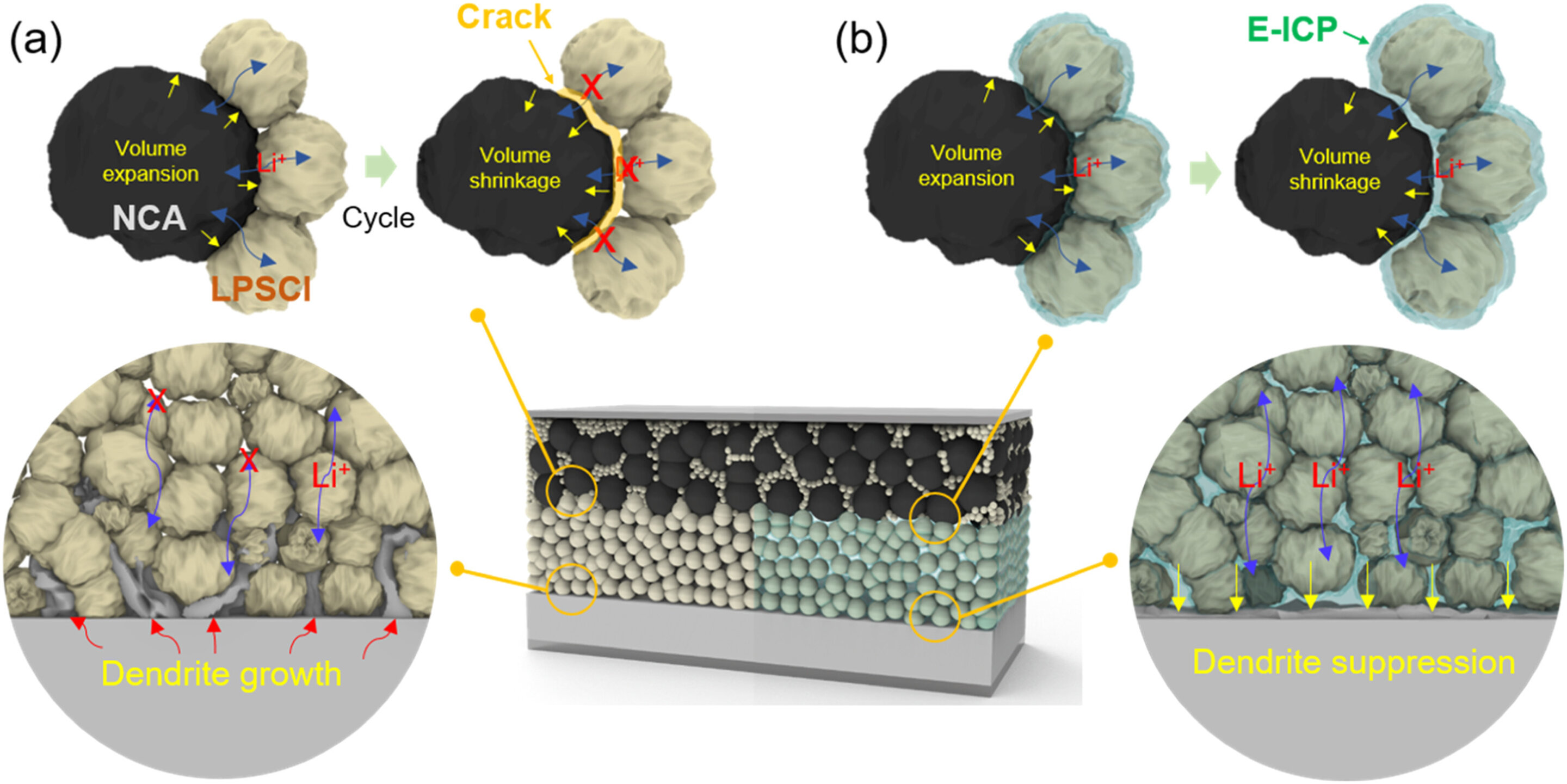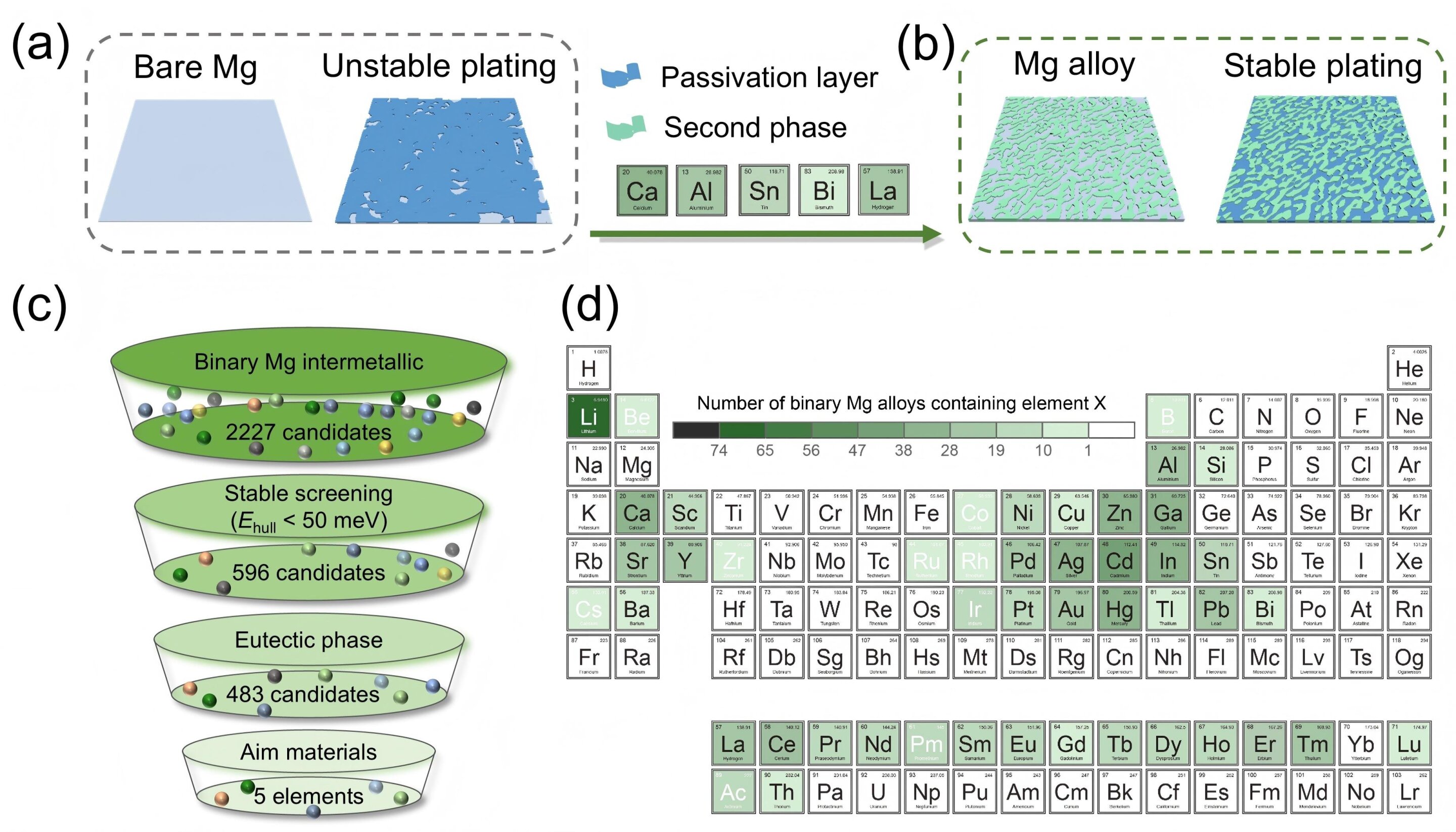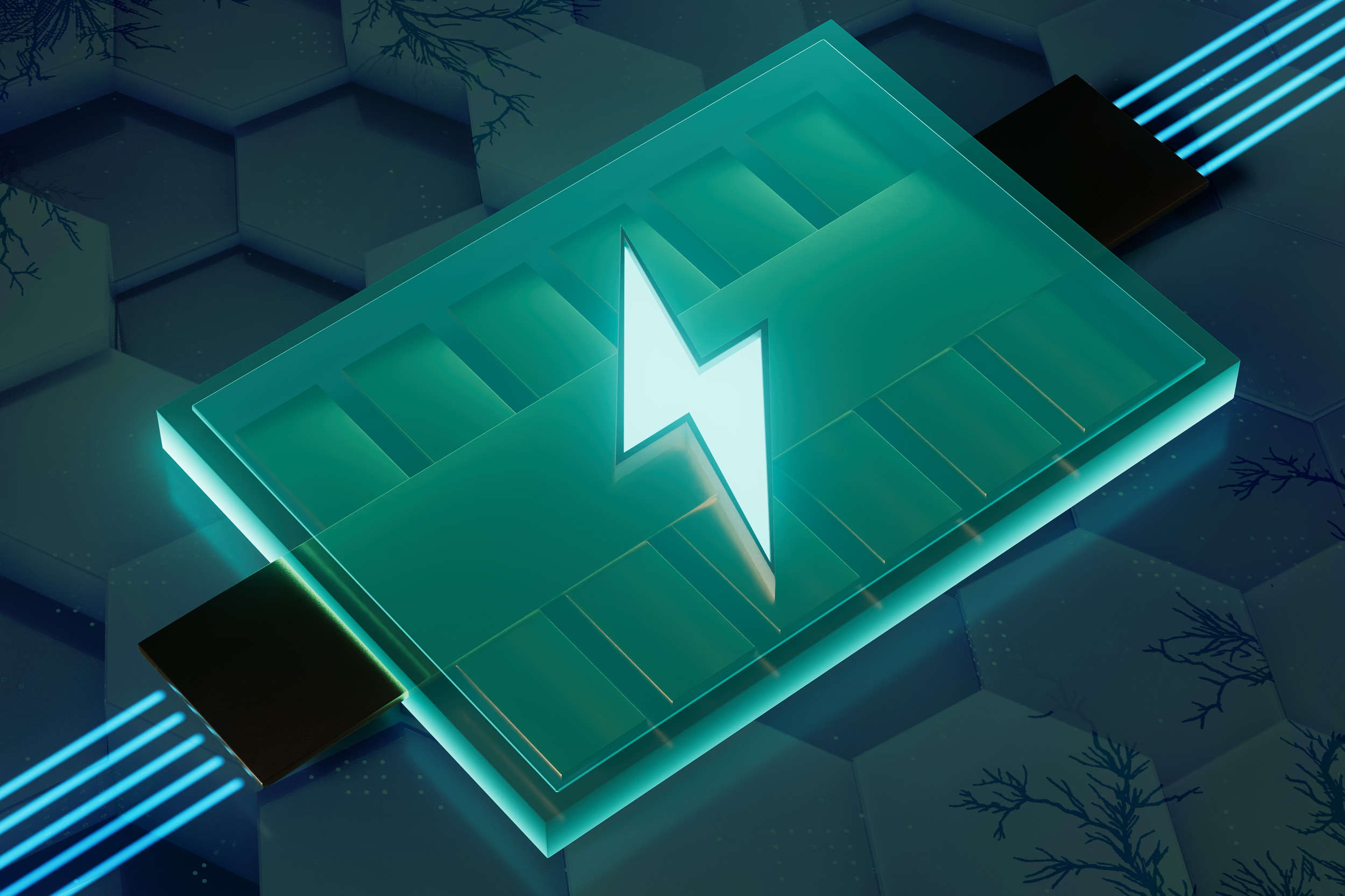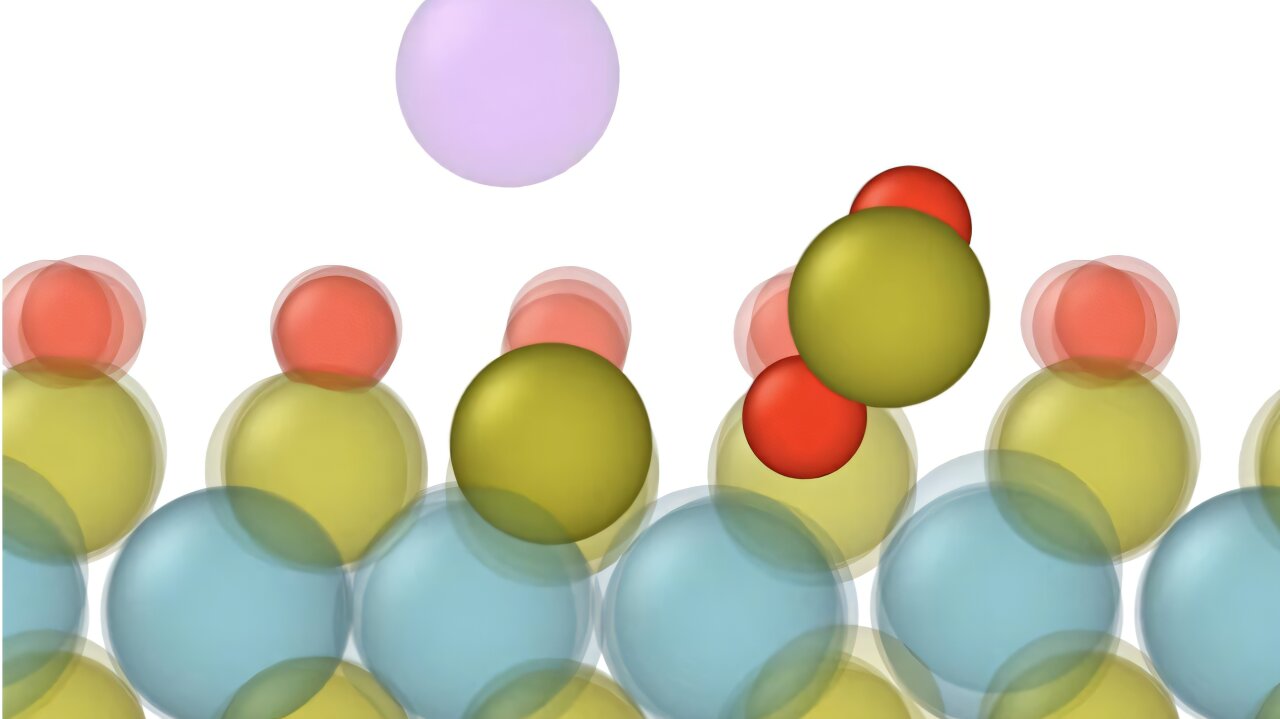
Computation and experiment were combined to find candidate protective coatings for sulfide-based solid electrolytes and uncover what makes those coatings work. Credit: Image by Argonne National Laboratory
The success of a promising class of next-generation batteries may hinge on something almost impossibly thin: a coating just a nanometer thick—roughly 100,000 times thinner than a human hair. In new research, scientists at the U.S. Department of Energy's (DOE) Argonne National Laboratory combined computation and experiment to find candidate protective coatings for sulfide-based solid electrolytes and uncover what makes those coatings work.
The results, published in Advanced Science, point to magnesium oxide as a particularly promising new coating and sets up a faster way to find others.
Solid-state batteries could store more energy and improve safety compared with today's lithium-ion batteries. But some of the most promising solid electrolytes, especially sulfide-based ones, are chemically fragile. They can react at key battery interfaces, especially where the electrolyte touches lithium metal. Those reactions can hurt performance and shorten battery life.
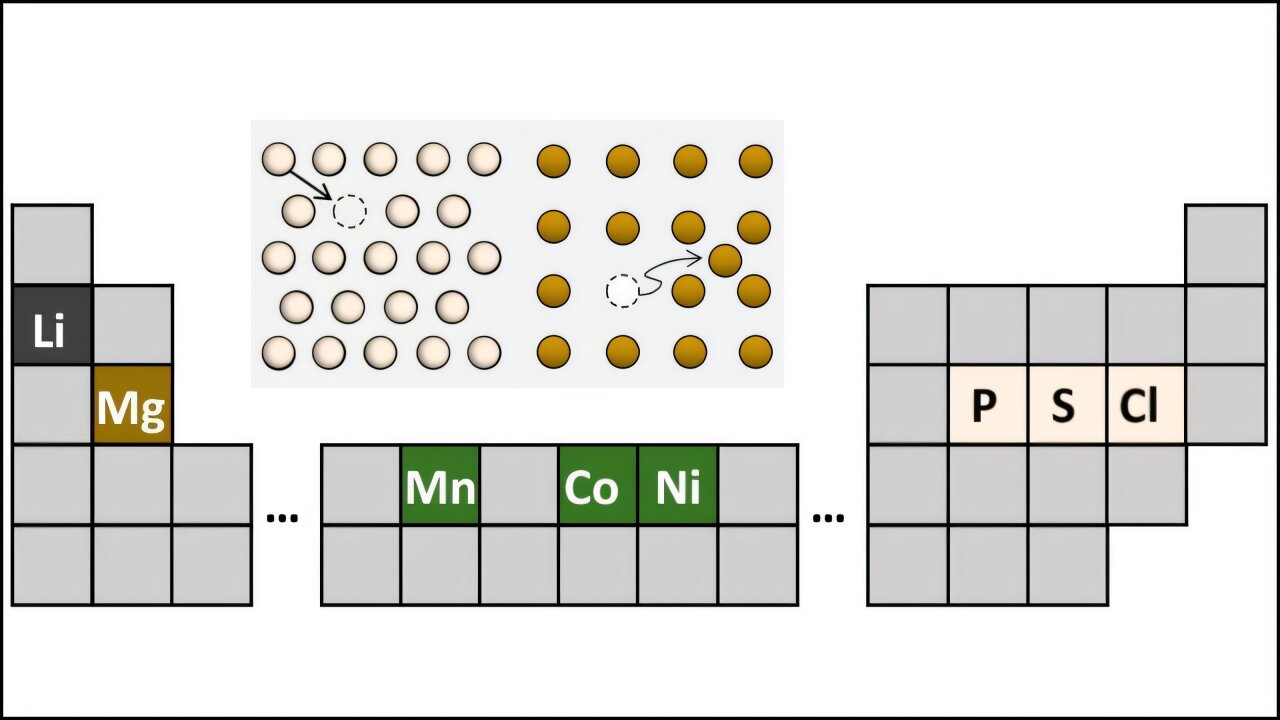
To tackle that problem, the team studied a type of sulfide solid electrolyte called lithium phosphorus sulfur chloride, or LPSCl. They used an approach based on a computational technique called density functional theory to screen a wide range of oxide coatings made by atomic layer deposition (ALD)—a method that deposits ultrathin, uniform layers with near-atomic precision.