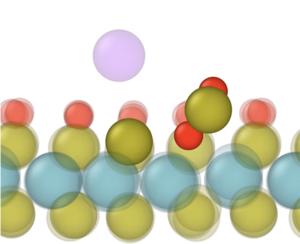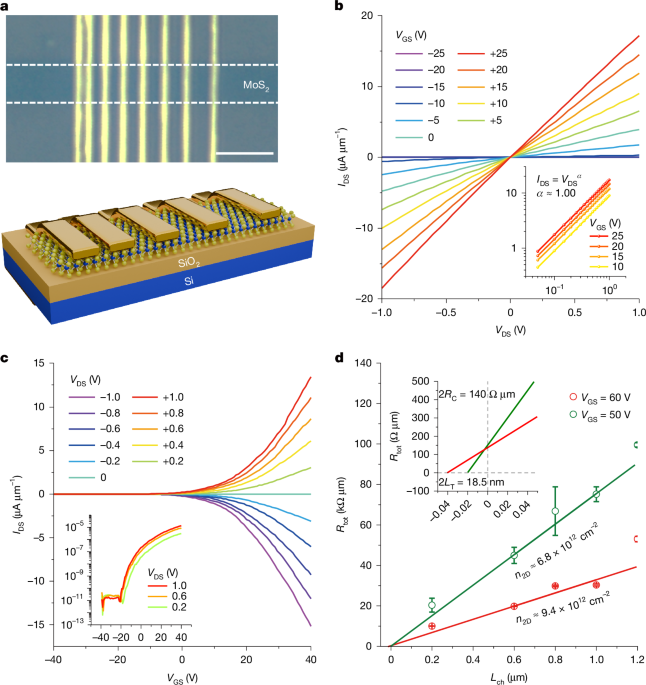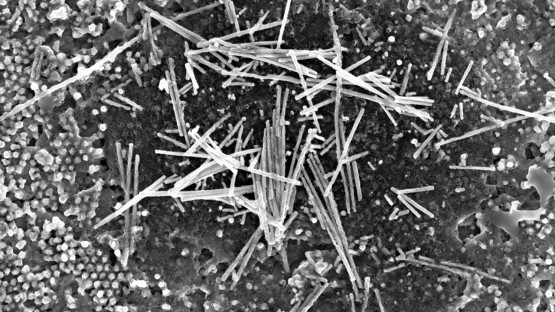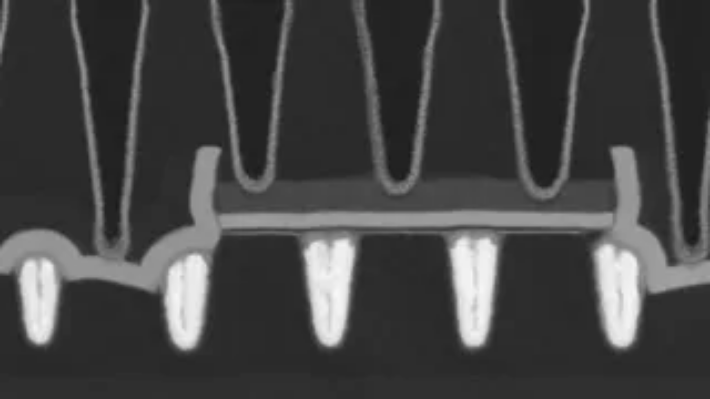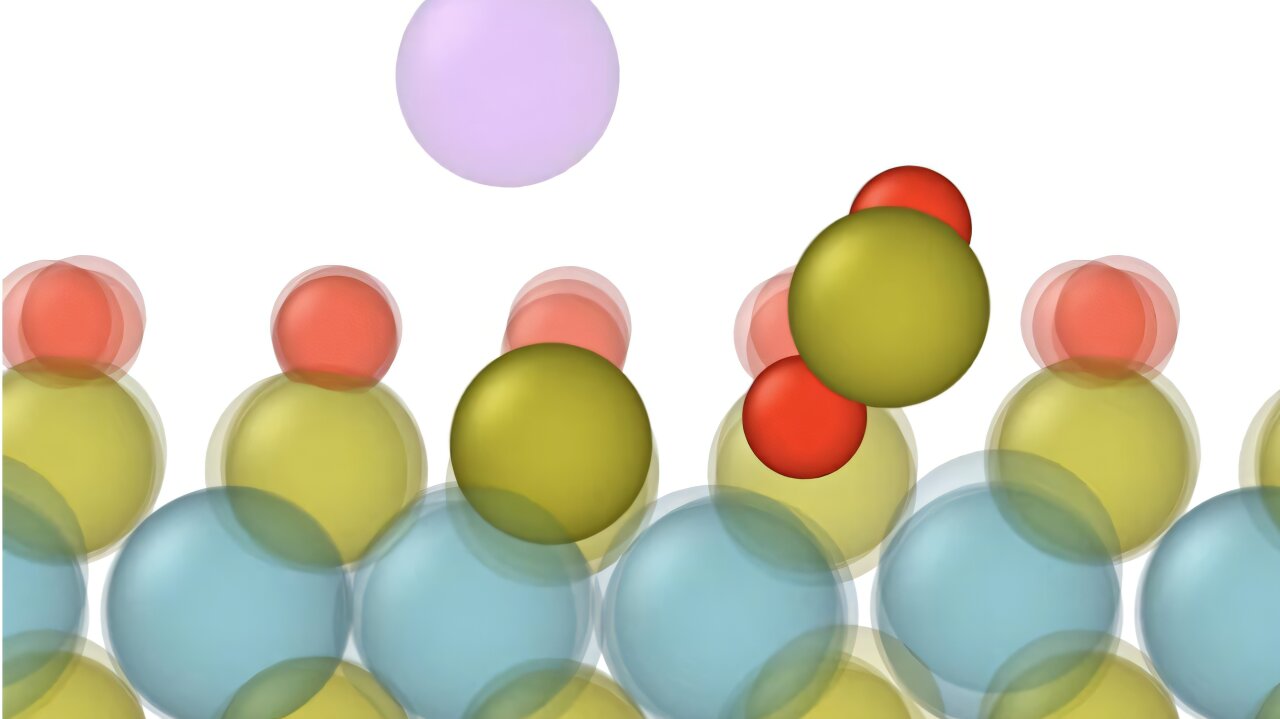
A frame from a simulation video shows a plasma ion (purple) dislodging atoms from a class of extremely thin materials called transition metal dichalcogenides (TMD). This material might be an ideal replacement for silicon in computer chips. A layer of molybdenum atoms (blue) is sandwiched between two layers of sulfur (green). The TMD has been coated in oxygen (red) so that when the plasma ion strikes, the sulfur and oxygen bond to form sulfur dioxide. This allows for the removal of the upper layer of sulfur without damaging the molybdenum below. Credit: Yury Polyachenko / PPPL
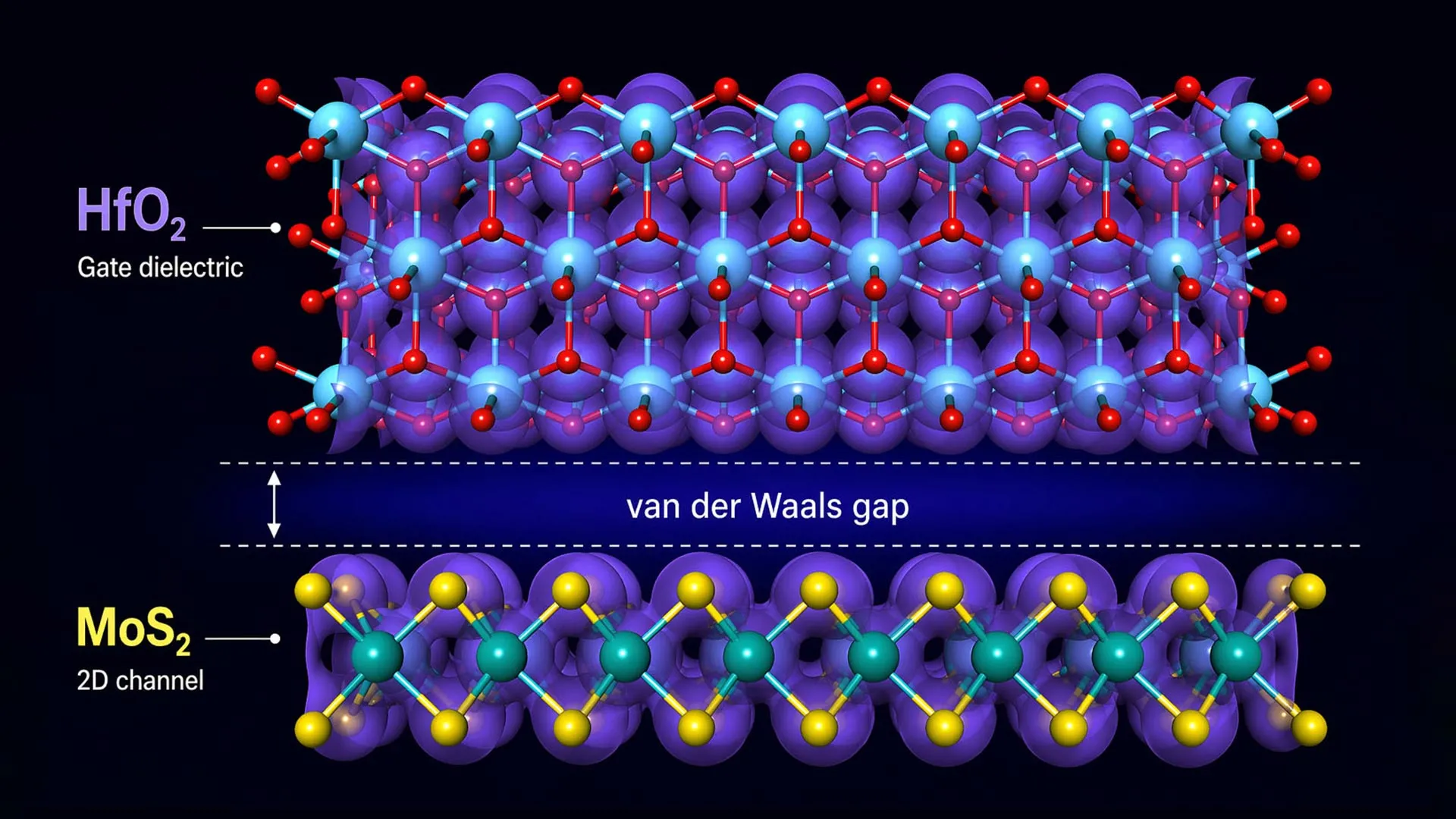
Inside computer chips are billions of tiny transistors made from silicon. But the material is approaching its limits. In an effort to build smaller, more capable devices, researchers are exploring how they might build transistors with other materials alongside silicon, including a class of extremely thin materials called transition metal dichalcogenides (TMD). One of the leading TMD candidates is a material called molybdenum disulfide. It is only three atoms thick: one layer of molybdenum sandwiched between two layers of sulfur.
To build transistors with silicon and TMD, manufacturers will likely need to remove atoms from only the top sulfur layer without damaging the layers underneath. The standard method for removing the top layer uses plasma, the state of matter that makes up the sun and the stars and that has been the focus of research at the U.S. Department of Energy's (DOE) Princeton Plasma Physics Laboratory (PPPL) for the last 75 years.