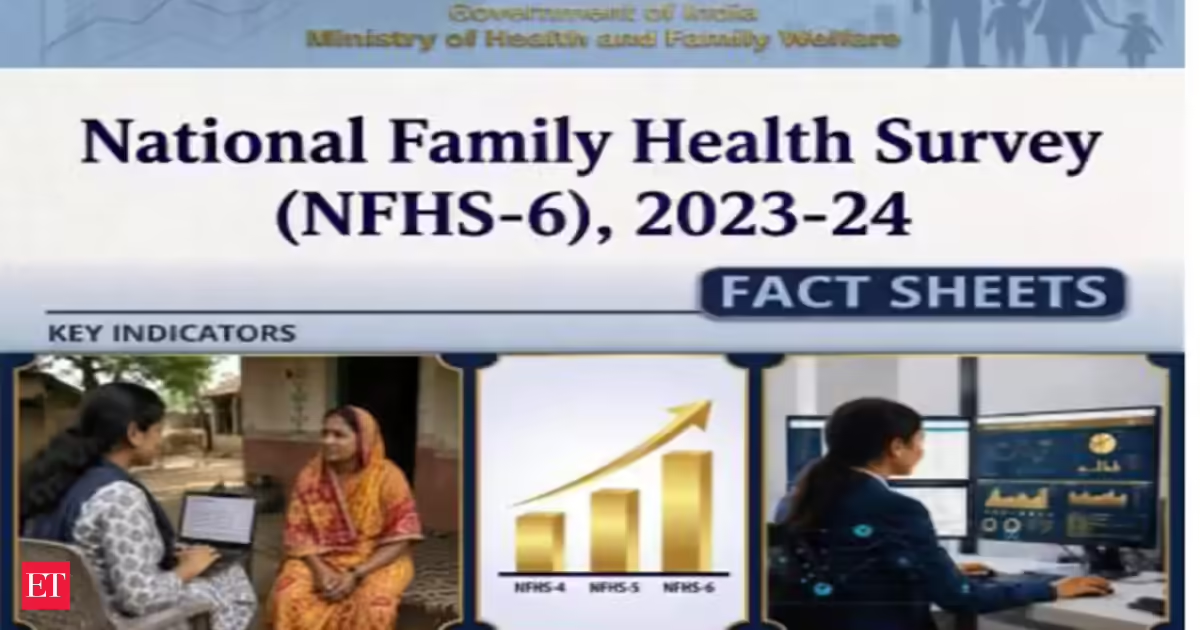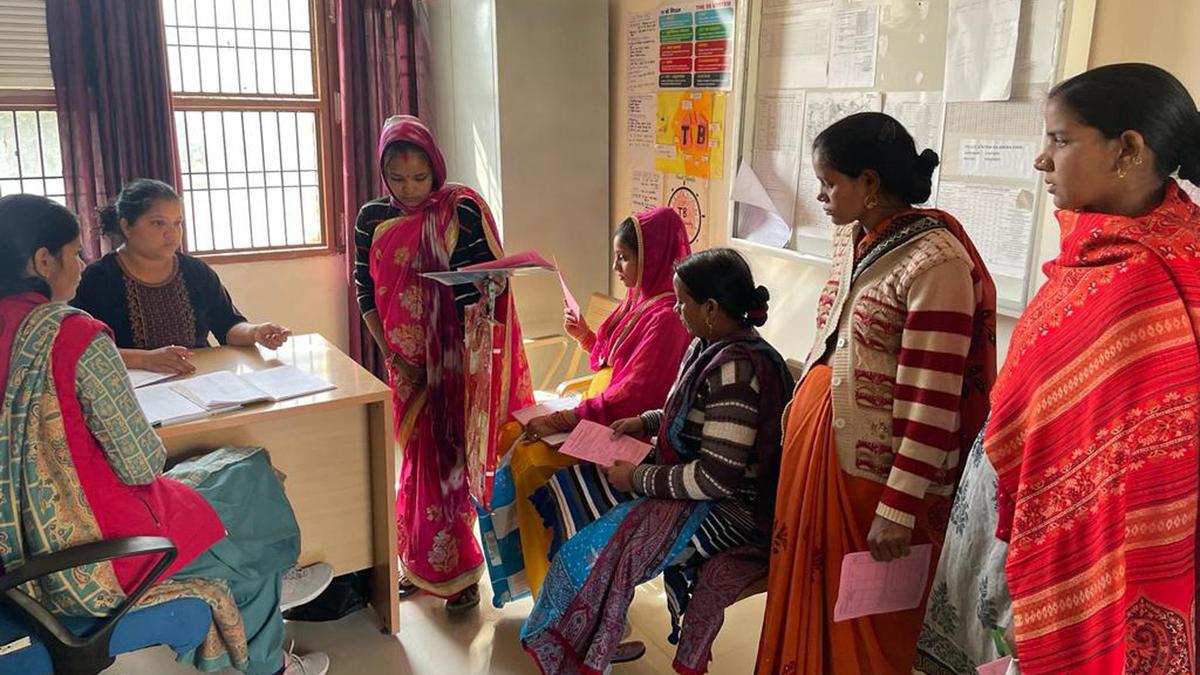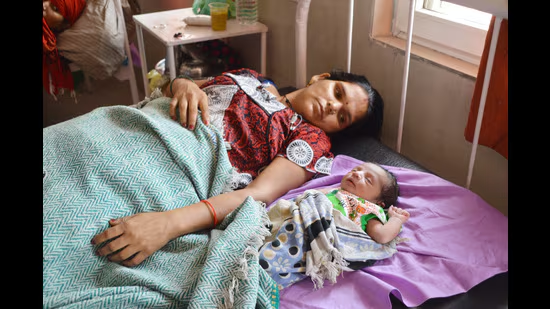
India’s impressive economic growth, and the revenue cushion it has generated over the past three-and-a-half decades have allowed it to surmount some of the most acute social sector challenges, and it no longer has to worry about population growth which is already on a declining trajectory.The findings also highlight the success of government programmes –– such as those in the areas of financial inclusion and health insurance. (Representative photo)That’s the message from the results of the latest National Family and Health Surveys (NFHS) –– the sixth round, conducted in 2023-24 –– released on Friday by the ministry of health and family welfare.The findings also highlight the success of government programmes –– such as those in the areas of financial inclusion and health insurance.The specifics: Just 25.5% of childbirths were institutional deliveries in the first round of NFHS, which was conducted in 1992-93. This increased to 38.7% by NFHS-3 (2005-06), 78.9% by NFHS-4 (2015-16), and is now at 90.6%. India’s total fertility rate (TFR) –– the expected average number of births by a woman –– fell from 3.4 in NFHS-1 to 2 in NFHS-5 (2019-21) and stays 2 in NFHS-6 as well. A TFR of 2.1 is considered replacement level fertility below which a country experiences population decline in the long-term. The share of underweight children has fallen from 53.4% to 31.8% between NFHS-1 and NFHS-6.The findings are especially significant because one of the most important and credible sources for filling the demographic information void in the last decade-and-a-half has been the National Family and Health Surveys, which have had three iterations since the 2011 census. India conducted its last census in 2011. It is in the process of conducting the next one now. Data for the next census will be available from 2027 onwards.The latest NFHS shows that on some parameters, such as institutional births, the success is almost universal. On others, such as child nutrition, challenges remain but the progress is unambiguous.To be sure, the NFHS numbers also have some red flags. In 2005-06, more than one-third of Indian men and women were underweight or with a below normal Body Mass Index (BMI). The share of overweight men and women was just 9.3% and 12.6%. By 2023-24, less than 20% of men and women are underweight, but more — 27.3% and 30.7% respectively — are overweight. Close to one-fifth of men and women have high blood sugar and almost a similar proportion report hypertension. Lifestyle disease burden is now a bigger problem than the absence of reproductive health and pre- and antenatal care facilities. This trend is in keeping with the rising mortality burden of cardiovascular diseases in the country, as seen in Cause of Death statistics from the Sample Registration System (SRS) reports.As the country’s demographic profile moves slowly but steadily towards an older population — the share of 60+ population has increased from 9% in 2005-06 to 12.9% in 2023-24 according to NFHS-6 –– it will also need to pivot towards managing the evolving health challenges.To be sure, there is more to the NFHS data released on Friday than the long-term story of reforms. NFHS-6 and NFHS-5 rounds have the smallest gaps between two successive rounds of the survey. And, yet, they show impressive achievement on some indicators, which tell the story of successes by both the state and markets.The share of men and women who have ever used the internet increased from 51.2% and 33.3% in 2019-21 to 80.5% and 64.3% in 2023-24. Households with any usual member covered under a health insurance/financing scheme increased from 41% in 2019-21 to 60% in 2023-24. Share of women with a bank account that they themselves use increased from 15.1% in 2005-06 to 53% in 2015-16 to 89% in 2023-24.All of these achievements are in keeping with government-driven programmes for financial inclusion, proliferation of DBT-based cash transfer schemes for women across states, the role played by the central government’s health insurance programme Ayushman Bharat Yojana, and India becoming one of the fastest growing and yet the cheapest mobile internet markets in the world.To be sure, the latest round of the NFHS has published data on fewer parameters than its predecessor, and the national fact sheet does not contain critical health indicators such as the share of men and women with anaemia. In purely numerical terms, the NFHS-5 fact sheet gave data on 131 indicators while the NFHS-6 has information for 101.As is to be expected, there are significant state-wise variations in the numbers, but the broad trends, at least on the aspirational indicators, remain the same: one of improvement.NFHS also offers a treasure trove of data beyond the fact sheet, including indicators across social and religious demographics. But that analysis will only be possible once the reports and unit-level data from the current round are released.
Health cover, welfare drive India’s social gains: National Family and Health Survey
That’s the message from the results of the latest NFHS –– the sixth round, conducted in 2023-24 –– released by the ministry of health and family welfare. | India News
797 words~4 min read