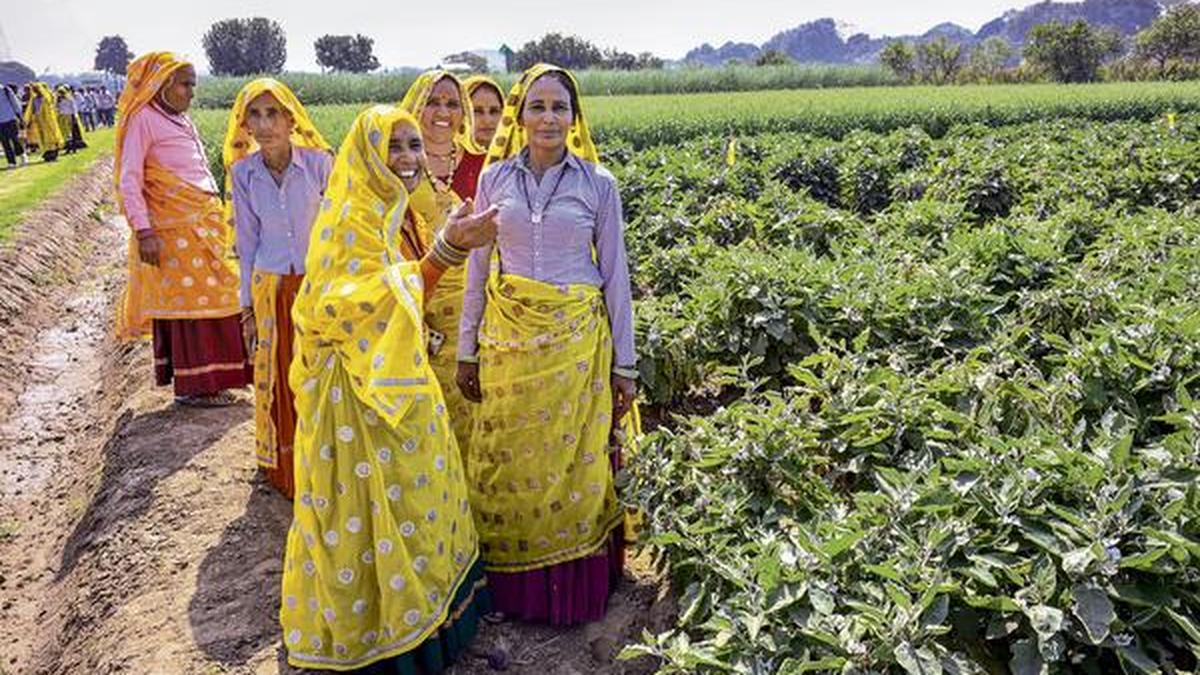
20.1% of women aged 20-24 years were married before the legal age of 18 – a modest improvement from 23.3% in the previous survey.
| Photo Credit: Shiv Kumar Pushpakar
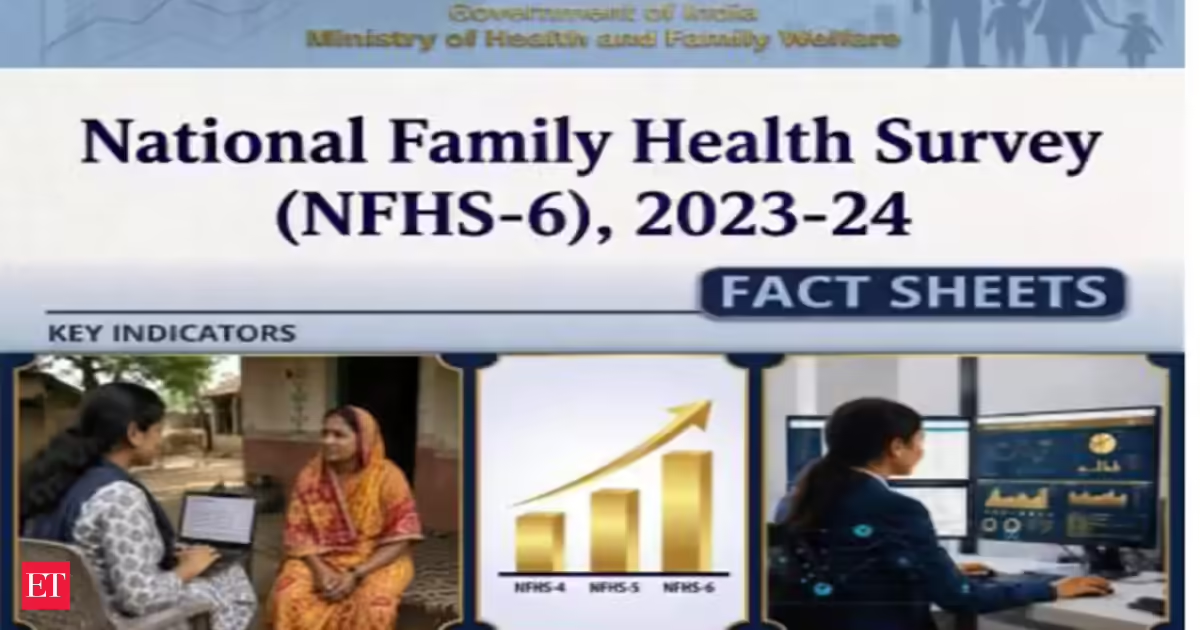
The latest National Family Health Survey (NFHS-6) data, 2023-24, tell a complex story of Indian women — with significant gains in education, digital access and economic agency, but also persistent social constraints including low property ownership, being married before the legal age of 18 and bearing the burden of family planning.The survey shows that 73.7% of women have attended school, an uptick from 71.8% recorded in NFHS-5 survey (2019–21), women with over ten years of schooling also went up from 41% to 46.4%, while internet use among women has nearly doubled from 33.2% to 64.3%.However, women’s ownership of a house or land, either alone or jointly, has stayed below 20% rising from 14% to 18.8%. Deep-rooted gender norms continue to shape life outcomes. 20.1% of women aged 20-24 years were married before the legal age of 18, only a modest improvement from 23.3% in the previous survey. Female sterilisation remains the dominant form of family planning at 36.5% falling from 37.9 %, raising questions about the unequal burden of reproductive responsibility.Gender-based violenceAccording to NFHS-6, India has recorded a notable decline in violence against women, particularly spousal violence. The survey found that 22.3% of ever-married women aged 18-49 reported having experienced physical, sexual, or emotional violence by their spouse, down from 29.2% in NFHS-5 — a decline of nearly 7 percentage points.Additionally, while States recorded decline in violence against women, Kerala saw an increase in reported spousal violence from 9.8% in NFHS-5 to 17.7% in the latest survey. Bihar 36.1%, Telangana 30.8%, Tamil Nadu 28.5%, Uttar Pradesh 28.5% and Andhra Pradesh 22.7%—all clocked above the national average.According to NFHS-6, the use of tobacco and alcohol in the country has continued to decline, although significant gender disparities remain. Among adults aged 15 years and above, 34.6% of men and 7.2% of women use any form of tobacco, compared with 38% of men and 8.9% of women in NFHS-5. Alcohol consumption remains far more common among men than women, with 18.2% of men and 0.7% of women reporting alcohol use, compared with 19% of men and 1% of women in NFHS-5.The survey indicates that tobacco and alcohol use are generally higher in rural areas and among socially and economically disadvantaged groups. While the decline reflects the impact of public health campaigns and tobacco-control measures, the continued prevalence of these risk factors remains a concern because they are closely linked to non-communicable diseases such as cancer, cardiovascular disease, chronic respiratory illness, and liver disorders. Published - May 30, 2026 08:32 pm IST