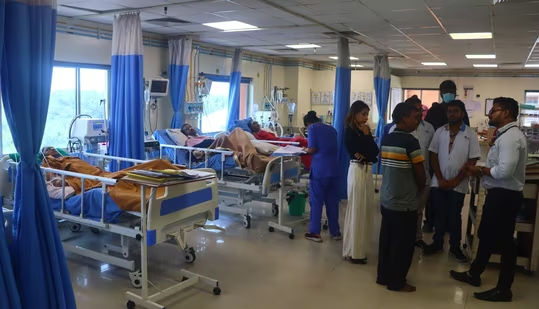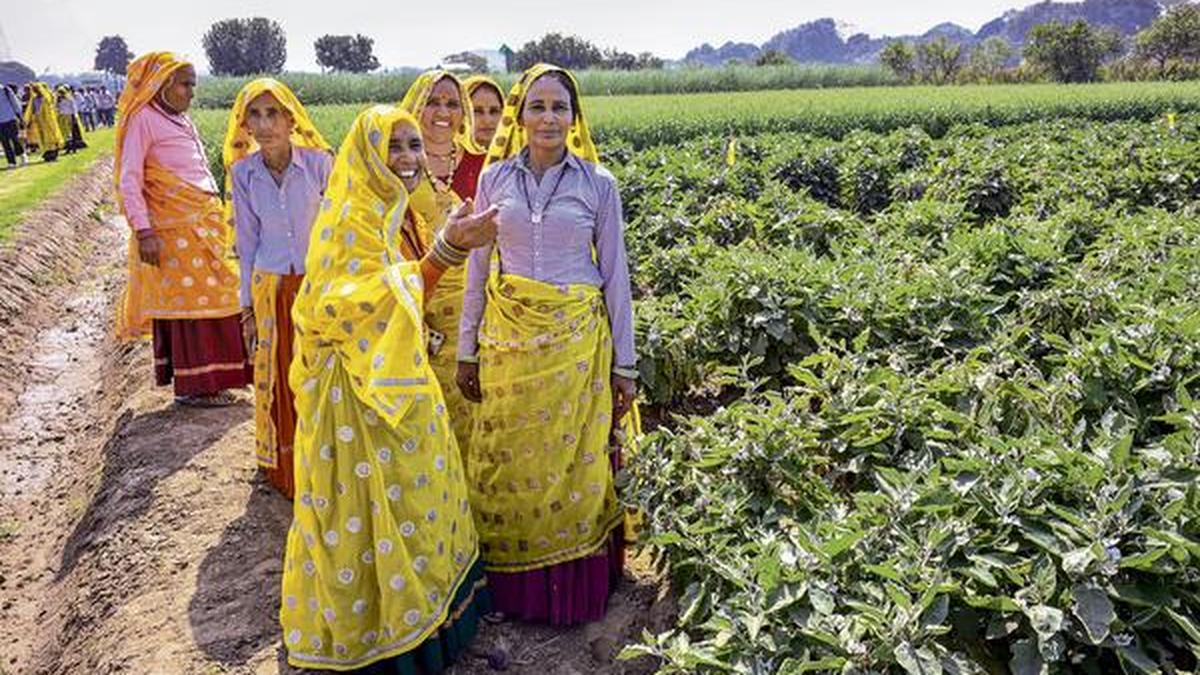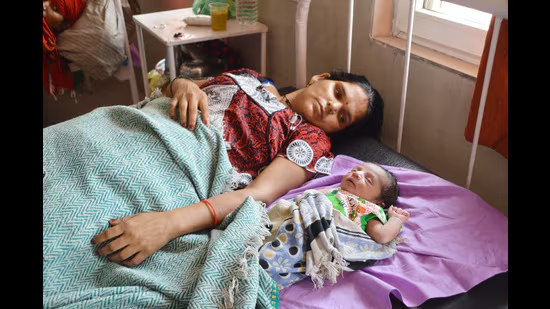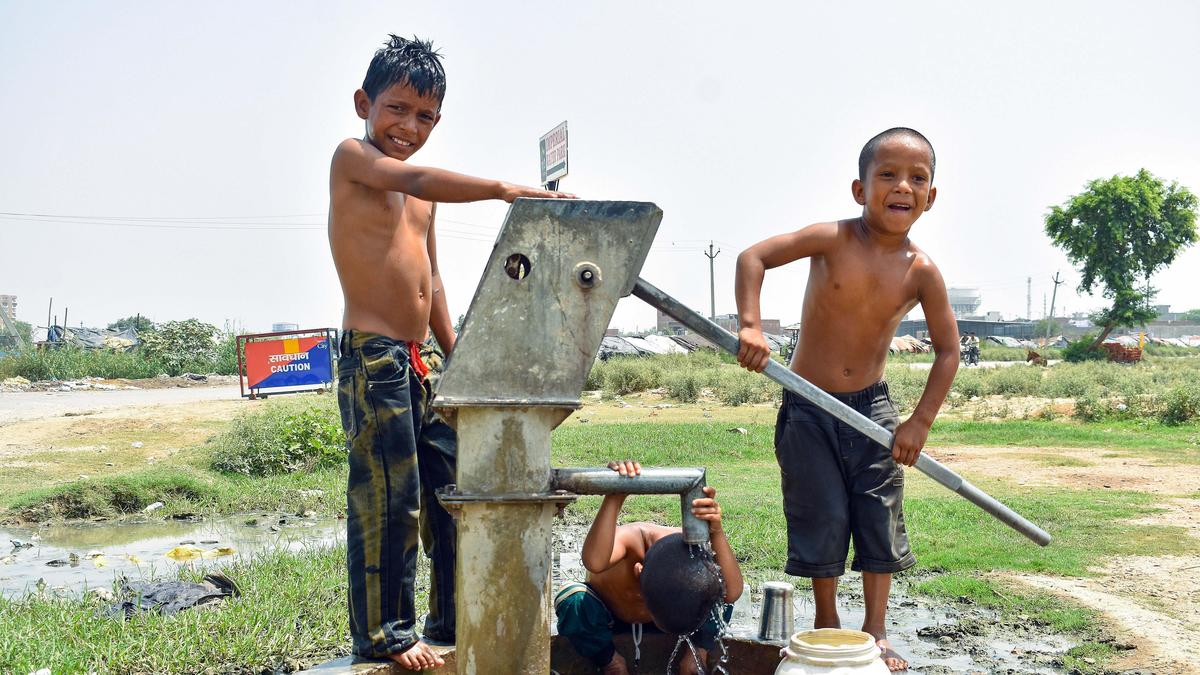
Among the modifiable factors associated with the well-being and cognitive ability of children, the roles of maternal health, early childhood nutrition, infections and education are well-established.The National Family Health Survey (NFHS), first begun in 1991 has been designed to capture these indices with increasing sophistication over the years. Initially, the sample only included women who had ever been married, who were between the ages of 13 and 49, and children aged four and below. In the first survey, the height and weight of the children were the only objective measures recorded.In NHFS-2 (1998-99), the height and weight of all eligible women were measured, besides adding haemoglobin measurements for married women and children below age three, thus providing information on the prevalence of anaemia in this demographic for the first time.In NHFS-3 (2005-2006), women who had never been married, and a small sample of men were added. Besides adding a number of biomarkers such as blood pressure and blood glucose, NHFS-4 (2015-2016), increased the sample size almost five-fold. The NHFS-5 (2019-2021), report is the most extensive and detailed so far. In the latest report, NFHS-6, Hepatitis B and Hepatitis C testing has been added. However, while the surveys have increased in scope and ambition, and much data has been made available for analysis, the focus on the child should not be lost.Maternal health gainsNotable progress has been made on many fronts. Teenage marriage has reduced from around 54% in NHFS-1 to around 20% in NHFS-6. There is variation among States in this metric as well as in others, with West Bengal, Bihar and Rajasthan recording percentages of 36, 35 and 34 respectively, while Kerala records less than 3%. The all-India prevalence of teenage pregnancy in India was reported in NHFS-5 as 7%. This metric has not been reported in NHFS-6 but considering that the decline between NHFS-4 and 5 has been only 1%, it may still be around 5% or so. Women with low Body Mass Index (BMI) has reduced from an all-India average of 36% in NHFS-2 (when it was first measured), to 19.7% in the current round, slightly higher than the 18.7 recorded during NHFS-5.Since 1970, the government has attempted to treat anaemia in pregnant women through a programme of iron and folic acid supplementation. The prevalence of anaemia in pregnant women has not changed much since 2016 (NHFS-4) and 2019-2021 (NHFS-5) remaining above 50%. This metric has not been reported in the indicators put out so far for NHFS-6. Unfortunately, the target of 180 days of supplementation set under the Anaemia Mukt Bharat scheme could be met in only around 38% of pregnant women, up from 26% in NHFS-5.Children of consanguineous marriages have an increased risk of congenital anomalies. The NFHS-5 recorded an all-India prevalence of 11%. The NHFS-6 has not reported this metric. This is one measure in which the Southern states perform poorly with Tamil Nadu, Karnataka and Andhra Pradesh reporting 28, 27 and 26% consanguinity respectively, as per NFHS-5 data.These maternal metrics are significant, and play a role in the health of the child as teenage pregnancies and poorly nourished mothers are associated with lower cognitive performance of the child.How children faredAll India, the percentage of under-five children who are underweight is still around 32%, not very different from what was recorded in NHFS- 5. There is a fairly wide State specific variation with Jharkhand reporting around 41%, Madhya Pradesh nearly 40% and Bihar, Chhattisgarh, Gujarat and Uttar Pradesh recording around 35%. Even the best performing states on this metric, Kerala, Sikkim and Nagaland have prevalence rates of over 10%. Infections in early childhood have a deleterious effect on cognition through complex intersecting pathways. It is encouraging that the percentage of children fully vaccinated is now at 87.1%. In the first NFHS, it was only 35%.The NHFS-5 recorded that almost all children (95%) in the age group 6–10 attend school with no difference between boys and girls. This drops to 70% for the age group 15 -17. Such a detailed report has not yet been made available from NHFS-6, but an indicator “females age 6 and above who have ever attended school”, is recorded as 73.7%.Parental education, particularly maternal education, is strongly associated with children’s learning, educational achievement, and cognitive development. The current survey reports that 46.4% of women and 54.6% of men have more than ten years of schooling.What the data revealsTaken together the data shows that although much progress has been made to secure the healthy development of our children, much more still needs to be done. Economic initiatives can eliminate poverty and improve food security, but the persistence of early marriages, teenage pregnancies and consanguinity highlight the fact that much social reform, and perhaps cultural reform, is needed.The introduction to the NHFS-6 states that the data provided is provisional. It is hoped that a detailed report on the lines of NHFS-5 will be made available in the near future. It has also been the practice so far to append the instruments used for the survey as well as the survey mechanism and details with the report. Providing this would be extremely helpful in analysing the data and providing feedback, which could serve to improve the quality of such surveys.(Dr. George Thomas is an orthopaedic surgeon in Chennai. george.s.thomas@gmail.com)
What the NFHS-6 tells us about how women and children are doing in India
Explore the NFHS-6 findings on women's and children's health in India, highlighting progress and ongoing challenges for social reform.
876 words~4 min read