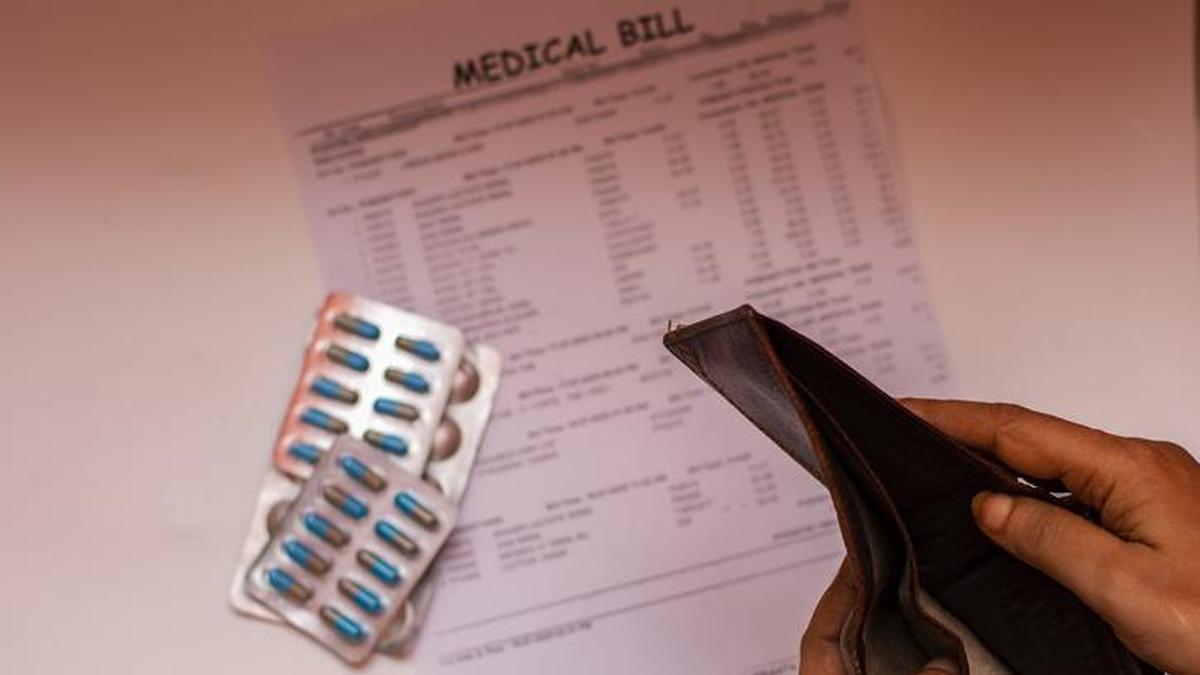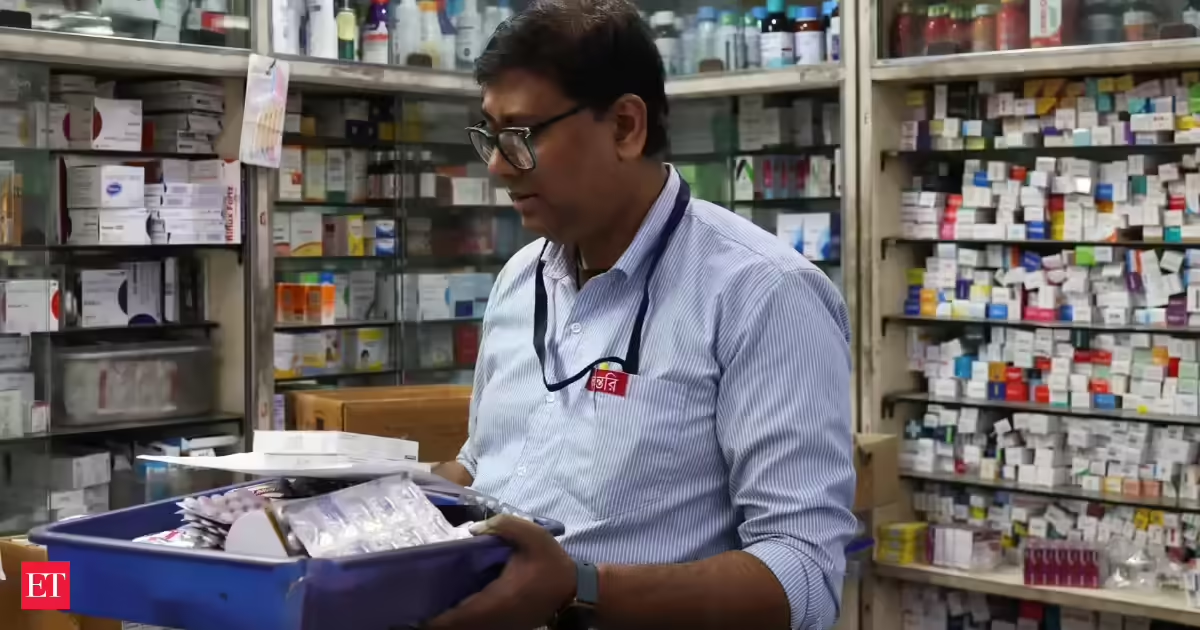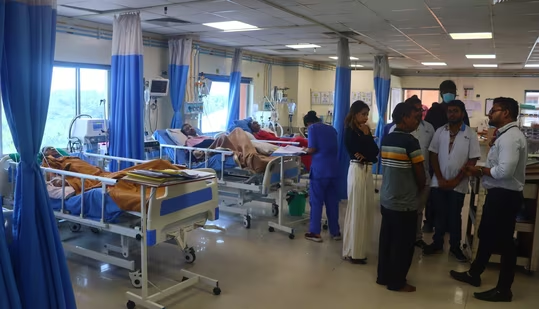
For the last few weeks, India’s health conversation has revolved around the findings from the sixth round of the National Family Health Survey (NFHS-6). Yet, while NFHS-6 is being discussed, two datasets of arguably greater immediate consequence received far less attention. In late April, the National Statistical Office released the findings of the 80th Round of the survey on Household Social Consumption: Health. In late May, the Union health ministry released the National Health Accounts estimates for 2022-23. Together, they tell us how India’s health system is financed, used, and experienced. That is the question on which the health of families and citizens is based.Every taxpayer has a stake in knowing whether increased government spending is translating in services. (Shutterstock)Also read: The Taste by Vir Sanghvi: The resurrection of St James Court, how Taj transformed a London hotel into a luxury iconWe know India is a mixed health care system where both government and the private sector provide health care services. In fact, a majority of outpatient and inpatient services are provided by the private sector, with exceptions such as immunisation and delivery-related services, which are mainly provided by the government.The National Health Accounts is India’s most systematic accounting of how money moves through the health system: government budgets, insurance, social security schemes, household spending, medicines, hospitals and outpatient care. It follows the internationally accepted System of Health Accounts 2011 framework and is based on official data sources. India has been preparing these NHA reports since the mid-2000s. The NSO survey has a different approach and is based on primary data collection. The data are collected at the household level from rural and urban India and include information on illness, hospitalisation, outpatient care, insurance and expenditure. One shows health financing architecture. The other shows how ordinary people encounter it and spend their money.Also read: Restoring trust after Ram Temple theft controversyThese two surveys are of immense policy relevance. It has been reported that government health expenditure has increased over the last decade in nominal terms. The government’s share in total health expenditure has increased from 28.6% to 43.7%. Out-of-pocket expenditure (OOPE) as a share of total health expenditure (THE) fell from 64.2% to 43.4%. The NSO survey reports median out-of-pocket spending per hospitalisation at ₹11,285, with median expenditure in public facilities at only ₹1,100.While these might appear impressive, context gives a better picture. OOPE, at 43.4%, is still high. The globally accepted norm for OOPE is less than 10% of THE. Thailand has OOPE of less than 10%. The National Health Policy 2017 committed India to raising public health expenditure to 2.5% of GDP by 2025. By 2022-23, government health expenditure was 1.43% of GDP, or 1.48% under the revised GDP series. The country is going to miss the policy goal.Also read: Pakistan's Asim Munir marshals his successes, for nowThe NSO findings also raise questions that require debate. The proportion reporting ailments has nearly doubled, from 6.8% to 12.2% in rural areas and from 9.1% to 14.9% in urban areas. This may reflect improved awareness and health-seeking behaviour. It may also reflect a rising burden of diabetes, hypertension, heart disease and cancer. If more people are falling ill, receiving diagnoses and seeking care, then the absolute amount paid by households may rise even when the share of OOPE falls. Percentages can comfort governments. But amounts in rupees trouble households.There is also the insurance question. Private health insurance’s share in total health expenditure rose from 3.4% to 9.2% over the decade. Coverage under government health insurance and financing schemes has expanded substantially. Yet insurance coverage is not the same as financial protection. Many schemes are hospitalisation-centric, while much of India’s health burden lies in outpatient care, medicines, diagnostics and chronic disease management. A diabetic patient does not become financially secure merely because a hospitalisation package exists. She needs affordable consultations, reliable medicines, periodic tests and continuity of care.The national averages also hide the India that matters most — the states. Public facility use, private sector dependence, medicine costs, insurance reach, hospitalisation expenses and outpatient access vary enormously. A national decline in OOPE can coexist with distress spending in particular states, districts, and social groups. These datasets contain the raw material for such analysis, but public discussion rarely moves beyond national-level headlines. Some of these data at the state or district level are not even available.This is why ordinary Indians need to understand these surveys. Every taxpayer has a stake in knowing whether increased government spending is translating into services. Every family that has postponed treatment, borrowed money or sold jewellery to pay a hospital bill has a stake in understanding out-of-pocket expenditure.For policymakers, these datasets are planning instruments. The NHA can help identify whether public money is flowing to primary health care, medicines, insurance reimbursements or tertiary hospitals. The NSO survey can locate where people are still paying heavily despite coverage, where public facilities are trusted, and where the private sector dominates by default. Academicians and researchers need to deep-dive into these data and provide evidence on whether Ayushman Bharat Pradhan Mantri Jan Aarogya Yojana is reducing catastrophic expenditure or merely shifting part of the bill.NFHS tells us where India’s children, women and families stand on key health indicators. But the NHA 2022-23 and the 80th round of the NSO survey tell us whether the system has money, design and fairness to move them somewhere better. We must learn to use health data not by familiarity or headline appeal, but by policy usefulness.The two most actionable health datasets released this year did not receive the argument they deserved. If read carefully, they could and should shape the next decade of Indian health policy. When it comes to health data, India has a dual challenge: it lacks credible, timely and reliable health data, and it often refuses to read the data that can change lives.Chandrakant Lahariya is a practising physician in preventive and cardiometabolic medicine and a specialist in health policy matters. He has worked with the World Health Organization and UN Systems for nearly 18 years. The views expressed are personal
The health care data that matters to households
A fall in out of pocket expenditure in percentage terms may comfort governments, but amounts in rupees trouble households.
1,010 words~5 min read