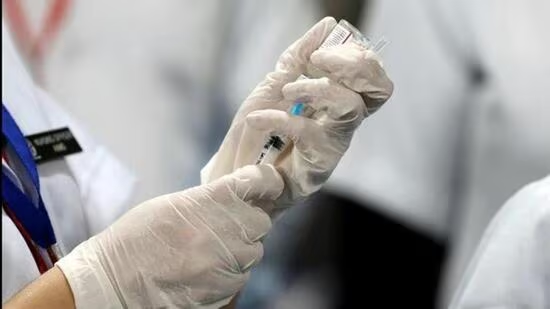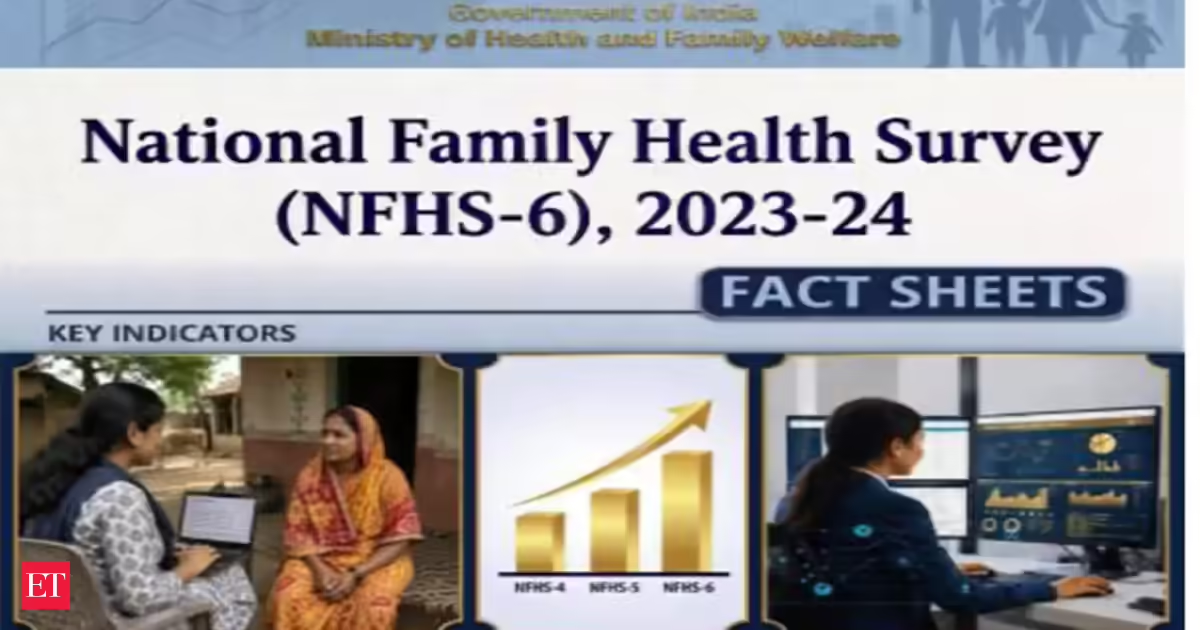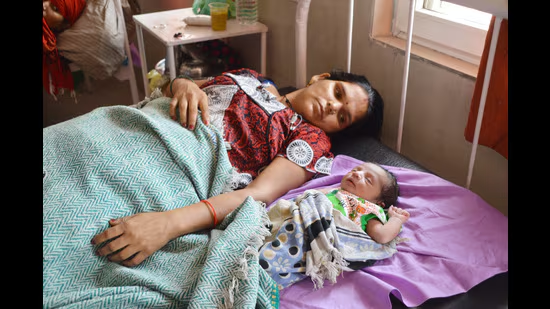
Earlier this month, National Family Health Survey 2023-24 (NFHS-6) was released. Its message is both reassuring and unsettling. At one level, it confirms that over the past decade, India has expanded welfare delivery and connected citizens to essential services at a staggering scale. Powered by DPI built on Aadhaar, this mission of foundational inclusion gathered pace, and has changed the state's ability to deliver.Electricity access has reached 98.3% of the population. Nearly 98% of households have a bank account. Access to improved drinking water is 96.5%, and institutional births account for more than 90% of deliveries. This also reflects integration of over 1.4 bn people into formal systems of welfare and public service delivery.At another level, the health atlas reveals a spike in lifestyle-related ailments, which, if unchecked, could pose a severe challenge to India's economic capability.For decades, India's development problem was straightforward but daunting. Too many people, too little infrastructure and weak state capacity. NFHS-6 reveals that one of those challenges has largely been addressed. India can build systems, scale programmes and deliver services to millions, drastically bringing down extreme poverty over the last decade to around 5%.But the challenge now is no longer access. Instead, it's generating desired outcomes. Take maternal health. While more than 90% of births now happen in institutions, only 37.8% of mothers consume iron and folic acid supplements for the recommended 180 days during pregnancy.The contrast is telling. India performs well when interventions are episodic, logistics-driven and measurable. The Covid vaccination programme was perhaps the best example of this capability - vaccinating over a billion people and doing so twice over.But the state struggles when success depends on sustained behavioural change. Take hygiene. Anyone walking through cities will notice the contrast: metro stations are clean and orderly because they are tightly administered spaces. Step outside, and overflowing drains, unmanaged waste and poor civic hygiene quickly reappear.A similar behavioural gap is visible in nutrition. Nearly 1/3rd of children are stunted and underweight. Only a small proportion receives an adequate diet. The numbers have improved but not fast enough.The economic implications of this shortcoming revealed in NFHS-6 are profound. Nutrition is not merely a public health issue but a human capital one, and, therefore, a productivity one. An undernourished child is more likely to suffer cognitive deficits, lower educational attainment and weaker lifetime earnings tomorrow, compounding into weaker economic capacity.While India continues to battle undernutrition, there is also a sharp rise in obesity, elevated blood sugar level and other lifestyle-related diseases. This means India is now confronting a 'double burden' of disease. This is not just a medical challenge but also an economic one.No country can sustain high growth if a rising share of its workforce is burdened by chronic disease. Healthcare costs rise, productivity falls, and labour force participation will weaken. Eventually, this will evolve into a macroeconomic constraint.There is another demographic warning embedded in NFHS-6. India's fertility rate has stabilised at replacement levels, and in some states has even fallen below them. As a result, the proportion of children in the population is shrinking, while the share of the elderly is beginning to rise. In short, India's ageing has already begun. The much-celebrated demographic dividend is peaking, and India risks growing old before it becomes rich.The next phase of India's development journey will require a different policy toolkit. If the first phase was about physical infrastructure and digital rails, the second is about ensuring human capability - nutrition, preventive healthcare, education, skilling and behavioural shifts.This transition will be harder because it lies mostly in the domain of states. Health and local governance are state subjects, education is on the concurrent list. Most states struggle with administrative capacity. This makes cooperative federalism not merely desirable but indispensable.NFHS-6, therefore, is a report card on India's readiness for Viksit Bharat 2047. India has built foundations of inclusion. But becoming a developed economy will require more than roads, bank accounts and welfare transfers. It will require healthy workers, well-nourished children, productive citizens and empowered women - quality human capital.(Disclaimer: The opinions expressed in this column are that of the writer. The facts and opinions expressed here do not reflect the views of www.economictimes.com.)
India’s next big challenge: From welfare delivery to human development - The Economic Times
The National Family Health Survey 2023-24 reveals India's success in expanding welfare delivery and essential service access, reaching nearly universal coverage for electricity, banking, and improved water. However, the report highlights a growing challenge of lifestyle-related diseases and persistent issues in sustained behavioral change, impacting human capital and economic productivity.
695 words~3 min read