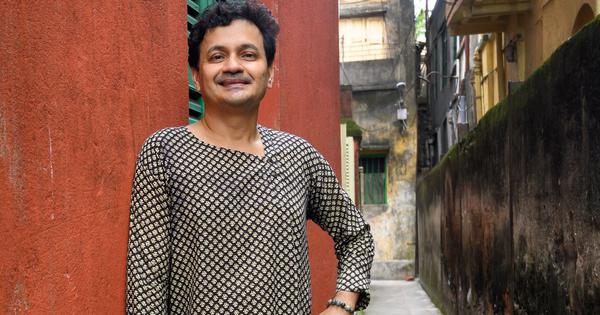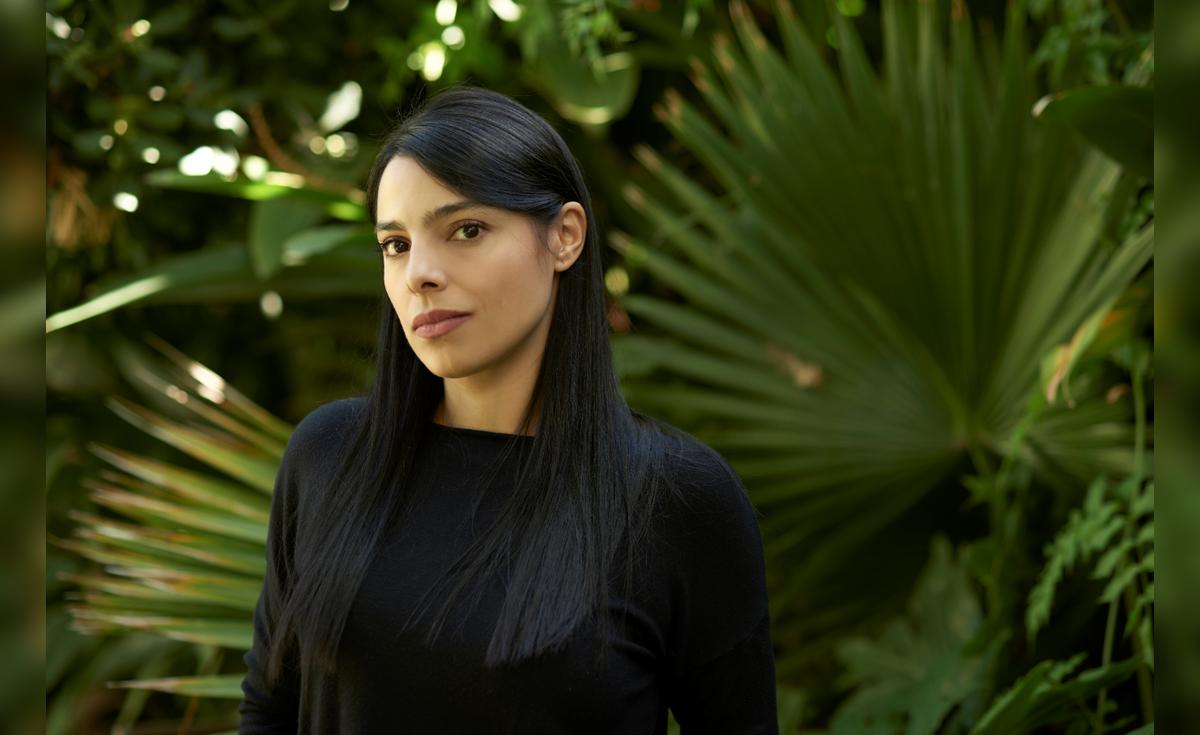
You move between philosophy, politics, and public writing. How do you describe what you do to readers encountering your work for the first time?Oscar Guardiola-Rivera (Jaipur Literature Festival)In a word, dancing. When you move in between these worlds, the only way you can do so is by pirouetting, by making sure you take the audience with you, which is very much the way we dance in the Americas.I’ve never liked being pigeonholed, so perhaps that’s why I move between different registers. Right now, for the first time, I’m beginning to work on a novel. I’ve written poetry before, but the novel is something I’ve always felt a little fearful about. It’s a very different thing to take on.If you’re a writer, there is no reason why you should remain in only one form.A big focus of your work is on power, but power today feels strangely theatrical — constantly performed, endlessly narrated. Has power today become less real or simply more visible?Let me be provocative. The reason why people focus on power is that power has always been theatrical. In 2024, I published a fiction book which is essentially a rewriting of Popol Vuh, the oldest play-myth we know from Latin America. The protagonists, Ix and Hu, are constantly shifting, neither male nor female, neither this nor that. To me it portrays power in deeply cinematic ways.The dimension of appearance is something we still do not pay enough attention to, which is paradoxical because we live in an intensely visual age. We are constantly surrounded by images, and yet our ability to read them is arguably weaker than that of ancient peoples — such as the Maya.We need to relearn the skill of reading images and understand that our identities are not fixed; they’re fluid and in a sense… performative. There is something hopeful about that. It means we can place ourselves in the role of another, which is the antidote to the forms of power that suppress dissent or erase others.Much political writing today is driven by certainty rather than curiosity. Do you think certainty has become the enemy of thinking?Absolutely, it has always been. In my latest non-fiction book, I coined a term: “fantastic critique.” It is about how we deal with uncertainty, which is also precisely why we created storytelling. Storytelling consists of creating a space where people can go and play different roles. And in doing so, they can reduce that uncertainty or grab it by the horns.One of the dangers of our hyper-technological, hyper-aestheticised culture is that it frames our imagination so that we only identify with what we are shown. But storytelling breaks that box, and you can identify not only with what you are shown in the present, but also wonder about what it can become next.How do you write about injustice without turning language into a weapon that only speaks to those who already agree?I’m not interested in creating a consensus. And that is perhaps why we invented language. We invented it because we cannot enter somebody’s mind, so we need to find one another somewhere in the middle.There is an indigenous group in northern Colombia called the Kogi, from the same region as Gabriel Garcia Márquez. They have a beautiful way of thinking about language. Through ritual, they almost treat words as something physical — something that can be shared and exchanged like a meal.I find it beautiful: that words are not weapons or private possessions; but a way of being with one another.India has been important for your writing and your development. How has the country influenced you?The first time I came here must have been either in 2010 or 2013. The one thing that impressed me immediately was the curiosity that people demonstrated, not only when they spoke with me but also in the very way they carried themselves.And then there are the colours. I live in London, and have been for almost 20 years now. The absence of colour in London still gets me. There’s just no light. Whereas in India, you have all kinds of colours.I have the impression that this also translates into a panoply of gods, a variety of perspectives, religions, forms of spirituality and therefore also a plurality of ways of seeking truth. This is not the same as relativism. It is not that everything goes or everything is the same. It means that you can get to the truth and beauty through different paths and different colours.I love the idea that truth has colours. And that is how I try to write. When it comes to philosophy or poetry, I try to write it in the most colourful manner I can.We are living through multiple, overlapping crises — political, ecological, and even moral. Which one do you think we are misnaming the most right now?I think the one we are misnaming is the moral crisis.In my latest book, A Hopeful Political Imagination, I make a distinction between two kinds of critical thinking and practice. On the one hand, there is what I call moralistic judgement or praetorian judgement. It consists of assuming there is one single gold standard and that every case can be subsumed under it.I think that makes no sense. It is sad, because it leads toward stasis. Reality is not like that; it moves around in time and space.We should pay more attention to the fact that time is real and we are constantly challenged by the unprecedented. We can no longer pretend that we are always going to be able to predict or preempt everything. This also ties back to the fact that now is when our creativity and imagination really matter.Do you ever feel pressure to simplify? How do you resist simplification without retreating into obscurity?We talked before about being shown models and characters and being told to follow them. I have avoided that all my life and probably that is the reason why I became a writer.You must not be fearful of blazing your own trail, wearing your own colours, putting on your own feathers, and keep finding yourself in newer ways. That is the best and most enjoyable way to live.Has the idea of the public intellectual changed or is it simply being performed on a different platform now?I think it has changed. If you look at the 1960s or 1970s, the public intellectual was more often than not an older Western white man.I love the fact that nowadays, perhaps the most powerful public intellectual is actually a Swedish girl — now a bit older — who showed us that simply walking out of school could begin to change the world. Being a father of two daughters, that really resonates with me, because I feel that [my daughters] are the public intellectuals, not me.Rather than the master who must be followed by the disciples, what we require is a gathering. Around the hearth, the fire. And exchange our ideas, stories, and perspectives to compose something more powerful together.What kind of reading sustains your thinking when public discourse feels exhausting?Poetry. I am a voracious consumer of poetry. That also extends to music and lyricism. To me poetry is more about the sound and rhythm, rather than metrics.Right now, I’m reading an Argentine poet named Roberto Juarroz. He writes metaphysical poetry, and is not afraid to ponder on big, existential questions. Along with him, I’m also reading a Chilean writer I have admired for a very long time, Alejandro Jodorowsky. He began with something called anti-poetry, which he now combines with extraordinary poetic filmmaking. He is now 97 years old. And he has been thinking and writing about death from the moment he was young and first started to write. To not be afraid of death — I think that is a beautiful thing. We forget that the only life that is well lived is the one you encounter at the moment of your death.That should give you hope, not fear.Rutvik Bhandari is an independent writer. He lives in Pune. You can find him talking about books on Instagram and YouTube (@themindlessmess).
Oscar Guardiola-Rivera: “I’ve never liked being pigeonholed”
At the Jaipur Literature Festival, the Columbian philosopher and author of A Hopeful Political Imagination spoke about moving between different registers, the theatricality of power, and the emergence of a new kind of public intellectual
TL;DRAI
Philosopher Guardiola-Rivera coins "fantastic critique": uncertainty demands storytelling, not fixed frameworks. His warning — hyper-tech cultures narrow creativity to existing models — is the blind spot every AI strategy team should stress-test.
1,344 words~6 min read