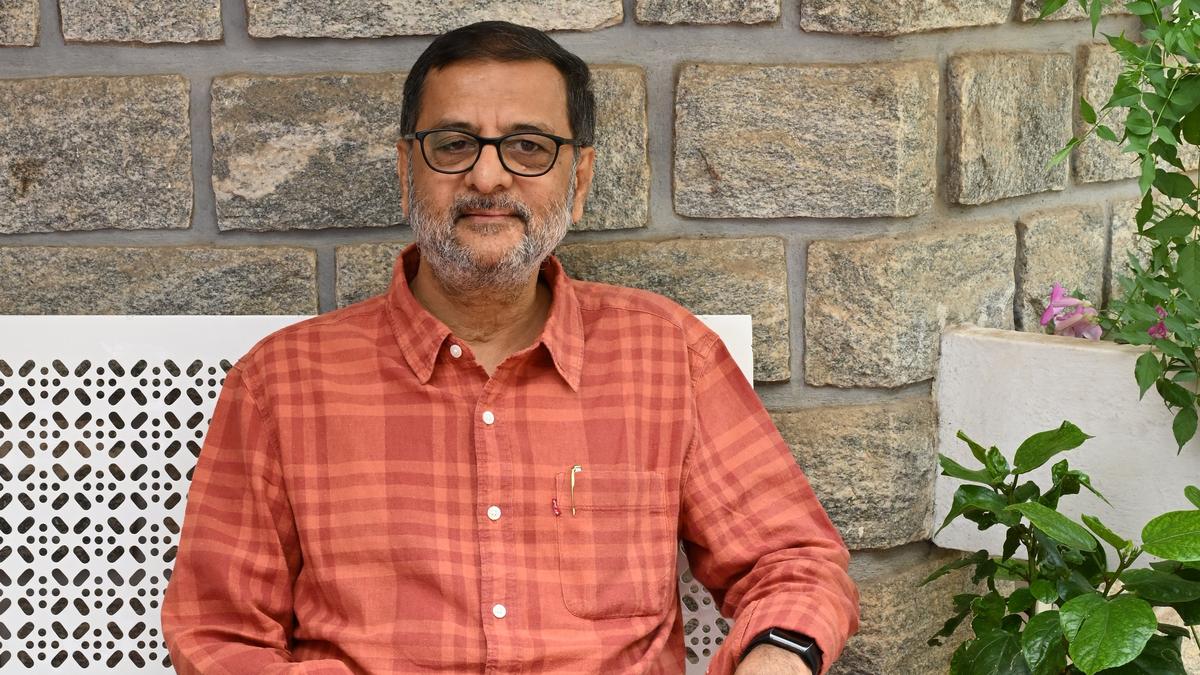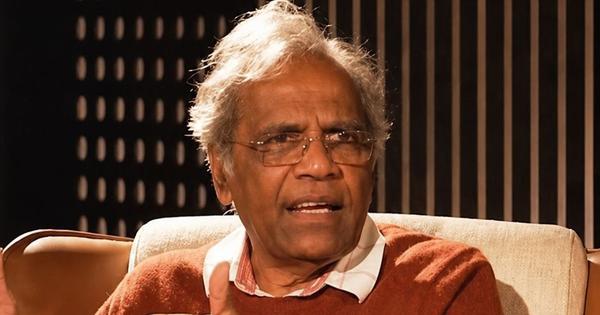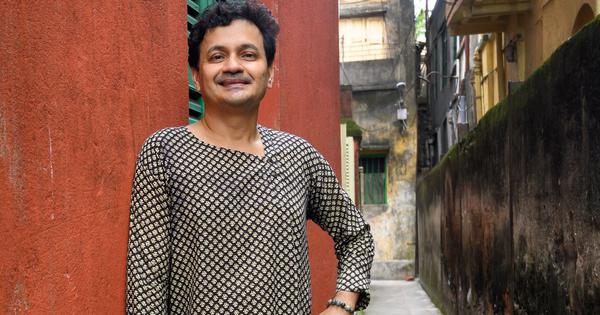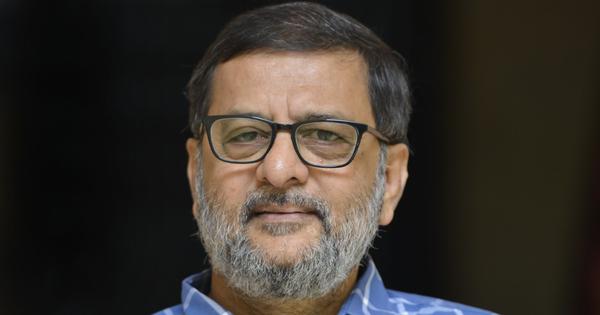
Literature marks the moment of passage, when thought crosses from private consciousness into public meaning. In translation, it makes yet another crossing – from one language to another, from the familiar into foreign territory. This conversation brings together two people acutely alive to that threshold, or what celebrated Kannada writer Vivek Shanbhag calls “the gate of translation”. Shanbhag’s spare and devastating Ghachar Ghochar traces how moral life mutates under the pressure of aspiration, how families invent new grammars to frame what they have become – or chosen to become. Questions of language, migration and identity carry particular weight for Shanbhag, whose novel found global acclaim through translation. His interlocutor, Parul Sehgal of the New Yorker, was once described by Teju Cole as a “good smuggler” who secrets herself inside her writing even as she listens for what lies hidden in an author’s words. Sehgal’s own childhood traced a geography of displacement – Washington, Delhi, Manila, Budapest – teaching her how language, once altered, quietly alters us. As Shanbhag reflects on writing within, against and beyond linguistic inheritance, Sehgal probes the aesthetics and ethics of this movement. The discussion opens onto larger questions of identity, taste and belonging. How does a new language rearrange desire, sharpen or dull perception, recalibrate what feels honest or beautiful? What do we gain – and lose – when our words no longer come from the place where we first learned to name the world?— Lakshmi ChaudhryVivek, your novels are so rich – and very often, very cautionary – in their examinations of taste, but I want to start with you, with how you define taste, and the evolution of your own taste as a reader and a writer.Taste – in definition alone – is vast. In many ways, it shapes how we see the world: what influences us and what we are drawn to. For me, taste must have two things: surprise and tolerance. Both are essential, and both shape how one writes.Being open, allowing yourself to be vulnerable, that’s what really matters for a writer. There should always be something I don’t yet know, something I discover only in the act of writing. I try to reach for that unknown deep inside me, and language is what leads me there. I don’t want to write what I already know.The joy lies in playing with language, in being surprised by characters, by what they do and notice, by how certain questions can suddenly make whole ideologies feel helpless. That, too, is taste.Your mention of surprise and openness reminds me of the role in your fiction of the unsaid – the missing piece of information, the little fact that cannot be verified. Many of your novels feel built around a certain silence, which seems very similar to how you are talking about taste – as a kind of opening, a kind of humility and vulnerability. But for many people, taste can feel very narrowing, right? There is the notion that things falling outside of the borders of one’s taste might be challenging, unseemly or embarrassing. The way you talk about taste is very different. Take me back to your roots as a reader – what attracted you? What writers, what aspects and what language?I write in Kannada, which is not my mother tongue. My mother tongue is Konkani. Konkanis are people who migrated South from Goa, and the stories of this migration are kept alive in every Konkani home. When we talk about taste, I don’t think we can escape history.Or class.Or class. The Konkanis left Goa after the Portuguese arrived – they feared conversion. As migrants, two things are striking. At home, they protected their language and culture, but outside, they were remarkably resilient, adapting to their surroundings. In Karnataka, they began writing Konkani in Kannada script; in Kerala, they adopted Malayalam. Today, Konkani is written in five scripts. No other Indian language has this distinction. Speech is mutually intelligible, but writing is not. That in itself is a powerful metaphor for the community’s worldview.So, there were multiple worlds. At home, we spoke Konkani, but outside, Kannada. Every outside experience, when brought back home, had to be translated. This act of translation was constant, sometimes involving the direct borrowing of Kannada words and phrases. The borders between languages were porous. It sounds romantic now, but at the time, it felt completely natural.My grandfather, a schoolteacher, taught me Kannada when I was four. Kannada is phonetic – if you know the alphabet, you can read any text. You may not understand it, but you can read it, unlike English. I began reading the Kannada script very early, often without comprehension. If I didn’t understand a word, I would wait for my grandfather or ask my mother. Until then, I would try different possibilities, making a game of it. Looking back, that gave me a different perspective on language. My mother sometimes hid periodicals from me, afraid I would read aloud and embarrass her with questions she could not answer.I grew up in a small coastal town and became a keen reader. At home, we had four large volumes of Krishnavatara, which I later discovered were translations of KM Munshi. Because there was little else to read, I read and reread them, perhaps a hundred times. That shaped me: the practice of rereading, of staying with a text, of realising that story alone isn’t the most important thing. I went back even after I knew the plots by heart. Of course, this is a common realisation for readers, but fortunately, it came to me very early.The word ‘Konkani’ in five different scripts, hand-embroidered on a handloom saree. Left to right: Latin, Devanagari, Nasta’l)q, Kannada, Malayalam.What was it that kept bringing you back to the story? The pleasure of the characters, or the language?A writer’s art is not shaped by books alone. I was also deeply influenced by Yakshagana, the traditional dance-drama of coastal Karnataka. What makes Yakshagana unique is that its dialogues are entirely extempore. On open-air stages, with elaborate makeup and costumes similar to those of Kathakali, actors perform episodes from the epics all night long. Behind them, the singer and drummers, dressed in plain clothes and occasionally sipping tea, ground the spectacle in everyday life. This tension between the sacred, mythological characters and the earthy, human performers never lets the audience forget that this art has a purpose beyond pure spectacle.The audience already knows the stories, but Yakshagana dives into a single, crucial moment – like Karna’s death or Yudhishtira’s disillusionment. Instead of retelling, it explores the character’s inner world. Extempore dialogue builds on the singer’s verses, showing both scholarship and linguistic mastery. Even when the ending is fixed, like Ravana’s death, the space for debate is vast.Yakshagana forces you to ask uncomfortable questions: Did Ravana have a point? Is this ending truly just? From it I learned that the most powerful stories are not just narrated, they are argued, questioned, reimagined. For a time, I even dreamed of becoming a Yakshagana artist.The reason for being drawn to the stories of Krishnavatara is the same as the reason for being drawn to Yakshagana: both gave me stories that live through reinterpretation.There was a language at home and a street language, a language of the theatre and a language at school. I wonder if it’s possible to talk about what goes on inside the mind of someone like you – attracted to language, attracted to narrative at a very young age – now learning to translate the self in this constant way. Is there a self that has to become portable, or are there different selves?I feel like a different person in each language. If I weren’t, my imagination would be limited to a single tongue.How so?The possibilities of Kannada and what it can offer will be diminished if I try to understand it through Konkani. The same is true of English. All my life, English has been the language of my professional world, during my years at engineering college and later in the corporate world. But it was a different English, not literary English.I can use a language effectively only when I am within that world and aligned with its worldview. I grew up with five different languages. The phrases and proverbs that come to me when I describe a situation in Konkani are not the same as those I draw on when narrating the same experience in Kannada. When I inhabit these languages, I become a different person. If I tried to understand English through Konkani or Kannada, I would never be able to enjoy what I read in English.The word ‘Amma’ (mother) in Kannada script, hand-embroidered on paper.I asked if you were translating yourself into different languages, but listening to you now, what I think you’re telling me is more profound: that you encounter the different languages separately, that you try to have a separate relationship with each. That feels very connected to how you evoke yourself as a reader, and how you conceive of taste, this receptivity to the unknown, the capacity to remain open to the encounter, be it with text or language, by what might happen.Certain experiences can only be captured in certain languages. One of the greatest challenges for an Indian writer is negotiating the subtle, intricate bond between the language of lived experience and the language of narration. I’ve thought a great deal about this, since I enjoy reading in different languages. When I read and truly enjoy something, it feels as if it belongs to my own language.We were talking about taste – it’s the same. You have to immerse yourself in something beyond you, something outside of yourself. That’s what we do when we write. We immerse ourselves; we give ourselves over to another character, someone entirely different. We must not use our own ideology or point of view to resolve the crises faced by the characters in our works. We must have the courage to go against our own beliefs and the many stances we take in life. If we cannot do that in the act of writing and building a character, then I don’t think we will discover anything. We will only end up writing what we already know.What you’re describing to me is almost a heretical definition of taste. When I think of taste, it’s as you said before – that taste cannot be extricated from history. But taste has also always been one of the prime ways in which people have tried to escape their own histories. And I do think of taste as often being fringed by fear, fringed by shame. Just as in Sakina’s Kiss, right? Rekha is so offended when she discovers that her father named her after the film star. The way that names and taste work in your novels is subtle and deep. How does that survive the translation process? You can write with a dazzling economy, not one word wasted, and yet you also embed these pockets of mystery within the sentences and between the paragraphs.The relationship between our taste and imagination is very complex, and it is difficult to understand exactly how one influences the other. For a translator, it is important to be aware of this while working on a text. I also spoke earlier about the bond between the language of lived experience and the language of narration. Without understanding these intricacies, it is difficult to carry a work into another language.Let me tell you another story that had a profound influence on my taste and writing. I was a teenager, about 15 or 16, when I published my first story. There was a Kannada writer named Yashwant Chittal, to whom I later dedicated my novel Ghachar Ghochar. He was already a celebrated writer, and an absolutely brilliant one. His mother tongue was also Konkani, and he was from near my hometown. At that age, I had read quite a lot of literature and believed that to become a writer one had to travel the world, gather big experiences and so on. But Chittal’s stories were all set in a small village very close to where I lived. It was a revelation to me: one need only look around to find stories.I vividly remember one of his stories about an innocent village girl fooled by a crook, who kisses her and convinces her she is now pregnant. She believes him. The news spreads, and the priest summons her father. There is a description of the father coming down the steps of the church with a heavy heart after meeting the priest. In my imagination, those steps felt endless, and the church building loomed tall and imposing. That scene was etched in my mind. In another story, an old man walks across the village on a rainy, pitch-dark night, the path lit only when lightning strikes. It is a story about death. In my imagination, the path was long, winding and almost endless.When I visited the village with Chittal, he showed me the church. I was stunned. It was a tiny building with only three steps. And the path from the second story was no more than 300 metres. It was an epiphany for me: a great insight into the relationship between the real world and literature.Chittal had never said how many steps the father descended from the church, nor had he mentioned the length of the old man’s path that night. Yet his description of the father’s emotions, his heavy heart, made me imagine the steps as endless. Likewise, the old man’s path appeared to the reader only in those sudden flashes of lightning, making us feel the fleeting, momentary nature of life itself. It was a profound lesson in how to evoke the unsaid in a reader’s mind.I was only 16, and I could not have asked for a better lesson on literary time, space and location, and on what Joyce meant by significant detail.The challenges must be even greater when you think about carrying across the notion of the unsaid from one language and culture to another. When we write, we take so many linguistic tendencies or meanings for granted.When you write in a language, you take many things for granted. But at the gate of translation, one is forced to choose a single meaning for a word or phrase. And once it passes through that gate, it inevitably acquires other meanings. This is why my conversations with my translator are never just about the meaning of a sentence or word, but about what lies beneath: why a particular word belongs here and not there, something I would never share with anyone else.It becomes necessary for a translator to understand the way I build a reader’s imagination. Otherwise, a sentence may be translated with perfect accuracy, and yet, by the mere choice of words, it might reveal something I do not wish to reveal but instead want the reader to construct for themselves. I want the reader to exercise their imagination. Achieving that is difficult and this is why translation can take so long.I must also say that I have learned a great deal as a writer through these translations. When you discover what works in your language but fails in another, it teaches you about the multiple worlds surrounding us. Suddenly, you feel helpless. Some of my most profound sentences, I have found, look utterly silly in English. The scaffolding of one’s native language suddenly becomes visible and, at times, even embarrassing.Your readers pick up on this, that the word choice is so deliberate. When I read you, I notice the same word cropping up again or see it being used slightly differently. A kind of vibration develops around the word. I can start putting the subtext together, that something is chiming and rhyming and echoing and building. My experience of your novels is very auditory. Your stories seem to have a different way of arriving in the mind and making their impact.The very same sentence, translated with great skill, can evoke entirely different memories in another language. And that, I feel, is something my translators must attend to, the memories evoked in Kannada and in English. Words have an extraordinary power. These days, I notice that young people use language with such confidence! I cannot. I am always nervous. God knows what histories these words carry within them, the circumstances in which they were born.Words are like people – you know – they behave differently when placed alongside other words. I’m always a little anxious around them, and perhaps that nervousness brings a certain tentativeness to my prose, which, I believe, is not a bad thing. I have always admired writers who withhold, who allow us to linger, to wrestle with the text. Good writing never lets you move on too easily.It makes you pause and say: Something is happening here.That was very beautifully put. I also think that tentativeness in tone works so beautifully with some of the stories that you’re telling and the characters who are speaking. Because we see the great effort with which your first-person narrators try to convince themselves that they are in control, that they understand what is happening. You let us see through their swagger and bravado to the fear and doubt.Absolutely. I’m wary of certainty, for it closes of imagination.I think it helps create that very quick intimacy readers have with your characters. There’s a humour to this self-delusion, this deep human comedy … We like to think we shape our own desires, but do we? Our sense of taste is seeded by things that happened when we were very small, prohibitions and values we may or may not remember. In your books, taste also becomes this great engine for aspiration, right? It’s so full of yearning and shame, and such a powerful way to sort and separate people. Which brings us back to your point about history – that we can’t talk about taste without talking about history. And you are writing about, and inside, a historical moment full of rapidly accelerating fortunes and rapidly shifting identities. Can you talk about how you see taste changing, becoming more aware of itself, perhaps?One of the most profound influences on taste in India has been language, English. The migration from villages to cities has been extraordinary in the three decades since globalisation, and with it has come a new way of life, new aspirations and new ways of imagining oneself. Much of this has to do with the liberation that arises from the anonymity of the city, and from English. Take Bangalore, for example: even for a job as a waiter in a restaurant, knowing a little English gives you an edge. It has become the language of the future. Parents insist on English-medium schools for their children.English liberates because it is not yet fully woven into our conscience. We still prefer to say “I love you” in English rather than in our own languages. It creates a distance from our homes and villages, allowing us to become someone different. This desire to belong elsewhere, and the shame tied to where we come from, shapes our taste. English gives people a new idea of what fun, enjoyment or even aspiration looks like.But this transition comes with enormous stress. In Indian cities, half the population consists of outsiders. The first question you ask anyone in Bangalore, or in any city, is: “Where are you from?”And because so many give up Kannada, Hindi or Telugu for English-medium education, where English itself is often taught poorly, they end up without mastery of any language. We are raising millions who have no deep expertise in any tongue. This shortcoming makes demonstration more important than truthfulness. People perform their love, their sorrows, even their suffering. That tension runs through Sakina’s Kiss. At one point, Venkat, the narrator, remarks: “Had I known the term then, I might even have called myself a liberal.” Relationships, between individuals and with the community, are shaped by this lack of truthfulness. When you are in love, you may not even have the language to know who you are engaging with or what love itself means. This weighs on me constantly. Our greatest challenge today is the lack of awareness of our own taste.The opening lines of Ghachar Ghochar in Kannada (in Shanbhag’s handwriting) flowing into its English translation by Srinath Perur.What you’re describing is a profound form of self-alienation, in which the primary relationship – the relationship with the self – is contaminated. Because if you cannot know what you genuinely like or respond to, or if you cannot eat the food that you really enjoy, or use the language you feel close to…It is heartbreaking to see people lose their language, and with it, their intimacy with expression. They end up not being fluent in any language. You notice it immediately when you speak to two generations in the same family in a city or town: the younger generation often lacks the richness, the metaphors, the proverbs that would once have come to them effortlessly as part of everyday speech.It’s a kind of violence, to be sundered from this private idiom, this way of knowing the world, knowing yourself, knowing your kin … You’re helping me see that taste isn’t just a matter of aesthetics or style or personality but an orientation. It can be the ability to arrange oneself to be present for an encounter, to grapple with the unknown.Let me respond with an example. Consider Jhumpa Lahiri. I admired Interpreter of Maladies, but her recent collection of stories, Roman Stories, written in Italian, struck me differently. It requires enormous courage for a writer to attempt that. In many ways, it is like facing the challenge of translation.But Lahiri did not seem to have the same deep access to Italian as she does to English. The writing leans more on plot than on the subtle inner lives of characters. I sensed hesitation, a lack of absolute confidence in evoking that inner world.It’s this hesitation I see reflected in today’s younger generation in India. To compensate, they look outwards, relying on external factors to shape their emotions and sense of fulfilment. In doing so, they surrender their own choices in forming taste. That gap, you called it alienation, is real, and it is exhausting. There’s no quick fix for it, and living with it can be deeply strenuous.I think I agree with you, especially when I think about Lahiri’s first collection. Every one of those stories hinged on the breakdown of language. In one, there was something a married couple could not say to each other. In another, a child could not communicate with his mother. There was some way in which the language all these characters had was insufficient to their needs. It felt as though she was writing with an affectionate, knowing antagonism towards English, to explore how language is really not up for the task. And when she chose to write in Italian and, it seemed to me, tried to persuade herself or others that she had a certain mastery, she could not explore what she had in these other stories, about what cannot be said between people, which makes them so moving.When you write a word, the next must arrive effortlessly. You shouldn’t have to think about it. That is why I don’t write fiction in English, because there’s always a slight pause, a few milliseconds before the next word comes, which means I have to think. In Kannada, the next word simply appears; I don’t know from where. That flow is what connects you to the unknown, to the history of the language. This is a process a writer never fully understands, yet it is what binds her to language. I don’t mean to suggest you just sit and wait for magic, but if you’ve honed your craft, it happens. For me, editing is an attempt to understand why these words appeared on the page in the first place. I want to make sense of what I’ve written. We have been talking about taste as something intimate, coming from within, but there is also the broader sense of taste that surrounds us: the taste of the market, the taste of the gatekeeper, of what gets published and what doesn’t, what gets read. Does that impinge on the work that you sit down to do?I was never dependent on writing to pay my bills. I always had a day job unrelated to literature, and I believe that kind of freedom is invaluable for a creative writer. There’s no stress or pressure to perform in a certain way. I also consider myself fortunate to write in Kannada, where the market is small and the financial stakes are low. My only concern has always been how to make my writing better, not whether the books would sell.We’ve spoken about how important the role of surprise is to you, that you don’t want to just write what you know. You say that, in the course of writing, you discover what you’re writing about, what the story is, what you’re trying to say. What does this mean, practically speaking? How do you keep surprising yourself when you’ve been doing this work for so long?When I begin writing, of course, I have some sense of direction – whether I’m heading north or south, so to speak. I usually know a few key incidents or events at the heart of the story, and I have some idea about the characters. What I don’t fully know are the relationships between them or the choices they will make. That reveals itself only later.Before I truly begin, I wait for the right entry point into the story. This waiting doesn’t mean I sit idle. I write and explore possibilities. The crucial thing is to recognise a false start. If you miss it, you may end up travelling down the wrong road altogether. Sometimes I’ve realised this only after writing 50 pages of a novel, at which point I’ve had to throw it away and begin again, searching for another entry. This entry point is critical because it determines the voice, which is nothing but the narrator’s stance. From this position, the narrator can see certain things, more importantly, cannot see certain other things. And the story, ultimately, is about what remains unseen.Now, about surprise: it demands a kind of intense listening. I must listen to my characters the way you listen to someone you’re in love with – closely, intently. You weigh every word, consider its context, its power, its timing and allow your imagination to follow where it leads. A writer must develop a similar relationship with her characters. By putting them into situations and watching closely, you begin to understand them, and often, they surprise you. It’s just like real life. Our experiences, our reading, our strengths and weaknesses – all of these shape how we understand another person, and there’s surprise in every relationship. A small detail, almost accidental, can upend our sense of a character, and of life itself, and change the direction of a story. Think of the moment in Kaka’s The Metamorphosis when Grete first refers to Gregor as “it”. That word alters the very fabric of the story.I’m fortunate because I write in Kannada, and I have a fairly good idea of who my readers are. I know how subtle I can be, and how far I can push certain boundaries. There is an implicit assumption that my readers have encountered my earlier work. If I were writing in English, a global language, I would not know my readers in the same way. After discovering that only 27 copies of his collection of poems, The Flowers of Evil, had sold in a year, Baudelaire supposedly remarked, “Thank God it isn’t a thousand. I can at least imagine the faces of these 27.” For me, that kind of intimacy with the reader allows enormous freedom. It gives me space to leave things unsaid, trusting that the silences will resonate. It also means I have a fairly good sense of the memories and associations my words will evoke.I believe you – that the Kannada-speaking reader picking up your books knows the rules of the game and that you can play with their expectations – but your novels work so well in English, too, with such specificity. I was talking to an American friend of mine who was reading Sakina’s Kiss, and he was taken aback; he kept saying, “I know this woman.”Isaac Bashevis Singer, one of my favourite writers, possessed this rare quality in his work, and I have often wondered how he achieved it. I first read him when I was very young, and since then I’ve read almost everything he has written – many of them several times. What fascinates me is that although he wrote in Yiddish, in translation, he still sounds so powerful. There is something in his narrative voice, in his descriptions, that allows his stories to travel across languages. That is why I’ve studied him so closely.The world he creates is filled with the details of Jewish life, rituals, and words specific to that community, yet they move you deeply, even if you are outside that world. One book I return to often is Singer’s memoir In My Father’s Court, where he recounts his childhood, watching his father, a rabbi, preside over village disputes, divorces and quarrels about property. It’s an outstanding book. The way he uses voice is remarkable: innocence is present, but alongside it lies the depth and complexity of what the child is witnessing.For me, Singer is the writer who revealed just how much language can hold and carry across borders. My point is that this quality, the ability to move beyond the boundaries of one’s own culture, must already exist in the original work. Otherwise, how could it survive translation and still communicate such complexity with such force?I like thinking about you and Singer together in this way. It also makes me think about the fact that, yes, there are certain aspects that need to be translated when you go from culture to culture, and others that don’t. For example, in both Singer’s work and yours, it is the family – not the individual – that is the essential unit, right? There’s a psychology of the family that both of you understand, which never needs translation. And listening to you, I’m struck again by how important re-reading has been, whether it was Krishnavatara or Singer; re-reading seems allied to your point about the importance of being able to articulate what you like.Revisiting a text or a performance is vital in shaping one’s taste, because with each return, you see more, notice more and look more closely.The joy of reading has never left me. I still feel that same exhilaration, and I consider myself fortunate for it. Whether reading or writing, anything to do with literature stirs a kind of frenzy in me. And I think that is essential; you must, in some sense, go mad with literature. Excerpted with permission from ‘Writing in Tongues: Vivek Shanbhag in conversation with Parul Sehgal’ in Taste, edited by Lakshmi Chaudhry, Juggernaut Books.
‘You must, in some sense, go mad with literature’: Writer Vivek Shanbhag
An excerpt from ‘Writing in Tongues: Vivek Shanbhag in conversation with Parul Sehgal’ in ‘Taste’, edited by Lakshmi Chaudhry.
5,217 words~24 min read