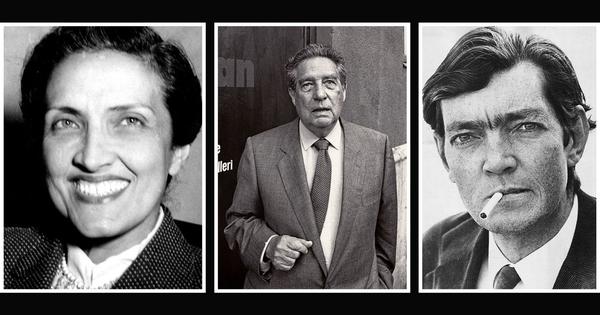
In 1953, a Brazilian woman in her early fifties stepped off a plane in Delhi at the personal invitation of Prime Minister Jawaharlal Nehru. She was not a politician – she was a poet. Cecília Meireles had been chosen as the sole Latin American delegate to a gathering of intellectuals convened in New Delhi to ask an urgent question: could Gandhi’s philosophy serve as a creative counterpoint to the nuclear tensions of the Cold War?She arrived on January 1 and immediately wrote home that Indian life felt “as familiar to me as if I had always lived here”. The sense of recognition ran deep and recurred: years after the visit, she would still describe India as the place where she had felt “most inside my own inner world”.The route to IndiaBut its genealogy was unexpected. In a 1964 interview, she described how she had come to India: “My grandmother spoke like [the 16th-century Portuguese poet] Camões. It was she who first drew my attention to India, to the Orient – cata, cata, que é viagem da Índia (“come along, it’s a journey to India.” Perhaps a nautical idiom for urging haste), she used to say when she was in a hurry. Tea from India, stories, the past – all of it led me, at the same time, to India and to Portugal.”The route to India, in other words, ran through the Azores and through Camões – through the Portuguese imperial archive. She herself would later name it directly: “The Indian vocation of Brazil is a kind of historical fate, when one remembers that the discovery of Brazil was a mere accident on the route of the navigators bound for India.”By the time she left India, in early March, she had visited 15 cities, received an honorary doctorate from the University of Delhi, and written 60 poems alongside a series of chronicles dispatched to the Diário de Notícias in Brazil. Nowadays, almost nobody in India remembers her visit.Indian readers are far more likely to recognise two other Latin American writers who engaged with the subcontinent: Octavio Paz, Mexico’s Nobel laureate, who served as ambassador in Delhi for six years, collaborated with Hindi poets, and helped organise the first exhibition of tantric art in the West; and Julio Cortázar, the Argentine master of the fantastic and author of Rayuela.Read together, these three writers illuminate the ambiguous position of the Latin American intelligentsia between West and East – before “Global South” existed as a category that could paper over those contradictions.A perception laboratoryMeireles arrived in India having read Tagore since her twenties, and her engagement went well beyond reading: her Portuguese translation of his play The Post Office – made, as she herself admitted with some regret, from a Spanish intermediary version rather than from Tagore’s Bengali original – had been staged at the Teatro Municipal in Rio in 1949.Meireles’s collection Poems Written in India is above all a perception laboratory, a record of what happens to a highly trained sensibility when immersed in light, texture, smell, and human form that exceed its existing categories. She does not explain India – she renders it, the way a painter renders a landscape without a caption.In Humility, a young woman sweeps a garden floor – crouching, bent, ancient before her time – and what Meireles sees is a visual composition: the old sari trailing in the dust, its thin gold border tracing messages in the sunlight, silver glinting at the nostrils, ears, wrists, ankles. “A resplendent poverty,” she writes. Much as one may admire her poetry and description skills, this is not a poem one reads today without discomfort.Alongside the poems, she was dispatching chronicles to the Diário de Notícias – a more improvisatory record of her weeks in India: a craftsman’s workshop in Jaipur where hands worked faster than the eye could follow; the same quality of crowd-noise she associated with Saturday mornings in Rio, surfacing in a Delhi market. The chronicles reveal a Meireles more porous to accident, more willing to be confused – not only the lyric gaze but the curious, slightly bewildered one.Octavio Paz’s India is more intellectual. In Ladera Este (1969) and El mono gramático (1974), he used India to think through language, desire, and time itself, returning always to the comparison with Mexico: two ancient civilisations shaped by colonialism, both carrying a pre-colonial inheritance that modernity tried and failed to erase.In Vislumbres de la India, he describes arriving in Bombay and feeling a jolt of recognition – the pre-Columbian pyramids of Teotihuacan and the temple complexes of South India arising in his prose as rhyming structures, evidence of a shared human impulse to inhabit time against forgetting.And yet the framework carries contradictions. Mexican sociologist Roger Bartra argued that the image of indigenous culture Paz helped construct – melancholic, cyclical, resistant to history – was less an ethnographic description than a nationalist myth. When Paz turns to India, he imports the same operation: India’s ancient civilisations risk inheriting the same frozen quality as his mythologised pre-Columbian Mexico.This tendency is most visible in his treatment of Islam. In Vislumbres, he reflects that in both Mexico and India, the arrival of monotheism – Christian in one case, Islamic in the other – failed to extinguish the older, polytheistic way of being in the world. It is a seductive observation but historically problematic. Christianity arrived in Mesoamerica as the explicit instrument of colonial conquest. Islam’s presence in the subcontinent is a far more layered history; to frame it as a break in an eternal, implicitly Hindu India is to reproduce the colonial belief that British imperial administration codified and Hindu nationalism would later inherit.Julio Cortázar’s approach is the most formally radical. Prosa del Observatorio (1972) is the only book in which he is both author and photographer: his own images of the Jantar Mantar observatories woven with a spiralling prose-poem ranging from migratory eels to the student uprisings of 1968. The most philosophically charged passage is not about India at all: it is about eels – and centuries of European naturalists failing to resolve the mystery of their reproduction.This becomes a meditation on the limits of a rationalism that mistakes its instruments for reality. Jai Singh’s observatories propose something different: not the conquest of the unknown but a patient dwelling inside what cannot be finally measured.Cortázar had come to Delhi as a United Nations translator, staying as a guest in Paz’s own ambassador’s residence – a story reconstructed from declassified diplomatic files and personal correspondence in Indranil Chakravarty’s The Tree Within. His published letters from Delhi record a writer who was not at ease in India.Writing to a friend from his United Nations office, he described his Indian colleagues as figures performing obscure rituals – passing cloths over chairs, threading wires through locks, gazing at plugs that did not work. He concluded: “We seem like what we are: the barbarians of the West. Kipling was right: East and West never shall meet.”The formal method of Prosa del Observatorio can be read as a direct response to this impasse: a writer who cannot bridge the East-West divide through analogy or lived intimacy instead builds a structure in which the tension itself becomes the subject. This is the gaze of a thoroughly Europeanised intellectual who, confronted with Asia, was honest enough about his bewilderment to make it the formal condition of his book. Argentine thought is, in its dominant tradition, defined by what Argentine literary critic Beatriz Sarlo called a cultura de la mezcla – a creole formation built on the difficult, never fully resolved negotiation between a European stratum and a local one.The Indian encounterNone of these writers came to India looking for an escape from their own civilisation and that separates them more decisively from the European tradition than anything else. The line that runs from the Romantics through the Orientalists to the 1960s hippie trail is, at bottom, a literature of flight: India as the place where the exhausted Western self goes to be dissolved, renewed, or consoled.Paz, Cortázar, and Meireles were doing something different. India was not their elsewhere – it was another version of their here, and it obliged them to confront their own Latin American self-image.For Meireles and Paz, this was reinforced by an ease with the pervasiveness of the sacred in everyday life that European visitors systematically lacked. In Brazil, the candomblé religion has never drawn a clean line between street and temple; in Mexico, the Virgin of Guadalupe coexists with pre-Columbian deities in a syncretism that stopped being a paradox centuries ago. Meireles moving through Varanasi did not need to suspend disbelief.Cortázar’s discomfort is structurally revealing for the other two writers as well: the Latin American intellectual elite of that generation was, in large measure, as European as Global South – carrying Paris in their heads as much as Buenos Aires, Rio de Janeiro or Mexico City. What distinguished them was not that they had escaped this formation but that they brought to it a layer of colonial experience that made them, at their best, more self-aware about what they were doing when they looked at another culture.Paz once wrote that India never stops asking a question of everyone who visits, though he refused to say what the question was. The Latin Americans arriving in India in the mid-20th century were already asking a version of it at home: what it meant to inhabit a society that was neither fully Western nor fully of the world the West had colonised.The category of the “Global South”, when it finally arrived, would give a name to the solidarity they were reaching toward. But naming is also a kind of smoothening: what the term unifies, it also pacifies. What made the encounters of these writers productive was precisely the discomfort, the projection, the failed analogies, the bewilderment of those who looked at another civilisation and could not decide whether they were seeing the other or a mirror, or both at once – and who found, lodged in that irresolution, a question they had not known they were carrying. India could not answer it.No encounter between civilisations can. What it could do – and did – was make the question impossible to misplace.Laura Erber is a Brazilian writer and editor whose work moves between poetry, fiction, and the critical essay. She is the author of several poetry collections and children’s books, and has written extensively on art and literature. She is the Global Partnerships and Fellowships Coordinator at the International Institute for Asian Studies (IIAS) in Leiden.
Cecília Meireles, Octavio Paz, Julio Cortázar: Latin America’s literary encounters with India
What made the encounters of these writers productive was not knowing whether they were seeing the other, a mirror, or both at once.
1,766 words~8 min read