THR Web Features / May 28, 2026
On Magnifica humanitas and encyclicals in history.
Ed Simon
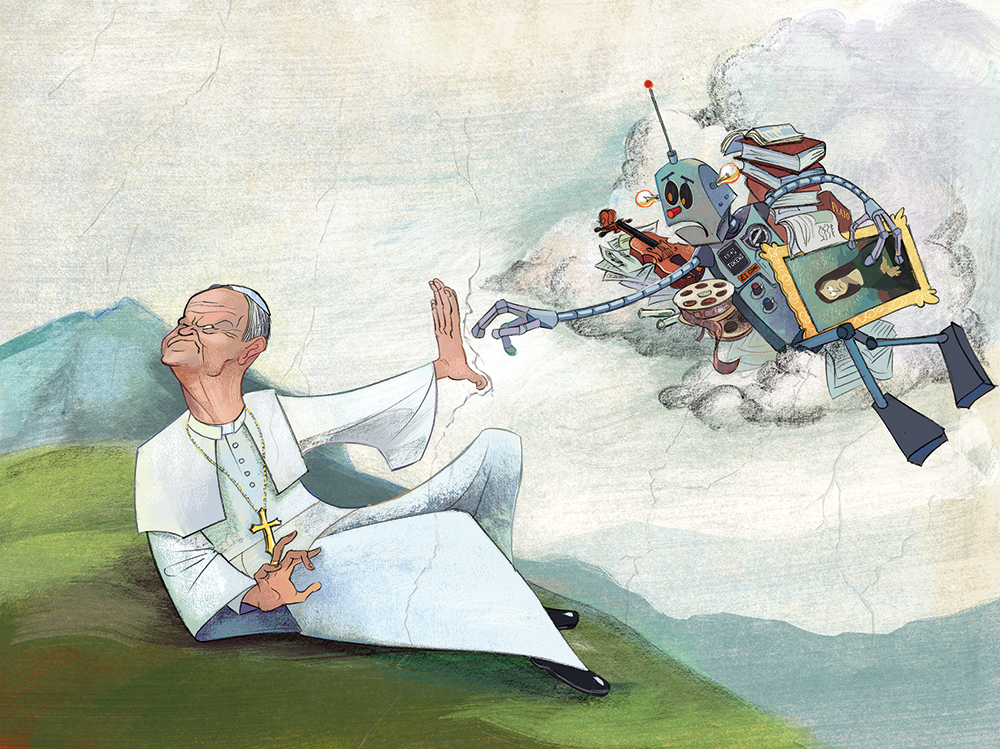
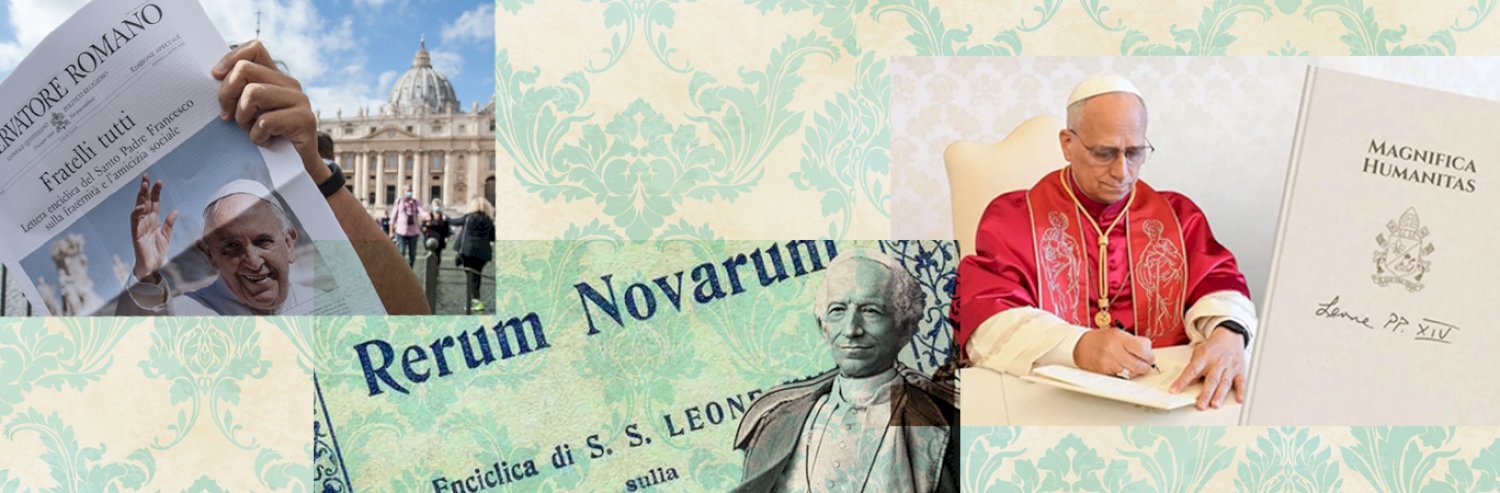
( THR illustration.)
Despite working in the grueling hell of Andrew Carnegie’s Homestead Steel Works near Pittsburgh, Pennsylvania, in the late nineteenth century, Peter Ferris—a devout Catholic—would cross the Monongahela River into the city of Braddock every week to attend Mass at the Slovak church there. While in the pews of Saint Michael’s, it’s not unlikely that Ferris would have heard the priest deliver a homily at some point about Pope Leo XIII’s 1891 encyclical, Rerum novarum. Addressing those who “possess not the gifts of fortune,” the encyclical states that “there is nothing to be ashamed of in earning…bread by labor.” More than expressing the dignity of the working class, Rerum novarum made ideological commitments and even policy prescriptions. At the height of the Gilded Age, when robber barons throughout the industrialized world saw labor as a commodity and exploitation as their prerogative, Leo XIII emphasized the importance of a living wage, the role of the state in ensuring equity for those toiling in factories, and, most important, the fundamental right of workers to organize trade unions in order to ensure their basic standards of living.