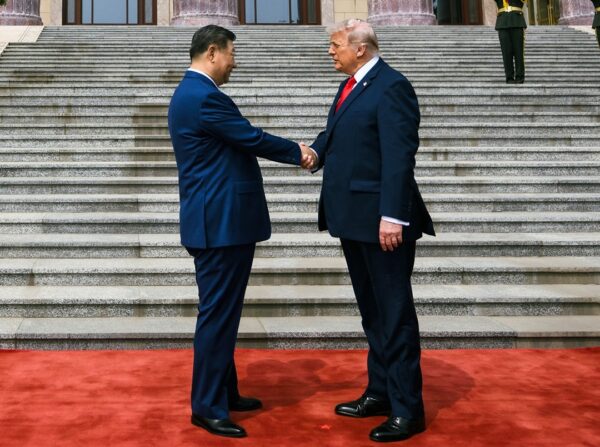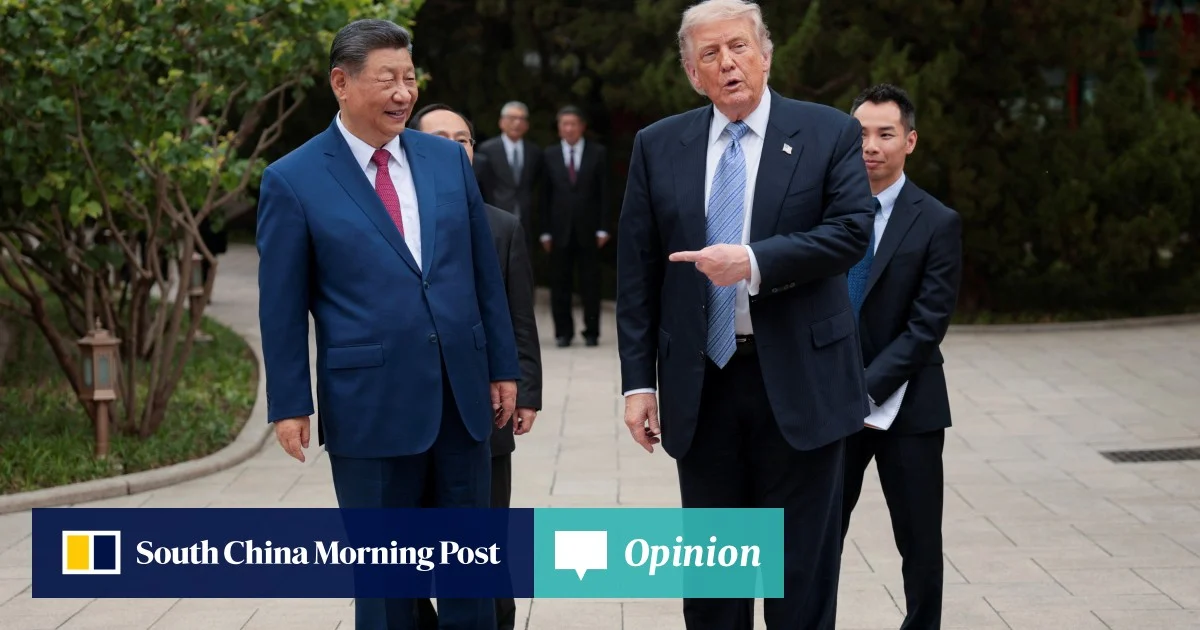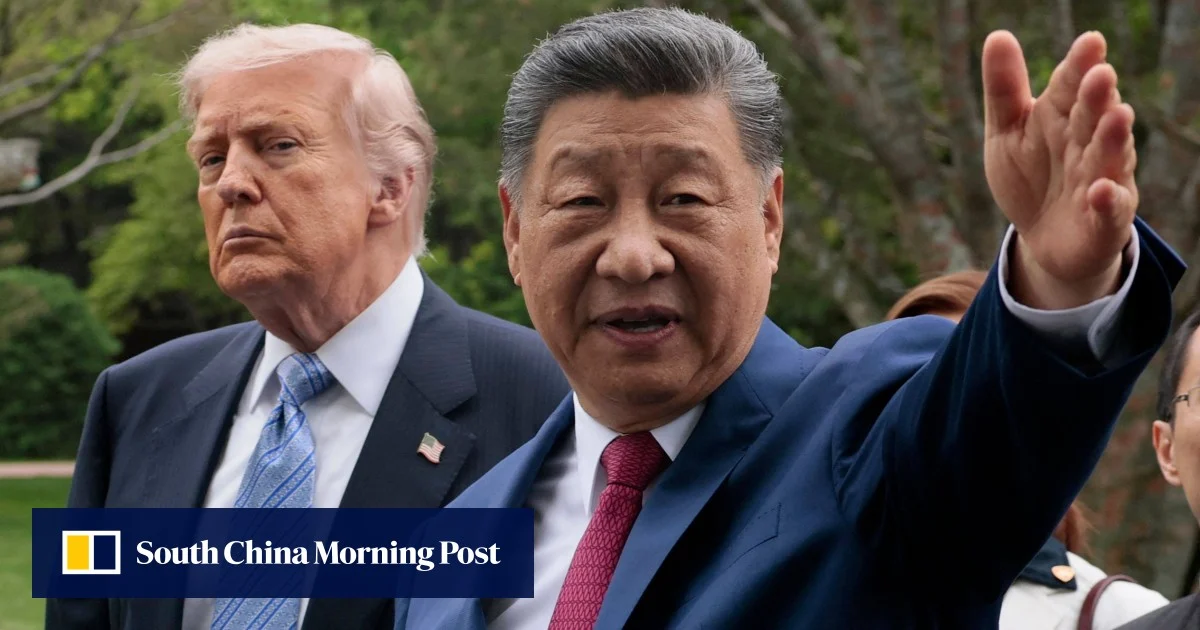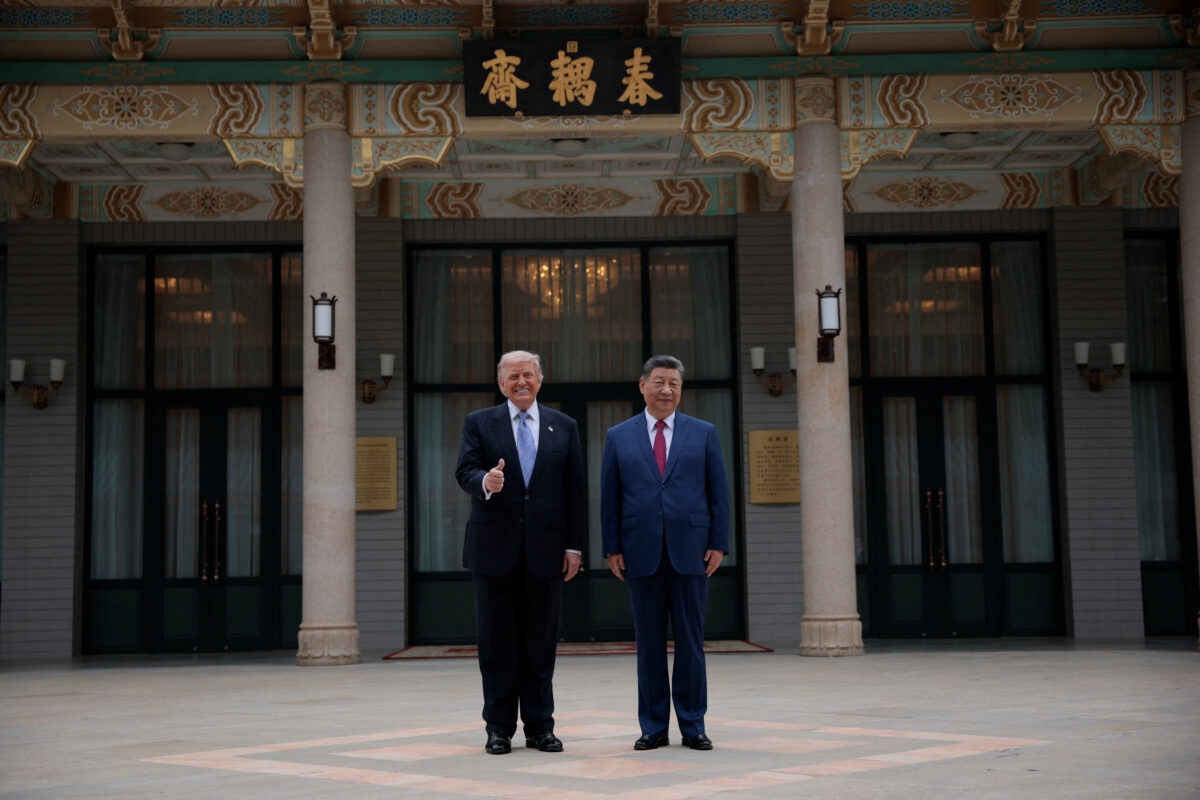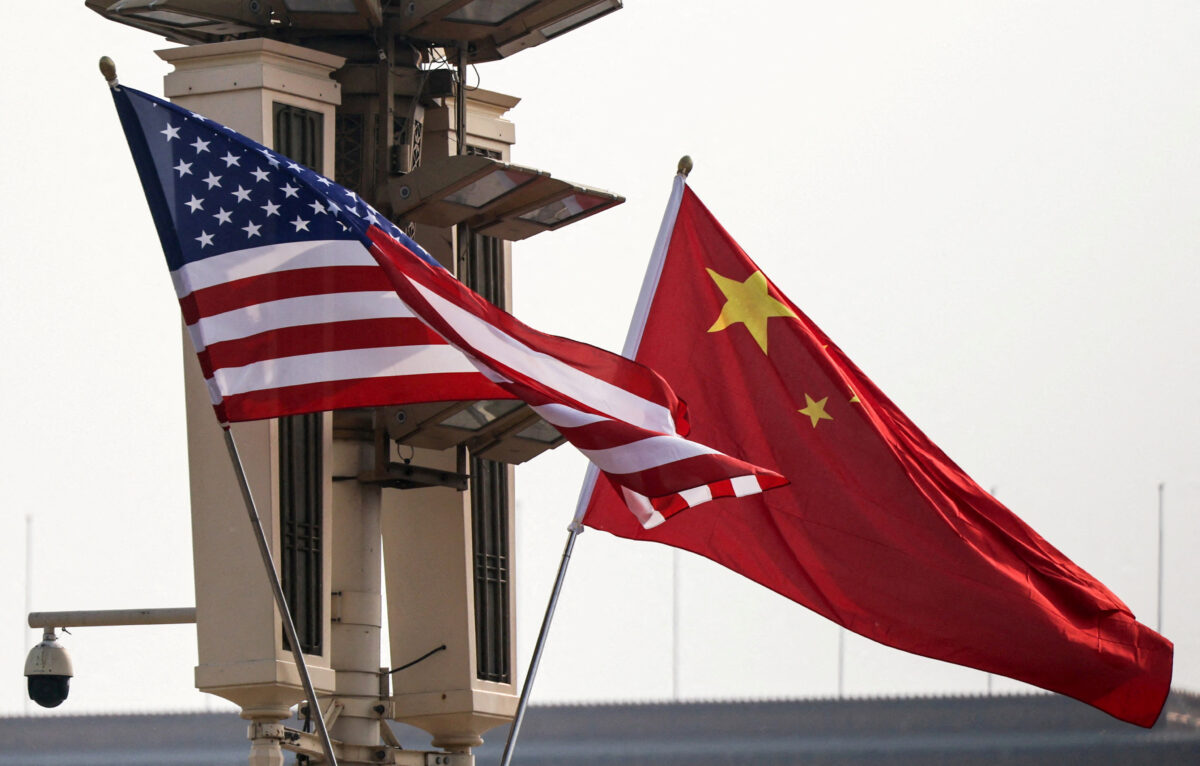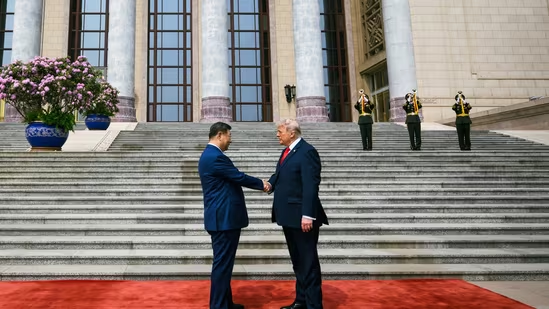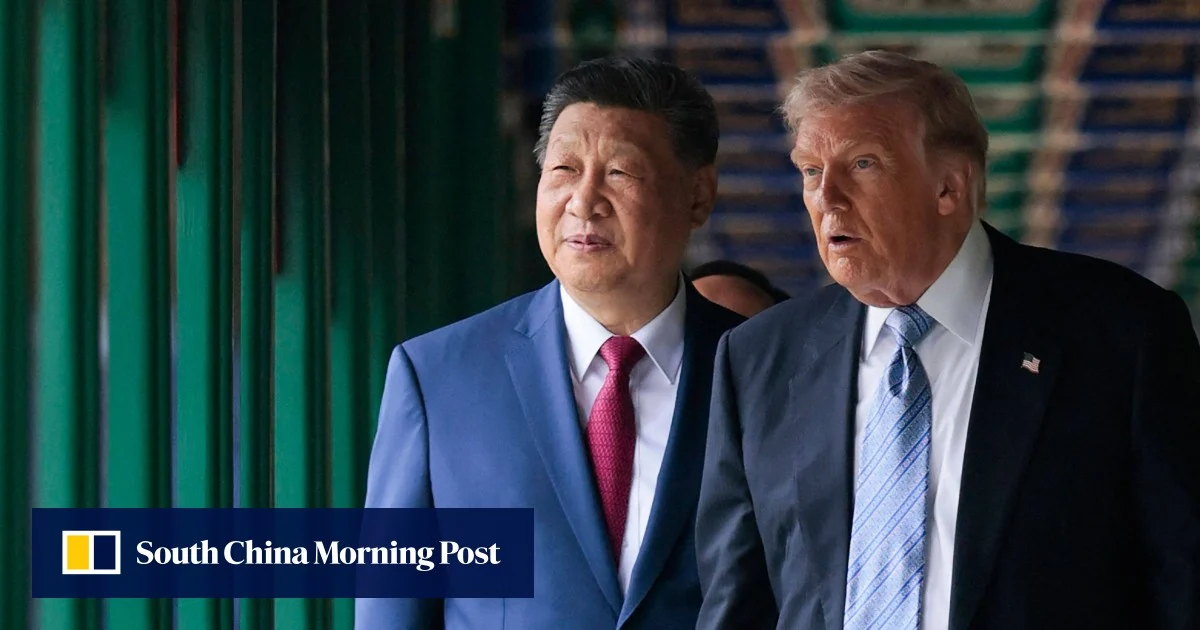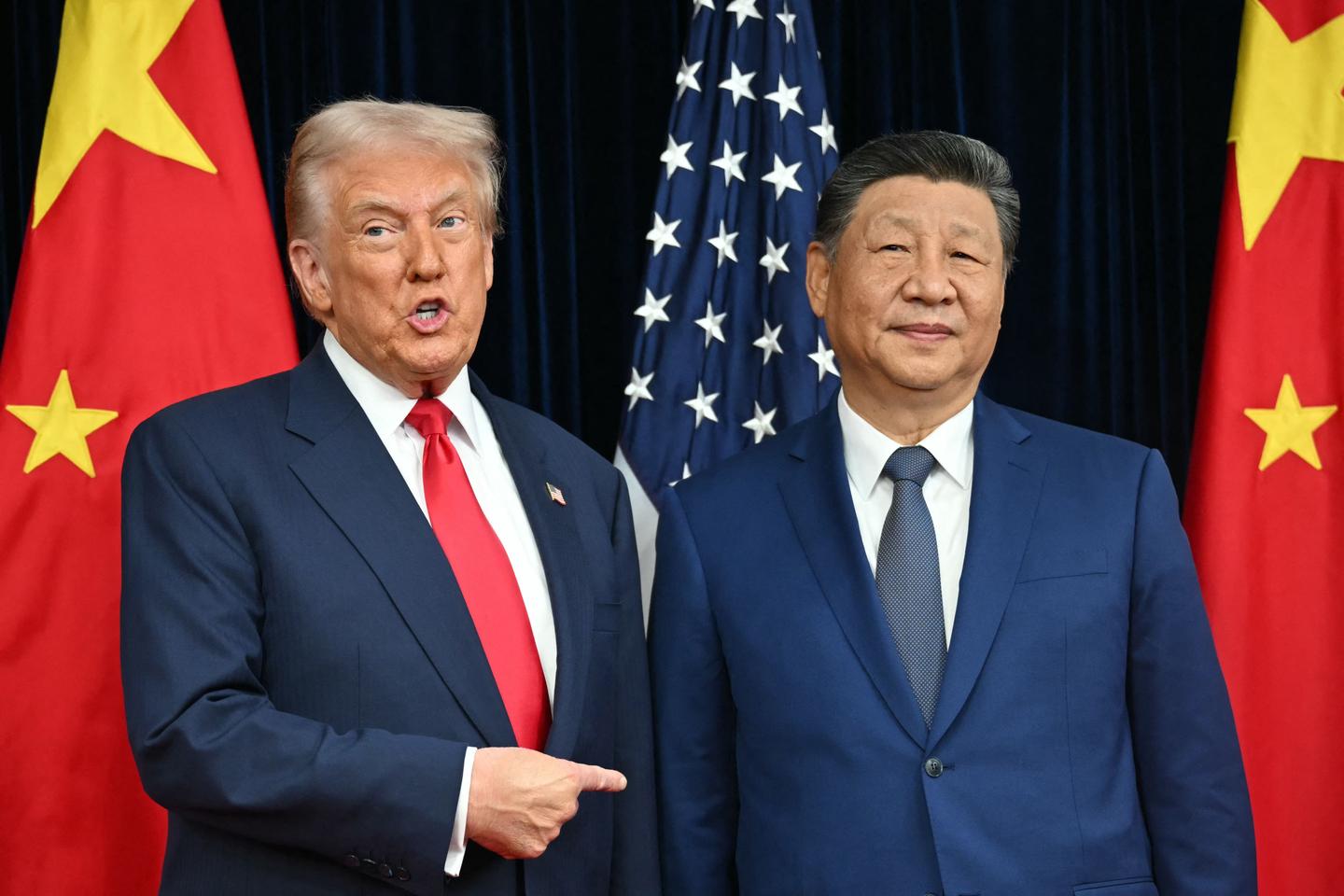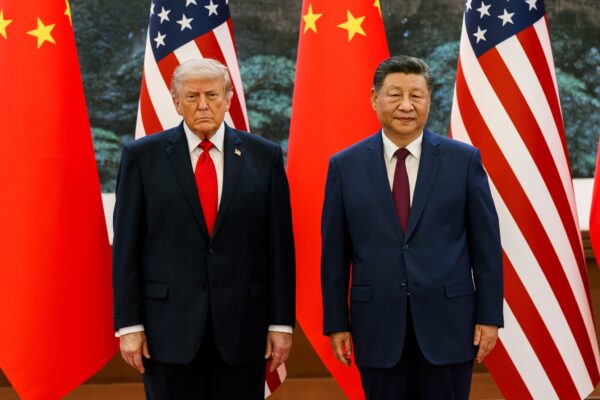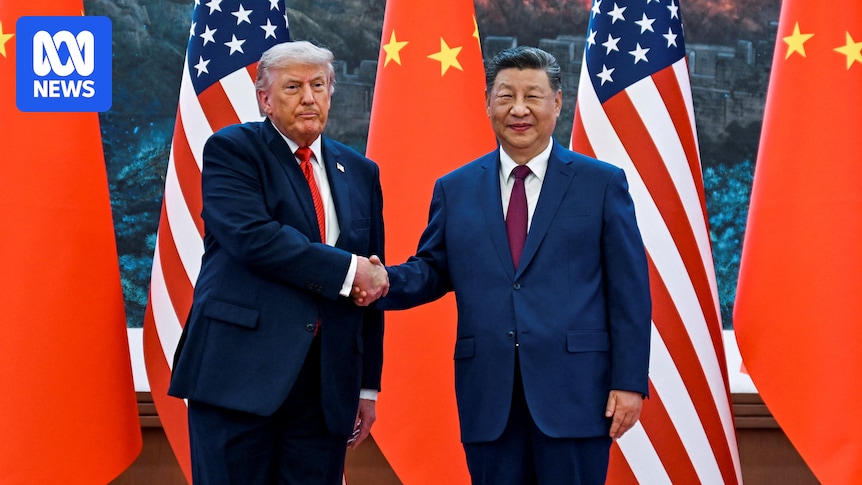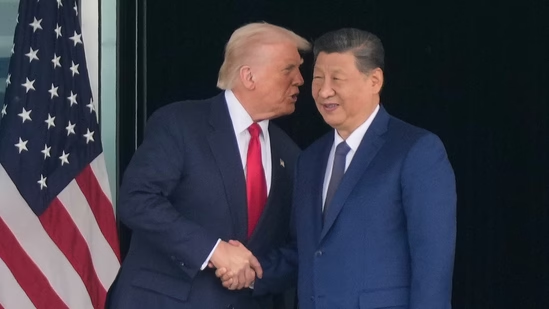
The US-China bilateral dialogue remains dominated by commercial stabilisation and trade truce mechanisms. However, their competition in the security sectors remains insulated from diplomatic management. The May 2026 Summit represents a temporary, yet tactical truce among two of the world’s largest military powers.President Donald Trump and Chinese President Xi Jinping (AP)The stability-instability paradox exemplifies the US-China security relationship in the Indo-Pacific. At the heart of it lies China’s rapid expansion of strategic nuclear parity and survivability, as seen in the construction of solid-fuel intercontinental ballistic missiles (ICBM) silo fields in Xinjiang and Gansu, the deployment of multiple independently targetable re-entry vehicle (MIRV)-capable DF-41 missiles, and the integration of JL-3 submarine-launched ballistic missiles (SLBMs) on Type 094 nuclear-powered ballistic missile submarines (SSBNs). With this parity, the probability of a deliberate and direct strategic nuclear conflict decreases. China has 460 ICBMs and 300 siloes.Then another factor in this paradox is that the US entered the summit at a time when it was facing weapons depletion and rare-earth vulnerability. The US-Israel war on Iran has strained the US military-industrial complex to meet the ever-increasing demand for war weapons and technology. The US military has depleted its advanced precision weapon stockpiles in West Asia, yet replenishing these systems requires heavy rare earths and magnets over which China holds a complete chokehold. It is in a Sword of Damocles situation, forcing the US to accept a trade truce to avoid a total halt in the supply chain.President Xi’s public call for a “relationship of strategic stability” is a conscious effort to lock in this truce on terms favourable to Beijing for the next three years. It thus establishes a diplomatic baseline in which any future US defence sales to Taiwan or tech export controls can be framed by Beijing as violations of the Summit’s agreements.Given these two factors, the strategic-level stability paradoxically encourages China to engage in aggressive, low-level conventional and grey-zone coercion, instability in the Western Pacific, including East Asia, Southeast Asia and Oceania. China’s geostrategic calculation factors in a level of US toleration of the former’s localised aggression to avoid systemic escalation.The uncertainty surrounding nuclear security cooperation between the two creates volatility in the Indo-Pacific. Beijing is undergoing a rapid expansion of its nuclear arsenal, which is projected to increase up to 1,000 nuclear warheads by 2030. China is preparing an operational posture for a launch-on-warning capability, using early-warning systems and ground-based radars to detect incoming strikes and launch a retaliatory strike before detonation. Moreover, the gravity of nuclear threats increases after China’s suspension of bilateral nuclear arms control over the US policy of arming Taiwan, and also refusing to join the trilateral disarmament talks with the US and Russia.Given the expiration of the US-Russia New START Treaty in February 2026 and China’s nuclear modernisation, the US strategic posture can be derived from the updated unclassified 2024 Nuclear Weapons Employment Guidance. This revision is seen as a policy shift with a strategic focus on simultaneously deterring multiple peer nuclear adversaries, particularly China, Russia, and North Korea. To implement this guidance, the US is seen modernising its strategic triad through the Sentinel ICBM replacement programme of 2025, the deployment of Columbia-class submarines by late 2028, and the development of the Golden Dome missile defence initiative of 2025 to defend against hypersonic and advanced ballistic threats. The Sentinel ICBM system will replace the outdated Minuteman III ICBM triad, which has been operational since 1970. The US missile defence technology is also increasingly obsolete against the present threats of advancement in the sector for China, Russia and North Korea.Now, these situations of instability are intensified by several asymmetries between the two powers. First, the US defence industry is heavily dependent on Chinese-controlled supply chains for critical and rare-earth minerals. This dependency is not only raw materials like gallium, germanium, antimony, and graphite, but also advanced refined products like yttrium, scandium, neodymium, and indium, which are used as essential inputs for precision-guided munitions, AESA radar arrays, and stealth coatings.Second, they view channels of communication frameworks differently. Although the China-US Military Maritime Consultative Agreement (MMCA) helps reduce escalation risks through military hotlines, it is non-binding, and either side can withdraw or refuse to participate. For example, it was suspended following Nancy Pelosi’s visit to Taiwan in August 2022. It is not a mechanism to resolve conflicts over island disputes, such as those in the South China Sea. It is problematic when China perceives these as a matter of sovereignty, while the US presses for freedom of navigation and overflight.Third, the maritime chokepoints in the Strait of Malacca and the Strait of Hormuz are another area of tension. Each Strait shares 24% and 11% of global seaborne trade, respectively. China’s dependence on the Straits is immense: About 80% of its hydrocarbon imports pass through the Strait of Malacca, while about 52% of its oil imports pass through the Strait of Hormuz. Given the US Navy’s distant blockade in the Strait of Hormuz in its war against Iran, China’s “Malacca Dilemma” is even more worrying for China. China has been developing alternative routes, such as the China-Pakistan Economic Corridor and the China-Myanmar pipeline corridor. It increases the potential for strategic friction between the US and China.Therefore, these developments have eroded predictability and strategic stability. Any bilateral nuclear reduction measure is disincentivised, pushing each power toward maintaining quantitative and qualitative thresholds sufficient to deter the other. Moreover, it also affects regional security architectures in the Indo-Pacific, with a visible shift away from inclusive, ASEAN-centred multilateral security dialogue toward a polarised network of overlapping, Western-led coalitions, such as the AUKUS, the Quad, and the US-Japan-Philippines trilateral arrangement. These counter bilateral partnerships. This network of security frameworks can trigger flashpoints if a localised confrontation occurs at a maritime outpost, for example, in the Senkaku/Diaoyu Islands in the East China Sea.The May 2026 Summit has done little to resolve the underlying security competition between the US and China. Beneath the veneer of diplomatic progress, both sides continue to prepare for a long-term rivalry shaped by asymmetric vulnerabilities and shifting alliances. The summit’s outcomes mask ongoing instability and the persistent risk of escalation in the Indo-Pacific. Actual stability will require more than temporary truces and performative gestures—it demands addressing the root causes of mistrust and competition.(The views expressed are personal)This article is authored by Mehdi Hussain, former research associate, Indian Council of World Affairs.
A deeper look at US-China security competition
This article is authored by Mehdi Hussain, former research associate, Indian Council of World Affairs.
1,059 words~5 min read