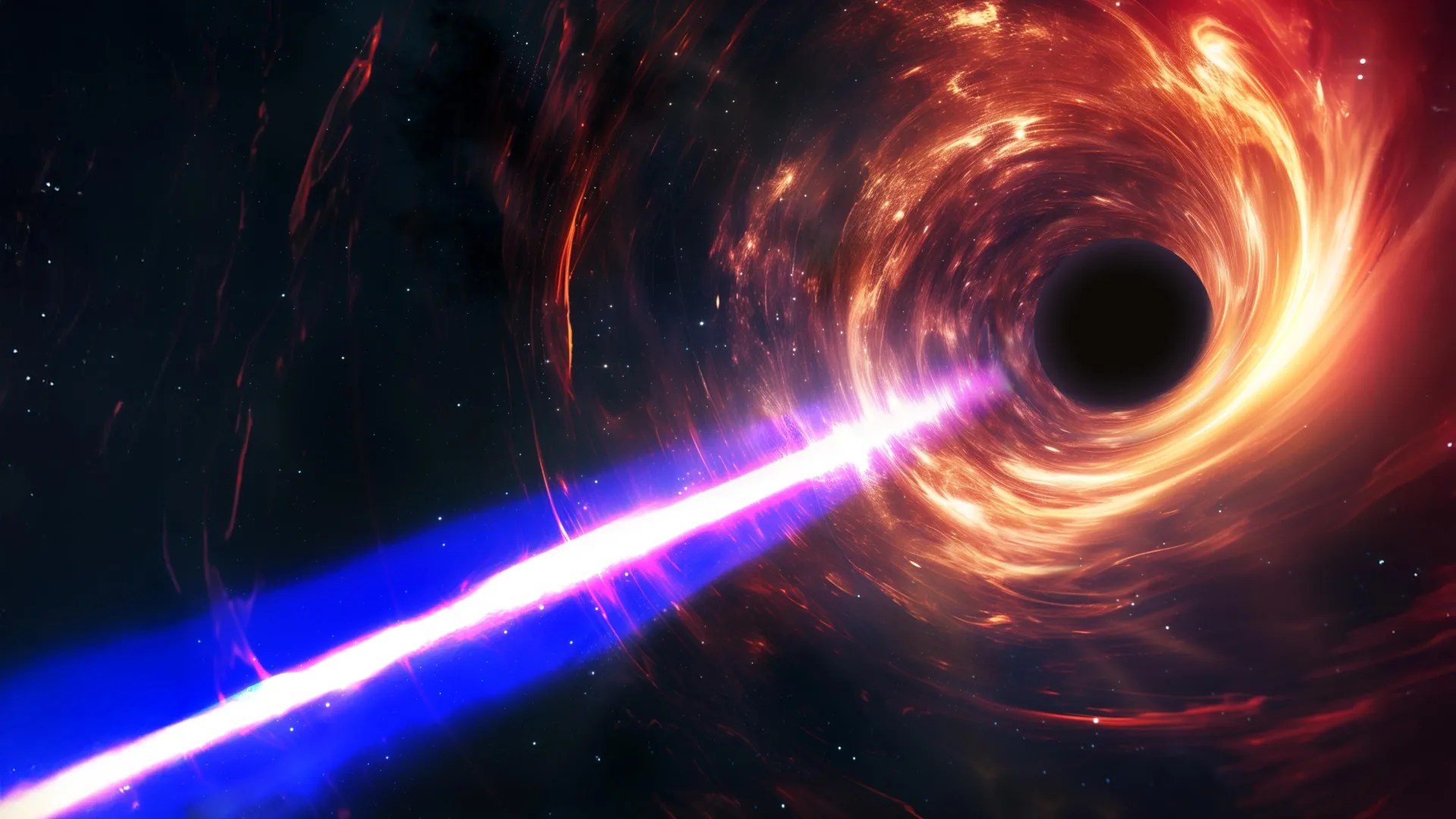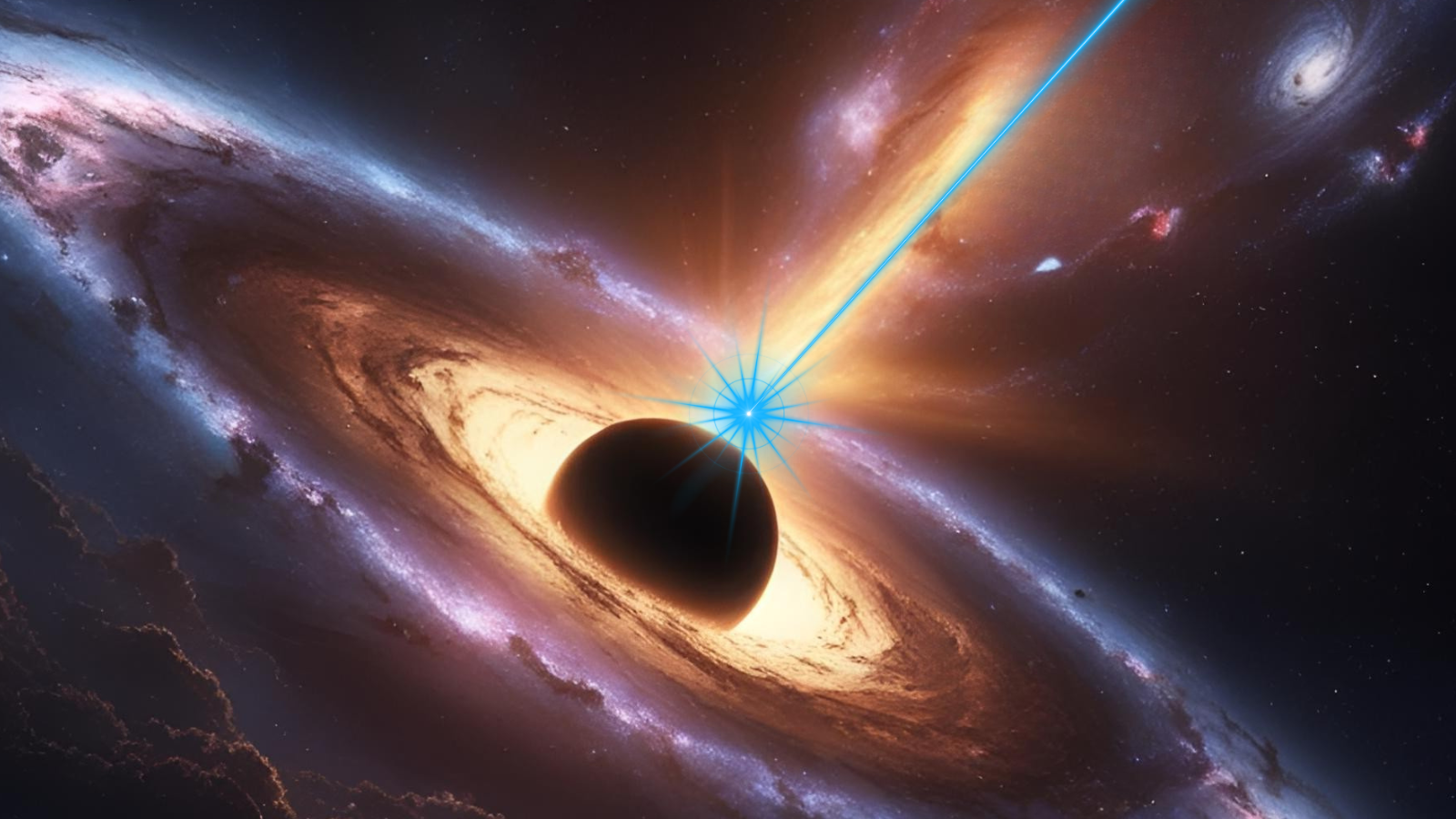
An illustration shows a black hole-powered blazar firing a powerful ghost particle at Earth
(Image credit: Robert Lea (created with Canva))
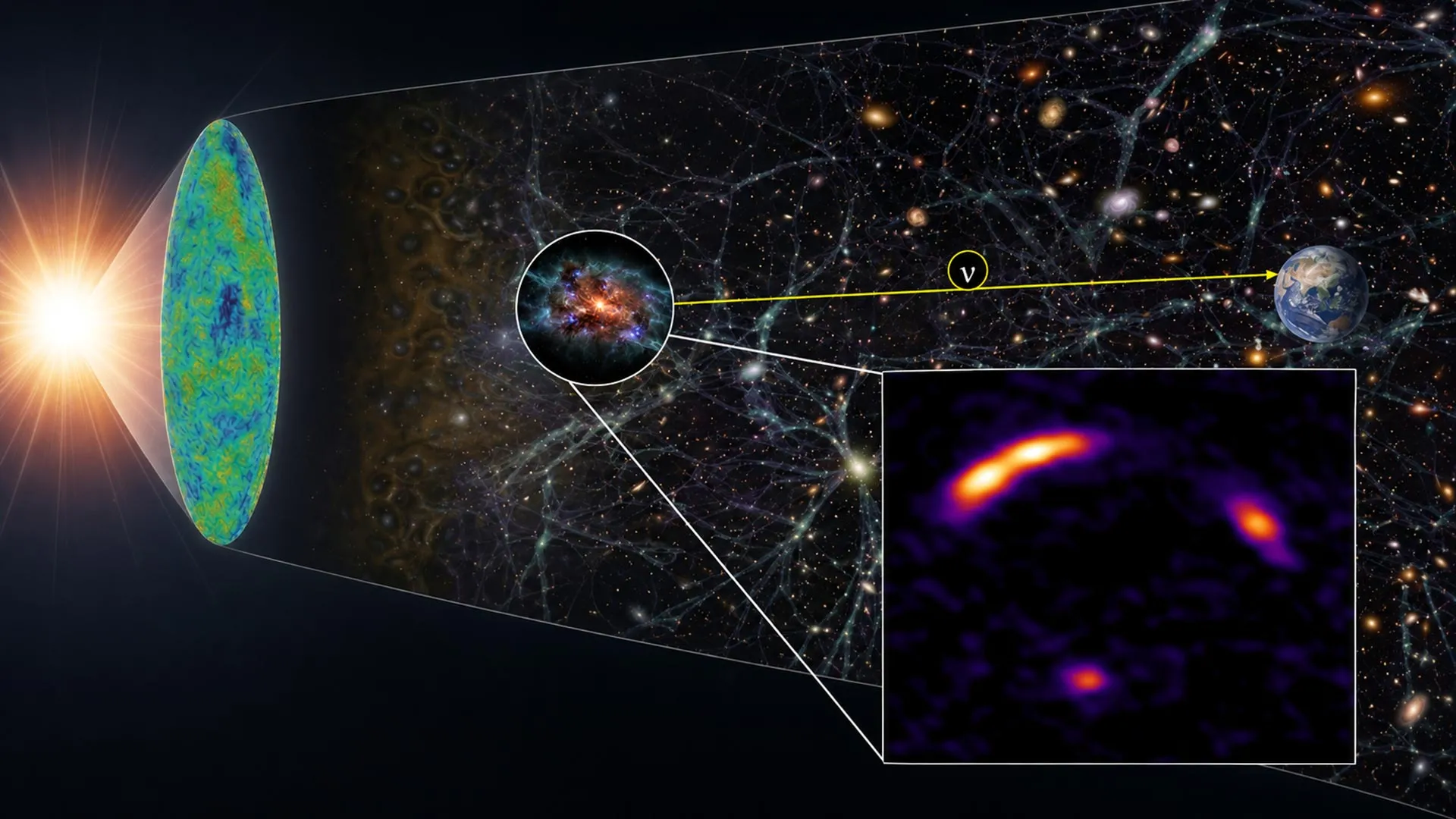
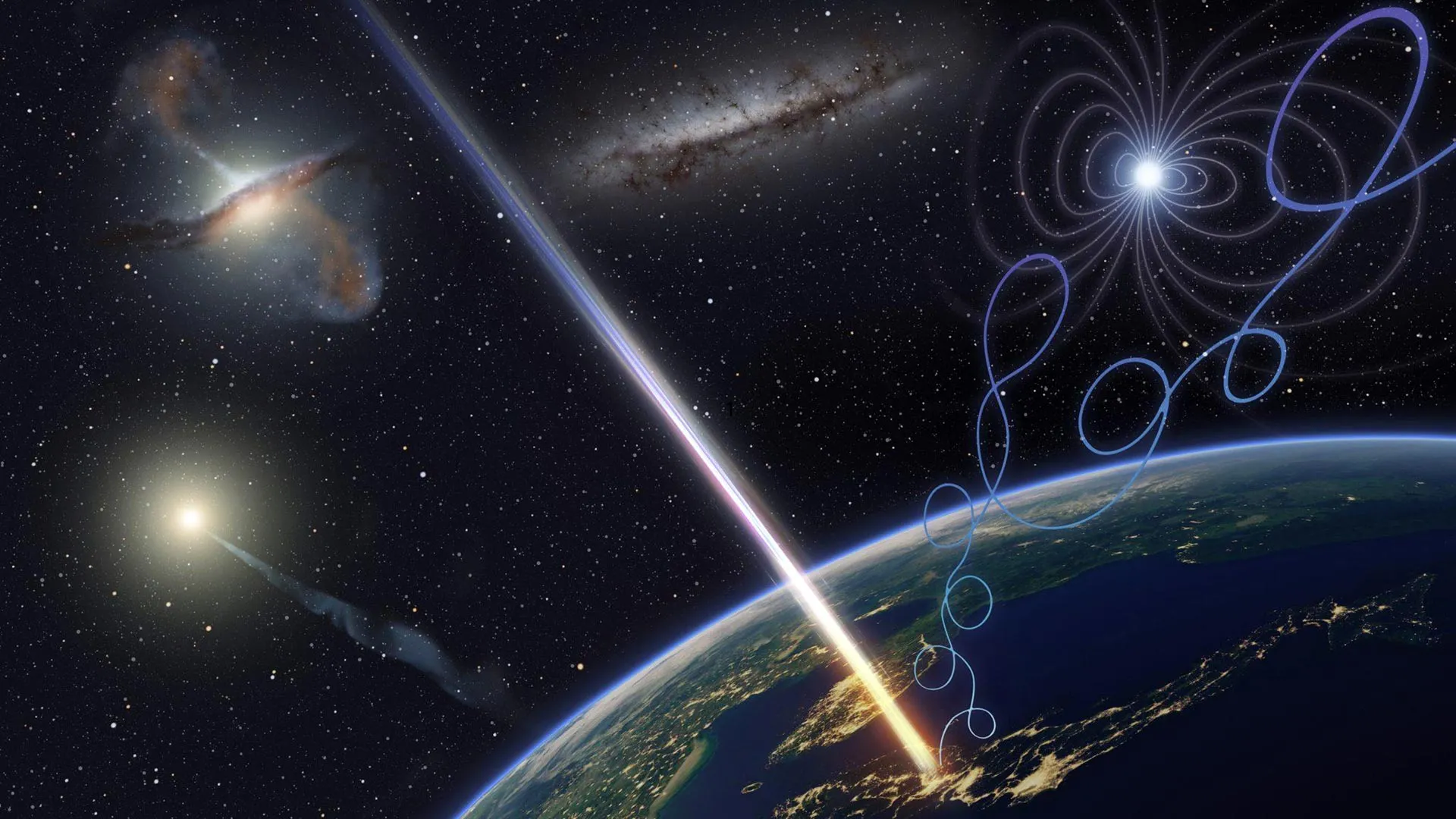
Scientists have discovered an ultra-powerful "ghost particle" or neutrino, which struck Earth and was detected in the Mediterranean Sea in 2023, may have been blasted at Earth by blazars powered by a feasting black hole engine.Blazars are a type of quasar, the regions at the hearts of galaxies that host feeding supermassive black holes and discharge powerful jets of radiation. Blazars are different from "ordinary" quasars because their orientation means that the energy, particles, and jets of plasma they blast out are pointed directly at Earth.The neutrino was 30 times more energetic than carried with it 30 times the energy of the previous most energetic neutrino ever detected. It arrived at Earth on Feb. 13, 2023, traveling at nearly the speed of light, and was spotted via the detection of a single muon (a subatomic particle) by the Kilometer Cubic Neutrino Telescope (KM3NeT), located 11,300 feet (3,450 meters) beneath the waves of the Mediterranean Sea. Blazars were initially suggested as the source of the particle, but this team of scientists took it upon themselves to confirm a specific class of these supermassive black hole-powered events as a possible origin."There are several possible explanations for the origin of this particle," team member Meriem Bendahman, from the KM3NeT collaboration, said in a statement. "For example, it has been proposed that such neutrinos are generated when ultra-high-energy cosmic rays interact with the cosmic microwave background radiation (CMB), the residual light from the early universe. But there is also the possibility that the neutrino originates from a diffuse flux produced by a population of extreme accelerators, such as blazars."A high-energy 'ghost'Neutrinos get their nickname of "ghost particles" from the fact that they have no electric charge and are virtually massless, meaning they pass through matter with little to no interaction. In fact, as you just read that sentence, around 100 trillion neutrinos passed through your body at nearly the speed of light. That makes detecting neutrinos incredibly difficult, even when like this one, they carry an energy of 220 million billion electron volts.For context, that is 30,000 times the energy that Earth's largest particle accelerator, the Large Hadron Collider (LHC), is capable of achieving. In fact, to accelerate a particle to such energies, the LHC would have to be expanded from its current length of 17 miles (27 kilometers) to around 25,000 miles (40,000 kilometers), the entire circumference of the Earth.Little wonder scientists are eager to understand where this particle came from and how it was boosted to such high energies.