Image by Merlin Lightpainting via Pexels | Not representative
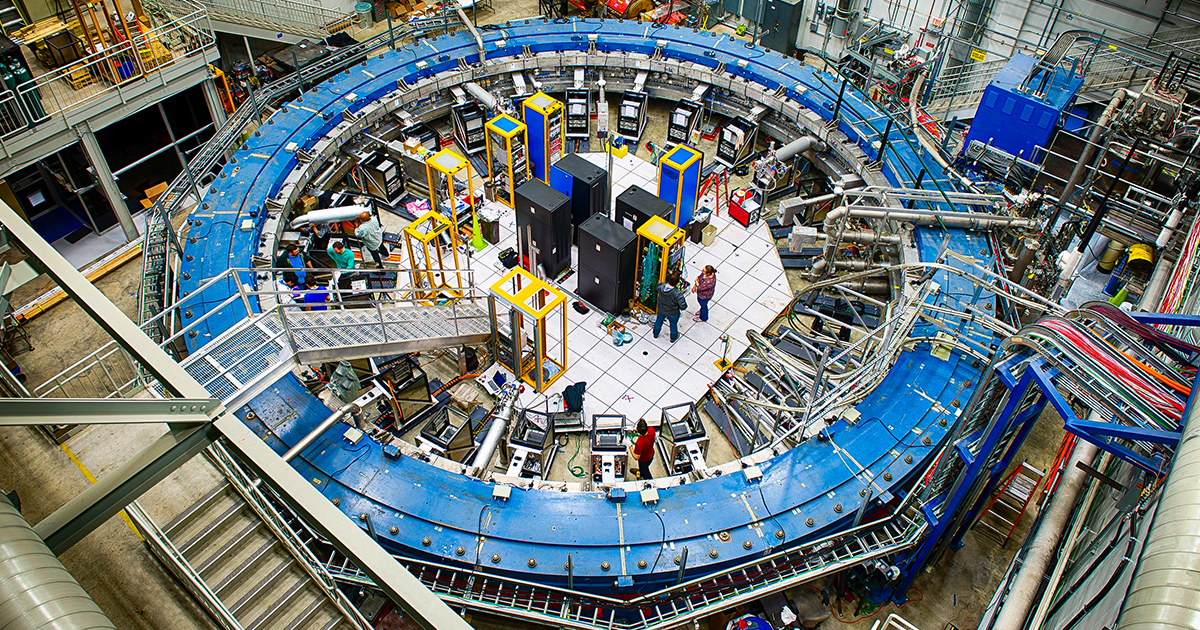
Scientists working on the Micro Booster Neutrino Experiment (MicroBooNE) have published results in Nature that rule out the existence of the sterile neutrino (a hypothetical type of neutrino that would not interact via the weak nuclear force, only gravity), a particle that had been suggested for decades as a possible explanation for puzzling behavior in neutrinos. This closes the door on one of the most popular theories in the field, while leaving the mystery itself still unsolved.
Neutrinos (tiny, hard-to-detect fundamental particles that are among the most abundant in the universe) are everywhere in the universe. “Neutrinos are elusive fundamental particles that are difficult to detect experimentally, yet are among the most abundant particles in the universe,” said David Caratelli, assistant professor of physics at UC Santa Barbara. Past experiments had shown results that did not match expectations, sparking speculation about a fourth type of neutrino, called the sterile neutrino. MicroBooNE’s data, however, did not support this idea.
The Standard Model of particle physics (the theoretical framework describing known fundamental particles and forces, but not including gravity, dark matter, or dark energy) explains most known particles and forces, but it does not cover everything. “We know that the Standard Model does a great job describing a host of phenomena in the natural world,” said Fermilab senior scientist Matthew Toups. “And at the same time, we know it’s incomplete. It doesn’t account for dark matter, dark energy or gravity.” Neutrinos are one of the areas where the model falls short. They were once thought to have no mass, but experiments showed they change between three “flavors” (electron, muon, and tau types that neutrinos can transform between through a process called neutrino oscillation), which can only happen if they do have mass.