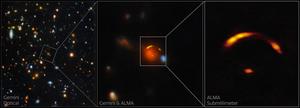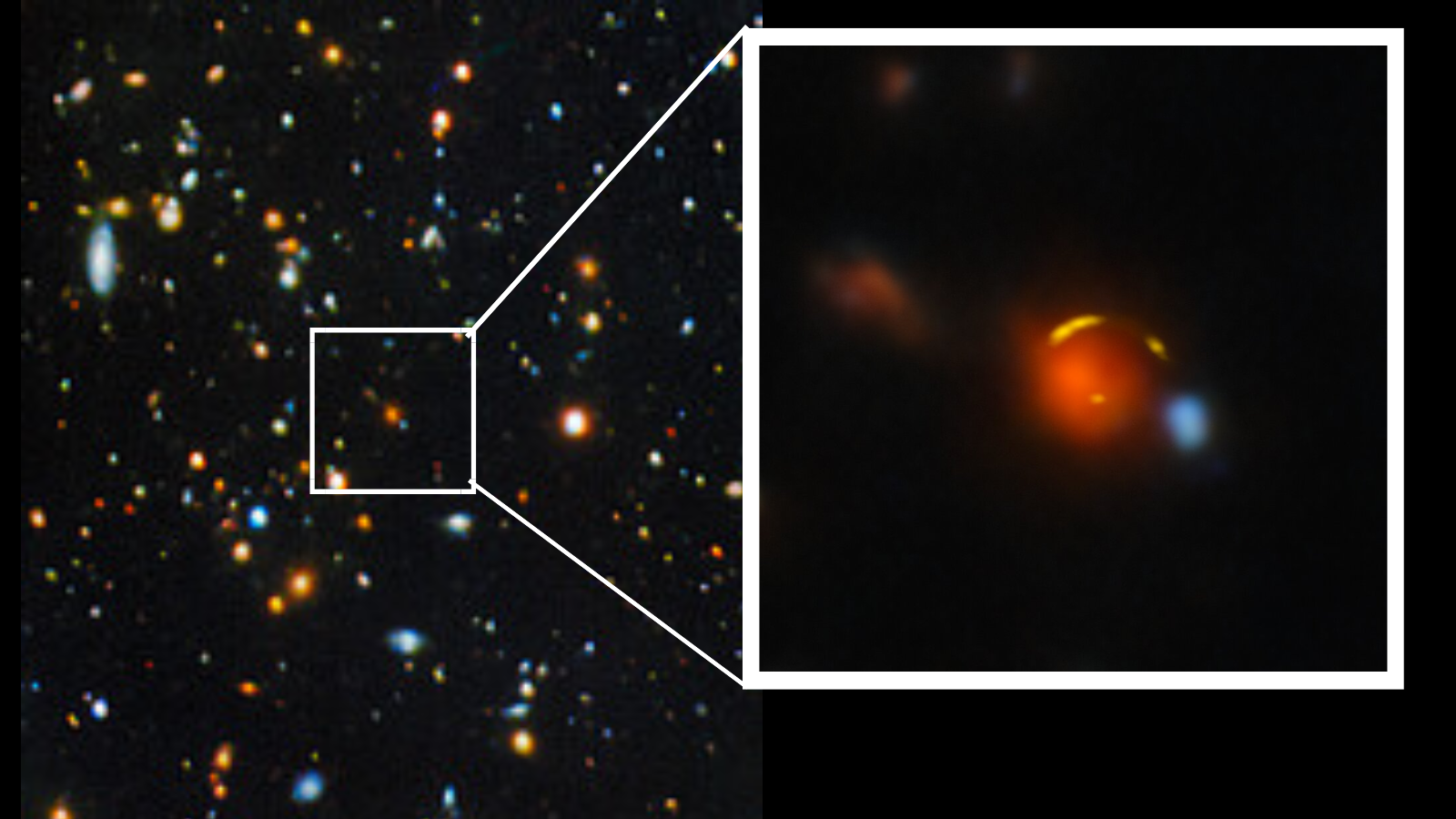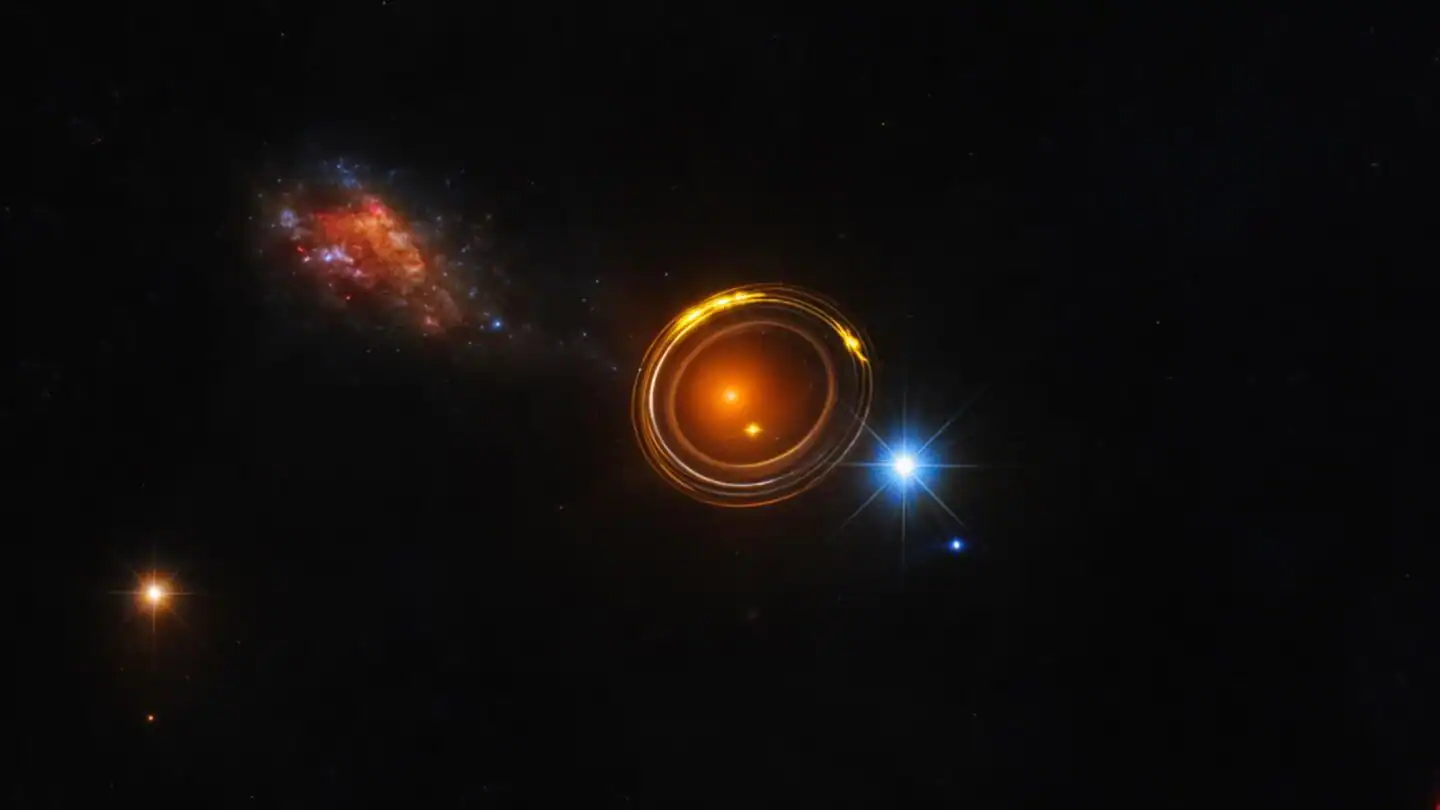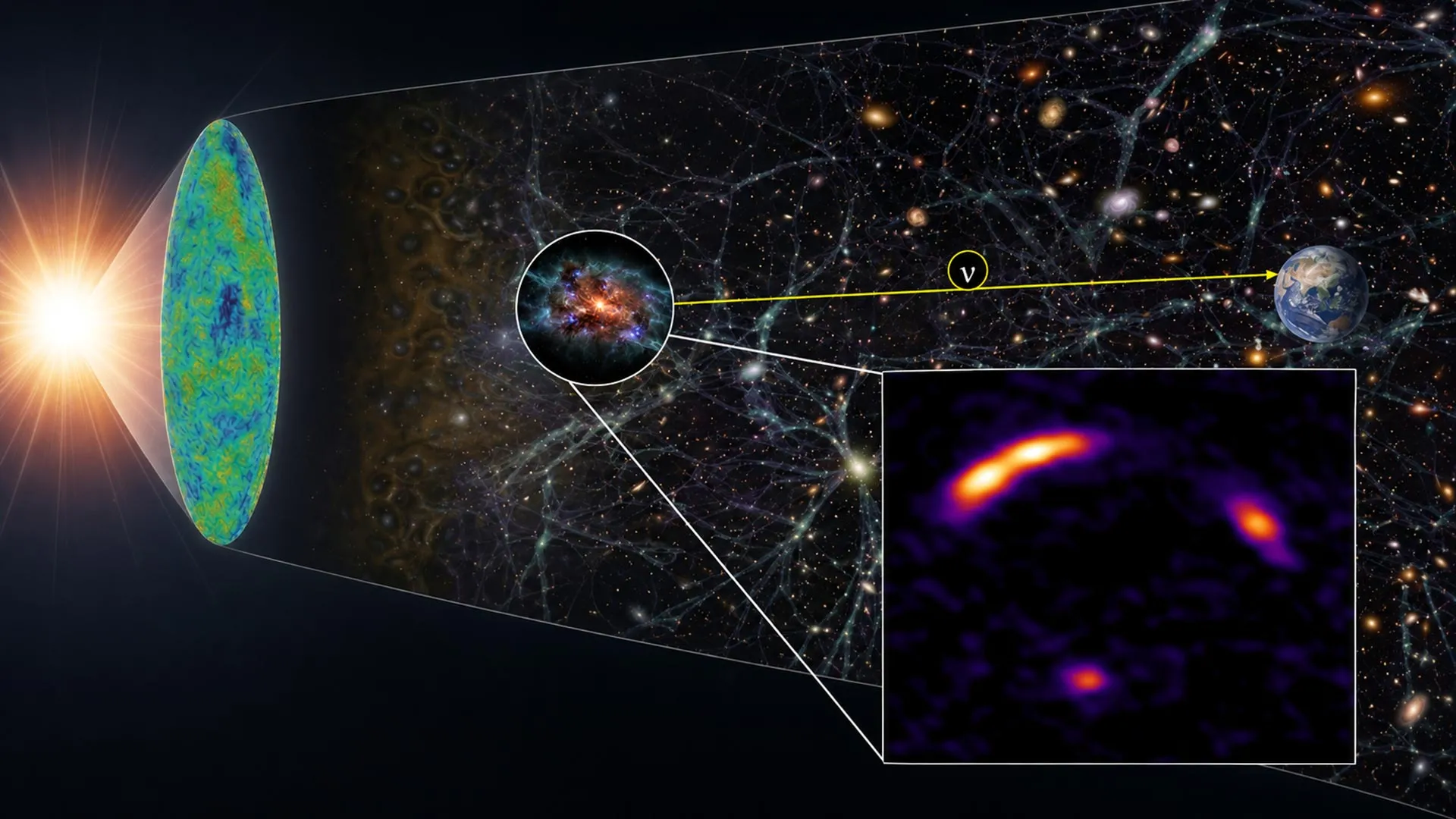
Astronomers using the Atacama Large Millimeter/submillimeter Array (ALMA) have tracked down the source of a powerful neutrino burst with the help of a remarkable cosmic phenomenon that acted like a natural telescope. What they discovered challenged expectations.
Researchers initially suspected that a supermassive black hole was powering an extraordinarily bright distant galaxy linked to the neutrino signal. Instead, observations revealed that the galaxy's energy comes from intense star formation. The finding provides important evidence that could help explain where many of the Universe's mysterious high-energy neutrinos originate.
Tracking One of the Universe's Most Elusive Particles
Neutrinos are among the most puzzling particles known to science. Vast numbers of them pass through space, and even through Earth, with very little interaction with matter. Although astronomers have identified a handful of galaxies capable of producing neutrinos, those known sources are not enough to account for the large population of high-energy neutrinos detected so far.
To investigate the origin of one such particle, an international team of researchers from MITOS Science Co., LTD., National Central University, Chung Yuan Christian University, Tohoku University, Fukui University of Technology, and the National Astronomical Observatory of Japan conducted follow-up observations using ALMA and several other telescopes.