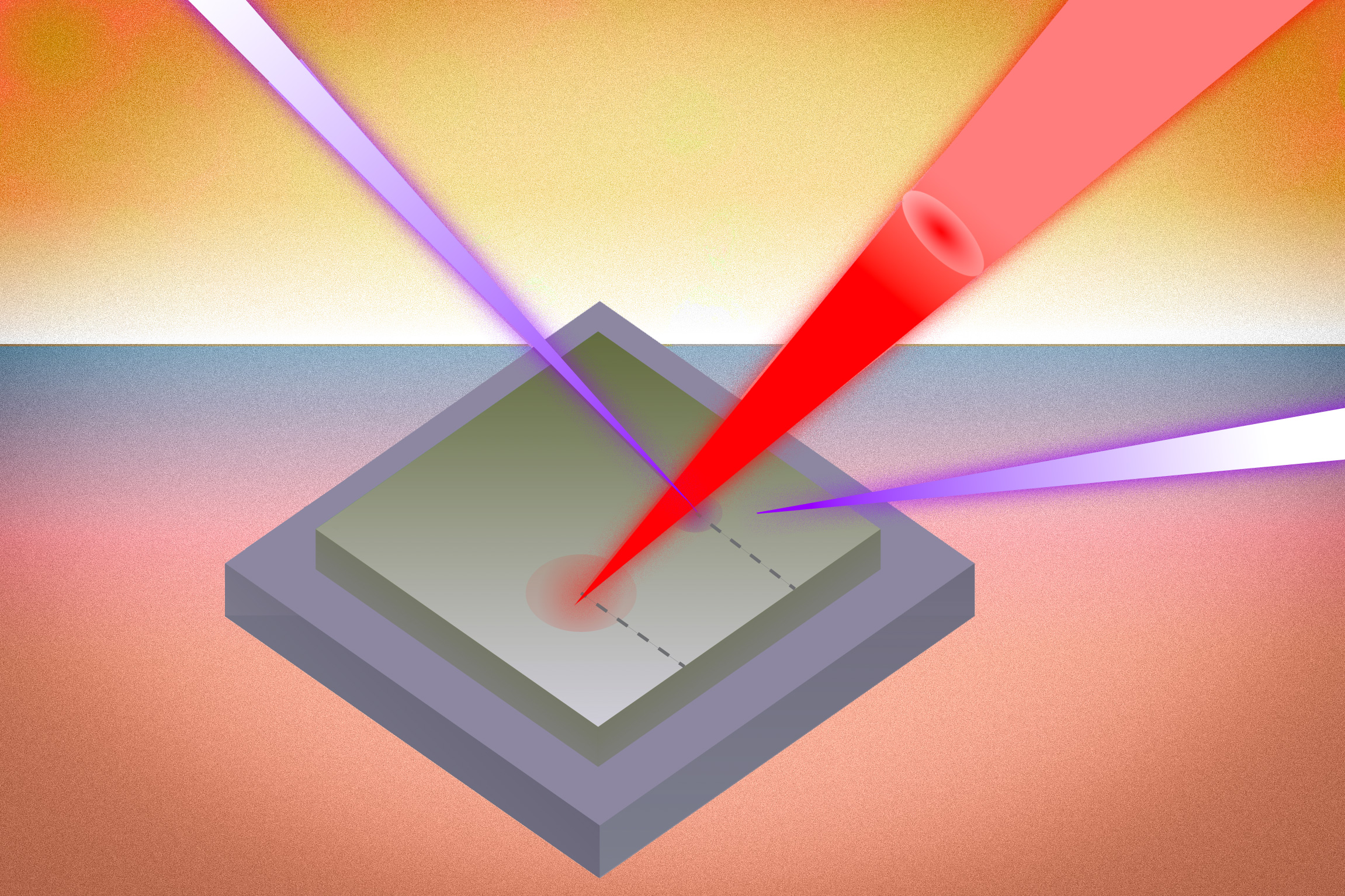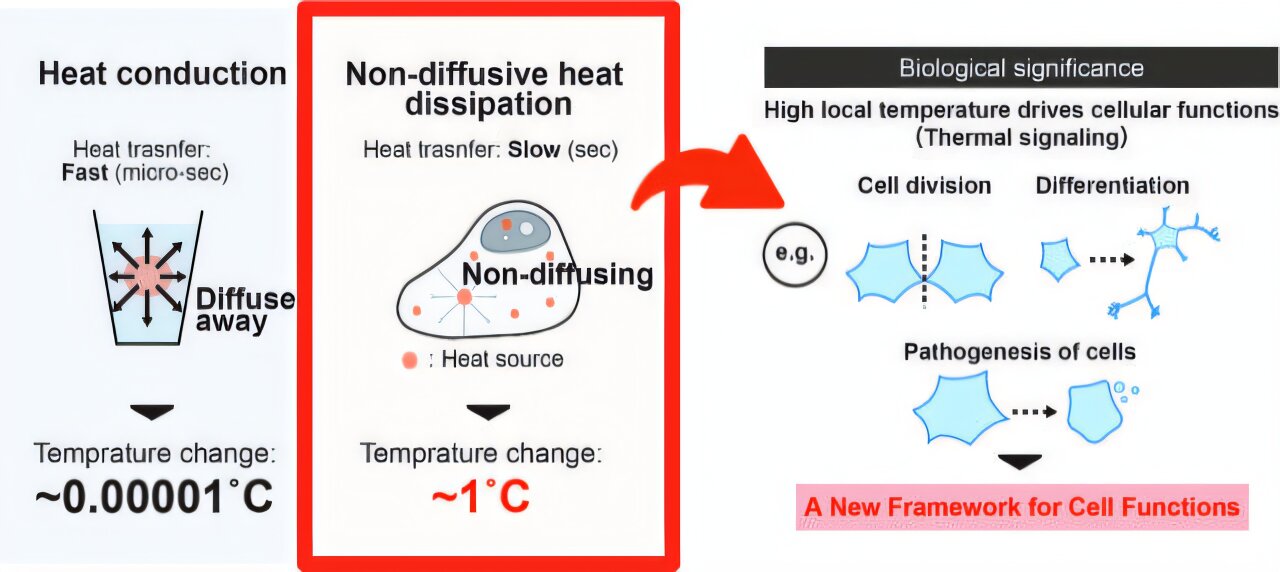
An illustration of the mechanism by which temperature in cells remains and the biological effects it can have. Credit: Nature Communications (2026). DOI: 10.1038/s41467-026-71878-y
Living cells cool much slower than our current understanding of heat conduction can explain, according to new research from the University of Tokyo. Researchers have used two techniques—high-speed temperature mapping and artificial heating—to observe how heat dissipates from living cells and similar-sized artificial, fluid-filled sacs (liposomes). While heat dispersed quickly from the artificial liposomes as expected, cells cooled significantly more slowly due to other biomolecules within the cell.
Understanding the process behind slower heat dissipation within cells could affect how we treat conditions linked to changes in body temperature, such as epilepsy, inflammation and cancer. The work appears in Nature Communications.
Why cellular temperature shifts matter
Do you tend to run a little hot or are you cool as a cucumber? Your internal body temperature is the byproduct of all the work your cells do to keep you living, moving and thriving. More recently, researchers have found that spontaneous heat generation in our cells, which can change by as much as 1–2 degrees Celsius, appears to play an important role in driving some key cell-based activities and functions. So far, this includes changing neural stem cells into neurons and the heat shock response, which protects stressed cells from damage.