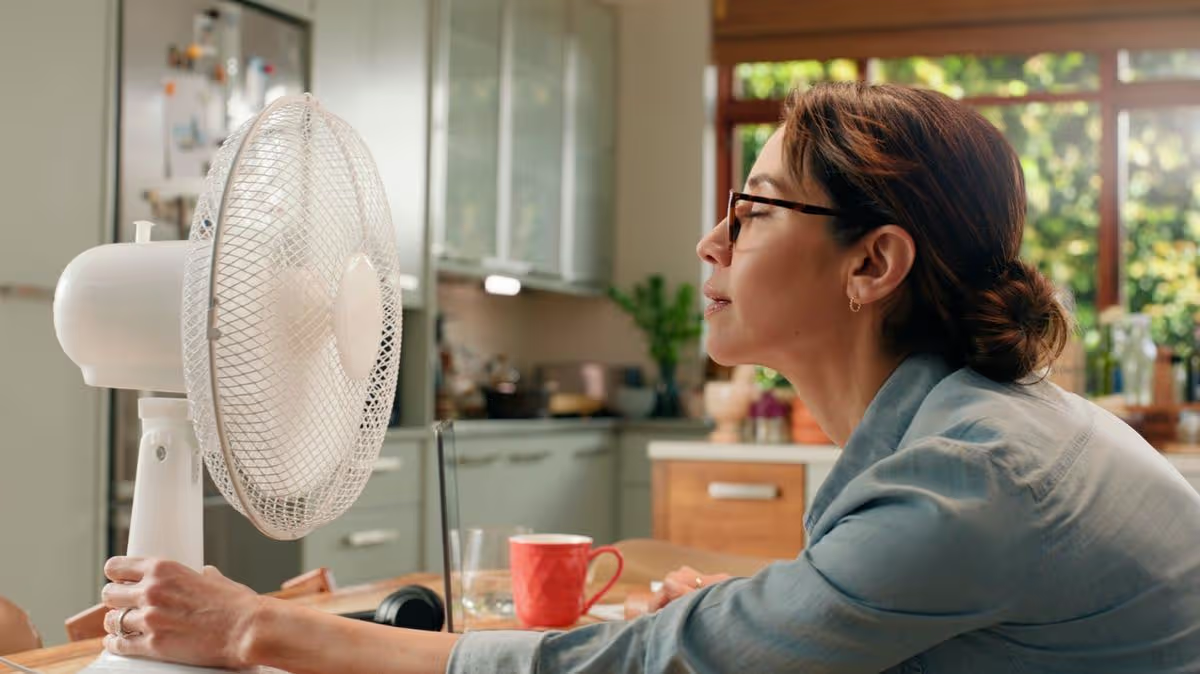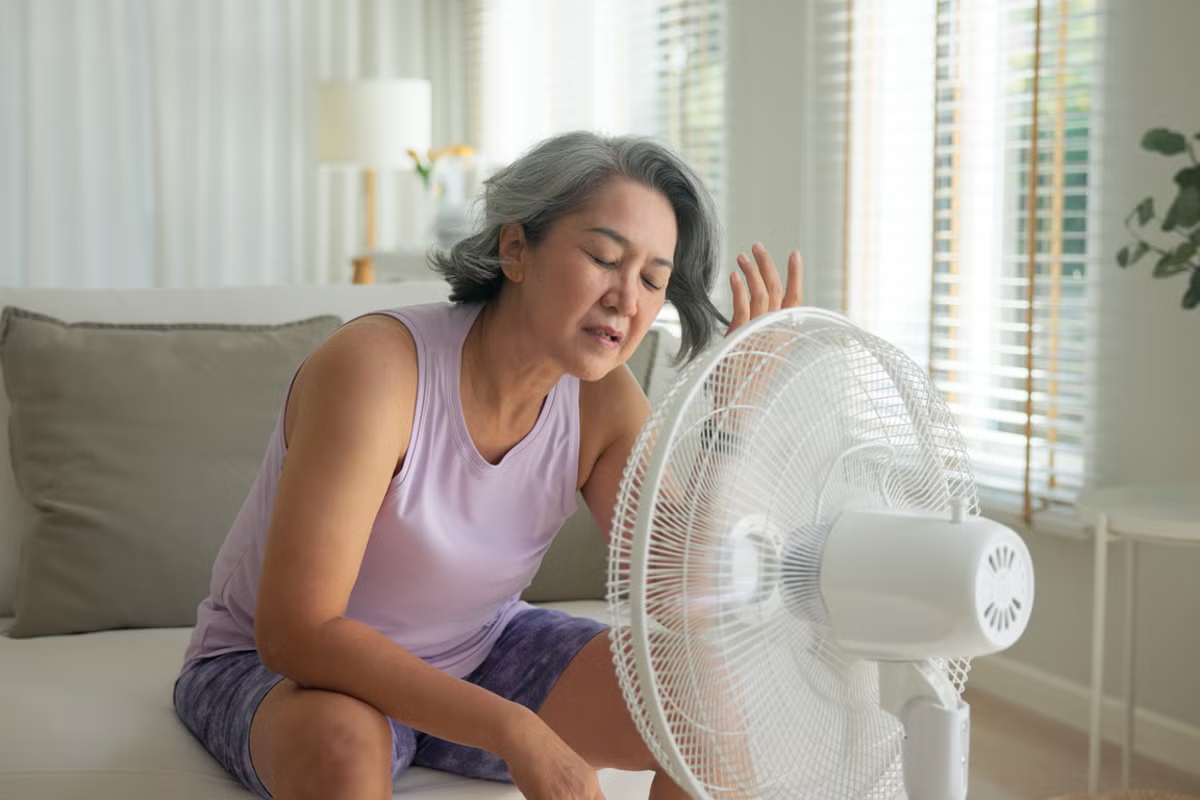
A University study looked at cooling benefits during extreme temperatures as health experts advise against relying on them during heatwaves13:36, 27 May 2026Do fans actually work, or are they simply circulating warm air? They can certainly make you feel somewhat cooler, but is that purely down to air movement?It's been an exceptionally hot week, with temperatures breaking new records for May, reaching 35C across the UK — leaving people desperately searching for ways to cool down. Well, according to Science How Stuff Works, fans do cool you down personally, but don't actually lower the room's temperature — and can even raise it slightly. The site said: "When a fan operates in a room, it does not decrease the room's overall temperature. Instead, the fan moves air around, which can add heat to the room due to the motor's operation, converting electricity into heat."However, this movement of air can make individuals in the room feel cooler by facilitating sweat evaporation, even though the ambient temperature remains unchanged or even increases slightly."Regarding humidity, the site said: "The effectiveness of a fan in high humidity environments is reduced because the air is already saturated with moisture, limiting the rate of sweat evaporation from the skin. In such conditions, the cooling effect achieved by moving air over the skin is diminished, making fans less effective at providing perceived cooling, compared to dryer environments where the evaporation process can occur more readily."READ MORE: Cars feel 'cool' in hot weather with scientist's 'door' techniqueREAD MORE: Stay cool indoors without a fan by putting 'green' item in your windowA new study by researchers at the University of Ottawa has poured cold water on the notion that electric fans can effectively keep you cool during periods of extreme heat.The research was headed by post-doctoral fellow Robert Meade and carried out at the Human and Environmental Physiology Research Unit at the University of Ottawa, a unit overseen by Dr Glen Kenny, a professor of physiology at the Faculty of Health Sciences.Prof Meade said: "Fans do improve sweat evaporation, but this effect is not strong enough to significantly lower your body's internal temperature when it's already really hot (above 33-35°C). In older adults, who may have a reduced ability to sweat, fans provide even less cooling benefits. In fact, even in younger adults, fans only provide a small fraction of the cooling power of air conditioning."The recent study, reported in Science Daily, urges health organisations to continue cautioning against depending on fans throughout extreme heat events, particularly for elderly people and other vulnerable groups at greater risk of heat stroke and other serious health complications during heatwaves.Article continues belowRather, the focus should be placed on ensuring access to alternative cooling methods, such as air conditioning, while exploring ways to make these solutions more accessible and environmentally sustainable. The study was carried out using "human heat balance" modelling techniques developed in 2015. By expanding these models to calculate core temperature across various conditions and modelling assumptions, the researchers were able to assess the anticipated effects of fan usage across a broad spectrum of scenarios.Prof Meade. said: "Results from the 116,640 alternative models we produced in sensitivity analyses indicated that fans likely do not significantly reduce core temperature in high heat, or match air conditioning cooling. Comparisons with more advanced modelling techniques and laboratory heat wave simulations supported this conclusion."
Scientist issues night fan UK warning as millions try to cool
A University study looked at cooling benefits during extreme temperatures as health experts advise against relying on them during heatwaves
558 words~3 min read