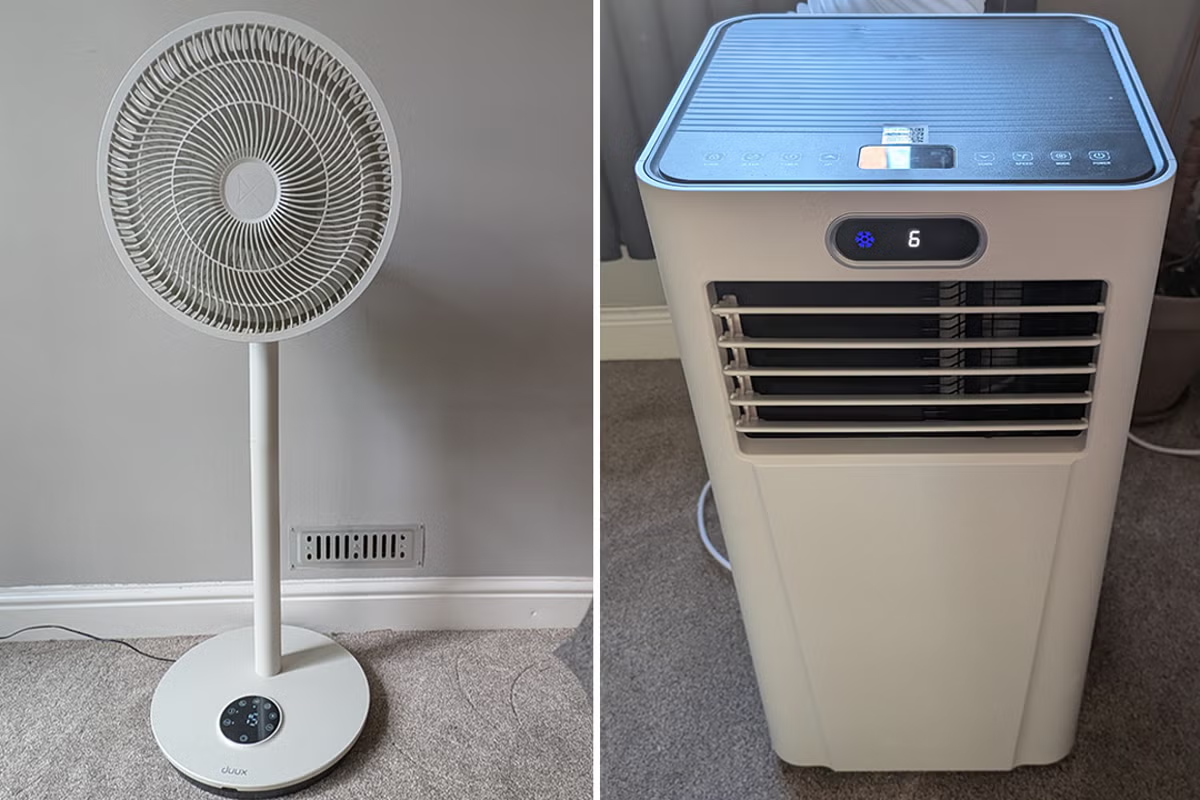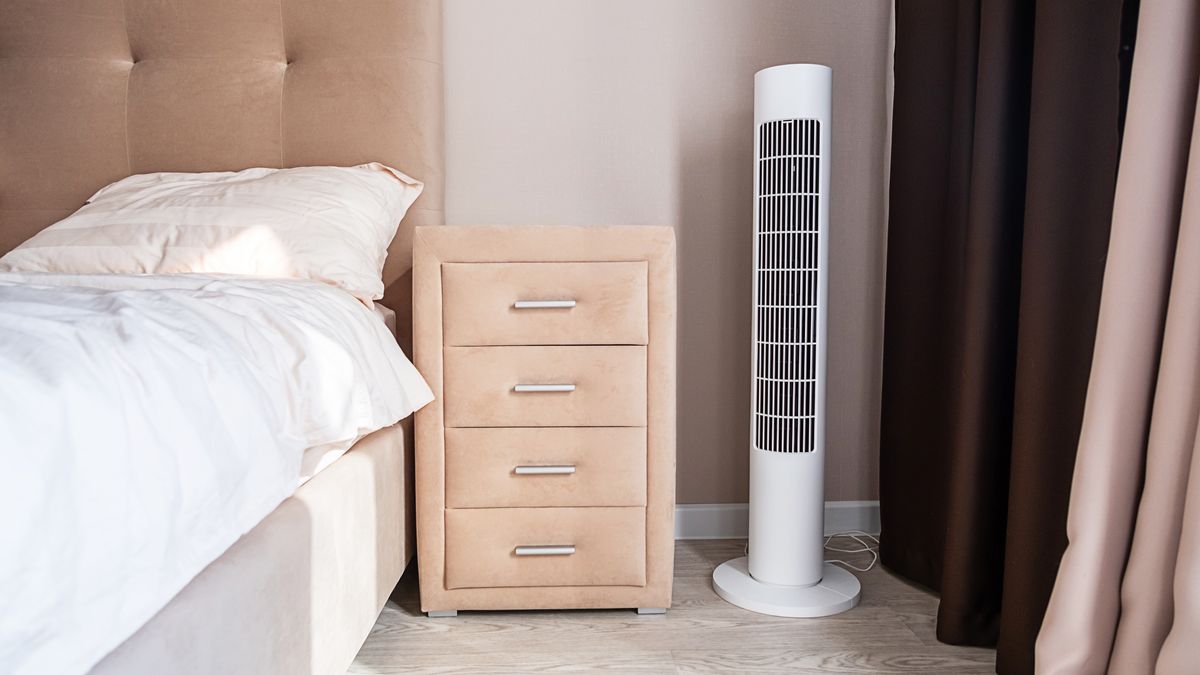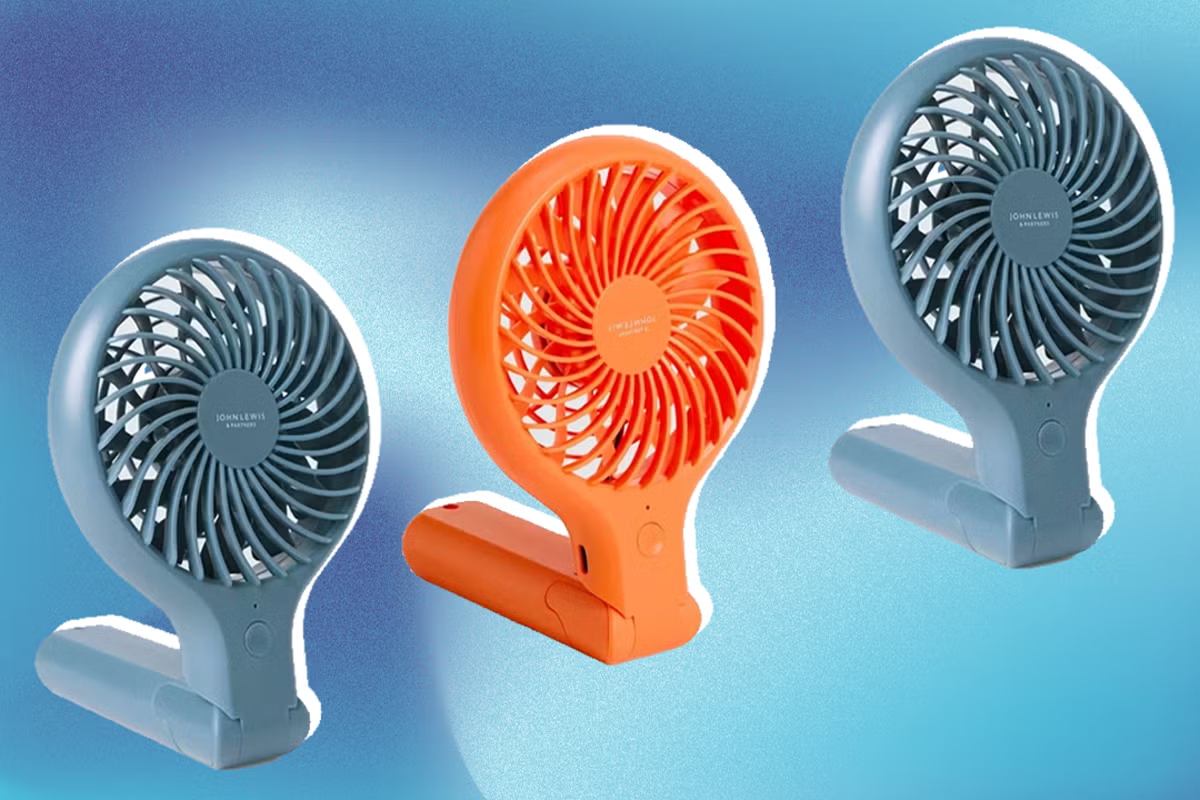
Households across Britain are reaching for electric fans this week to keep them cool during the heatwave. However, with energy prices due to rise again this summer, they may also be concerned about the cost of running such devices. To complicate matters further, there are now a range of different options to choose from. Traditional desktop and pedestal fans are being replaced in some homes by more modern air cooler devices, and even domestic air conditioning units. So how much would it cost to run each of these for a week? Energy experts at comparison website Uswitch have crunched the numbers so that hot and bothered households don't have to. Watch out: The energy usage involved to run a portable air conditioning unit is higher than something like a pedestal fan How much does a fan cost to run? First of all, it depends on your energy tariff - as this governs how much you are charged for each unit of energy you use. It also depends on the wattage of your fan. Uswitch's figures assume a fan with wattage typical of those currently on the market, but you can work out the cost of your specific device using the calculation below. Work out how much YOUR fan costs to use Every appliance has a power rating, usually given in watts (W) or kilowatts (kW) - 1000W = 1kW - which tells you how much electricity needs to work. This can be found somewhere on the device.Find your fan (or air cooler, or air conditioner's) wattage and multiply it by the number of hours you use it per day. Divide this number by 1000 to get the daily kilowatt-hourElectricity is sold by kWh, which tends to come up as 'units' in your bill.You can work out how much an appliance costs to run by multiplying the device's wattage by the number of hours you use it per day and then by the cost of electricity.To get the weekly figure, multiply this by seven. Running a typical, 35W desktop fan costs 49p if used for just over nine hours a day, for seven days, according to data from comparison website Uswitch.com - but this is only for someone on one of the cheapest fixed-rate deals currently available. Some fixed tariffs, such as Economy 7, charge different rates for certain days of the week and times of the day, so this is worth bearing in mind. However, it is much more likely that households are on a 'variable' tariff, governed by Ofgem's price cap. This will normally be the case if you have not fixed a new deal for a year or more. On 1 April 2026, the energy price cap fell by 6.7 per cent from £1,758 a year to £1,641 a year for a typical use household paying by direct debit.The energy price cap is expected to rise significantly in July due to the ongoing war in the Middle East. This could take it to £1,850, according to the latest estimate from Cornwall Insight. On a tariff governed by April's energy price cap, the cost of running a desktop fan rises to 55p per week when running for nine hours a day. With energy prices set to increase from July, Uswitch expects the cost of running a desktop fan for nine hours a day to rise to 58p. How much does a pedestal fan cost to run?A standard pedestal fan costs about 84p to run for nine hours a day for one week on the cheapest fixed rate tariffs, equating to around 9.3p an hour.Using the April energy price cap, the cost of running a pedestal fan rises to 94p when run for nine hours a day. Uswitch expects this to rise to 99p from July. How much does an air cooler cost to run? Fans create a breeze by circulating the already warm air. Air coolers go one step further than this, taking in warm air and make it cooler through a process of evaporation, before blowing it around the room. Although more effective in some cases, they are also more expensive to run. At the cheapest fixed deals available, the cost of running an air cooler for nine hours a day is £1.05 per week, according to Uswitch. This rises to £1.18 at April's energy price cap level and, according to Uswitch, could rise to £1.24 from July. How much does an air conditioner cost to run? There are two types of air conditioner: portable and built-in. Both are substantially more expensive than using fans to keep cool, but they are also more effective. The energy usage involved to run a portable air conditioning unit is considerably higher, at £14.06 when run for nine hours a day for seven days. At April's price cap, this comes in at £15.71. Uswitch expects this to increase to £16.58 from July. The cost of running a built-in air conditioning unit is even higher, at £37.96 when running for nine hours a day for seven days, based on the cheapest available fixed deals. At the energy price cap level, this rises to £42.43 per week. Uswitch expects costs to increase further to £44.77 for the same timeframe from July. A heat pump on cooling mode costs £14.06 to run for nine hours a day for seven days on the cheapest fix rate tariffs, Uswitch said. How much does it cost to run your fan or cooling device? Cheapest fix rates Predicted July rates Device Power 1 hour a day for seven days Average 9.1 hours daily use for seven days 1 hour a day for seven days Average 9.1 hours daily use for seven days Handheld fan 3W 0.46p 4.2p 0.55p 4.97p Desktop fan 35W 5.4p 49p 6.4p 58p Pedestal fan 60W 9.3p 84p 10.9p 99p Air cooler 75W 11.6p £1.05 14p £1.24 Heat pump on cooling mode 1kW £1.55 £14.06 £1.82 £16.58 Portable air con unit 1kW £1.55 £14.06 £1.82 £16.58 Built-in air con unit 2.7kW £4.17 £37.96 £4.92 £44.77 Source: Uswitch A nation of desktop fan usersAccording to Uswitch analysis, the vast majority of Britons still use desktop fans to cool down. More than nine million households use desktop fans to keep cool, up 14 per cent from the eight million homes using them last year.A 35W desktop fan uses just 1 per cent of the power of built-in air conditioning units, meaning households that opt for the less energy-intensive device could reduce their consumption by 99 per cent and save themselves £42 a week. The number of households with air conditioning has increased from less than two million in 2022 to more than four million. Portable air conditioning units with power ratings around 1kW are slightly more common than the more powerful built-in versions that can guzzle 2.7kW of power, which is more than an electric oven. Of the four million households with air conditioning, nearly 1.9million have built-in units with power ratings up to 2.7kW. Data from Uswitch also revealed that more than 260,000 households now have heat pumps that can also be used to cool homes. A typical air source heat pump used in cooling mode will use around 1kWh per hour, costing a similar amount to a portable air conditioning unit, although the heat pump is likely to be more efficient at cooling a large room, Uswitch said. Natalie Mathie, energy expert at Uswitch.com, said: 'The number of households with air conditioning has more than doubled in three years, and more and more homes are taking the plunge to keep cool as UK summers get hotter.'Remember that it’s easy to build up a hefty energy bill on hot days, and there are other simple tricks you can use to keep the temperature down inside your home.'Keeping your curtains closed during the day will stop sunlight from warming up your property, while filling a hot water bottle with cold water can help keep you cool.'Five ways to keep cool at home 1. Create a cooling breezePlace a bowl of ice cubes in front of an electric fan to create a refreshing breeze as it blows the ice-cold air around the room.2. Close the curtainsKeep your curtains shut during the day. It may be tempting to let the light in, but the sunshine will heat the room, turning your home into a greenhouse.3. Unplug your techPlugged-in gadgets produce heat, including those that are on standby. Unplug them when you are not using them to keep the room cool.4. Take advantage of the daylightSwitch the lights off at home during the day, if you can. Lightbulbs release heat, causing a room to get warmer, so turning them off or switching to LED bulbs that generate less heat can help reduce the overall temperature. With the sun setting late in the evening during summer, you can keep the lights off for longer and therefore keep the room cooler.5. Use a 'cold' hot water bottleYou don’t have to use a hot water bottle just to keep warm. Instead, you can fill it with cold water or ice cubes to keep you cool during the night - though it is not advised to freeze hot water bottles as this can damage the rubber and cause leaks.
How much does it cost to run a fan all day?
With energy prices due to rise again this summer, households may be concerned about the cost of keeping cool. This is how much common devices cost to run.
1,534 words~7 min read