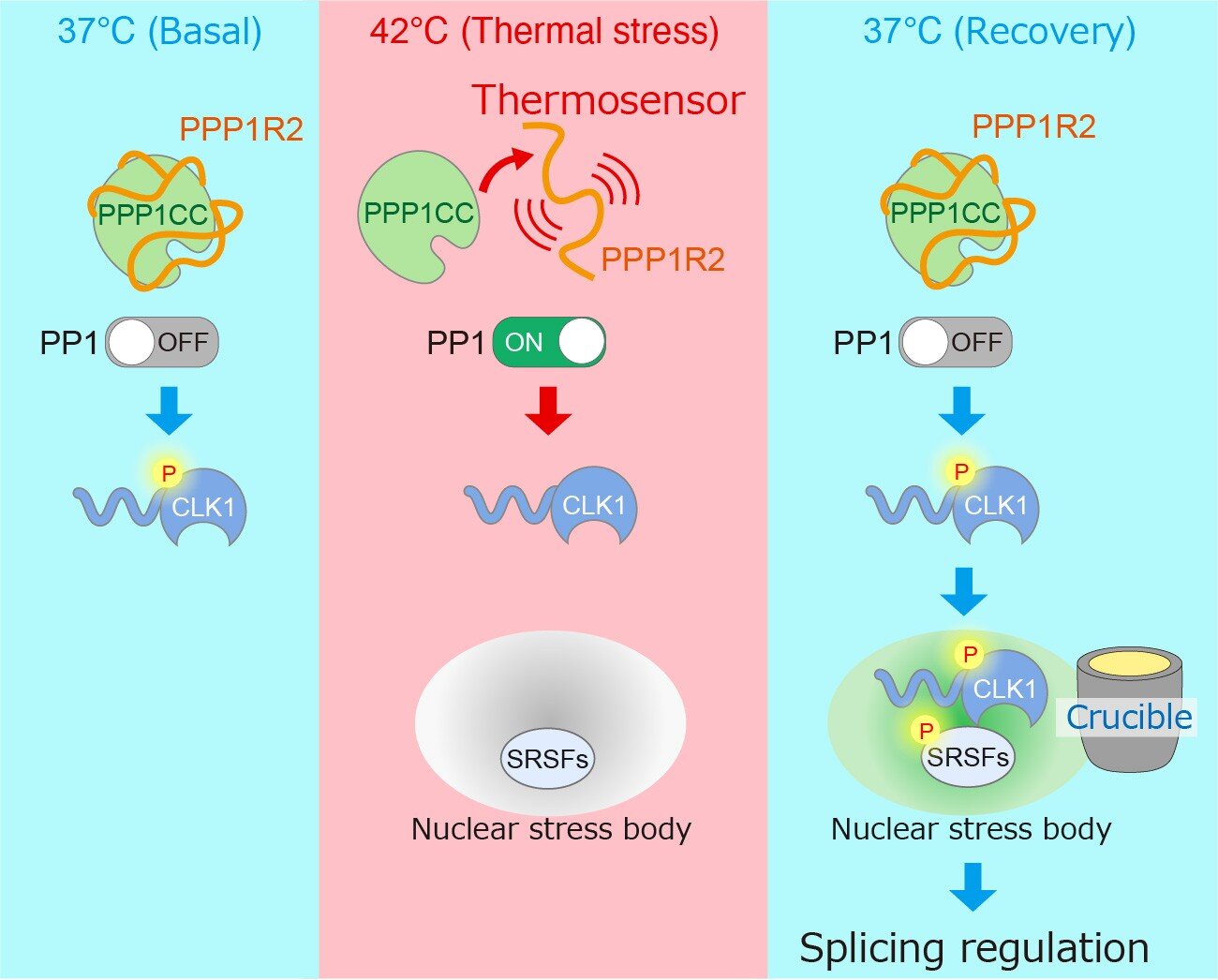
PPP1R2 acts as a reversible thermosensor to regulate CLK1 phosphorylation and its localization to nuclear stress bodies (nSBs). As a result, nSBs regulate target pre-mRNA splicing in a temperature-dependent manner. Credit: Molecular Cell (2026). DOI: 10.1016/j.molcel.2026.06.034
If you want to beat the heat of the summer sun, slowing down and doing less is a good strategy. However, researchers have long asked whether the same occurs at the cellular level. While cellular stress responses have been repeatedly studied, the impact of the environment on these responses remains relatively unknown.
Now, researchers from Japan report an elegant mechanism by which cells shut down certain nonessential functions when they get too hot. In a study recently published in Molecular Cell, researchers from the University of Osaka revealed how nuclear stress bodies sense temperature to regulate survival during and recovery from thermal stress.
When cells are stressed by environmental conditions, they change how their genes are expressed to protect themselves and conserve resources. For example, in response to high heat, cells modulate pre-mRNA splicing, a key step in producing functional proteins. But when temperatures cool down again, this process needs to be restored to normal levels.