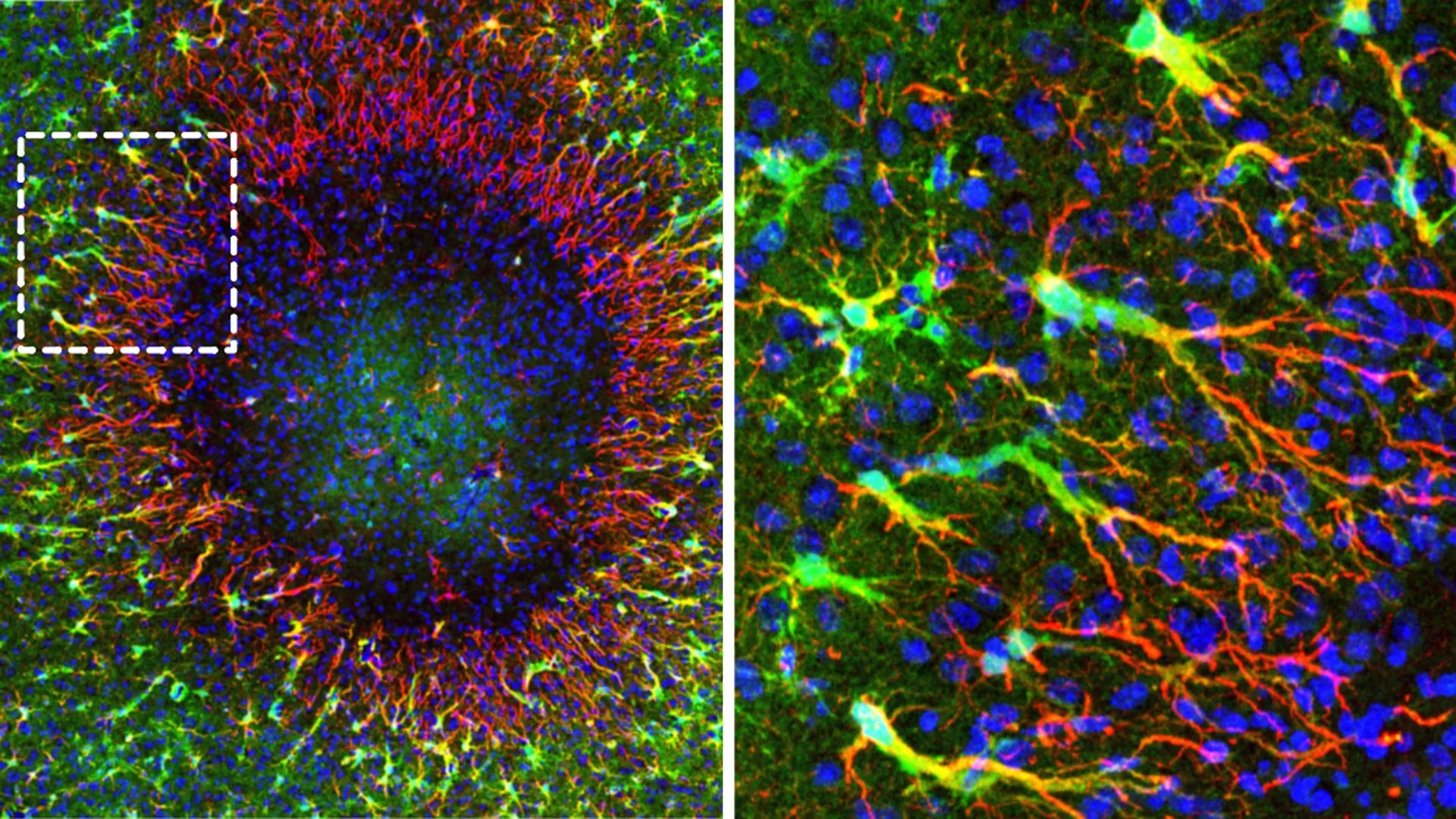
When laboratory mice experience brain damage, e.g., from an injection, Jan Deussing repeatedly notices the same response. A particular group of cells appears and becomes active around the damaged area. Although Deussing, a research group leader and experienced neurobiologist, had observed the phenomenon many times, he did not know exactly what type of cells were involved.
The mystery became an ideal research question for a master's student. Clemens Ries, who had recently joined the Max Planck Institute of Psychiatry for an internship as he approached the end of his biology degree, took on the challenge.
Identifying the Brain's Repair Cells
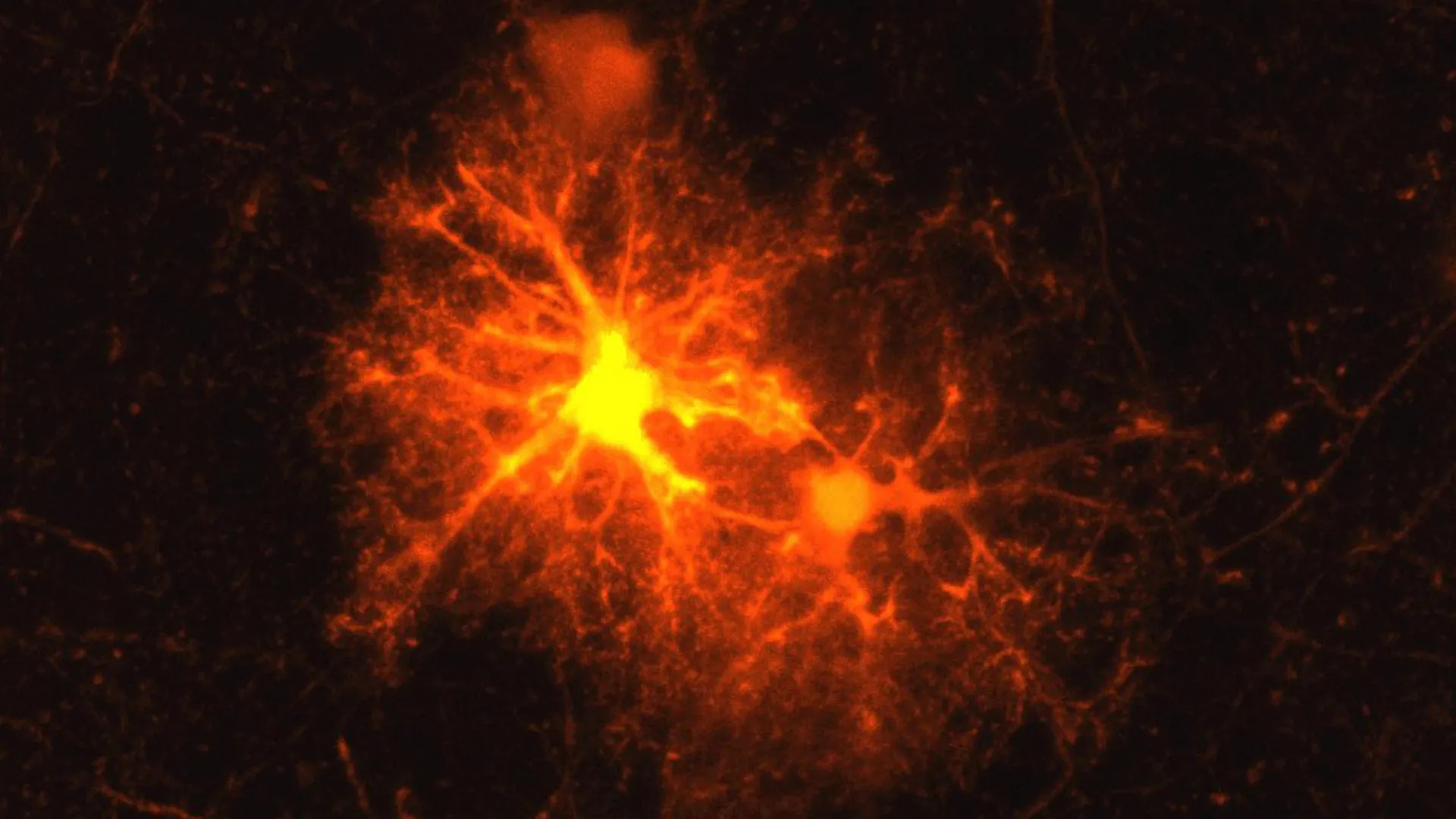
Using a mouse model, Ries systematically tested markers for all known cell types. Only one produced a response: the marker for oligodendrocyte progenitor cells (OPCs).
These precursor cells can mature into oligodendrocytes, which produce the myelin sheath surrounding axons. Axons are extensions of nerve cells that allow neurons to communicate with one another. Myelin acts much like the insulating material around an electrical cable. It supports efficient information transmission along axons and also helps supply them with nutrients, making it vital to healthy brain function.