Image by Killian Eon via Pexels
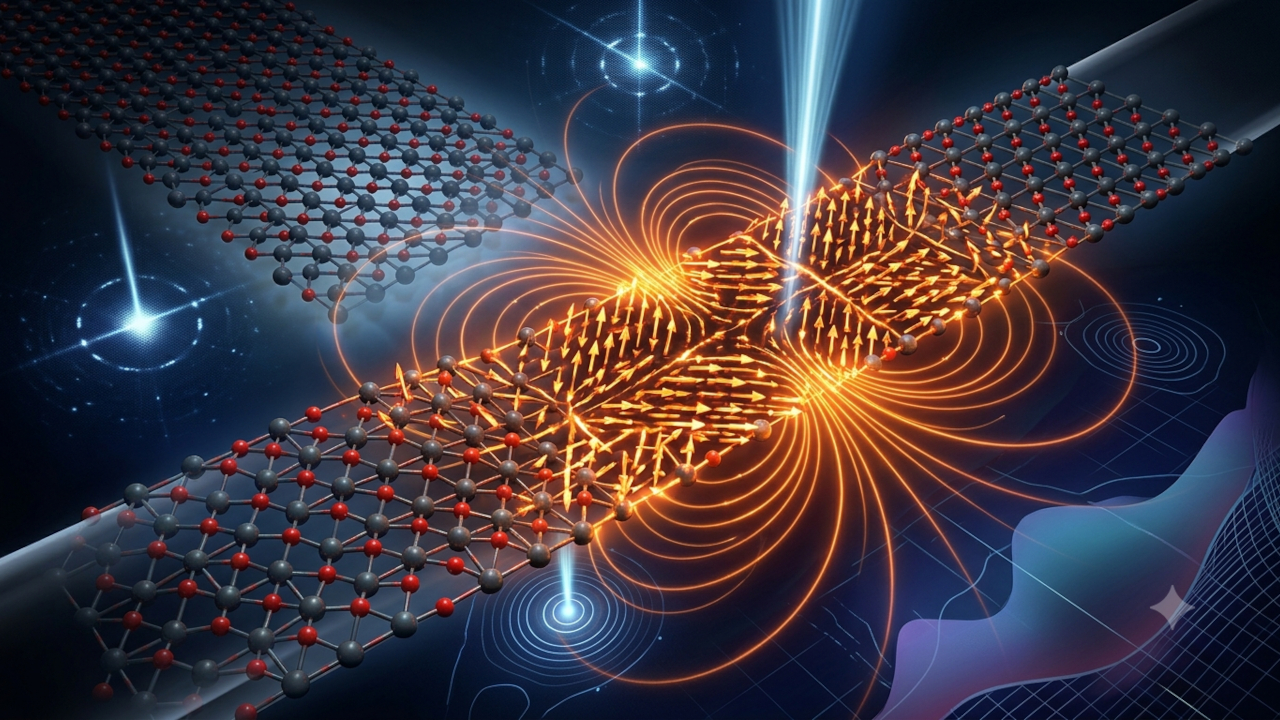
Scientists at Kyoto University took a fresh look at Strontium Ruthenate (Sr₂RuO₄), a material that has puzzled researchers since it was found to be superconducting in 1994. Superconductors are materials that can carry electricity with zero resistance, usually at very low temperatures. Most follow well-understood rules based on conventional BCS theory, but Sr₂RuO₄ has remained an exception. It belongs to a class known as unconventional superconductors, where electrons pair through mechanisms that are still not fully understood. Despite being one of the cleanest and best-studied unconventional superconductors, the exact way its electrons pair up to create superconductivity is still debated.
For years, experiments have given conflicting results. Ultrasound studies suggested that Sr₂RuO₄ might have a two-component superconducting state. The superconducting state is described using something called an order parameter — a mathematical framework that explains how electrons organize themselves inside the material. In a two-component state, multiple interacting quantum states can coexist, making the superconductivity more complex and capable of supporting unusual effects like internal magnetic fields or multiple superconducting domains. On the other hand, some uniaxial pressure experiments pointed toward a simpler one-component state. This disagreement has been at the center of the debate.