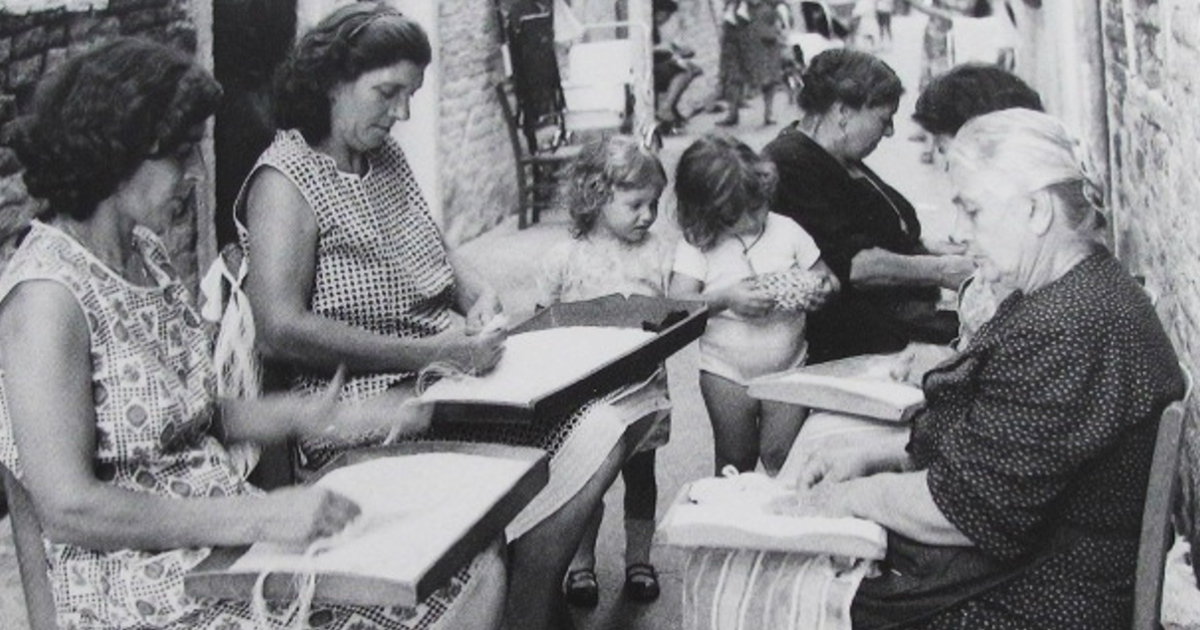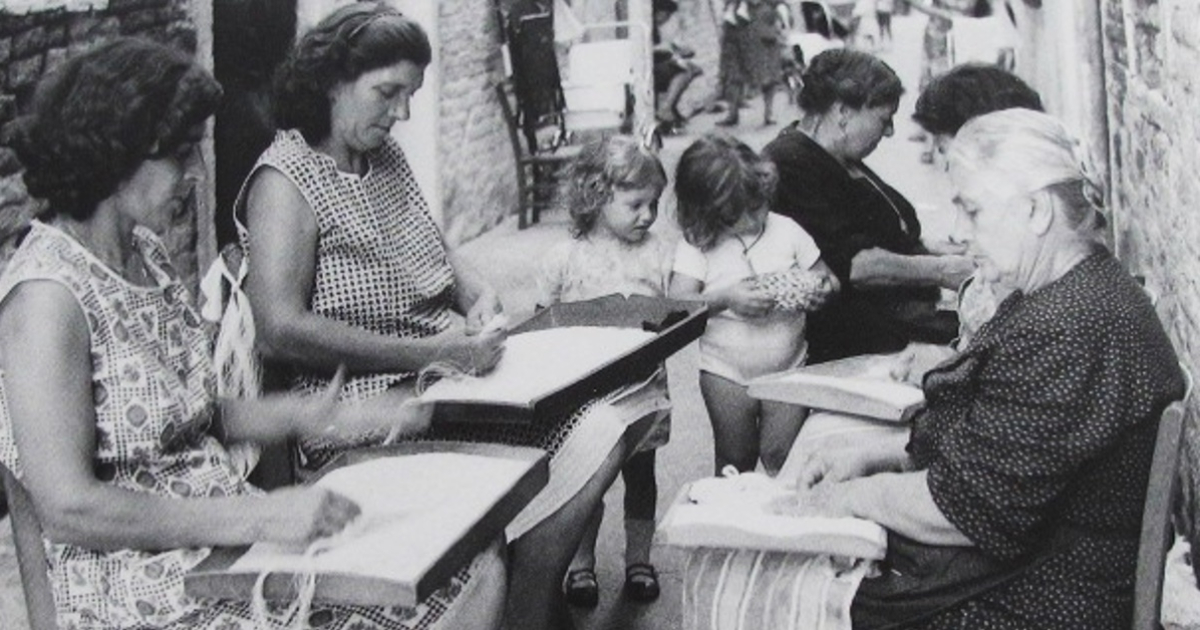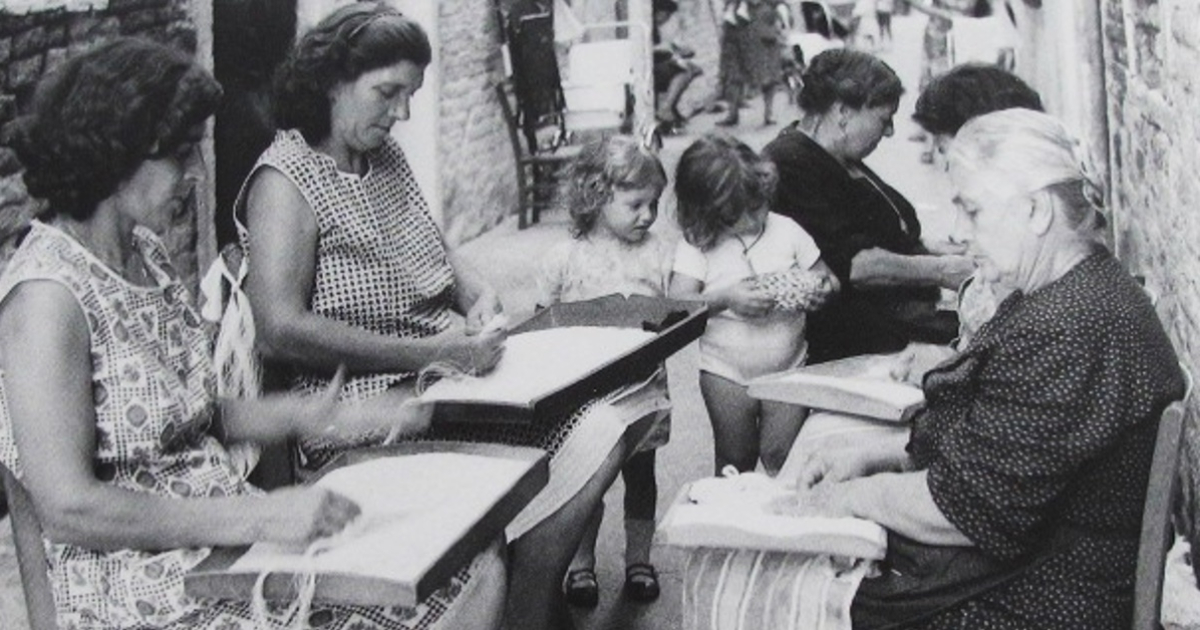
Impiraresse (1960) - Maspez via Wikimedia Commons
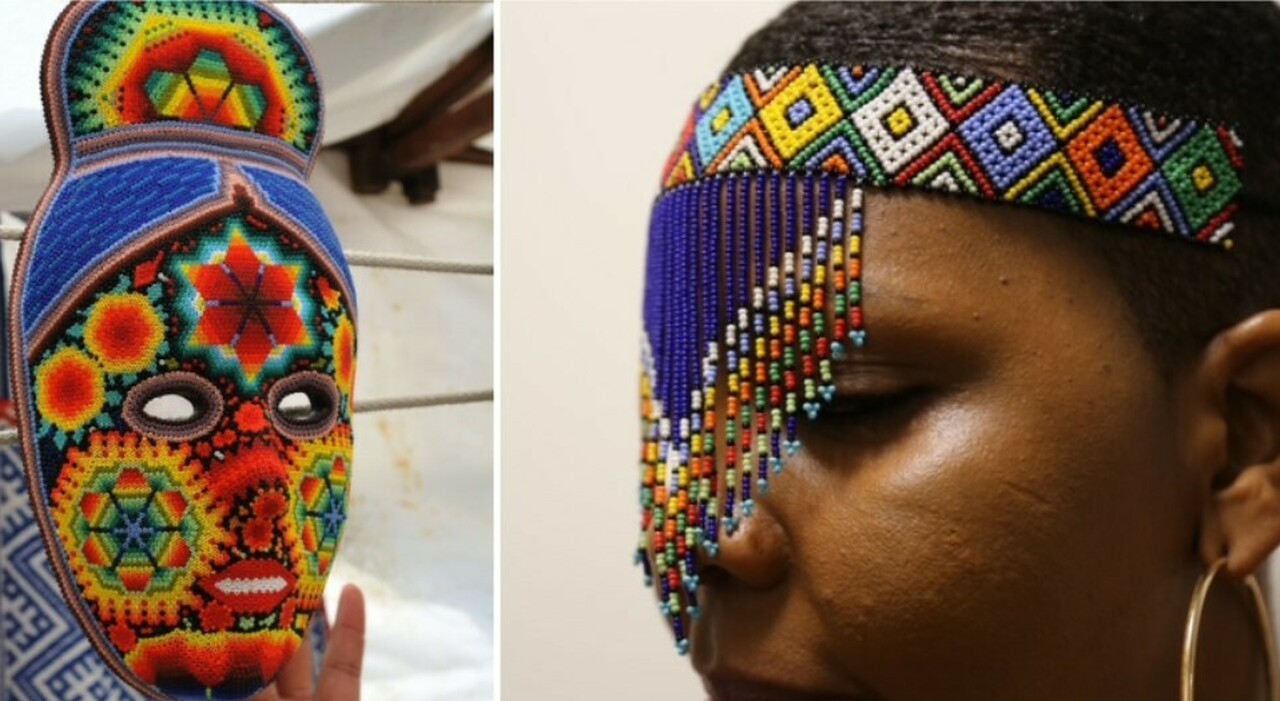
Venice and glass have shared a long-standing bond: for centuries, the famous beads made from it travelled across continents and cultures, becoming one of the most recognizable symbols of the lagoon’s craftsmanship. Behind this economy, however, lay a vast system of female labour that has often remained at the margins of historical narratives. We are talking about the impiraresse.
Sitting in small groups, with dozens of thin needles clasped in their hands, these women populated the calli of the districts of Castello and Cannaregio between the nineteenth and twentieth centuries. Their task was to string together — impirare in the Venetian dialect — rigadin, incamicià, cremette, macà, as well as tosche, papagà, pive — also known as brovadini — and burattini: tiny glass seed beads produced in the furnaces of Murano, assembled into bundles of 240 strands. In 2020, this craft was recognised by UNESCO as part of the Intangible Cultural Heritage of Humanity.
Foto 1: Infilatrici di perle-Impiraresse, S. Piero di Castello, Venezia, foto di Filippi Tomaso (XIX secolo), archivio IRE, Venezia; foto 2: Infilatrici di perle-Impiraresse, Corte ignota, foto di Filippi Tomaso (XIX/XX secolo), archivio IRE, Venezia