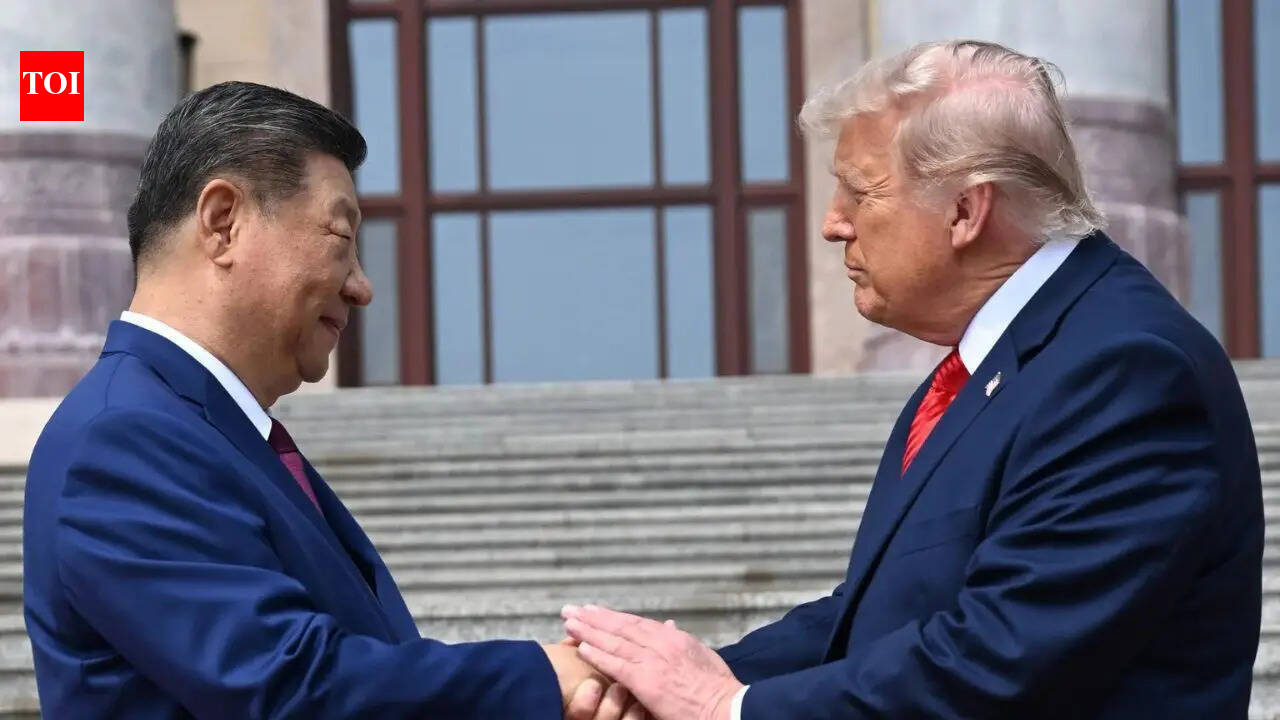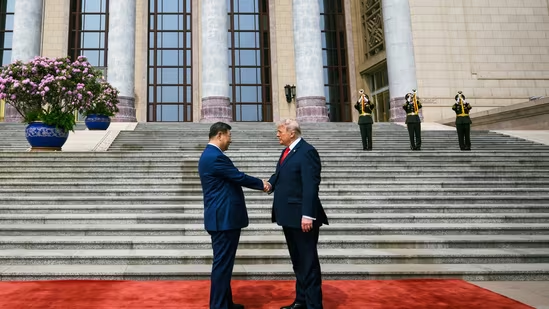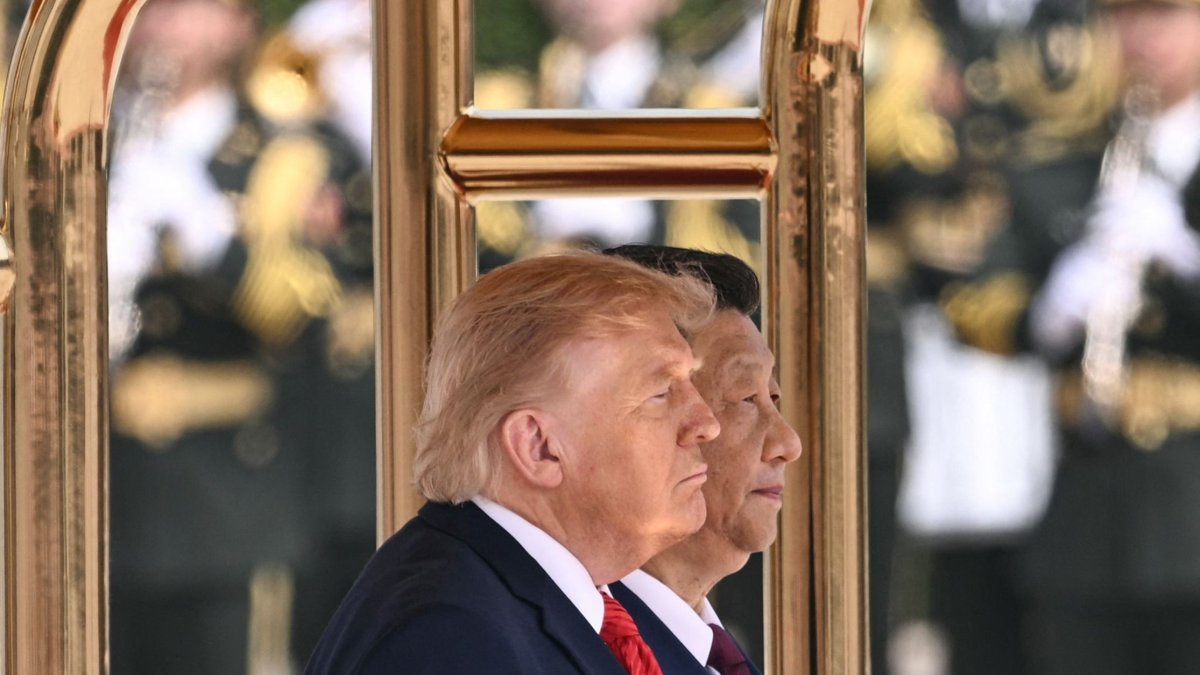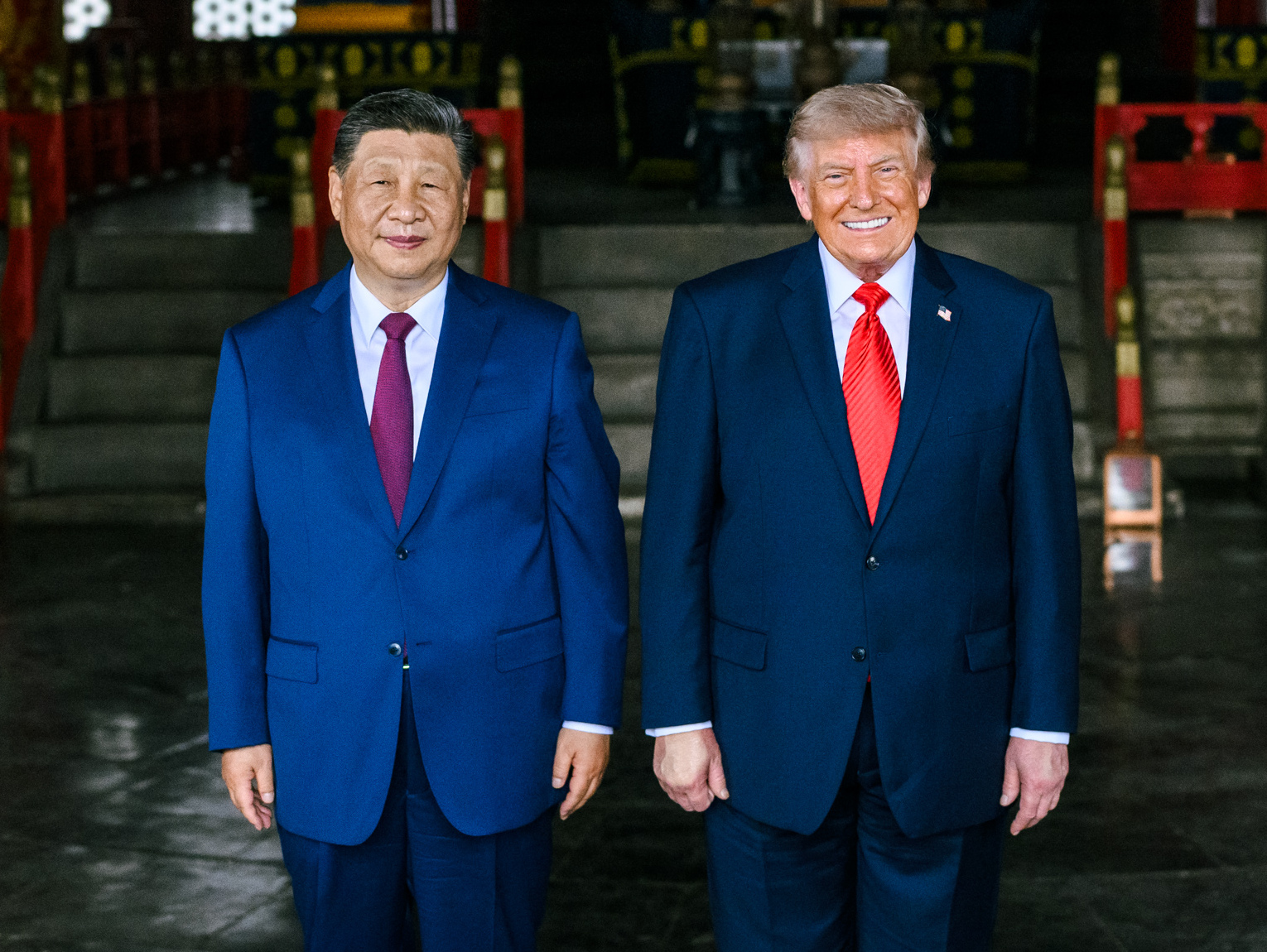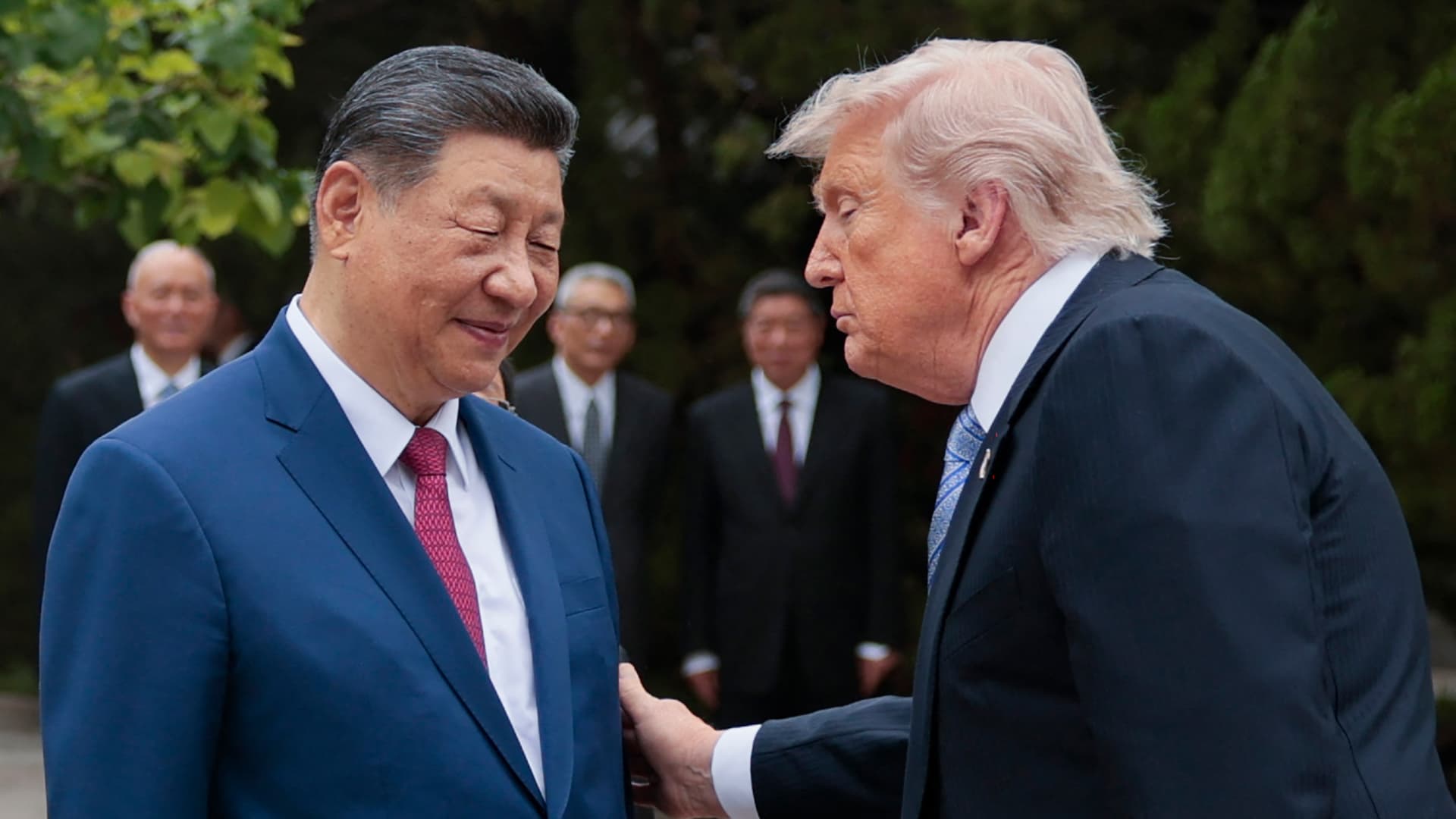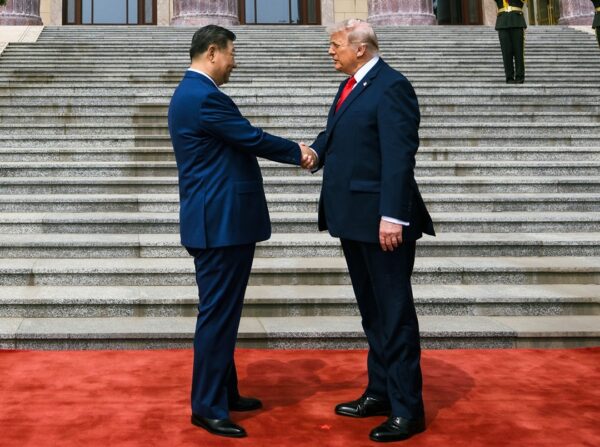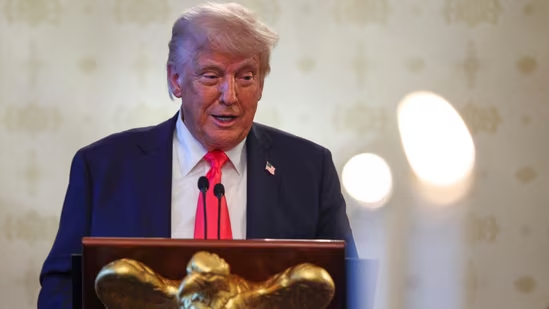
The Beijing truce of May 2026, highlighted by US President Donald Trump’s State visit to China, signals the end of simple decoupling and introduces a period of transactional geo-economics. From May 14 to 15, the world watched as leaders in the Great Hall of the People moved to establish a new board of trade and a board of investment.US President Donald Trump (AP)For years, India’s manufacturing strategy relied on the assumption of a permanent break between the world’s two largest economies. New Delhi bet that as Washington pressured Beijing with tariffs and technology bans, global capital would flow toward India. However, this recent pivot toward transactional diplomacy, evidenced by China's commitment to purchase 200 Boeing jets and $17 billion in American agricultural products annually, threatens India’s industrial ambitions just as they were gaining momentum.The risk for India lies in the restoration of China’s cost advantages and the dilution of the geopolitical risk premium that made Indian factories attractive to western companies. Since 2025, India has enjoyed a period of trade diversion as US tariffs on Chinese goods spiked. During this window, Indian exports in electronics and engineering surged, with manufacturing GVA growth hitting 9.13% in late 2025. But the new deal in Beijing suggests a relaxation of these constraints in exchange for Chinese purchases of American energy. If the speed of tariffs in 2025 created a manufacturing opening, the truce of 2026 could dissolve it just as quickly.When Washington and Beijing manage their rivalry through new bilateral boards, the narrative that favoured India loses urgency. Multinational corporations may now find it easier to stay in China’s sophisticated ecosystems rather than navigating the bureaucratic hurdles and infrastructure gaps that still persist in the Indian landscape. India’s incentive schemes were designed to offset these issues, but they cannot easily compete with a scenario where the US lowers entry barriers for Chinese goods. Geopolitically, the truce is equally destabilising. For several years, New Delhi’s leverage came from its position as a frontline counterweight to China in the Indo-Pacific. The US treated India as a privileged partner, offering concessions in defence and intelligence. However, a US-China rapprochement reduces the incentive for Washington to offer special treatment. Without a shared goal of containing Beijing, the US might become more transactional toward India, focusing on trade barriers and intellectual property issues.To overcome this, India must shift its focus from geopolitical luck to structural competitiveness. The strategy of being an alternative to China was always reactive. To survive the truce, India must make its manufacturing environment so efficient that companies choose it for its own merits. This requires reform in logistics, electricity, and labour costs, which traditionally make Indian products more expensive than those from China. While the recent 2026-27 budget granted duty exemptions on critical inputs for seven strategic sectors, execution remains the bottleneck. India must simplify land litigation and administrative processes to ensure that ease of doing business becomes a reality.Furthermore, India must move up the value chain. While technology industries now contribute over 46% of manufacturing value, the country remains dependent on the assembly of components imported from China. This is a wake-up call to accelerate the local production of semiconductors, display panels, and batteries. If India can internalise these supply chains, it becomes a sovereign manufacturing hub immune to the fickle nature of trade deals between other nations. The goal is to transform from an assembly shop into a design and component hub with a unique value proposition.On the diplomatic front, India must recalibrate its autonomy through new trade corridors. The landmark trade agreement with the European Union, concluded in January 2026, provides a critical counterbalance to the US-China pivot. This deal, aimed at being fully operational by year-end, removes tariffs on 96% of goods and offers Indian professionals unprecedented access to European markets. Even as other deals, such as the one with the UK, face temporary roadblocks over new steel safeguard measures, the push for diverse partnerships highlights the necessity of expanding trade geography. By operationalising these agreements, India can secure market access that is not subject to the whims of anyone.The sudden May 2026 steel dispute with the UK, where new safeguards threaten nearly $900 million in Indian exports, underscores the fragility of relying on any single western partner. India’s response must be to leverage its growing role as the world’s second-largest steel producer to bargain for specific quotas while simultaneously deepening its ties with the Global South. Expanding export reaches to Singapore, Vietnam, and African nations can create a resilient trade network. Additionally, India must manage a cold peace with China that allows for essential trade in raw materials while defending its territorial integrity and regional influence.For India, the period of being a natural beneficiary of global discord is ending. The future of its manufacturing ambitions will be decided by the efficiency of the ports it builds, the skill of its workforce, and the speed of its bureaucracy. The challenge is real, but it is also a necessary catalyst. It forces India to stop waiting for the world to decouple and start building the internal strength to compete in a connected world. By doubling down on domestic reforms and leveraging alternative partnerships, India can ensure its industrial goals remain intact despite the shifting allegiances of global superpowers.(The views expressed are personal)This article is authored by Gunwant Singh, scholar, international relations and security studies, Jawaharlal Nehru University, New Delhi.
Trump’s new China approach is a wake-up call for India
This article is authored by Gunwant Singh, scholar, international relations and security studies, Jawaharlal Nehru University, New Delhi.
898 words~4 min read