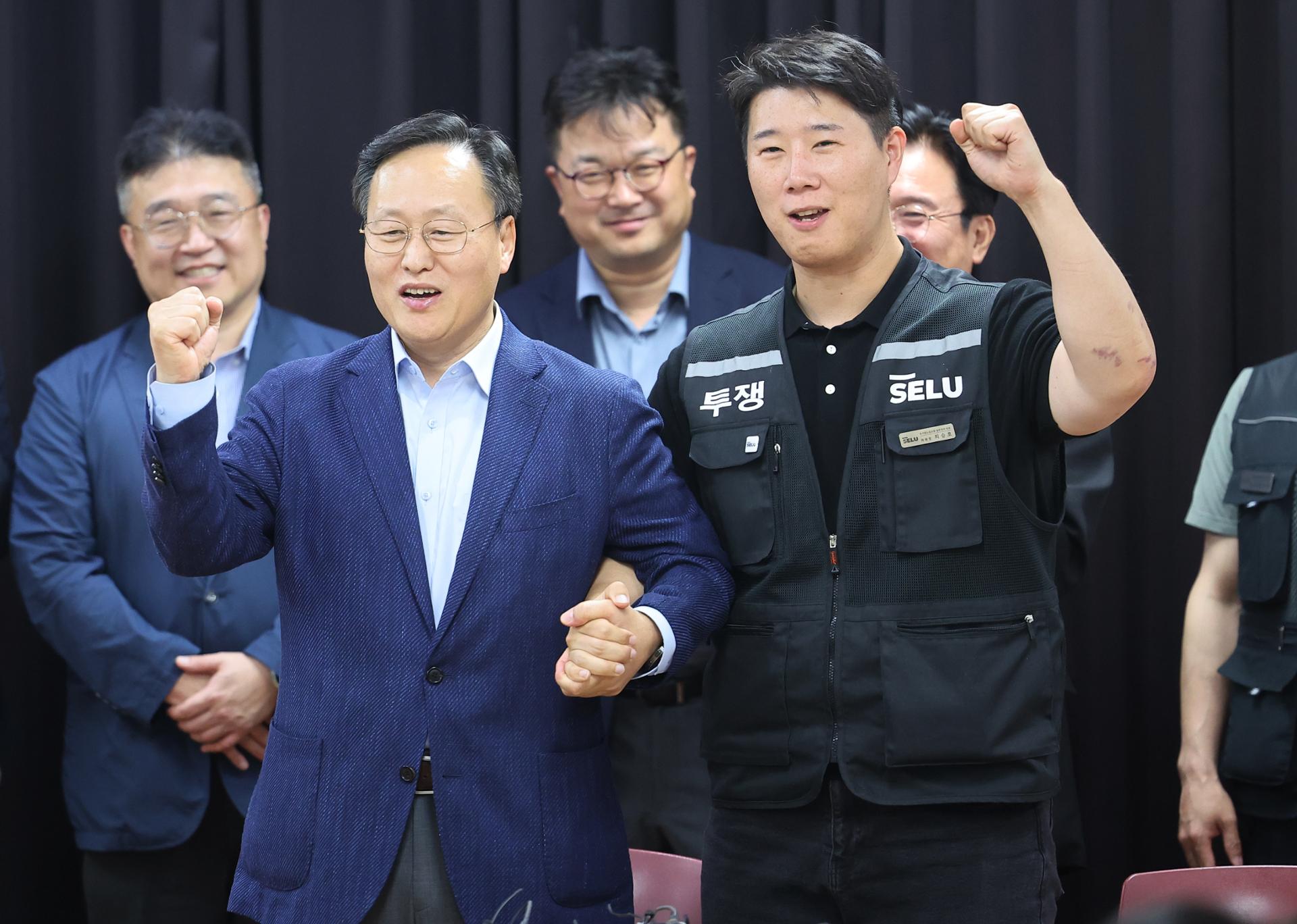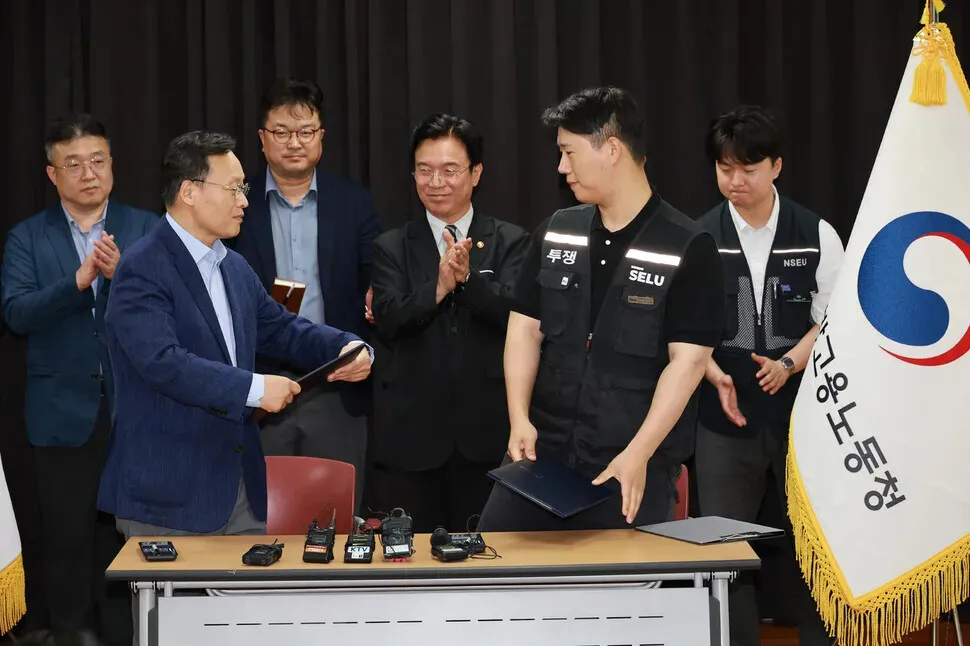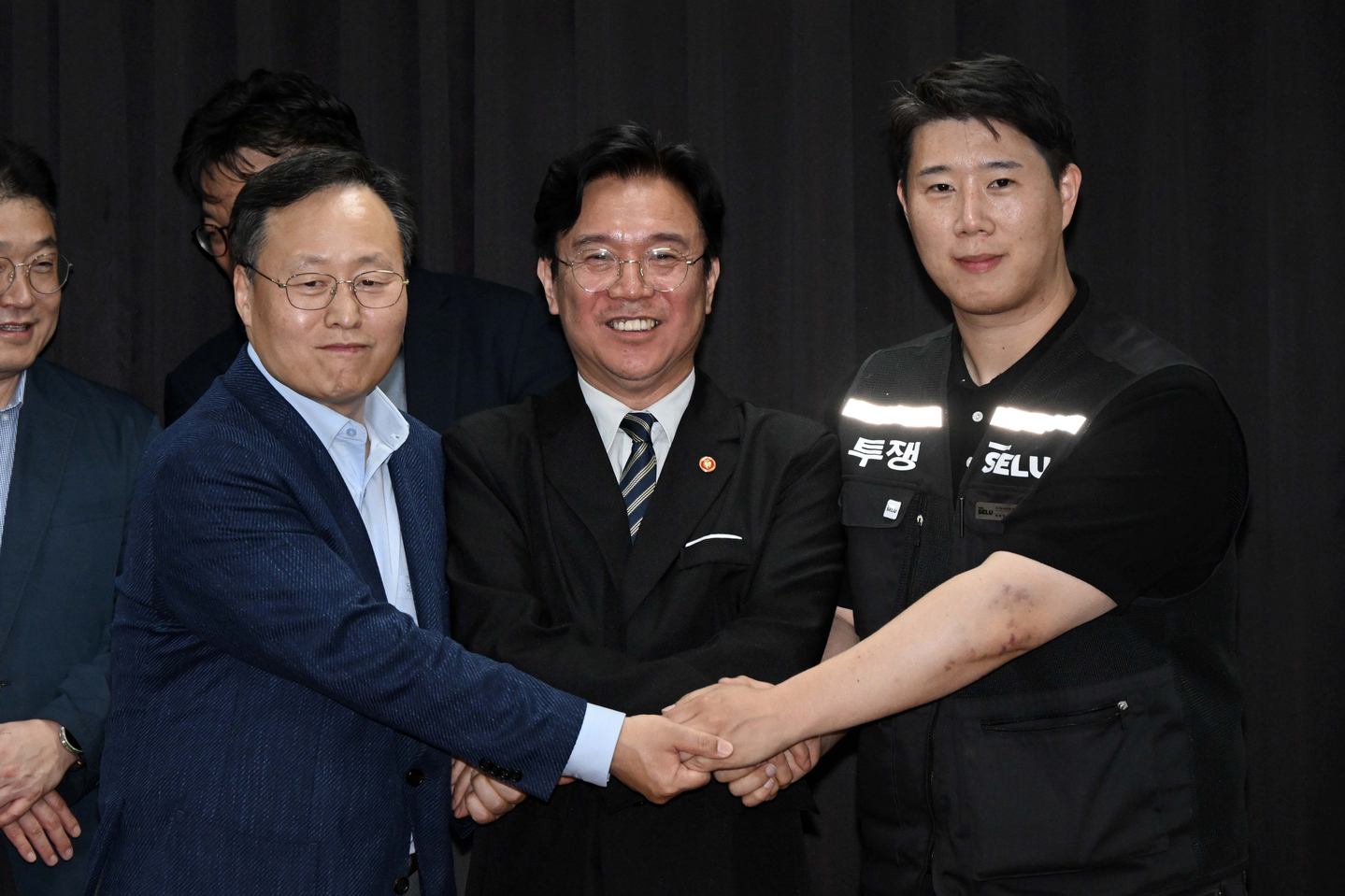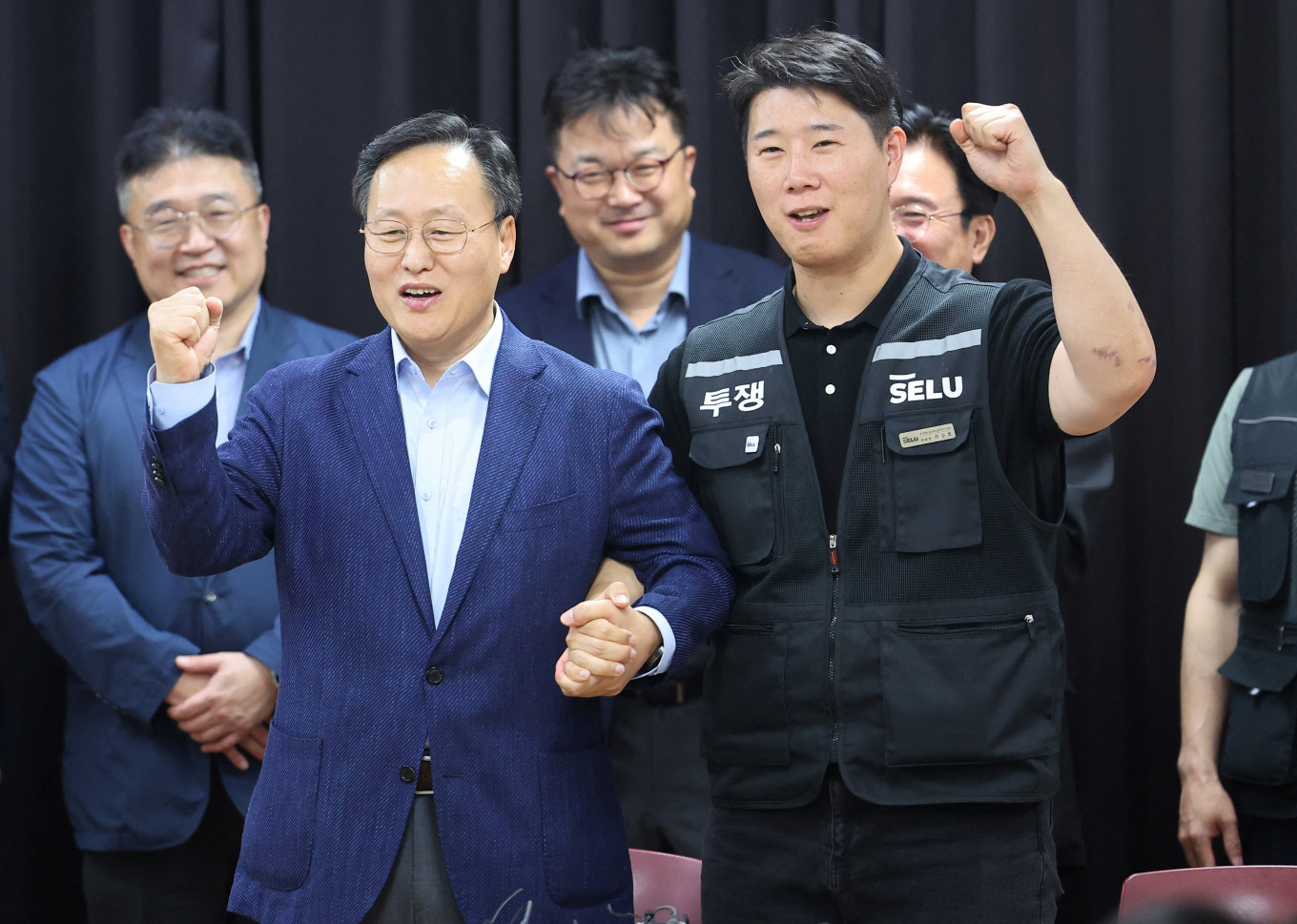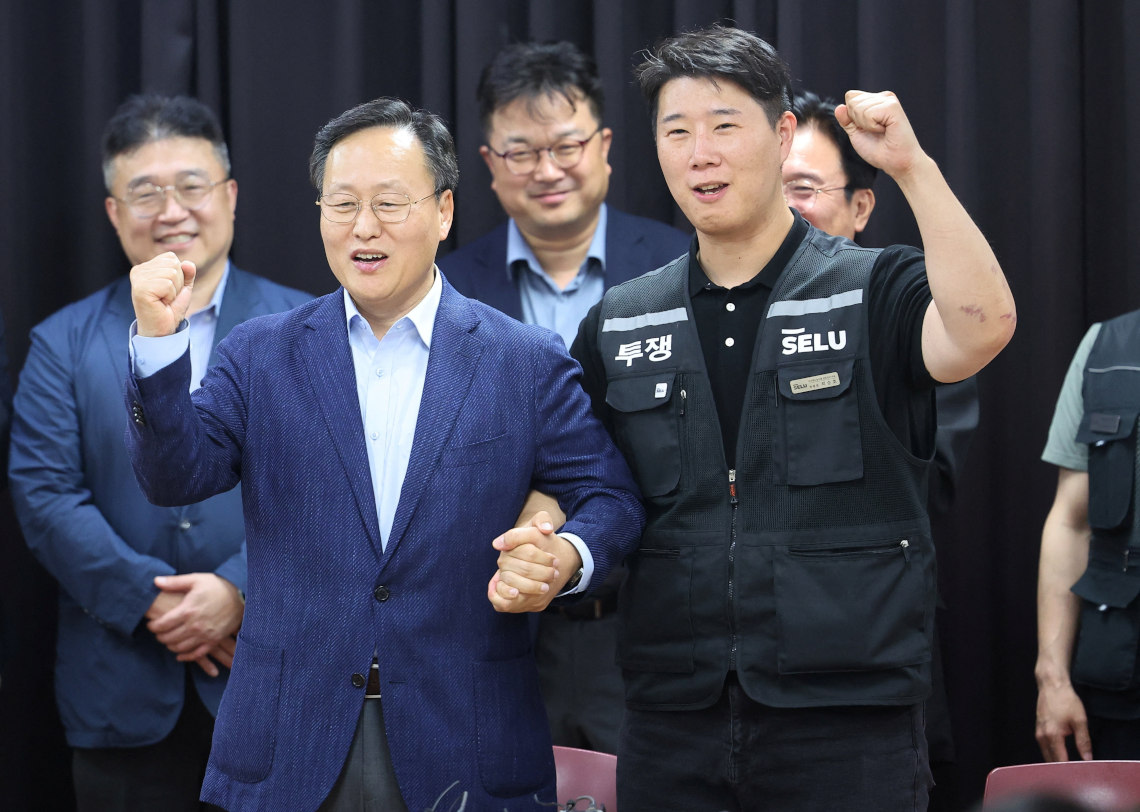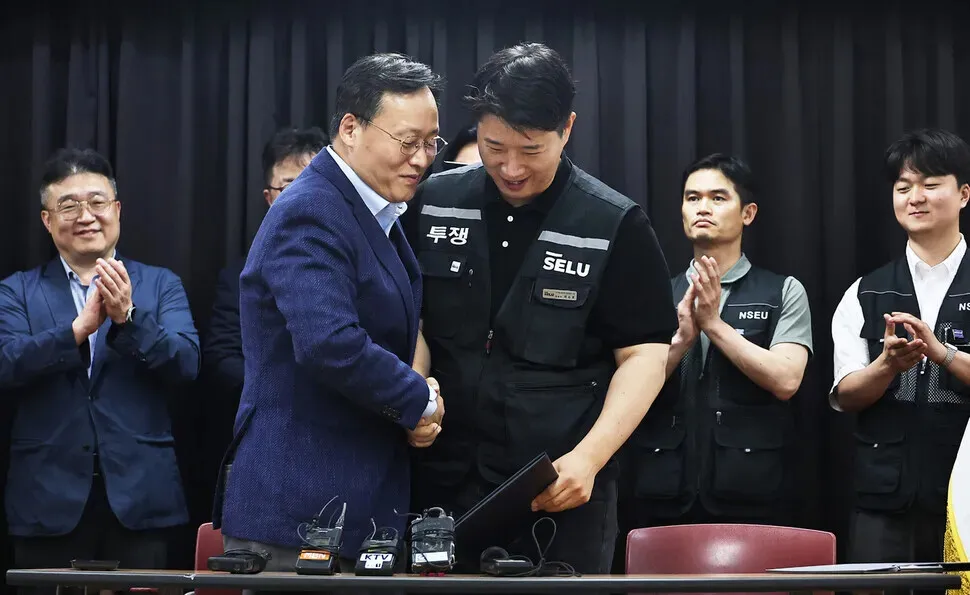
Yeo Myeong-gu (center left), head of HR at Samsung Electronics’ device solutions division, shakes hands with Choi Seung-ho, the head of the company’s largest labor union, after reaching a provisional agreement on wages following last-minute negotiations held at the Gyeonggi District Employment and Labor Office in Suwon on May 20, 2026. (pool photo)
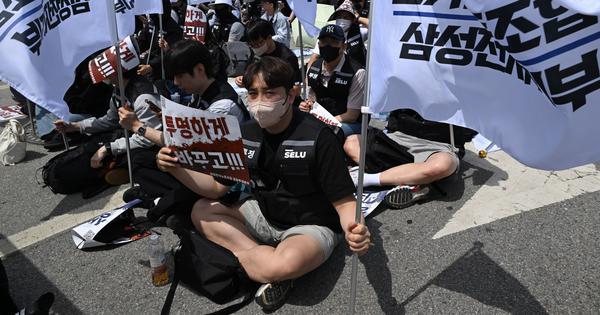
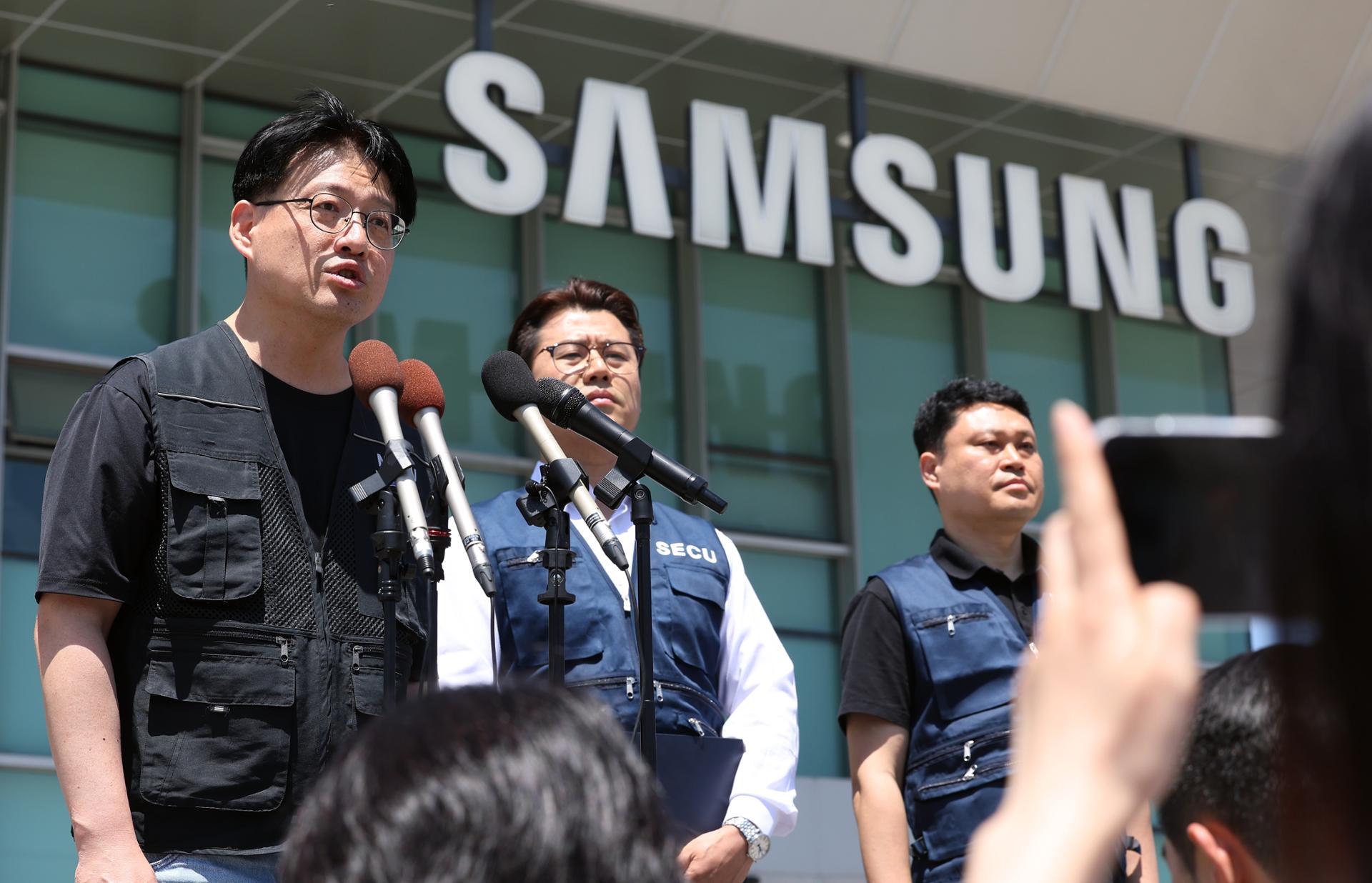
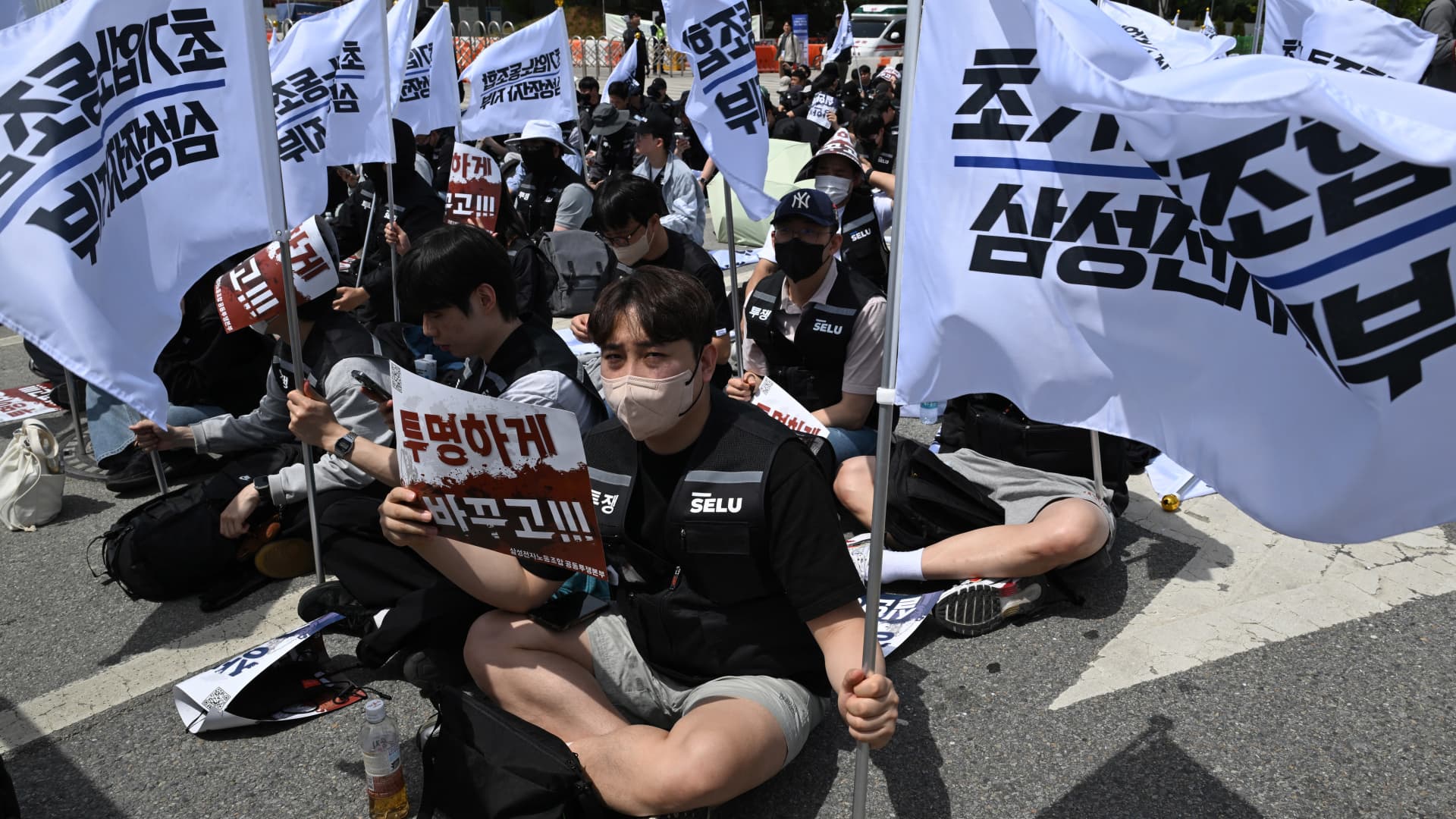
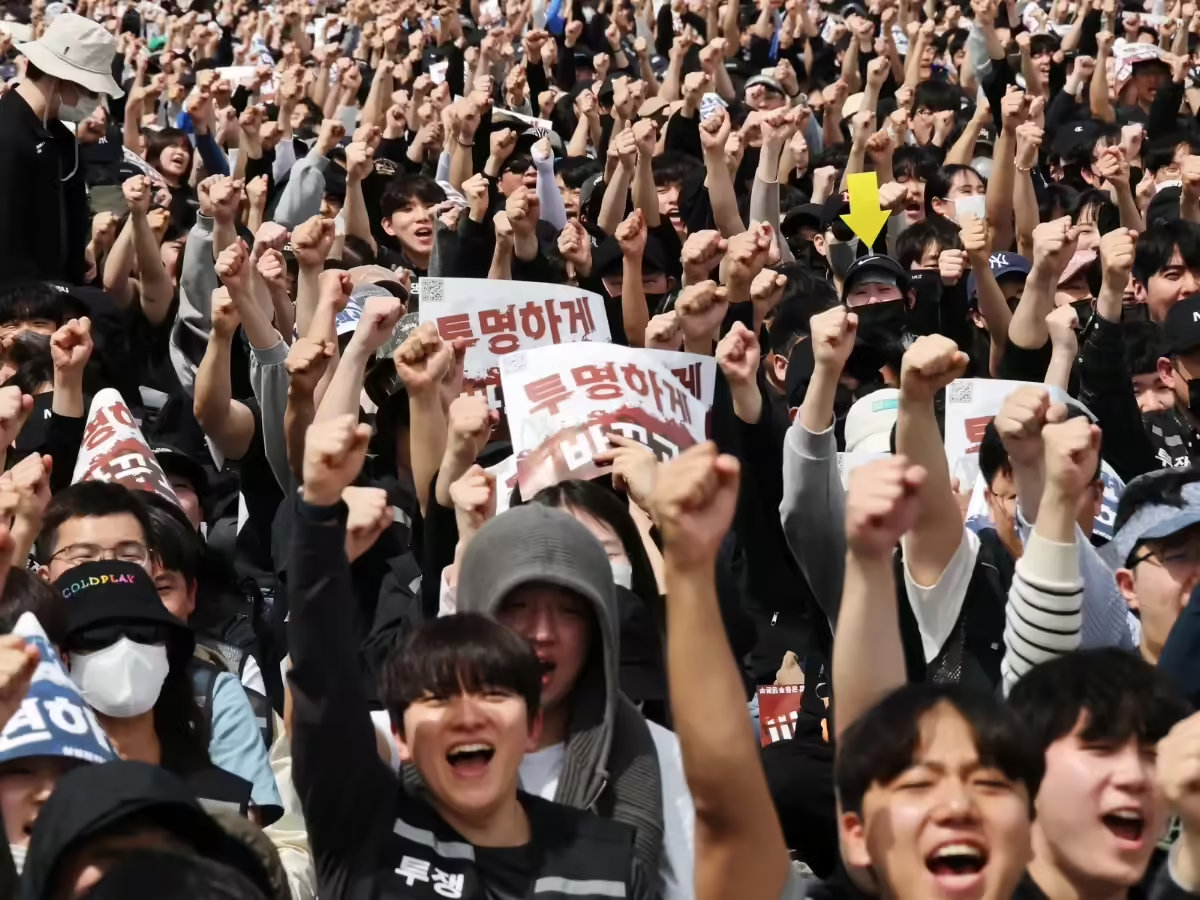
Workers and management at Samsung Electronics finally reached a tentative agreement in their negotiations over bonuses.It is fortunate that they managed to come to this kind of dramatic last-minute agreement, considering growing concerns among the South Korean public about the imminent strike announced by the company’s union. This was the result of both sides taking a step back and the government persevering with its efforts to mediate.As recently as Wednesday morning — the day before the strike was set to begin — labor and management had been unable to reach an agreement in their follow-up mediation facilitated by the National Labor Relations Commission (NLRC).While the union found the NLRC’s plan acceptable, the company rejected it. The union declared that it would go ahead with the strike as scheduled on Thursday.Another turning point in the talks came when Minister of Employment and Labor Kim Young-hoon pursued last-minute mediation at around 4 pm the same day. After around six hours of discussions, Kim and the representatives from both sides signed a provisional agreement late in the evening, and the union announced that it would postpone its strike.The reason these negotiations ran into an impasse was due to the ratios of bonus distribution across different project divisions in the semiconductor sector.The union proposed jointly distributing 70% of the semiconductor sector bonus funds across all memory and non-memory divisions. The company responded by proposing a shared distribution ratio of 40%, stating that it ran against the principles of performance pay to give excessive bonuses to non-memory divisions that were operating in the red.In their 11th-hour negotiations, the two sides appear to have reached an agreement where the union’s call to show consideration for money-losing divisions was accepted on a limited one-year basis. The tentative agreement will become official if it is approved by more than half of all union members in voting between May 22 and 27.Labor and management might have finally reached an agreement under heavy pressure for dialogue, but the situation has dealt a heavy blow to trust in Samsung Electronics as one of South Korea’s leading companies.In a situation where Samsung Electronics was recording a historic surplus in profits, the labor and management remained consistently at odds. Their inability to find a solution based on principles of autonomy and cooperation ultimately led the government to step in and mediate.The union has argued that the request for bonuses is legitimate in light of past effort, while the company has countered that some wiggle room should be left for future investments. But in shirking their responsibilities to return the state support they have received in the past and share the benefits with their partner companies, both sides have failed to win the public’s trust. The internal conflict over bonus distribution rates remains something that could flare up again at any point.The question of how to distribute the profits from the unprecedented semiconductor industry boom — a reflection of a turning point in the artificial intelligence industry — is something that South Korean society as a whole will need to resolve.Rather than just being about profit distribution at a single company, this situation should serve as an opportunity for public discussion of social sharing for the sake of community integration and future investment.Please direct questions or comments to [english@hani.co.kr]