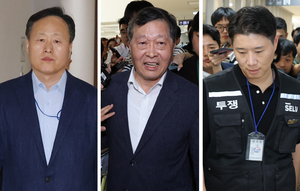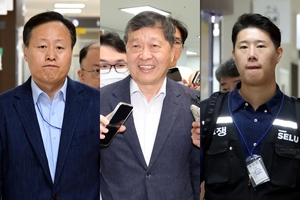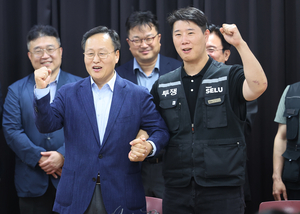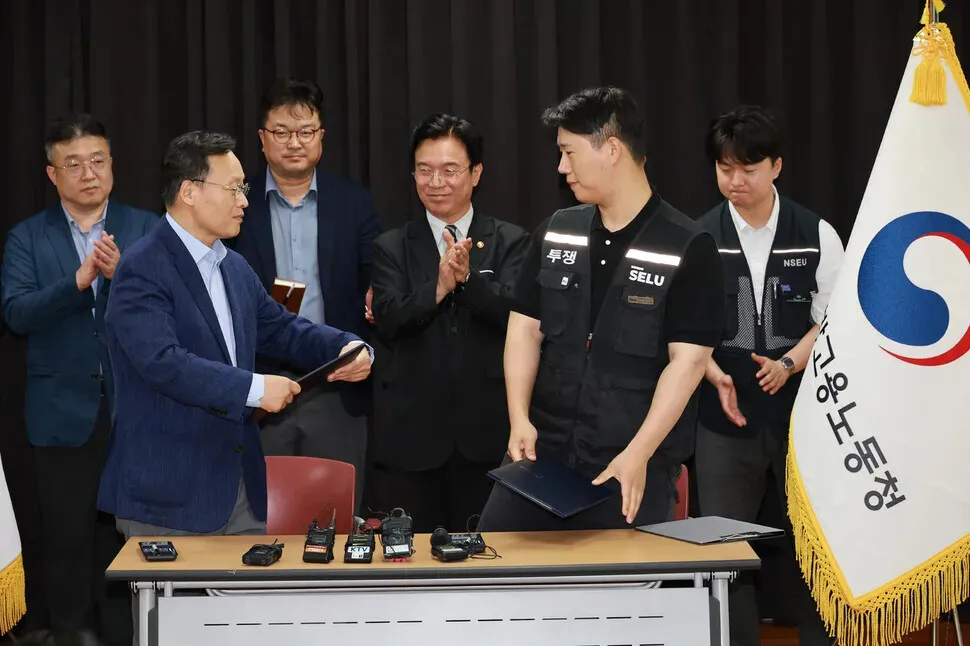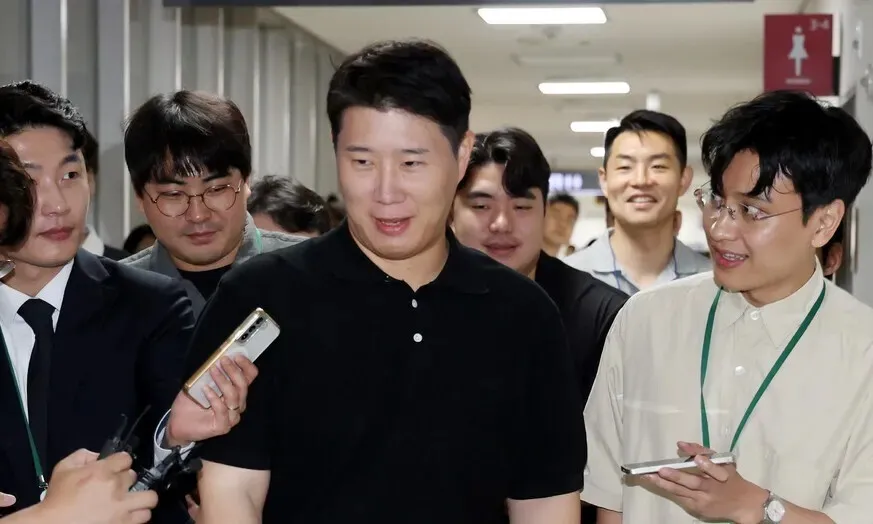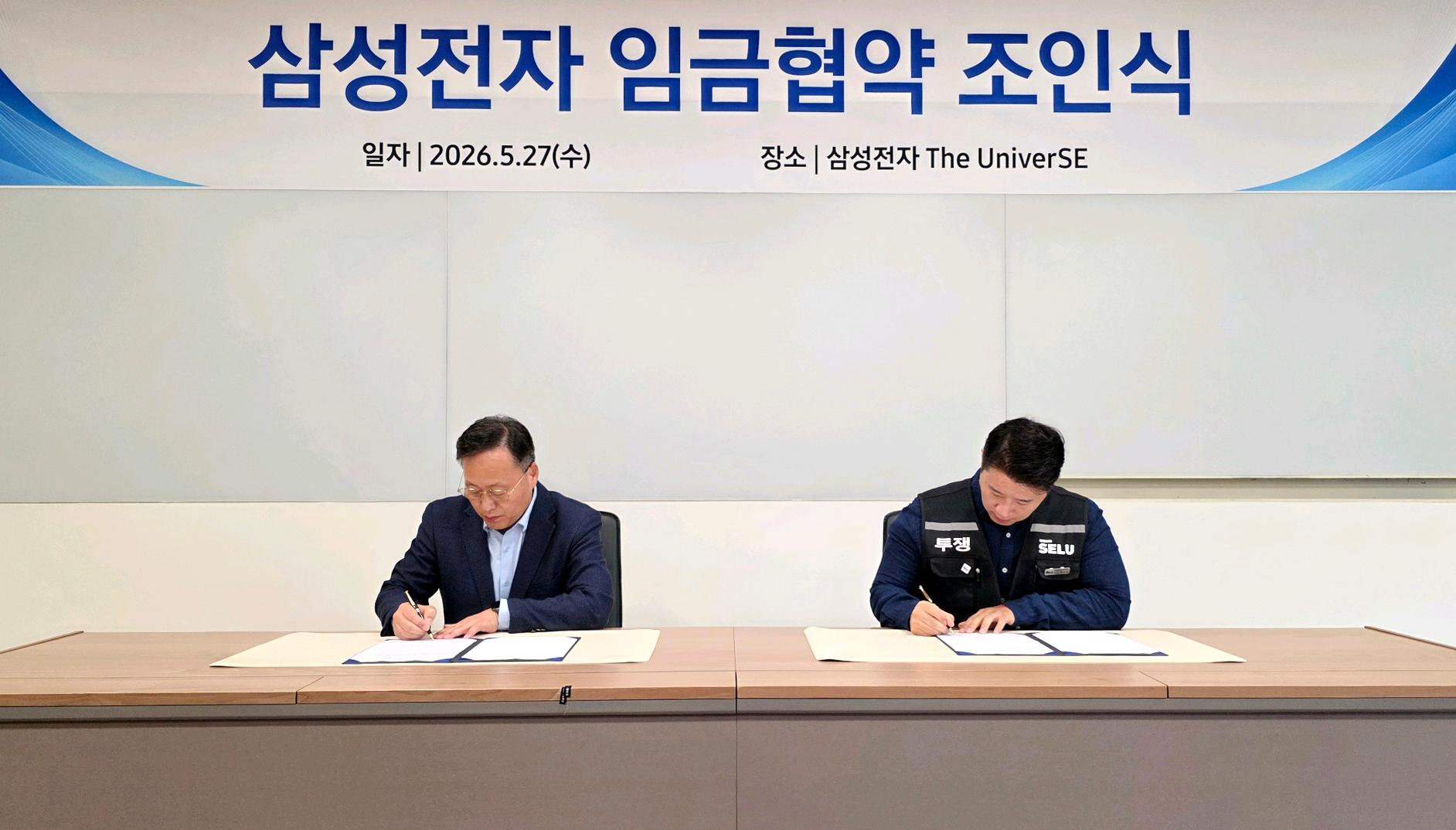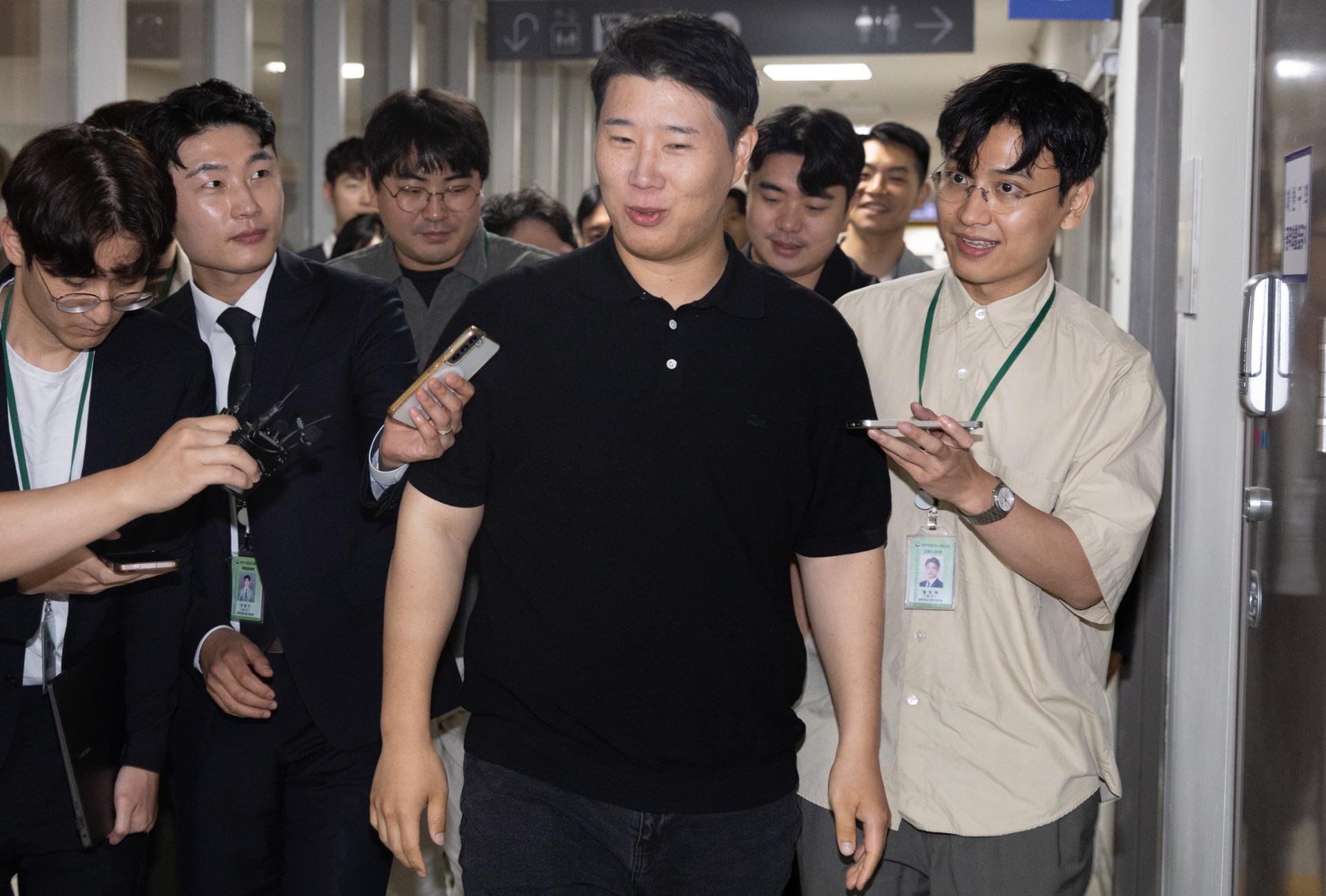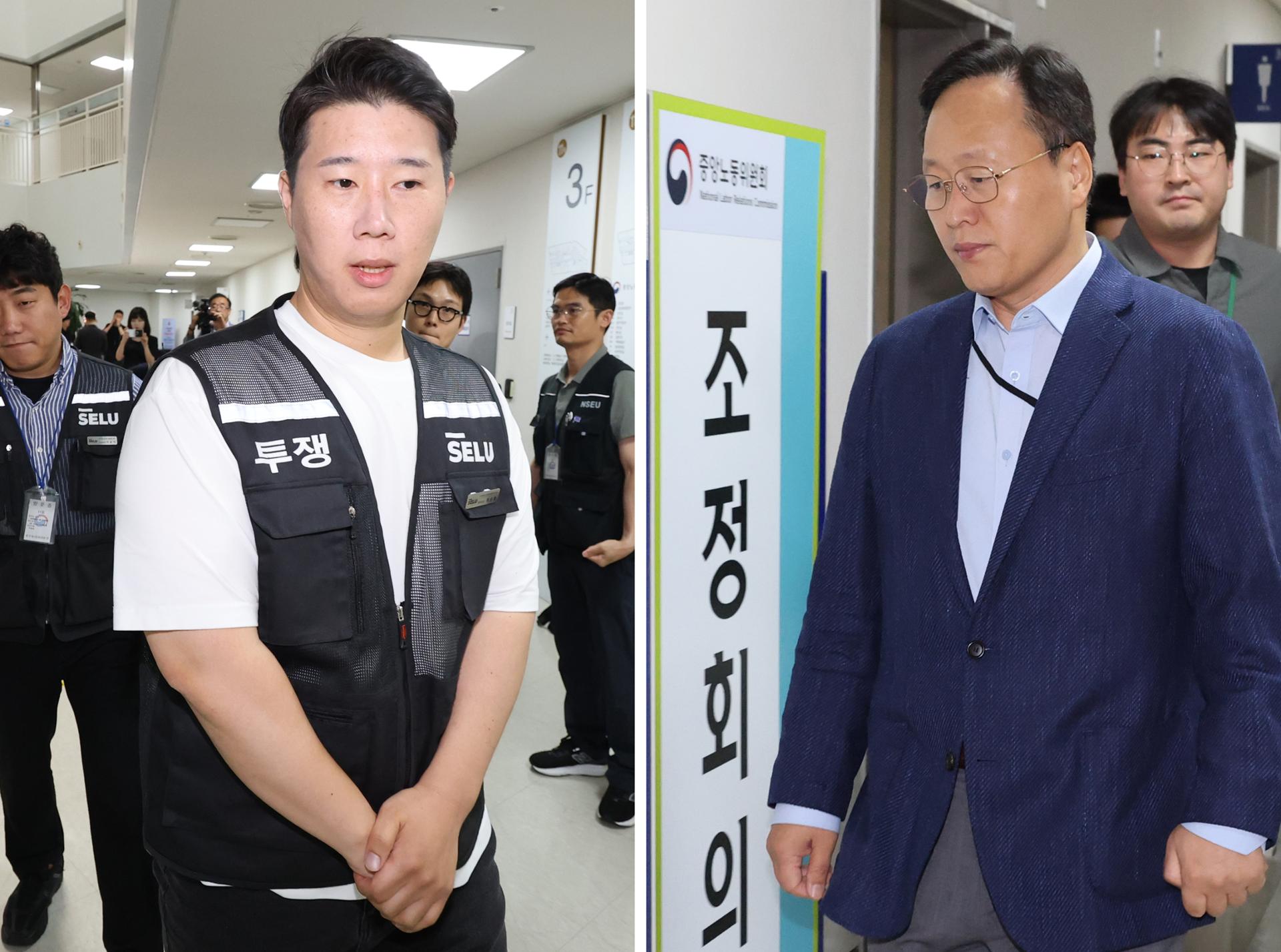
Samsung Electronics Labor Union leader Choi Seung-ho, left, and Yeo Myung-koo, vice president of the People Team at Samsung Electronics' Device Solutions division, are seen arriving for mediated talks at the National Labor Relations Commission in Sejong, Wednesday. The talks fell through. YonhapTalking intensely until the 11th hour, Samsung Electronics' management and its unionized workers struck a tentative deal that put on hold a planned Thursday strike. Union members will now vote to finalize the deal. Tentative and on-hold may be the terms for the moment, but an imminent strike averted will reinject stability for the national economy and in the global supply chain of chips highly in demand for the artificial intelligence (AI) industry. Management and labor at the nation's tech giant each made some concessions regarding the bonus payments. Labor Minister Kim Young-hoon who mediated the final talks said that the two sides found common ground on the matter of distributing profits. A strike at Samsung Electronics would have hit the national economy and the global supply chain. Samsung accounts for about 14 percent of the nation's GDP and about a quarter of its exports. The Bank of Korea warned that a potential industrial action could shave off 0.5 percentage points from its forecast of 2 percent growth this year, and Prime Minister Kim Min-seok said it would be "fatal" to the national economy. Samsung is the world's largest memory chip manufacturer, with clients around the globe. While the averted strike allows a national exhaling in many aspects, the issue of heightened demand for bonus payments is likely to expand. Samsung Biologics saw a five-day strike in early May. HD Hyundai Heavy Industries and Kakao workers are also asking for higher bonus payments, with the latter moving toward a walkout.Another likely spillover effect from the Samsung labor dispute is discussion about how Korea's core industries will balance prosperity with responsibility, labor rights with economic sustainability and short-term demands with long-term national interest, as we wrote previously. The bonuses that Samsung employees hope to receive go as high as hundreds of millions of won, up to a decade's worth of annual salary for the average Korean worker. To some extent, the call for equal distribution for employees in the semiconductor division reflects Korea's rigid labor market.The semiconductor industry is a pivotal growth engine for Korea. Developments in AI have led to record-high first-quarter earnings this year for Samsung and SK hynix. Chips are also an industry requiring massive investments in research and development in order to maintain a leading technological edge. As the company and its workers continue to seek a fair resolution, they should discuss how to set up a model that ensures labor rights and economic sustainability. There are also concerns being raised about the "yellow envelope law," under which tens of thousands of employees at subcontracted companies can make labor-related requests from primary contractors — in this case, Samsung Electronics. Labor strife over bonus payments encapsulates manifold issues in the labor market, including payment and distribution, that an economy and society pursuing AI-driven economic and technological shifts must debate and consider. Korea should tackle these issues from a rational perspective and open minds. President Lee Jae Myung stressed a few days ago that "labor should be respected as much as business and management rights should be respected just as labor rights are." The tide is high for a deal.
[ED] Tentative deal struck at Samsung - The Korea Times
Talking intensely until the 11th hour, Samsung Electronics' management and its unionized workers struck a tentative deal that put on hold a planned...
563 words~3 min read