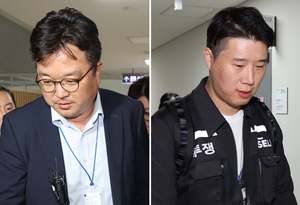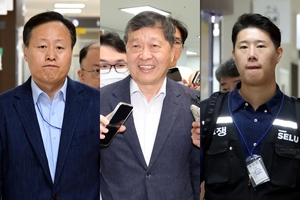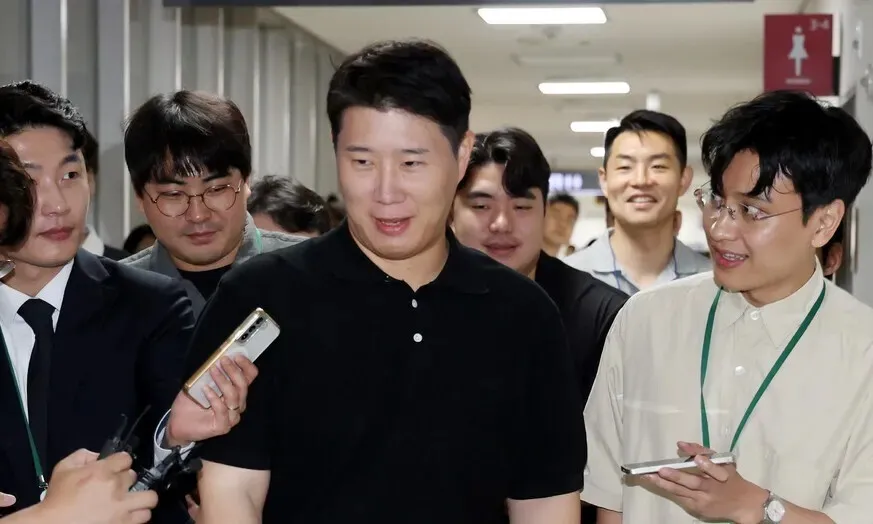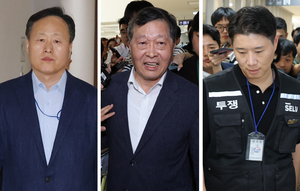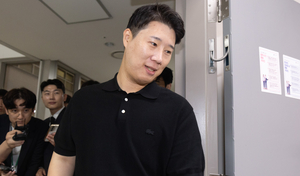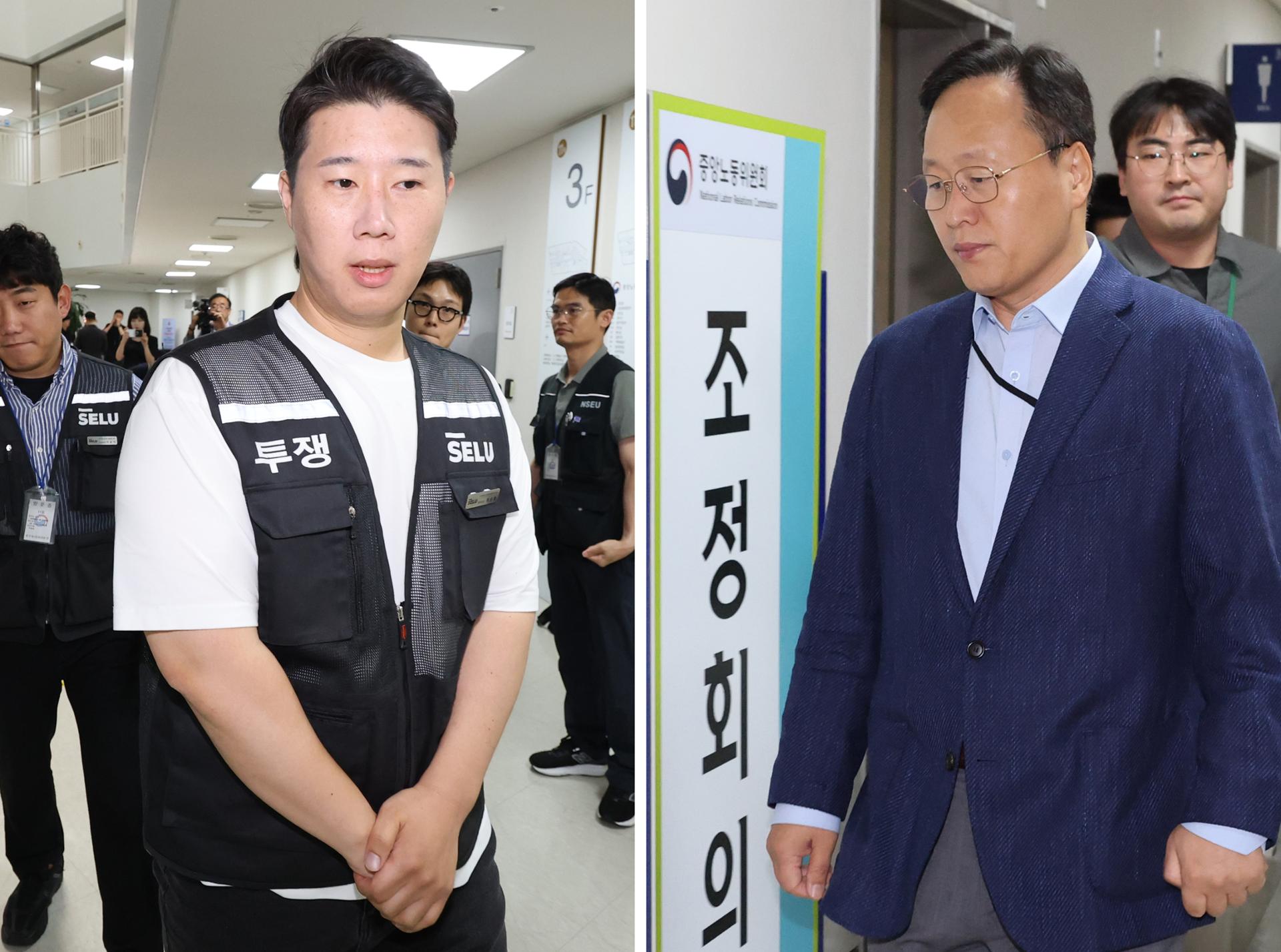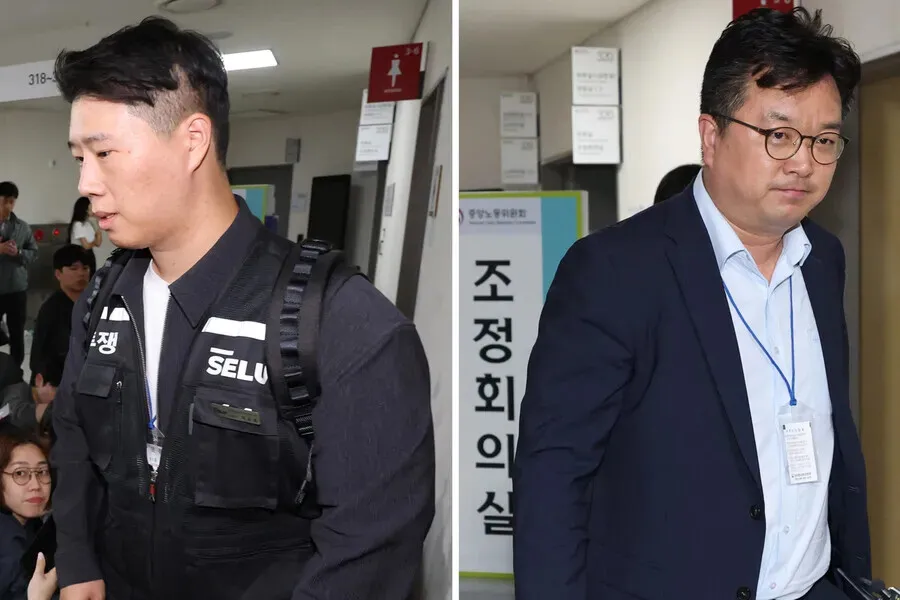
Choi Seung-ho (left), the president of Samsung Electronics’ labor union, and Kim Hyung-ro, a vice president of the company acting as head of its negotiating committee, each depart from the National Labor Relations Commission after a second round of talks mediated by the government fell through on May 13, 2026. (Yonhap)
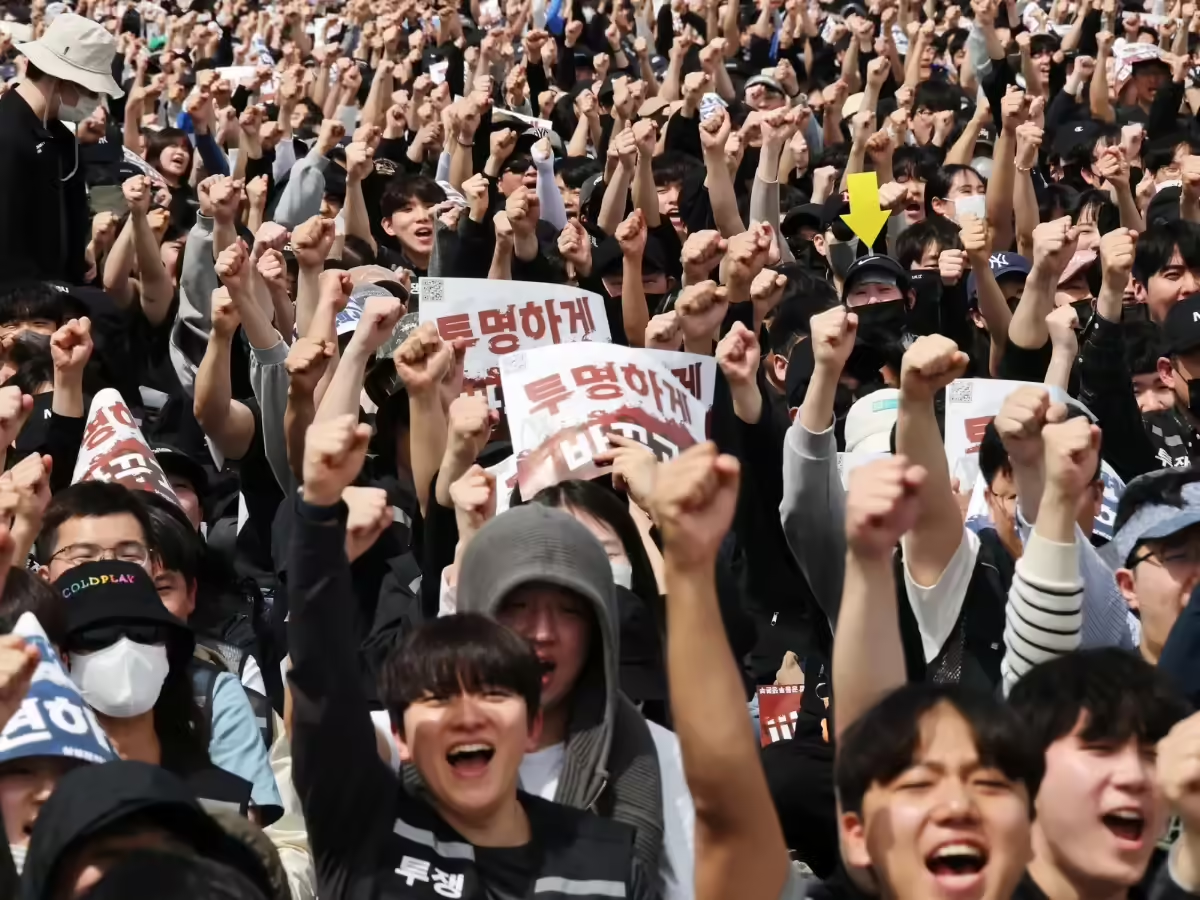
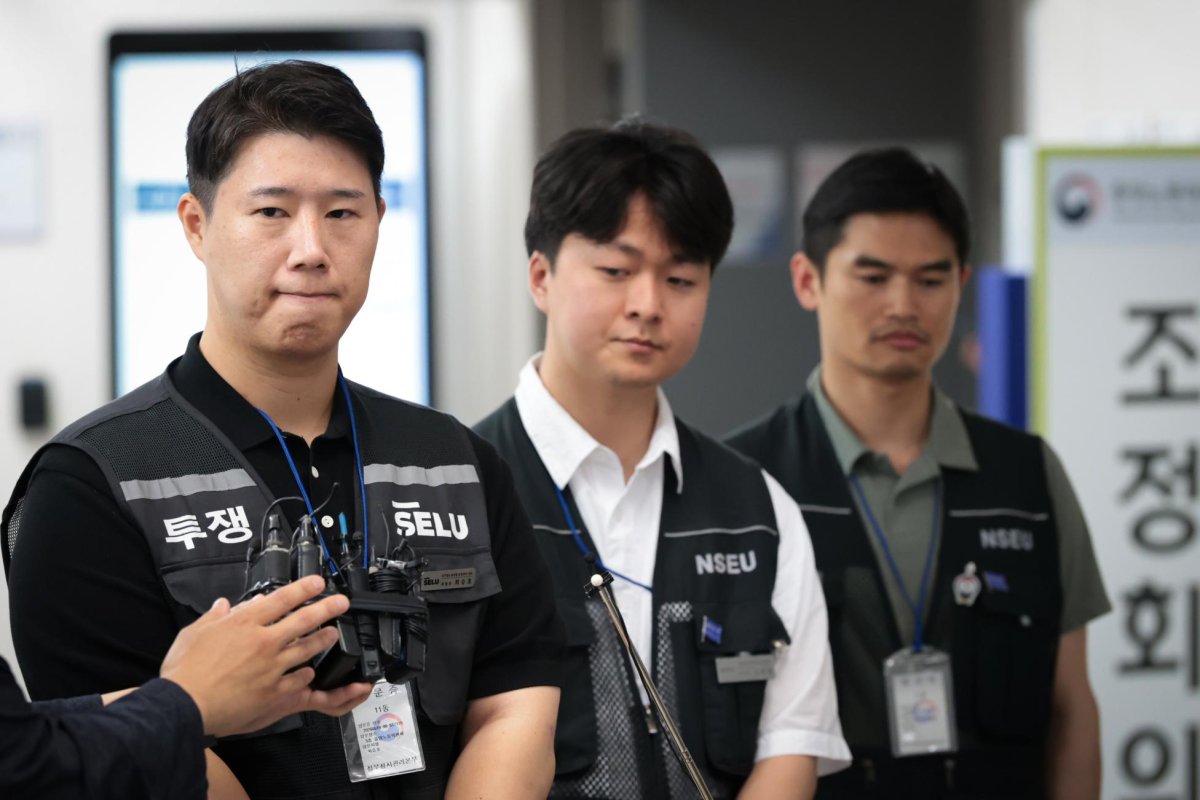
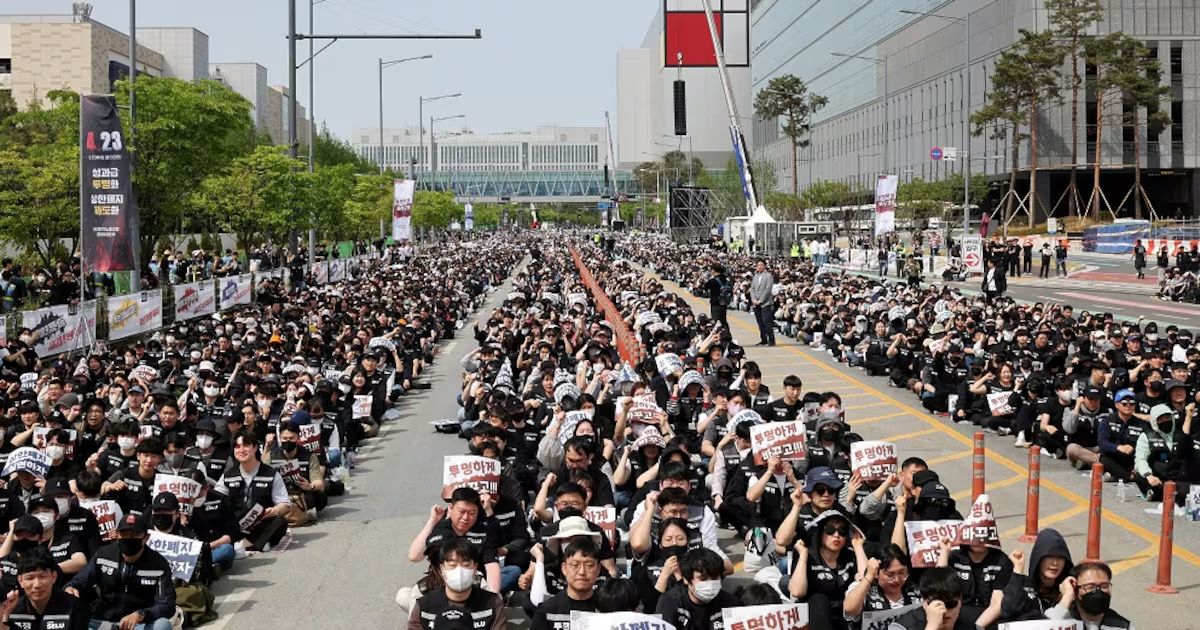
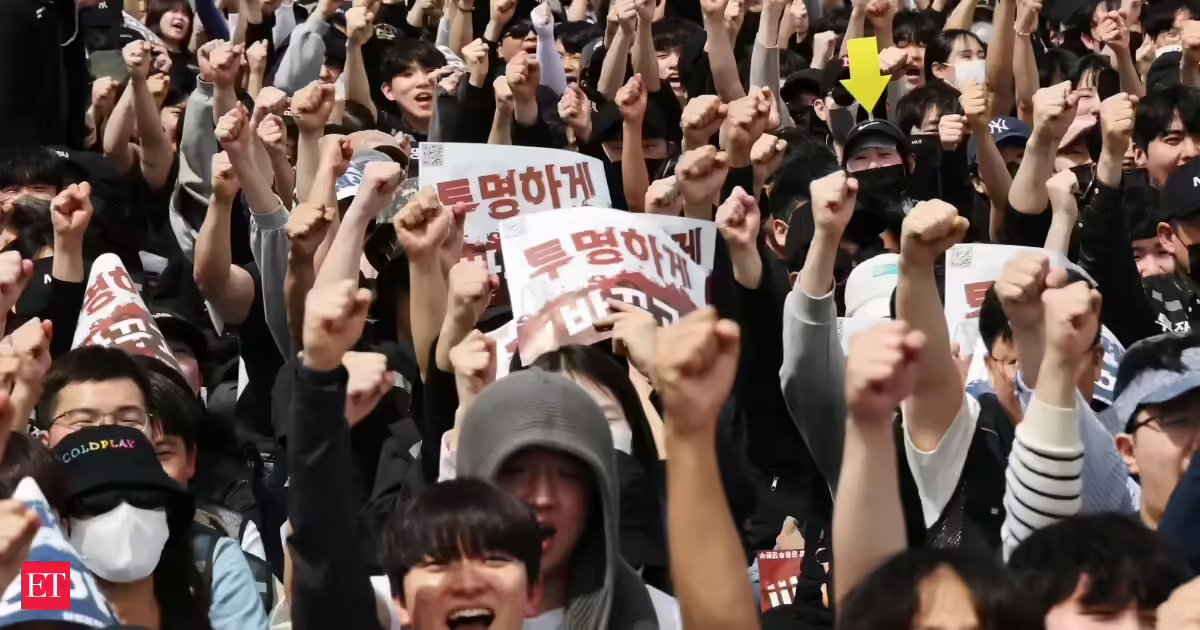
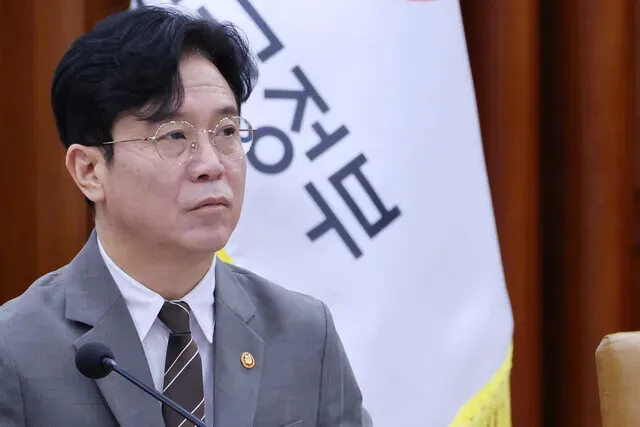
Representatives from Samsung Electronics’ management and labor union spent 28 hours over three days in intense negotiations but failed to reach an agreement about how to calculate bonuses based on the company’s record-setting profits.With the Korean government playing an active role in supporting the talks, the two sides may try to arrange another round of negotiations before May 21, when the union has threatened to go on strike.Officials from the National Labor Relations Commission (NLRC) spent 17 hours, from 10 am on Tuesday to 3 am on Wednesday, in an unsuccessful attempt to broker a deal. That followed an 11-hour marathon negotiating session between the two sides from 10 am to 9:30 pm on Monday.Despite the grueling talks, the two sides have been unable to narrow their differences. The union is demanding that the company scrap caps on performance-based bonus pay and formalize a system in which 15% of the company’s operating profit be paid out in bonuses. “Management has long claimed that it would set aside funds during profitable periods to cover losses when the company is in the red, but this promise has not been kept,” said Choi Seung-ho, head of Samsung Electronics’ largest union, stressing the need for such a policy to be “institutionalized.” The company, on the other hand, has said that it will offer performance-based bonuses at the highest rate within the industry this year, but that it opposes setting a fixed bonus system in stone. As the semiconductor industry is prone to boom-and-bust cycles, it argues, it has to be flexible in its investment and cost structures, which means that setting aside a portion of operating profit for bonus pay would make it difficult to respond effectively during an economic downturn. With the two sides locking horns over the company’s bonus policy, there’s little hope for progress unless either management or the union offers a concession. On Tuesday, the NLRC proposed increasing the funding for bonus pay in the semiconductor division to 12% of operating profits, a rate higher than the 10% proposed by the company.At the same time, it presented a draft “arbitration plan” that kept the bonus ceiling at 50% of annual salary while avoiding institutionalization.Choi rejected that plan, saying, “We demanded abolition of the bonus ceiling, along with transparency and institutionalization, but those elements were not met.”“If anything, the NLRC arbitration plan was a step backward,” he added.With only around eight days left before a strike, the key question now is whether labor and management will sit down for another round of talks.Choi maintained that the union is “not considering additional dialogue with management before the strike concludes.” Analysts interpreted this to mean that meaningful talks will only be possible once management revises its proposal on the issue of institutionalizing bonus pay. The company left the door open for more dialogue, saying it would “continue making efforts to the end to prevent a worst-case scenario through genuine dialogue.” But it remains opposed to institutionalizing fixed bonuses.The government shared a message encouraging Samsung Electronics labor and management to pursue dialogue and offering active support.“The post-mediation may be over, but there is still time, so we will support labor and management in resolving the issue through dialogue,” Blue House senior spokesperson Kang Yu-jung said in a briefing Wednesday.At an emergency meeting of relevant Cabinet ministers, Prime Minister Kim Min-seok called for “active support for ongoing labor-management dialogue to ensure that under no circumstances will there be a strike at Samsung Electronics.”The Ministry of Employment and Labor, which is tasked with overseeing labor-management relations, appears likely to play a central role in mediating. In a message posted to YouTube, Minister of Labor Kim Young-hoon announced plans to “mediate dialogue to ensure that there is no strike and work tirelessly to coordinate between the two sides, whether it is behind the scenes or out in the open.”The NRLC said that it is “capable of assisting at any time if management and labor agree to request additional mediation even after their decision to end mediation.”With the prospect of a strike looming, some have raised the possibility of the government invoking “emergency adjustment” powers. According to Article 76 of the Trade Union and Labor Relations Adjustment Act, the minister of employment and labor may invoke emergency adjustment powers when an industrial action is deemed “likely to impair the national economy or endanger citizens' daily lives.”If an emergency adjustment takes place, a strike will be prohibited for a period of 30 days. Such adjustments have only occurred on four occasions to date: in response to a 1969 Korea Shipbuilding Corporation strike, a 1993 Hyundai Motor strike, and pilot strikes at Asiana and Korean Air in July and December 2005, respectively.The Labor Ministry has dismissed the prospect of an emergency adjustment, with one official saying, “There is still room for labor and management to negotiate things on their own, so what we need now is negotiation.”“We are not at the stage of talking about emergency adjustment powers,” they added.Also awaiting resolution is an injunction request submitted by Samsung Electronics on April 10 against the Samsung Electronics Labor Union and the National Samsung Electronics Union to bar what it characterized as an illegal industrial action. The Suwon District Court finished the second round of questioning on Wednesday, with a result expected to come before the projected strike date of May 21.Observers are predicting that the judgment is unlikely to bar the strike itself and that it will instead determine its potential scope, prohibiting only specific illegal actions.“Even if some parts [of the injunction request] are accepted, that poses no issues for the strike,” said Choi, the union leader. “Currently, the number of union members who have announced their intent to participate in the strike stands at around 41,000, and that number could go as high as 50,000,” he added.Samsung Electronics experienced its first-ever strike in July 2024, with the National Samsung Electronics Union as its key player. With around 6,000 union members taking part, it did not result in any major production setbacks, and the union made the decision to return to work after 25 days.By Park Da-hae, Kwon Hyo-jung, Bae Ji-hyun, staff reporter; Ko Han-sol, staff reportersPlease direct questions or comments to [english@hani.co.kr]