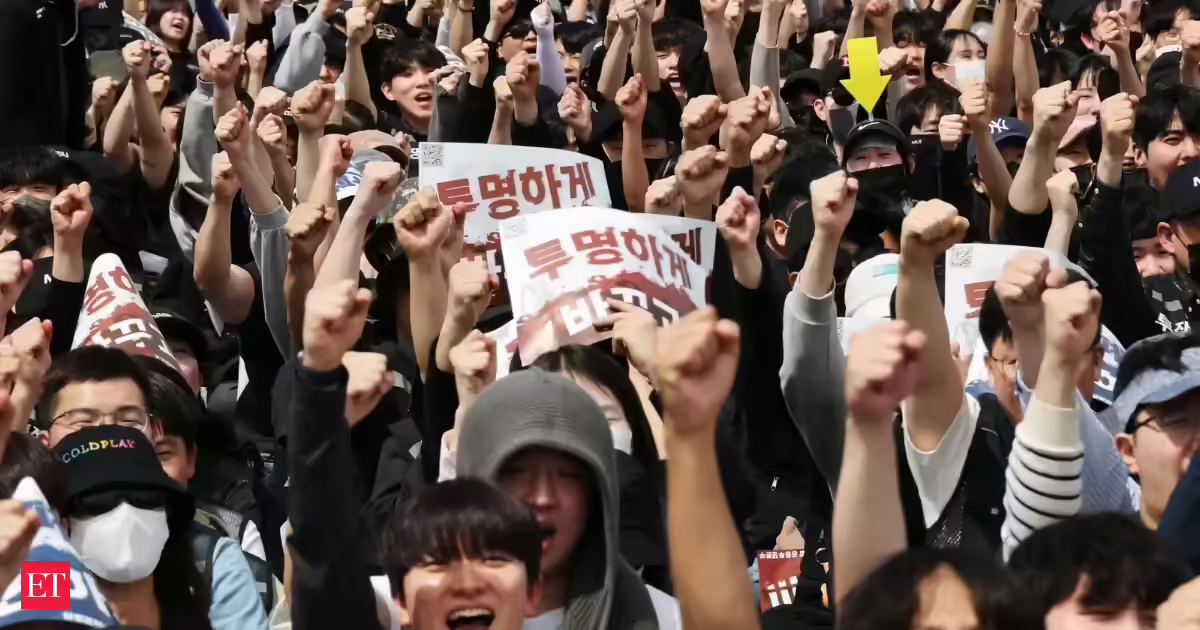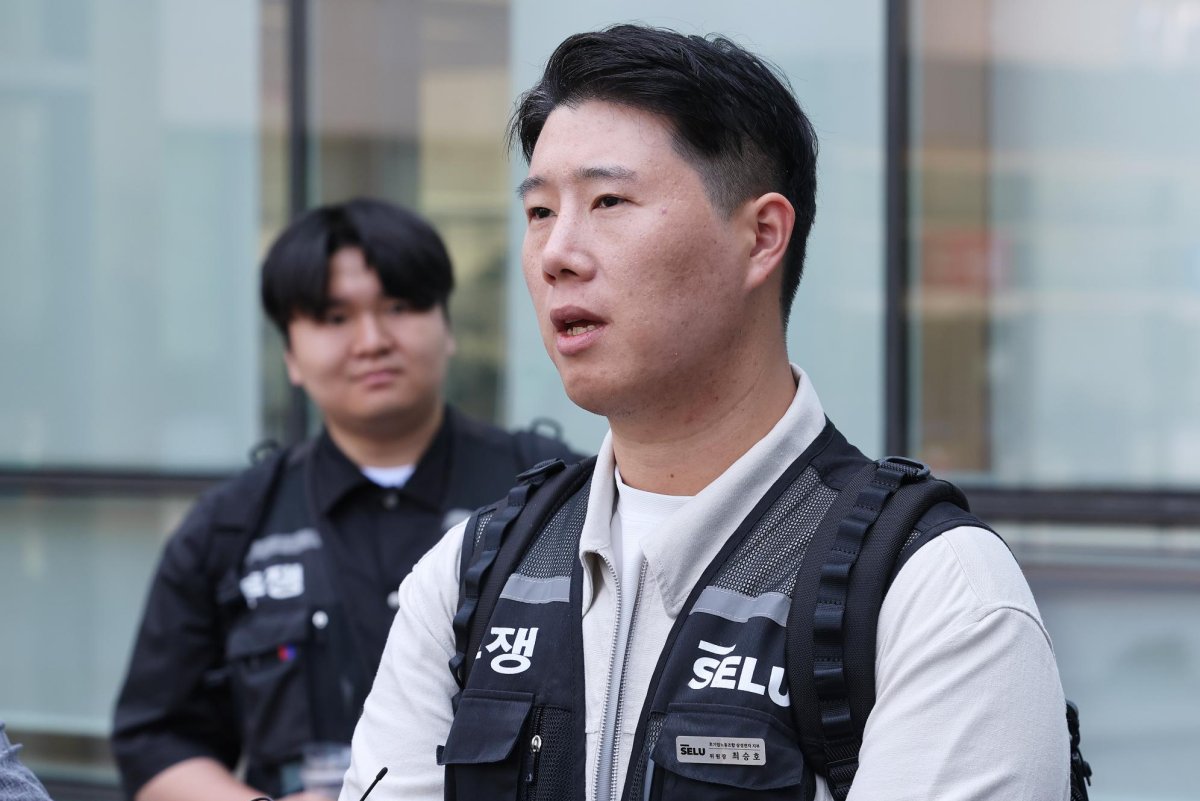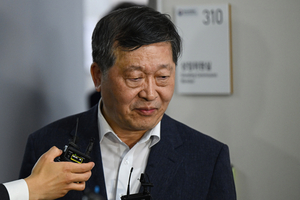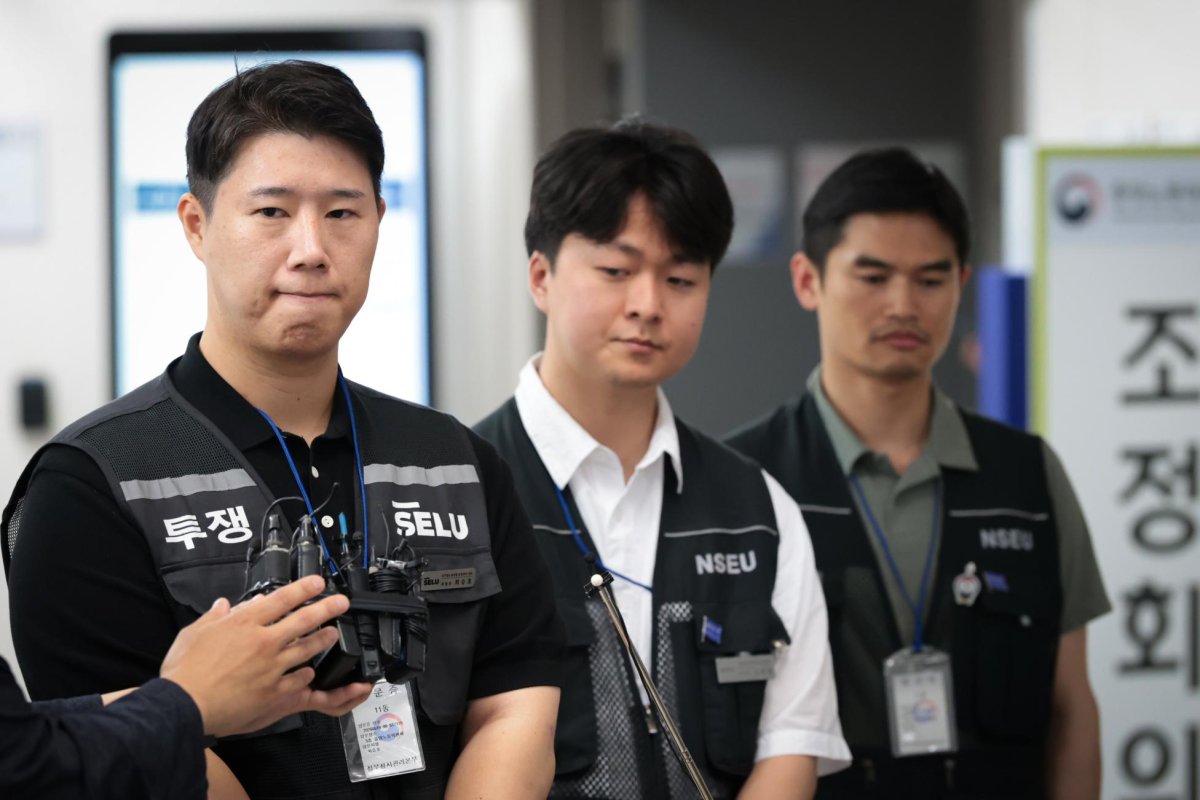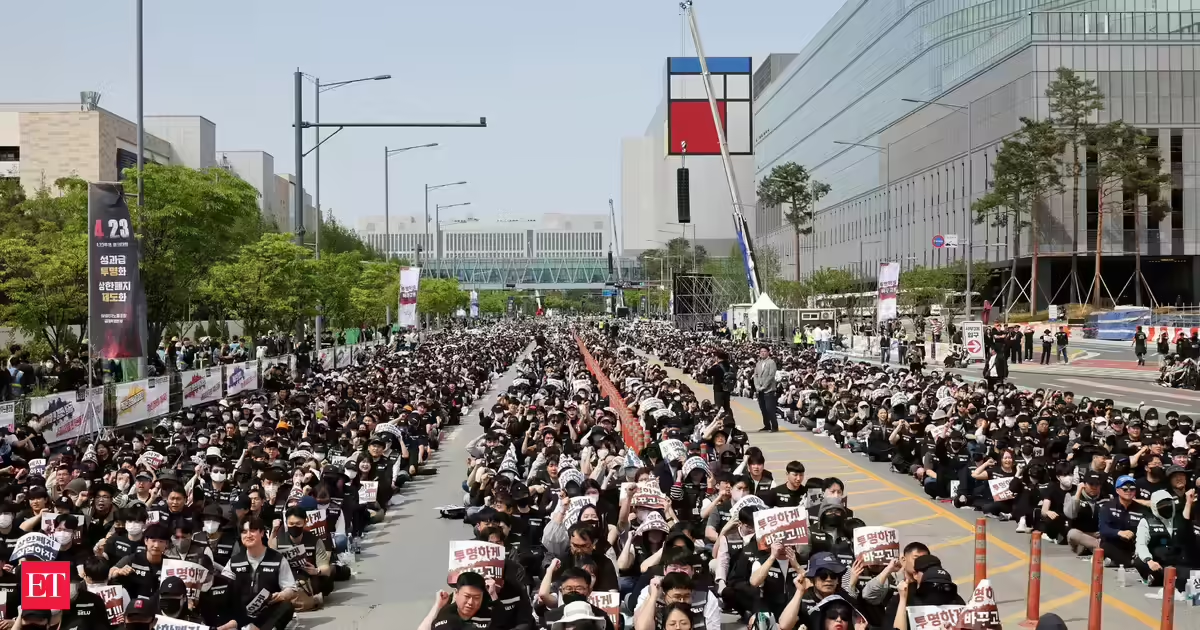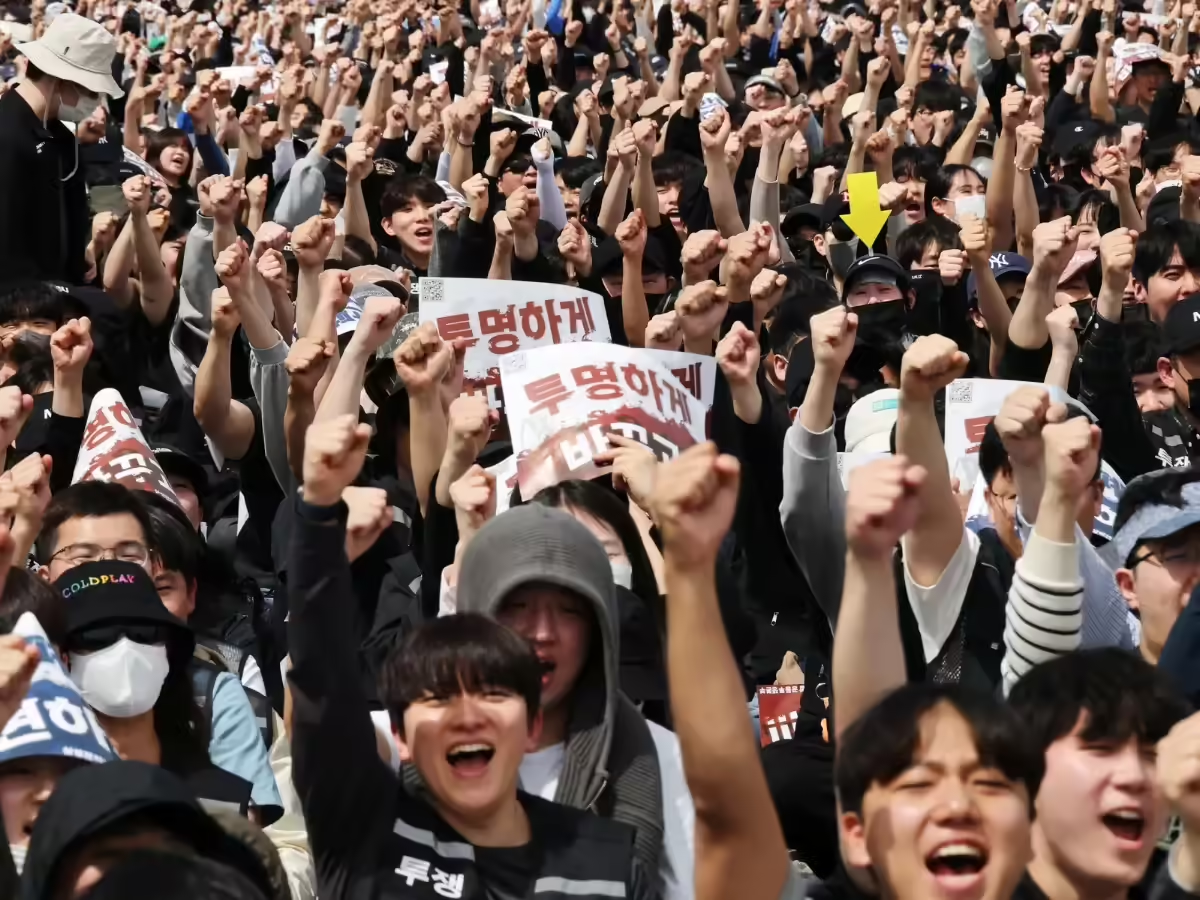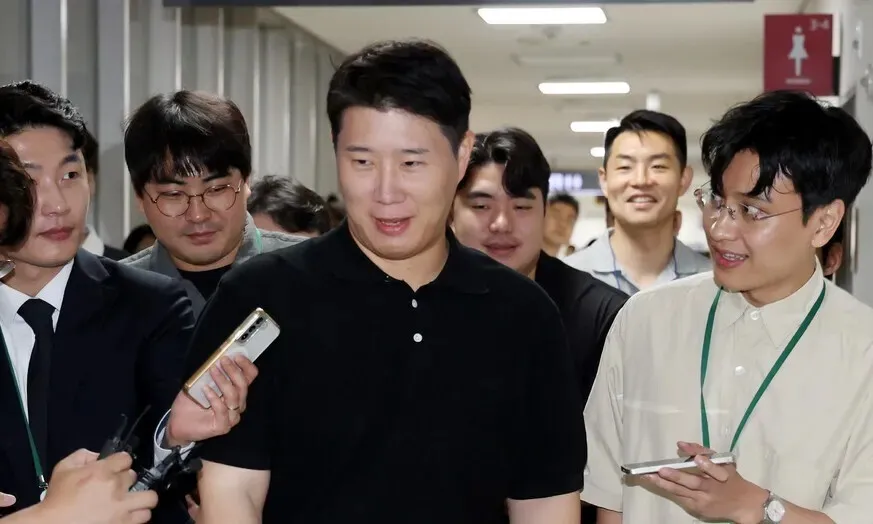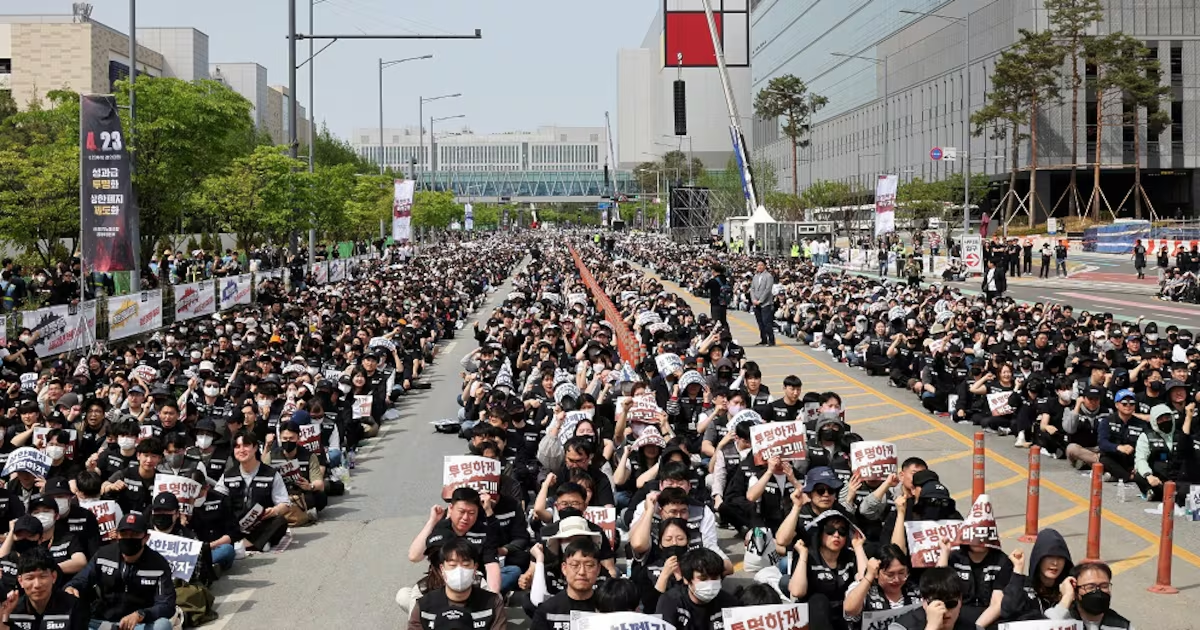
Samsung Electronics Co. and its largest labor union resumed government-led wage mediation talks Monday in a last-ditch effort to avert a strike at the world's largest memory chipmaker.The talks restarted days after the first round of government-mediated negotiations collapsed over performance-based bonuses, ahead of an 18-day strike scheduled to begin Thursday."We will participate in this second round in good faith," Choi Seung-ho, head of Samsung Electronics' largest labor union, told reporters at the National Labor Relations Commission office in Sejong, about 110 kilometers south of Seoul. Choi Seung-ho, head of the Samsung Electronics branch of the Samsung Group Super-enterprise Labor Union, attends a second post-mediation meeting at the National Labor Relations Commission in the government complex in Sejong on May 18. (Yonhap) No deadline has been set for the second round of mediation. However, with only three days remaining before the union's planned strike, it is widely viewed as the final opportunity for a breakthrough.Labor and management remained sharply divided over performance-based bonuses tied to earnings from the company's artificial intelligence-related semiconductor business amid the ongoing memory supercycle.Management has proposed maintaining the current excess profit incentive system while allowing the bonus pool to be calculated based on either 10 percent of operating profit or economic value added, known as EVA. The company also proposed introducing a special compensation system, saying it would help create a more flexible incentive structure.The union, however, is demanding fixed performance bonuses equal to 15 percent of the semiconductor division's operating profit and the removal of payout caps.Industry observers say if a walkout occurs, losses to the South Korean economy can reach up to 100 trillion won ($66.7 billion), given the country's heavy reliance on semiconductor exports.Government officials have raised concern over the strike, suggesting Seoul may invoke emergency arbitration powers to prevent the strike. This has prompted backlash from labor groups.Under South Korean law, the labor minister can issue an emergency arbitration order if a dispute is deemed likely to harm the national economy or seriously disrupt the lives of ordinary people.Such an order would suspend industrial action for 30 days while the National Labor Relations Commission conducts mediation and arbitration.Earlier in the day, President Lee Jae Myung said that companies' management rights should be respected as much as labor rights."In South Korea, which has adopted the basic orders of democracy and free market economy, labor should be respected as much as companies, and corporate management rights should also be respected as much as labor rights," Lee posted on his X account. (Yonhap)
Samsung Electronics, union resume wage talks as major strike nears
Samsung Electronics Co. and its largest labor union resumed government-led wage mediation talks Monday in a last-ditch effort to avert a strike at the world's l
418 words~2 min read