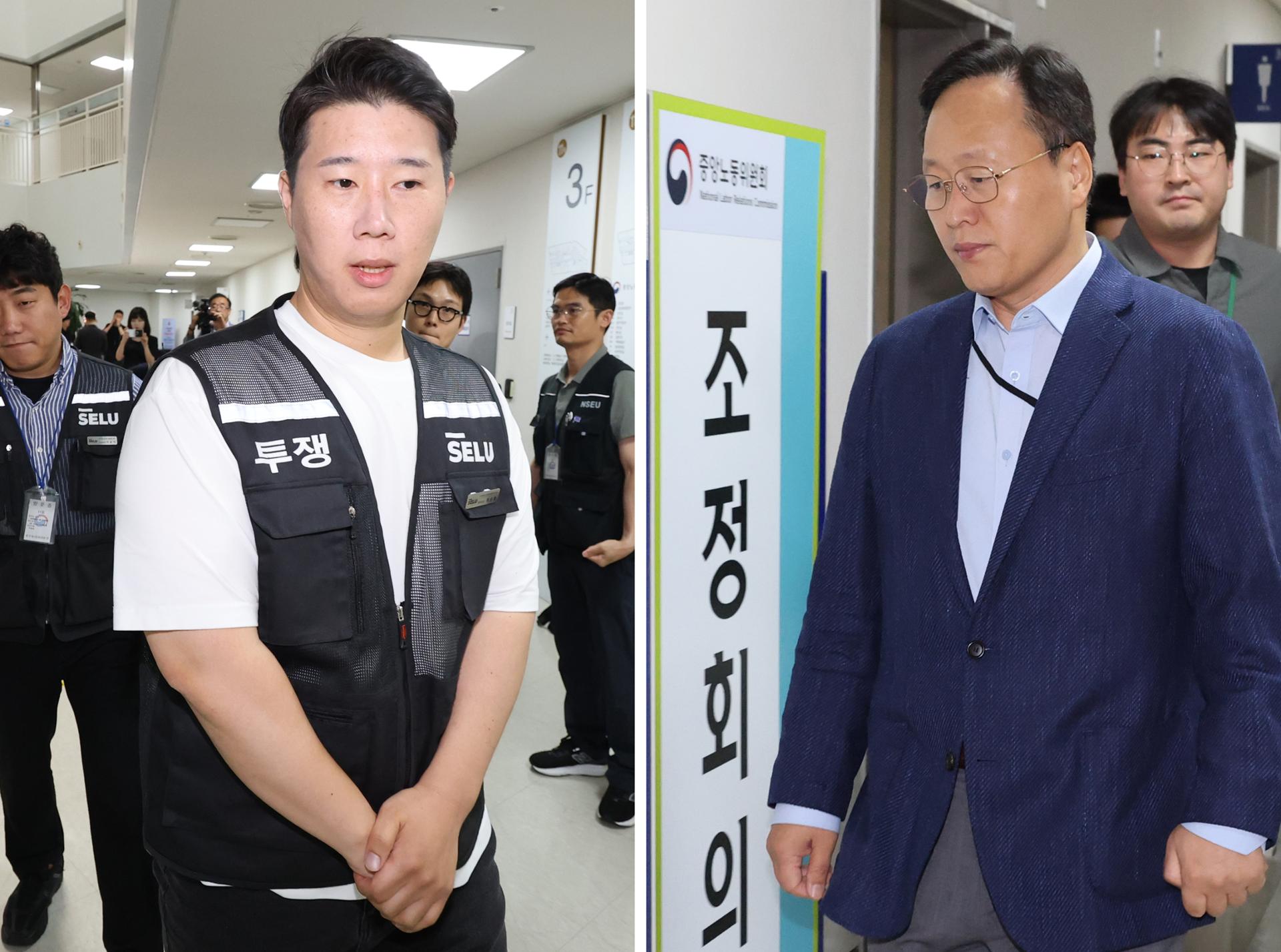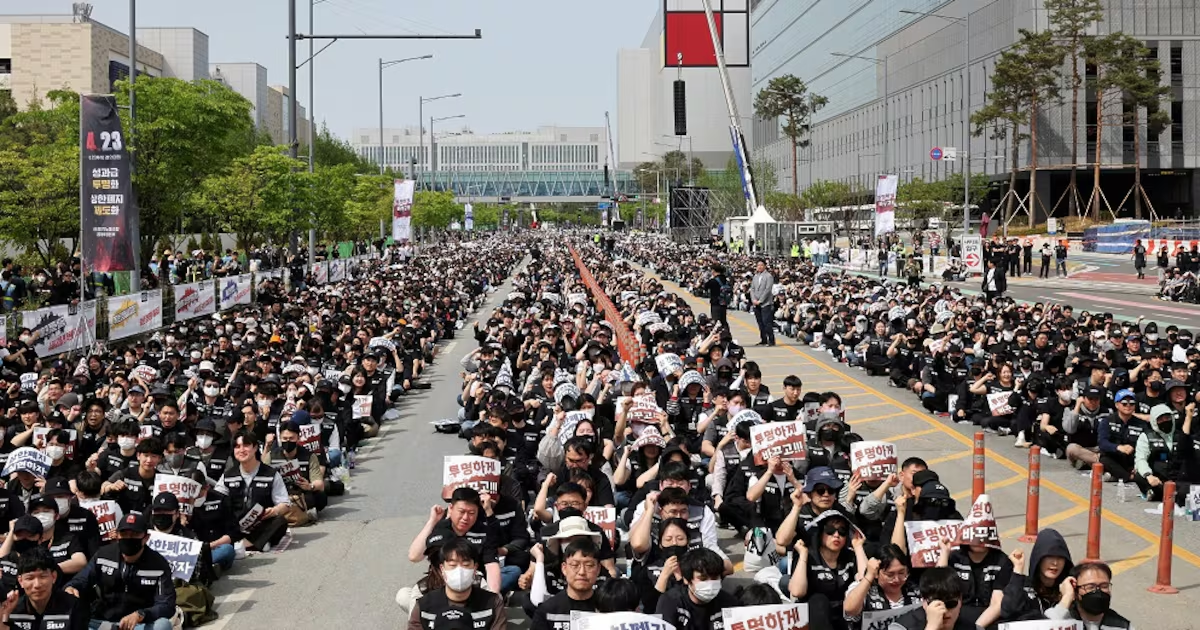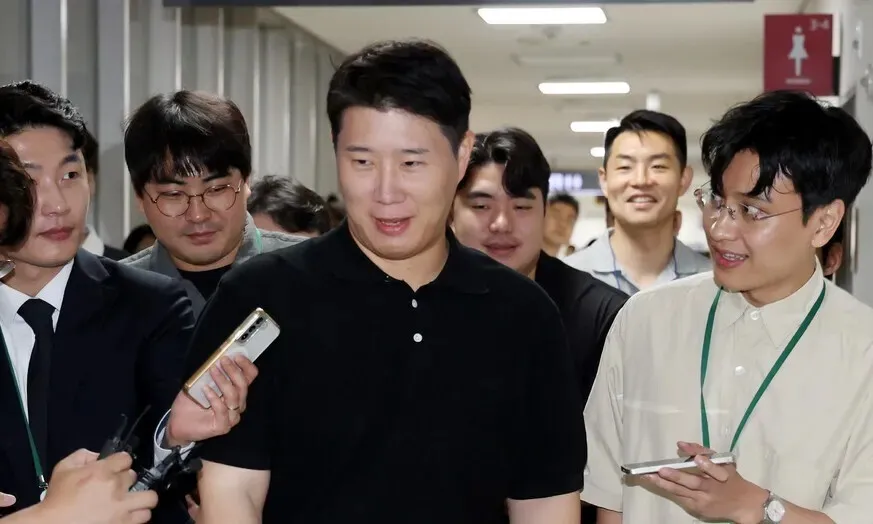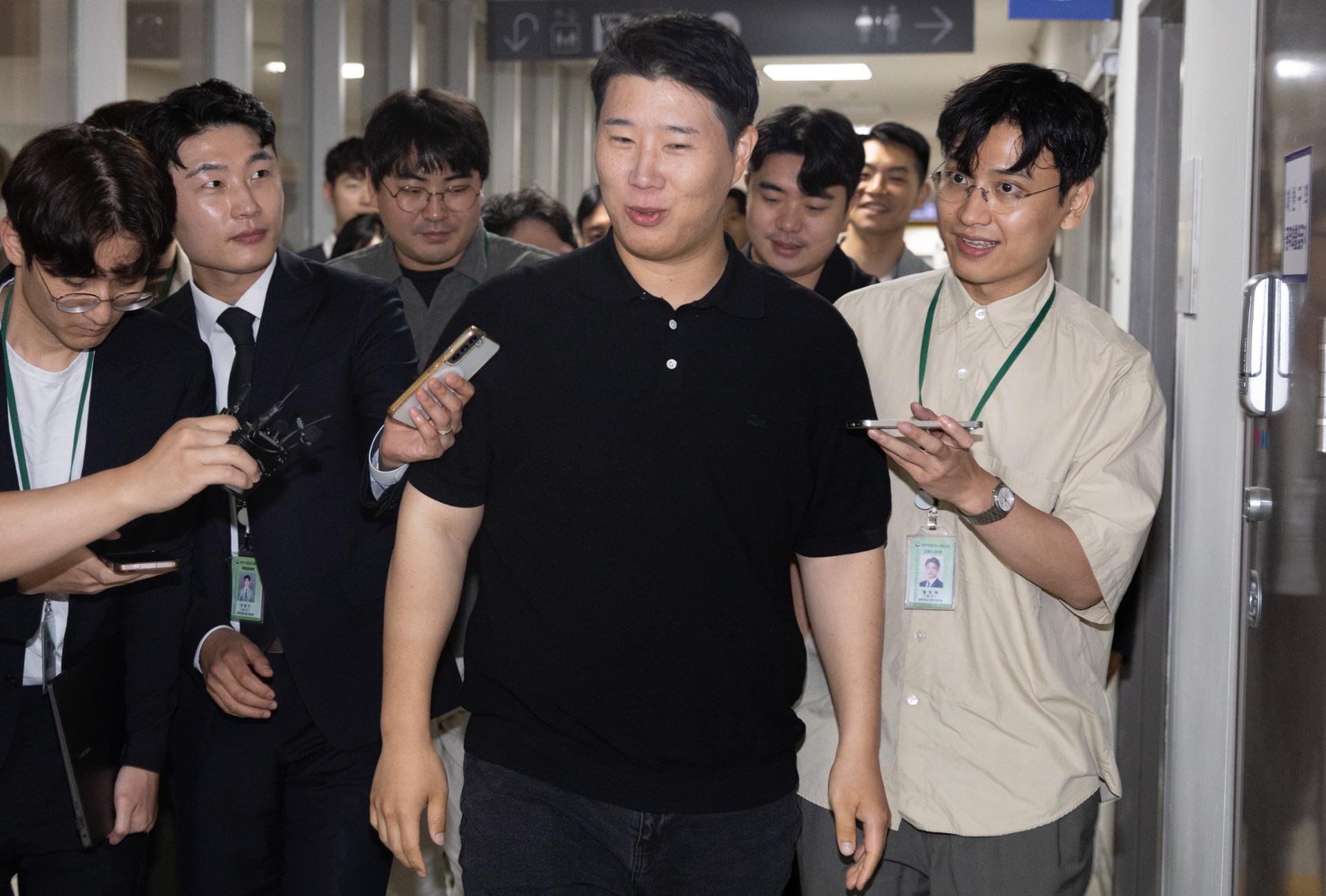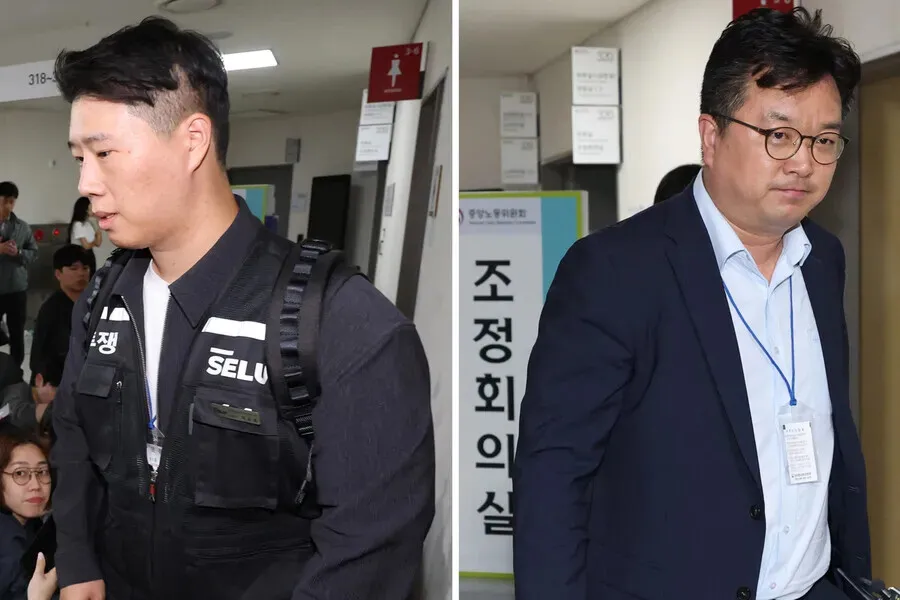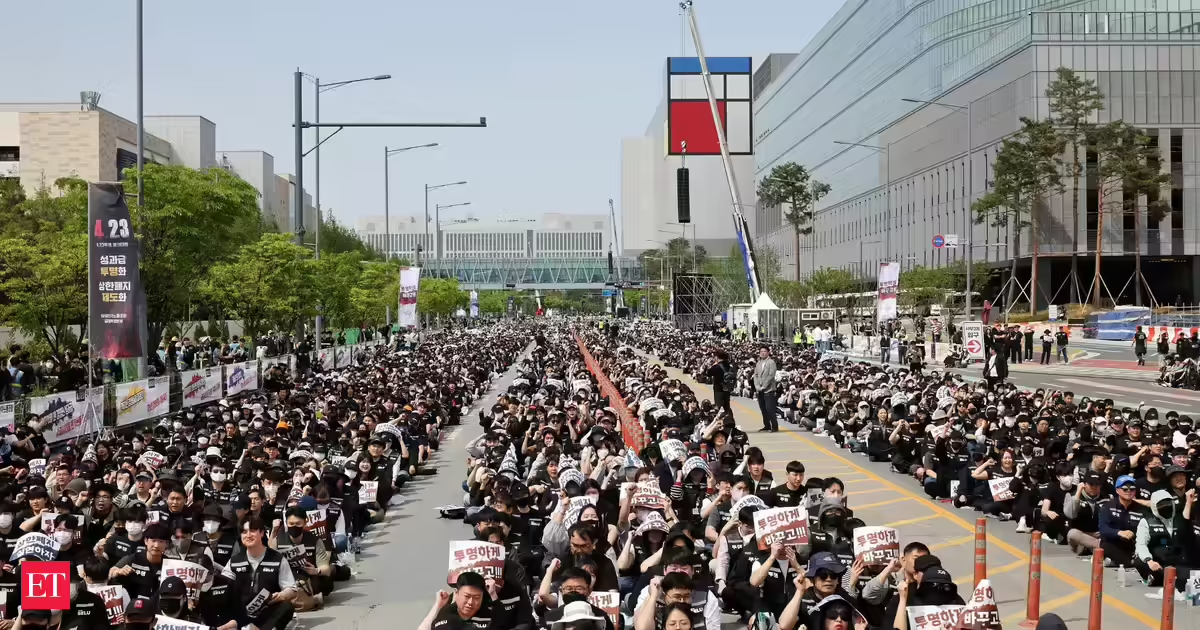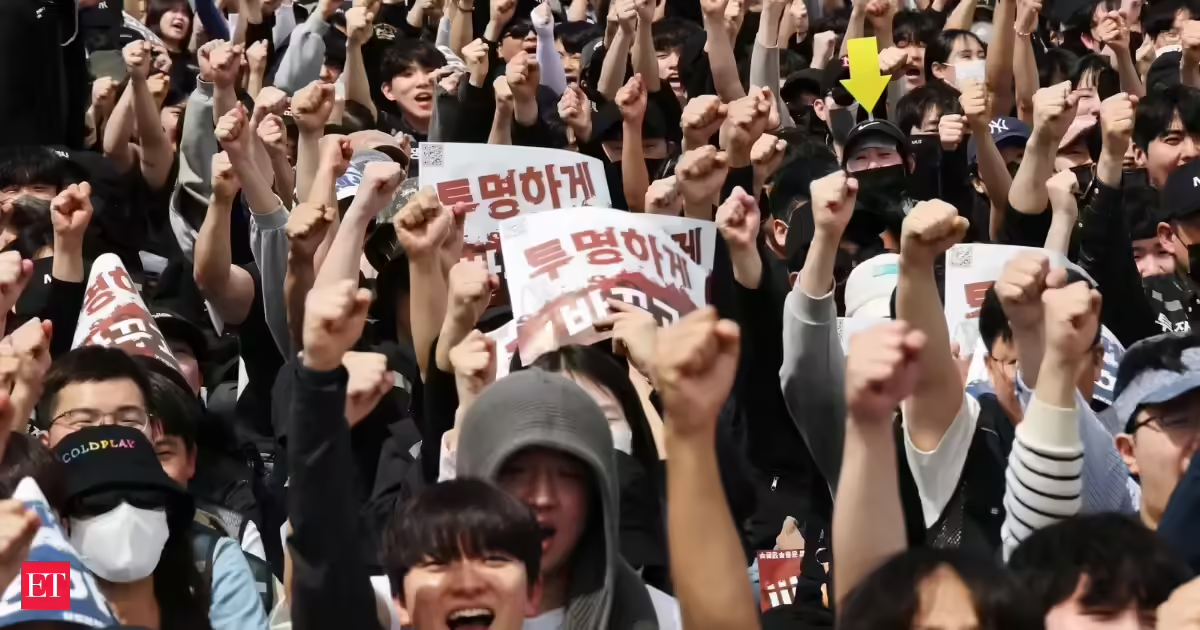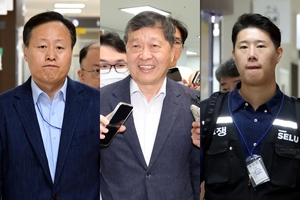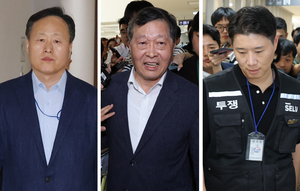
Court partially grants injunction against union action as government steps up pressure for negotiated settlement From left: Samsung Electronics’ chief negotiator Yeo Myung-koo, National Labor Relations Commission Chair Park Soo-geun and union leader Choi Seung-ho enter a meeting room in Sejong on Monday for a second post-mediation session, three days ahead of the union’s planned strike. (Yonhap) Samsung Electronics and its labor union continued government-mediated talks Monday, as both sides sought a last-minute breakthrough ahead of a strike planned for Thursday.The second post-mediation session, arranged by the National Labor Relations Commission, opened Monday morning at the government complex in Sejong, after both sides accepted Labor Minister Kim Young-hoon’s request to return to the table.NLRC Chairman Park Soo-geun said after the morning session that the talks would continue until 7 p.m. Monday and resume at 10 a.m. Tuesday.He said the commission had so far heard only the two sides’ basic positions, with proposals expected later in the day.The talks follow a first round of post-mediation held May 11-12. The union has warned it will stage an 18-day strike from Thursday to June 7, with about 50,000 workers expected to take part; this week's two-day mediation round is widely seen as the final practical opportunity to avert it.At the center of the dispute is Samsung’s performance-based bonus system.The union has called for greater transparency in how bonuses are calculated, the removal of the current cap on incentives and a written commitment that 15 percent of operating profit be set aside as a bonus pool. The current ceiling is understood to be 50 percent of annual salary.Samsung has resisted writing such demands into a fixed compensation formula, saying it would offer compensation above rivals’ levels if it regains industry leadership.Choi Seung-ho, head of the union’s Samsung Electronics branch, said before entering the Monday meeting that the union would take part in good faith.“We have come this far to post-mediation,” Choi told reporters. “We will sincerely engage in this second round as well.”Company negotiators, including Yeo Myung-koo, head of the company’s device solutions division’s people team, and Vice President Kim Hyung-ro, entered the meeting room without comment.Later in the day, Choi declined to comment when asked about the atmosphere of the talks, the current state of negotiations and whether the union had been informed of the court’s injunction decision.Political pressure has also begun to weigh on the talks.In a post on X, President Lee Jae Myung urged labor and management to seek a “wise” settlement, saying labor rights and management rights should be respected in equal measure. He also said workers should receive fair compensation for their labor, while shareholders are entitled to returns on the risks they bear.The remarks added pressure on both sides to seek a compromise, while leaving room for government action if the dispute causes wider disruption.Prime Minister Kim Min-seok on Sunday raised the possibility of invoking emergency adjustment powers, drawing strong opposition from the Samsung union and the broader labor community.Samsung’s request for an injunction was also partly accepted by the Suwon District Court on Monday, placing legal limits on the union’s planned action.The court barred the union from obstructing safety-related facilities, including fire prevention, exhaust and drainage systems, and from interfering with work needed to prevent facility damage or wafer deterioration. It also banned occupation of company facilities, lock installations and entry blockades.The union said it would respect the ruling and proceed with Thursday’s planned action.Majung, the law firm representing the union, said the ruling only partly accepted Samsung’s request and would not block the planned action.The firm said the court appeared to accept Samsung’s view on the scope of safety protection facilities and security-related work, but sided with the union on staffing levels.That, it argued, would allow staffing at weekend or holiday levels, leaving fewer than 7,000 workers on duty and posing little practical obstacle to the strike.
Samsung, union resume talks in last ditch attempt to avert strike
Samsung Electronics and its labor union continued government-mediated talks Monday, as both sides sought a last-minute breakthrough ahead of a strike planned fo
642 words~3 min read