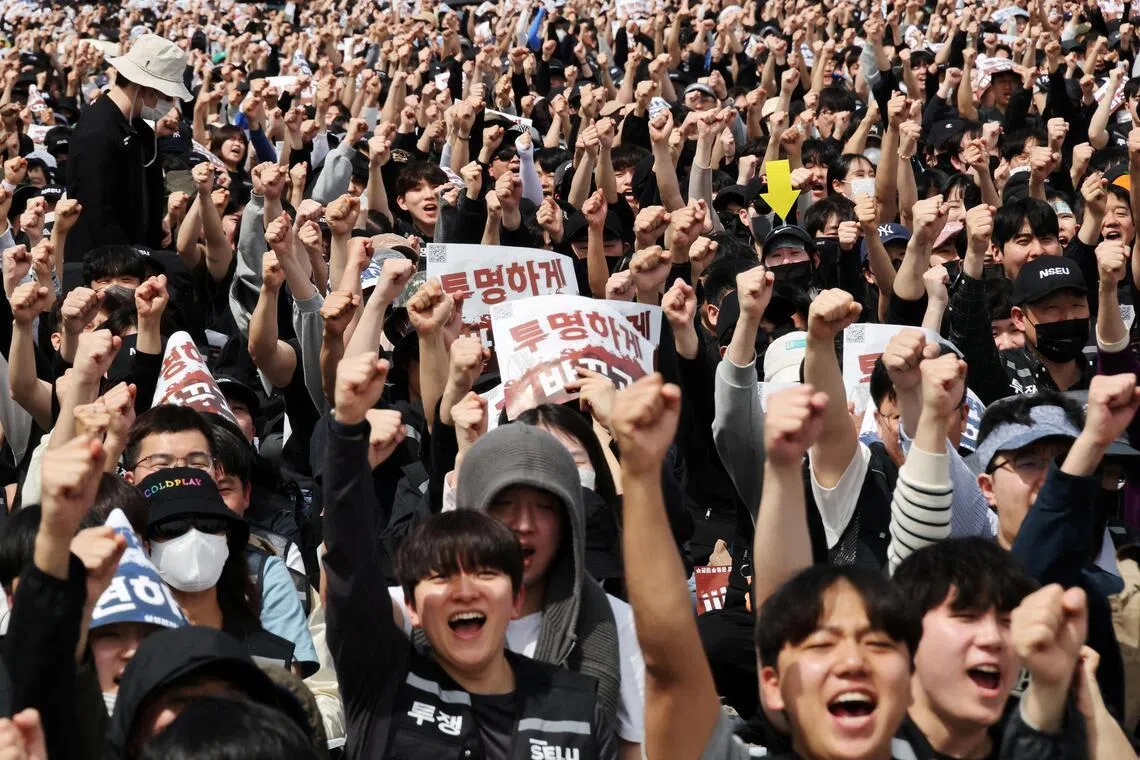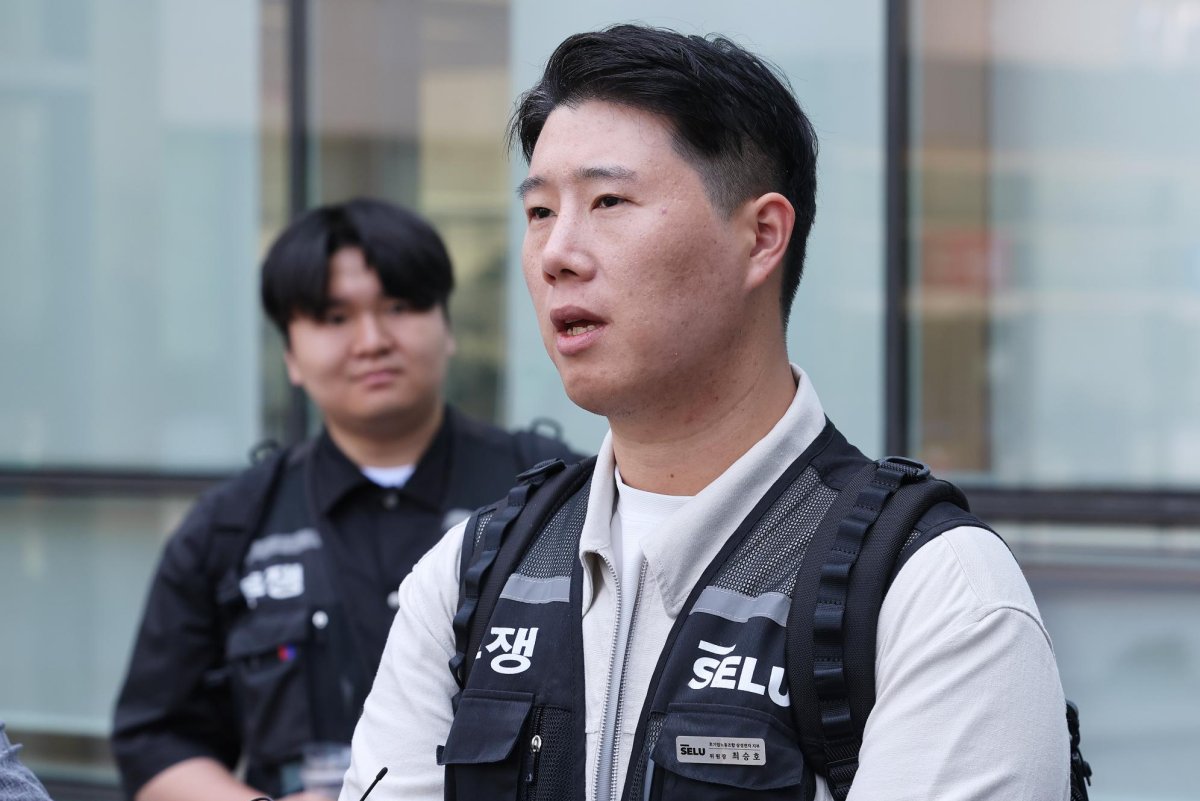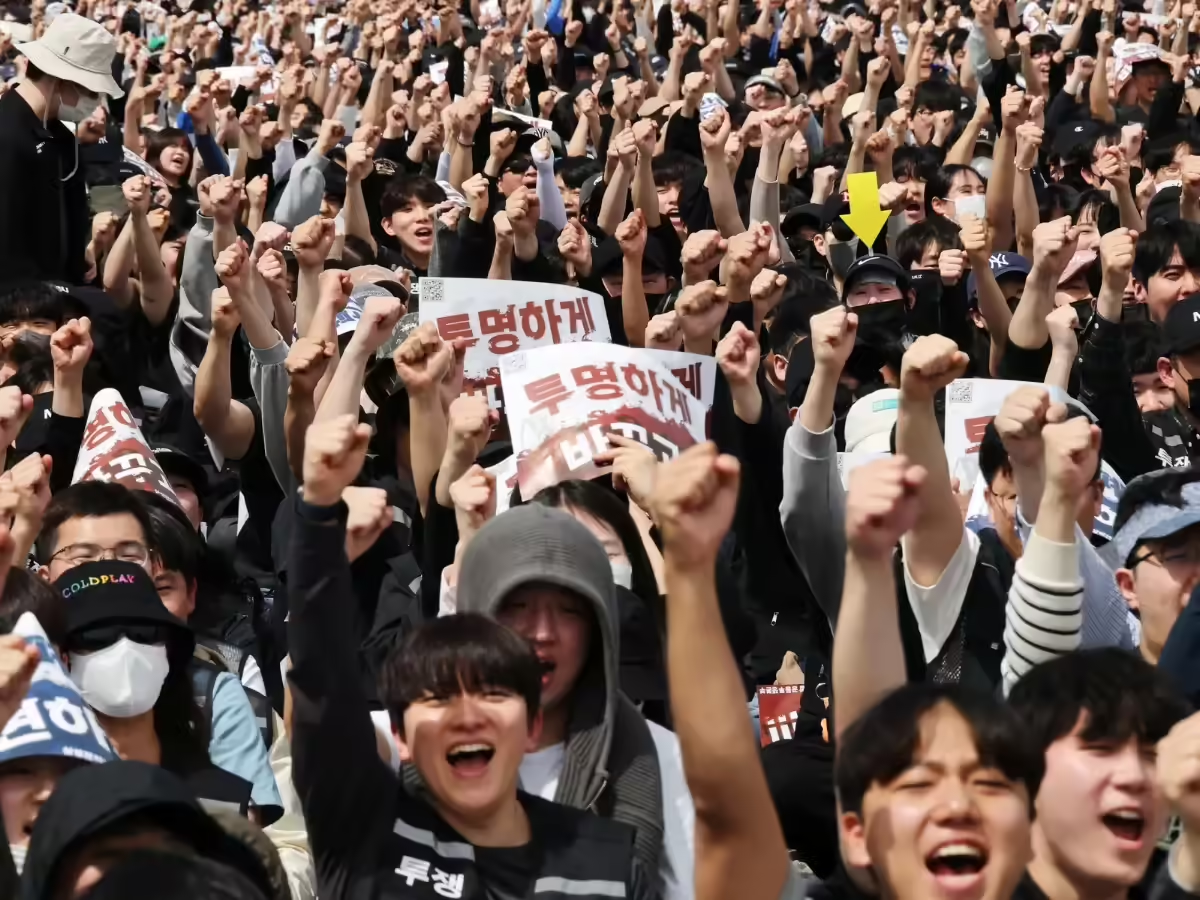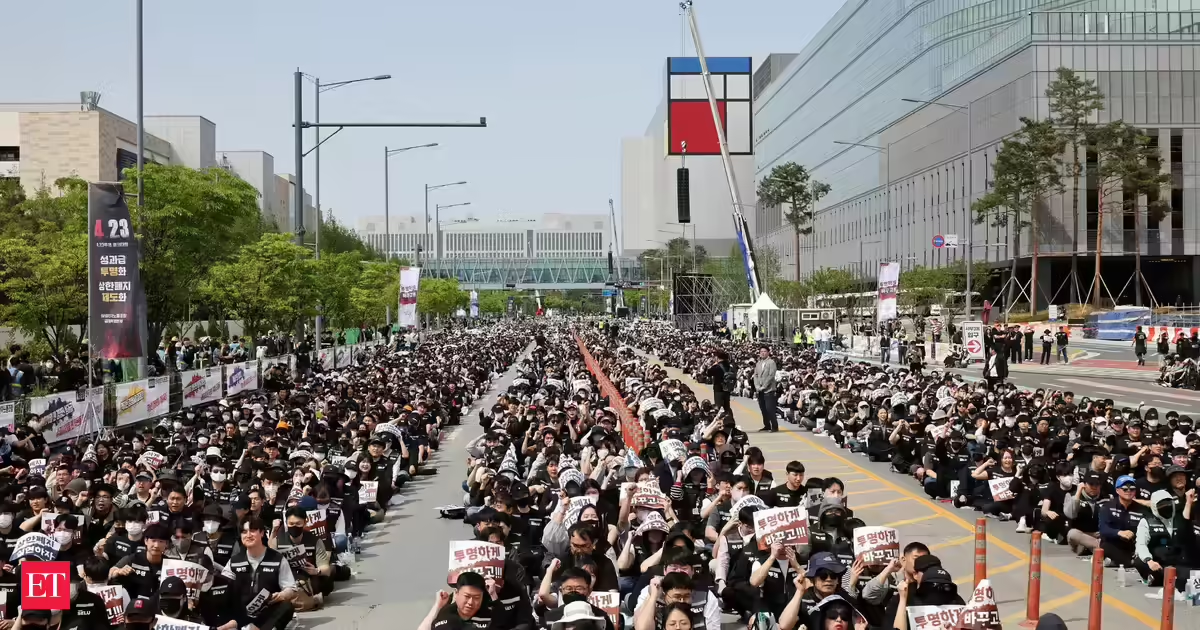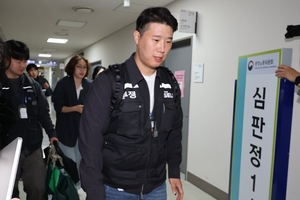
Looming 18-day strike raises disruption fears as last-ditch talks resume Saturday Samsung's largest union chief Choi Seung-ho exits the National Labor Relations Commission in Sejong before dawn on Wednesday, moments after declaring the collapse of a 17-hour second post-arbitration session aimed at sealing Samsung Electronics' 2026 wage deal. (Yonhap) Samsung Electronics has entered emergency management mode ahead of a planned strike by its semiconductor labor union next week, as concerns mount over potential disruption to one of the world's largest chip manufacturing networks.According to industry sources Thursday, the company began reviewing contingency measures such as adjusting production and taking preemptive stabilization work ahead of a planned 18-day strike set to begin on May 21.The escalating labor dispute has heightened fears that a prolonged stoppage at Samsung’s chip plants could ripple across the global semiconductor supply chain. Some industry observers estimate direct and indirect losses could swell to as much as 100 trillion won ($67 billion) in a worst-case scenario involving a full shutdown of semiconductor manufacturing lines.JPMorgan has also estimated potential losses of up to 43 trillion won from a prolonged strike, factoring in labor costs and production disruption.Past incidents underscore the risks. In 2018, a power outage at Samsung’s Pyeongtaek chip complex halted operations for just 28 minutes but resulted in estimated losses of around 50 billion won. That translates to more than 100 billion won per hour and roughly 2.6 trillion won per day, according to industry estimates.Semiconductor experts say chipmakers face unique operational risks during strikes because fabs require extensive advance preparation to minimize damage to yields and production quality."Unlike other manufacturing industries, semiconductor plants need to begin production and quality management adjustments a week before a strike even starts in order to minimize the damage," one industry expert said.That includes restricting the number of new wafers fed into production lines and reshuffling the product mix toward higher-value chips such as high-bandwidth memory and advanced-node semiconductors, the expert added.Some warn the fallout could extend well beyond the planned 18-day walkout because chip production lines require both pre-strike preparation and lengthy post-strike stabilization procedures.Kim Dong-won, head of research at KB Securities, said in a recent report that under a worst-case scenario, an 18-day strike could be followed by an additional two to three weeks needed to restart and normalize Samsung’s highly automated production lines.Against that backdrop, Korea's National Labor Relations Commission on Thursday formally asked Samsung Electronics and its largest union to resume postarbitration talks on Saturday, a last-ditch attempt to avert what would be the company's first full-scale strike.The request came hours after Samsung sent its own letter proposing direct dialogue with the Samsung Group Federation Union's Samsung Electronics chapter and the National Samsung Electronics Union. Earlier talks held Monday and Tuesday at the Sejong government complex collapsed over performance-pay reform, the central sticking point of negotiations that began in December.The union is demanding that 15 percent of operating profit at Samsung's semiconductor division be set aside as a performance bonus pool and that the existing cap of 50 percent of annual salary be abolished. Samsung wants to keep its current scheme tied to economic value added, offering only a one-time special bonus for the chip unit.Union Chair Choi Seung-ho, responding to both proposals later Thursday, left the door slightly open."There is room for dialogue if the company has a plan to institutionalize the removal of the cap and ensure transparency," he told reporters. "We ask the CEO to provide an answer by 10 a.m. on Friday."He otherwise stood by plans for the walkout, with at least 50,000 members expected to join.Under Korean labor law, postarbitration talks can resume only with both parties' consent. Labor Minister Kim Young-hoon has so far ruled out emergency arbitration, which would legally suspend the strike for 30 days and could result in a binding settlement, urging the two sides to resolve the dispute through dialogue.
Samsung enters emergency mode ahead of chip union strike
Samsung Electronics has entered emergency management mode ahead of a planned strike by its semiconductor labor union next week, as concerns mount over potential
646 words~3 min read