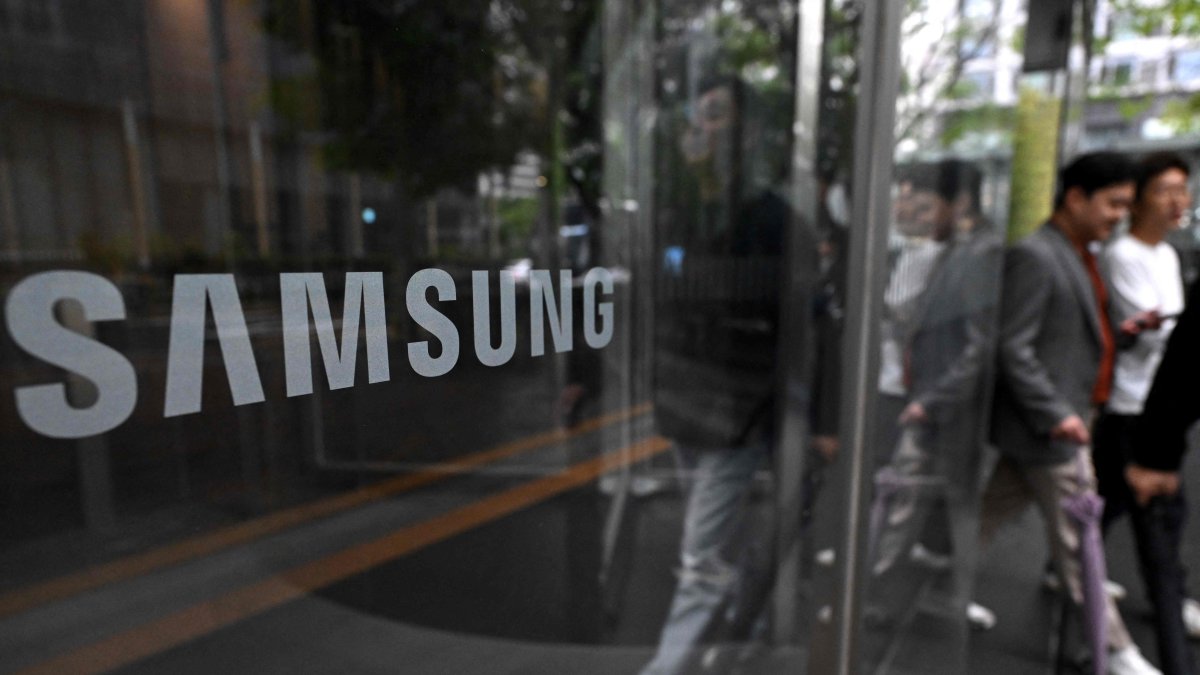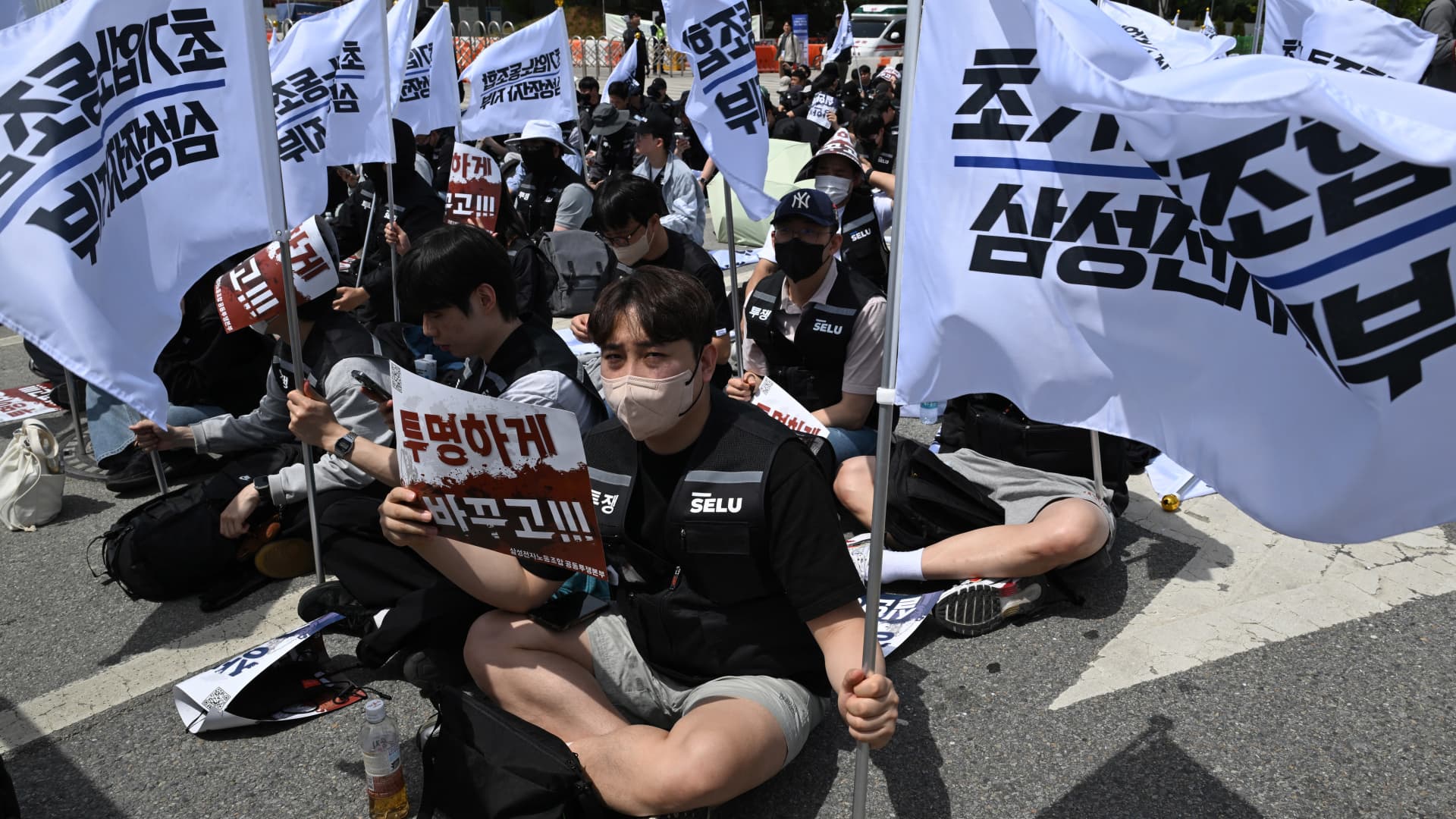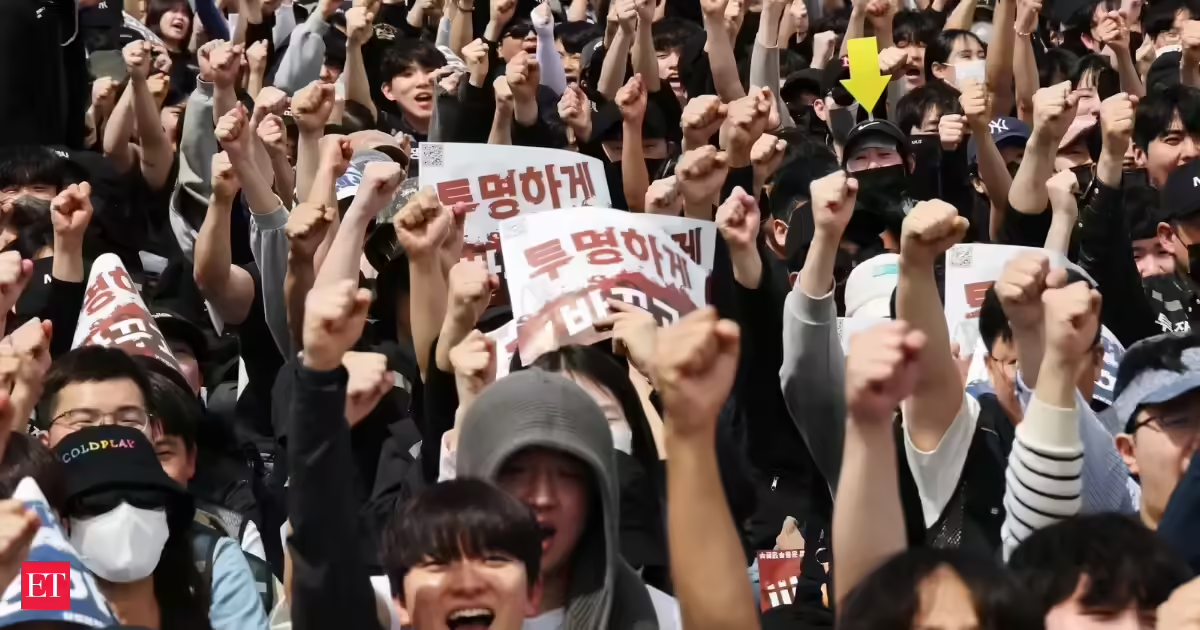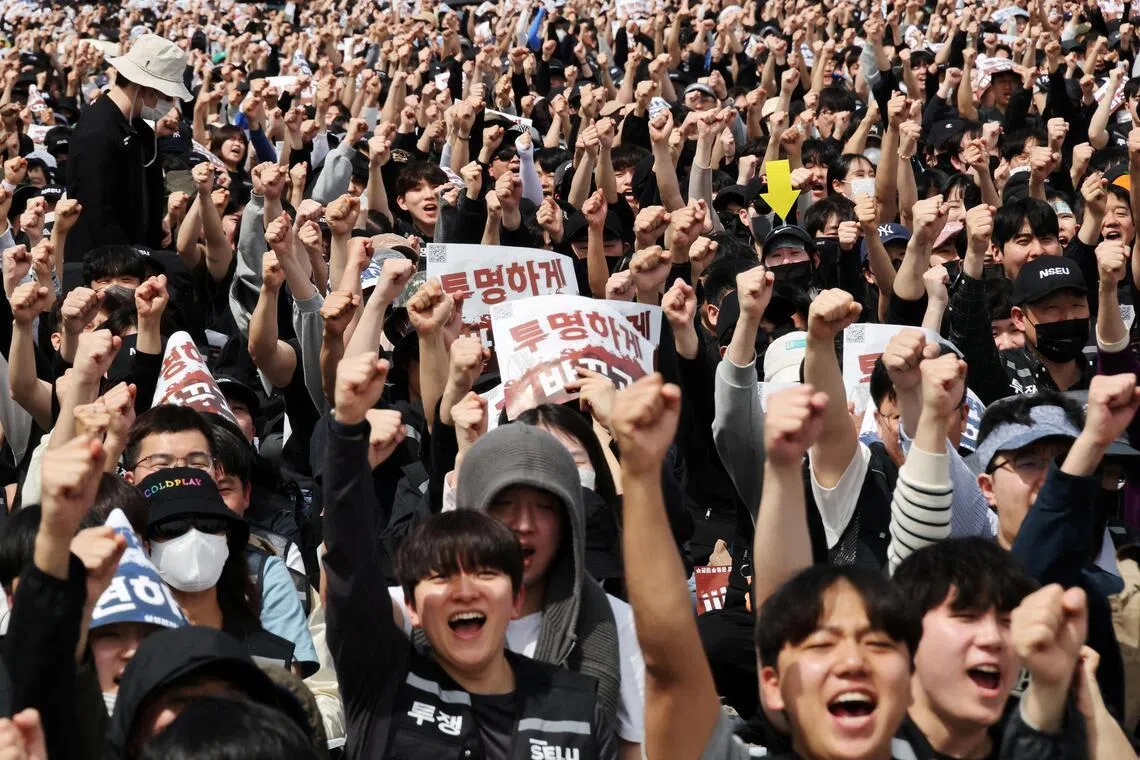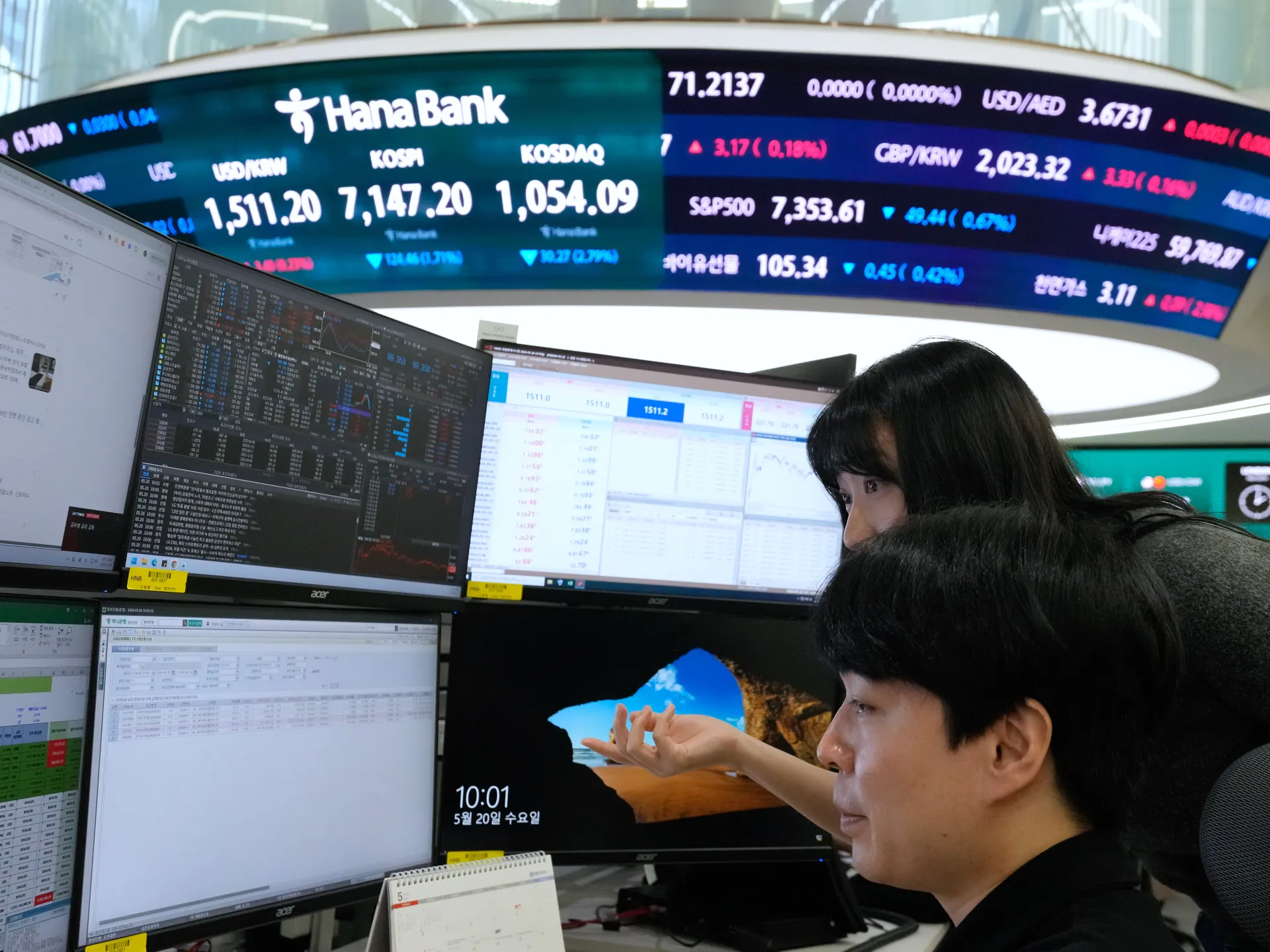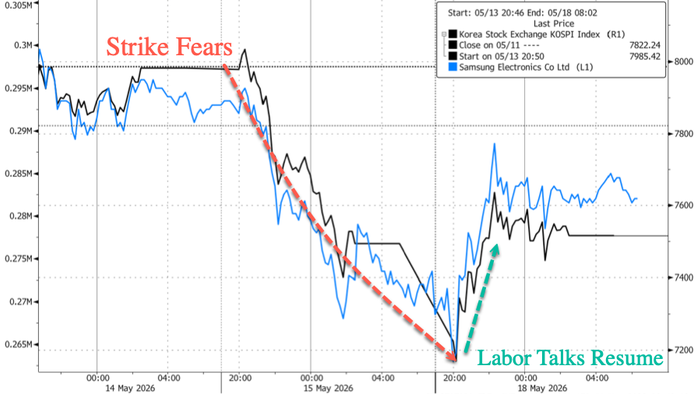
Downward momentum in South Korean stocks was halted on Monday as optimism returned to Samsung Electronics after the company and its union reopened talks to resolve contract disputes and avert a strike that could begin as soon as Thursday.Bloomberg reported that the union's leader would "sincerely engage" with Samsung executives. The world's most important memory chip maker was also granted several requests by a Korean court, including orders to block the union from occupying company facilities.The union is still threatening an 18-day walkout beginning Thursday unless its contract demands are met, but both sides signaled earlier today a willingness to resolve the labor dispute.On Saturday, Samsung also made a concession by replacing its lead negotiator, while Prime Minister Kim Min-seok and Chairman Jay Y. Lee publicly urged compromise.Shares of Samsung in South Korea closed up 3.5%, helping lift the country's main equity index, KOSPI, after it had slid late last week on labor action fears.Goldman analyst Christy Park told clients, "By now, one would know: any correction on Hynix & Samsung = Buy (*note Hynix shares corrected >1% only 5x times since April out of 30+ sessions in which at ALL times regained more than its losses immediately within the following 1~3 days)."Park listed the catalysts for Samsung & Hynix:Resolution to the labor union strike removing overhang (Samsung; co replaced its entire negotiation team)Continued conventional memory pricing strength acting as a tailwind (Samsung has higher exposure vs. Hynix) 2027 HBM pricing upside given HBM now sold at a discount vs. conventional DRAM (both Samsung & Hynix)Upside in shareholder return given the substantial growth in FCF (Samsung: 2024-2026 shareholder return policy of paying back 50% of this)Potential ADR listing of Kioxia could be positive for Hynix sentiment (as Hynix owns a meaningful stake in Kioxia through a consortium) ADR listing of SK HYNIX (anticipated in July)We see Agentic AI driving a 24x jump in token consumption by 2030 (120 quadrillion tokens per month) (both Samsung & Hynix)In a separate note, Tom Kang, director at Counterpoint Research, said, "There is a clear need for both sides to reach an agreement," adding that both sides have relatively little experience because Samsung has historically lacked a strong union culture."The gap may seem large, but the issues are workable," Kang said. "I believe the differences can be resolved without a strike."Taiwan-based market intelligence and research firm TrendForce pointed out:Samsung's strike is set to formally begin on May 21. Because the company's semiconductor fabs are already highly automated, the impact on production is expected to be limited.However, there will likely be noticeable disruptions to packaging and logistics, R&D and design, and customer relations. In terms of unionization, about half of all employees across the Samsung Group are union members, most of whom work in the semiconductor division. Internally, management has already extended an olive branch to the DRAM division, but has not yet reached an agreement with union members in the Foundry and LSI divisions.Samsung’s strike is set to formally begin on May 21. Because the company’s semiconductor fabs are already highly automated, the impact on production is expected to be limited. However, there will likely be noticeable disruptions to packaging and logistics, R&D and design, as well… https://t.co/l2ibgeXEIL
Samsung, Union Resume Talks After Labor Action Scare; Goldman Says "Korea: Buy"
"By now, one would know: any correction on Hynix & Samsung = ..."
553 words~3 min read