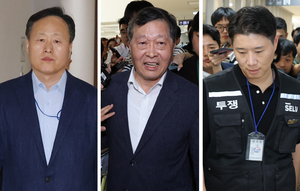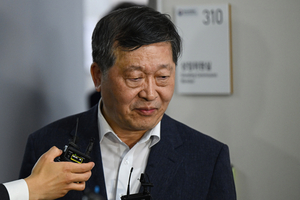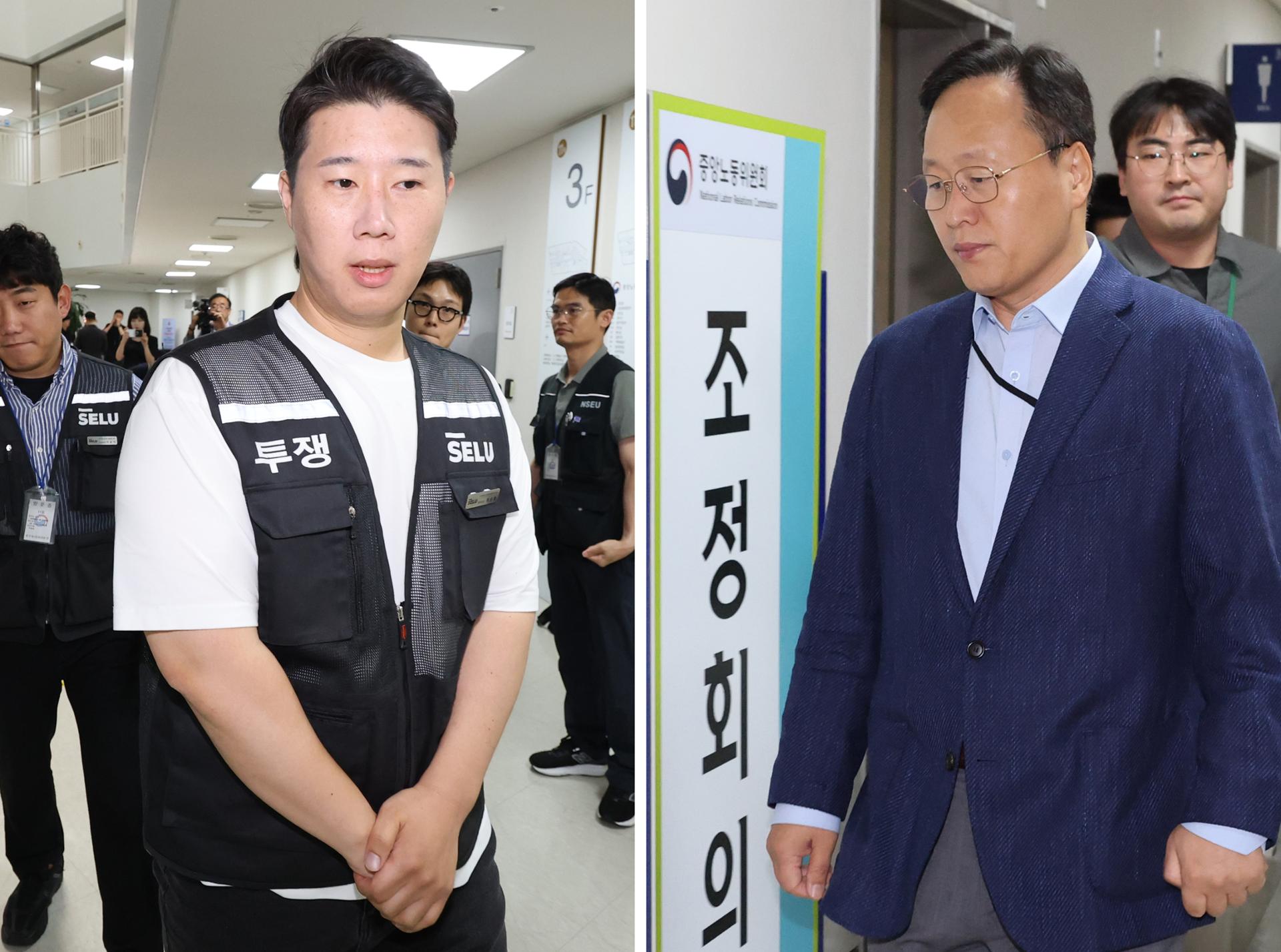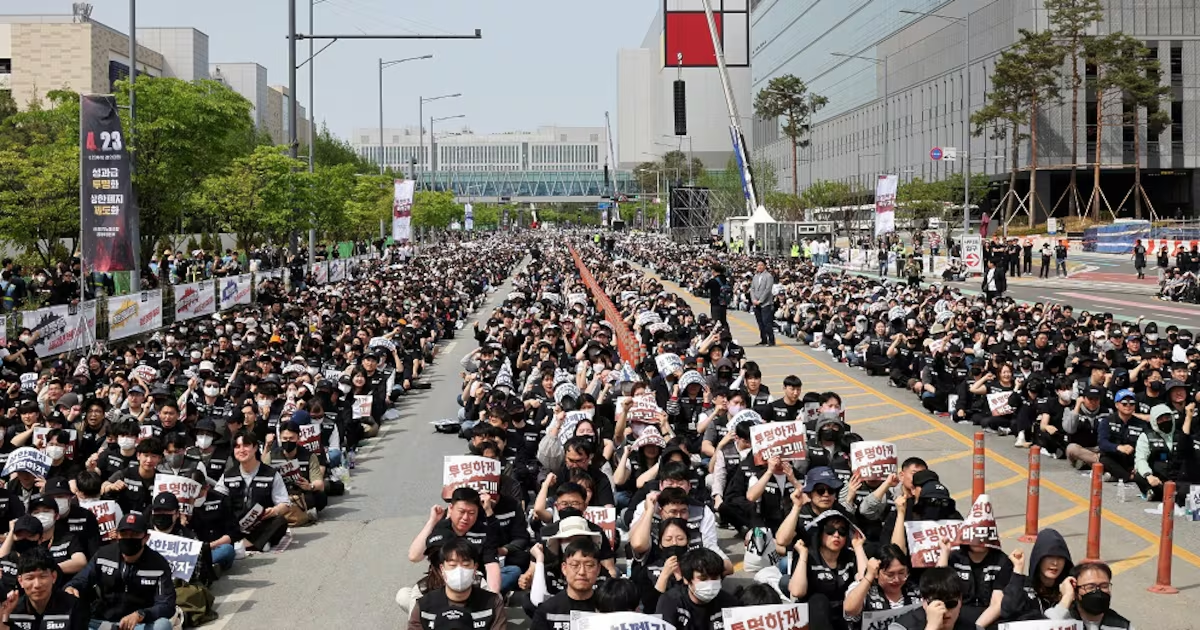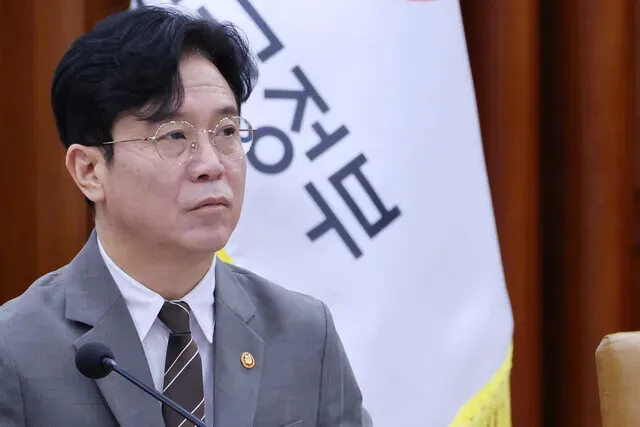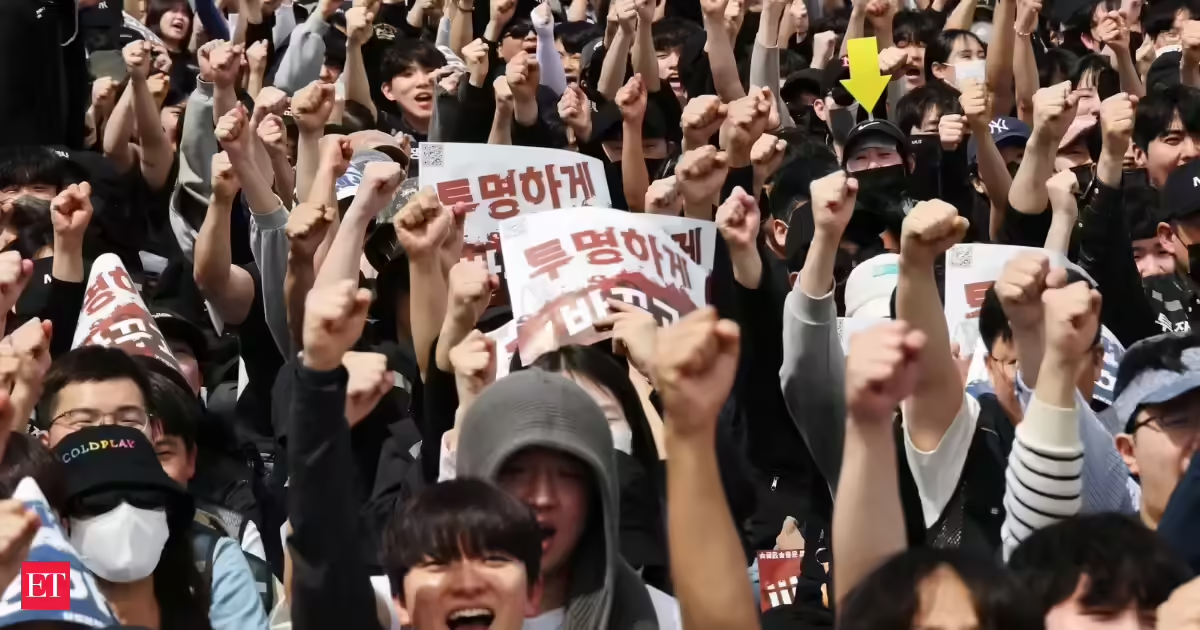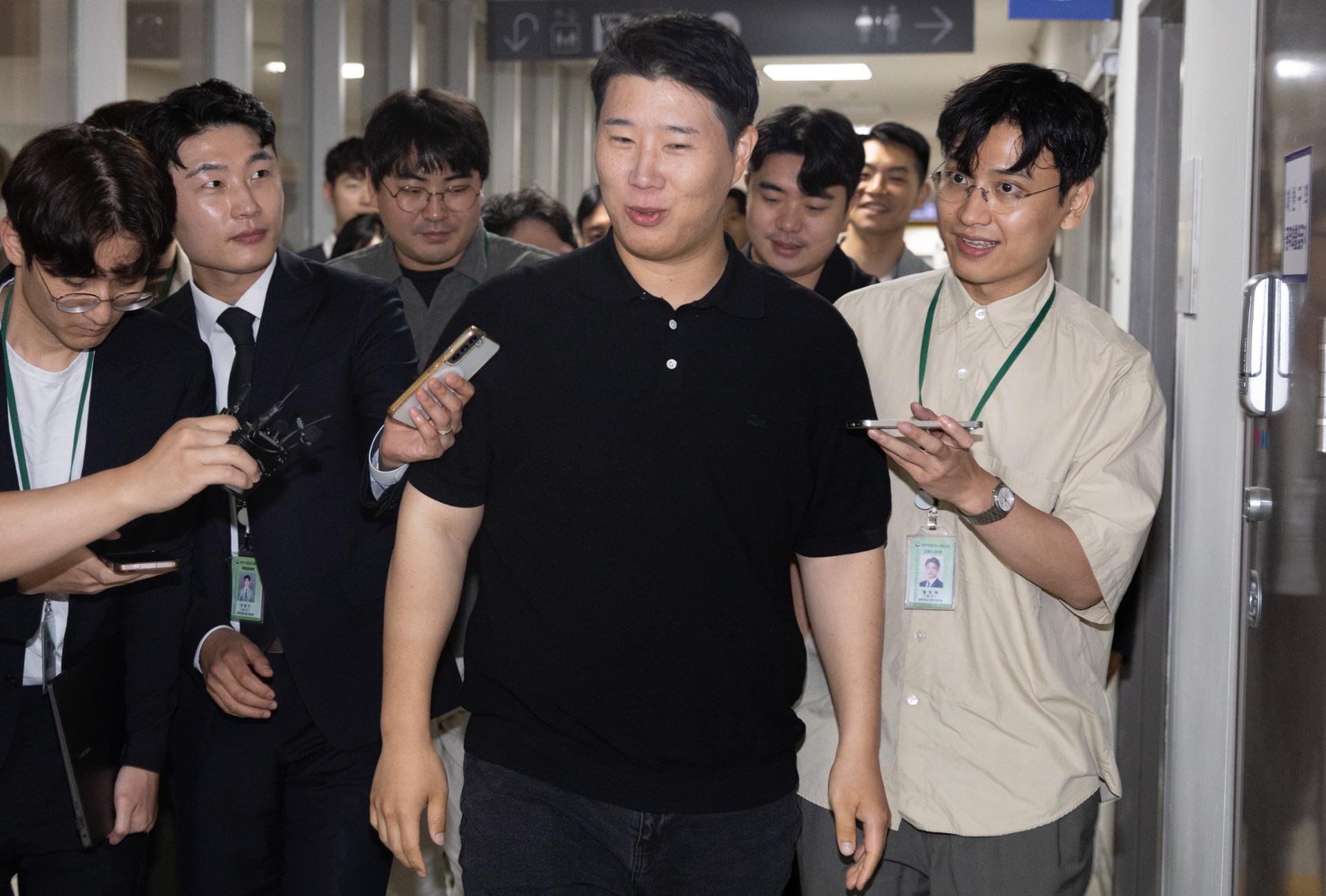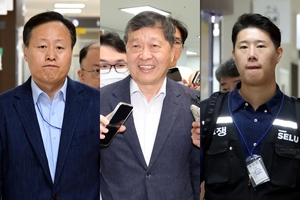
Mediators signal possible room for compromise as political, economic pressure mount From left: Samsung Electronics’ chief negotiator Yeo Myung-koo, National Labor Relations Commission Chair Park Soo-geun and Samsung Electronics Labor Union leader Choi Seung-ho head to a post-mediation meeting room at the Government Complex Sejong on Tuesday. (Newsis) Samsung Electronics and its largest labor union resumed government-mediated talks for a second day Tuesday, with attention focused on whether the two sides can reach a last-minute compromise before a planned strike Thursday.The closed-door talks at the National Labor Relations Commission in Sejong followed an earlier round of mediation on May 11 and 12 that ended without an agreement. The latest round, which began Monday, has centered on performance bonus calculations, bonus caps and how the bonus pool should be divided across business units.Commission Chair Park Soo-geun, who is overseeing the mediation, said the two sides were “making concessions to each other” and that there was “some possibility of an agreement” as he entered the meeting room around 2 p.m. Tuesday. Park earlier said the commission could present a mediation proposal if the two sides failed to reach an agreement, adding the process could extend to Wednesday.Samsung Electronics Labor Union head Choi Seung-ho declined to comment on the likelihood of a settlement or details of the talks. Asked whether the union was maintaining its demand for a new performance bonus system, he said, “Yes,” adding, “We will try to make an agreement that can satisfy our members as much as possible.”At the center of the dispute is how Samsung should distribute performance bonuses in its semiconductor business.The union wants 15 percent of operating profit from the Device Solutions division, Samsung’s chip business, set aside as a bonus pool this year, with 70 percent distributed across the division as a whole and the remaining 30 percent allocated based on each business unit’s performance.The union says the formula would help narrow bonus gaps between profitable and loss-making units. Management argues that placing too much weight on a division-wide pool would undermine Samsung’s performance-based pay principle.According to the union, Samsung has proposed paying an additional 9 to 10 percent of operating profit on top of existing incentives if the semiconductor business posts profit above a certain level, with that pool split 60 percent by division and 40 percent by business unit.The issue has become more sensitive as earnings vary sharply within the chip business. The DS division posted record quarterly earnings in the first quarter, with most of the profit believed to have come from the memory business. Nonmemory units, such as System LSI and foundry operations, are estimated to have remained in the red.The union itself has also come under pressure. The Samsung Electronics Labor Union, which holds bargaining rights, became the company’s first legally recognized majority union last month after its membership topped 76,000. But the figure has reportedly since fallen to around 70,000, amid complaints from employees in the Device eXperience division, Samsung’s consumer electronics and mobile business.Separately, Samsung on Tuesday notified the union of staffing levels needed to maintain safety and security operations at its semiconductor production lines during the strike planned for May 21 to June 7, after a court partially accepted the company’s injunction request against illegal strike activity. Samsung listed 7,087 essential workers.The government has warned of the possible economic fallout from a strike at Samsung and raised the possibility of invoking emergency adjustment powers to prevent a walkout, drawing opposition from the union and the broader labor community.Industry Minister Kim Jung-kwan also voiced concern Tuesday, telling lawmakers that workers’ calls for a greater share were understandable but that a Samsung Electronics strike would carry broader repercussions. “There is a strong sense of urgency that a strike must be avoided,” he said.Political pressure has also built around Samsung’s major chipmaking sites in Gyeonggi Province. Yang Hyang-ja, the People Power Party’s candidate for Gyeonggi Province governor, began an indefinite hunger strike Monday in front of Samsung’s Pyeongtaek campus, where People Power Party Chair Rep. Jang Dong-hyeok also visited Tuesday. Rival by-election candidates Yoo Eui-dong of the People Power Party and Kim Yong-nam of the Democratic Party of Korea were also scheduled to visit the campus, while Reform Party Chair Rep. Lee Jun-seok visited Samsung’s Hwaseong campus Monday, urging labor and management to keep talking.
Samsung Electronics, union race for deal ahead of Thursday strike
Samsung Electronics and its largest labor union resumed government-mediated talks for a second day Tuesday, with attention focused on whether the two sides can
716 words~3 min read