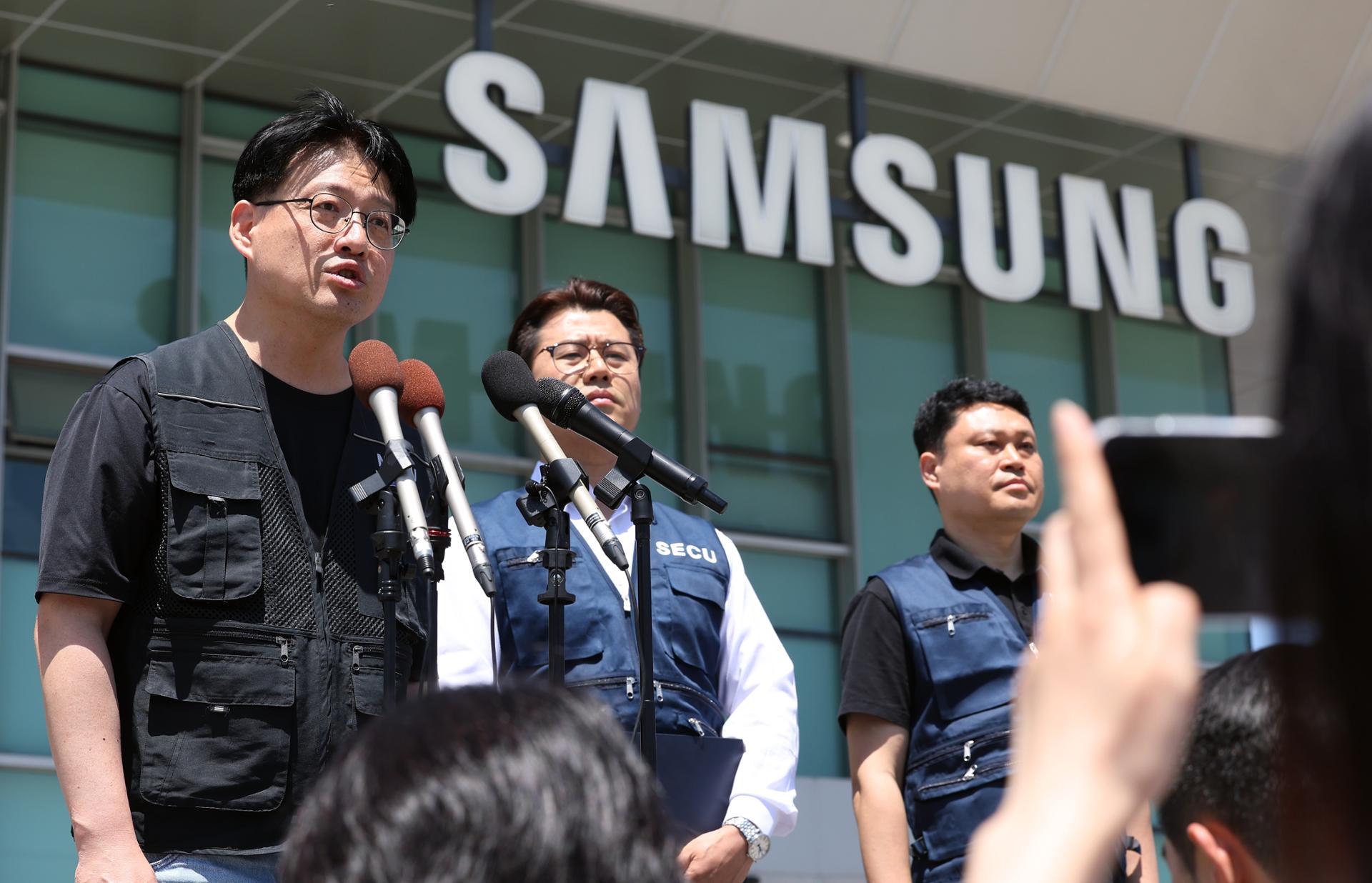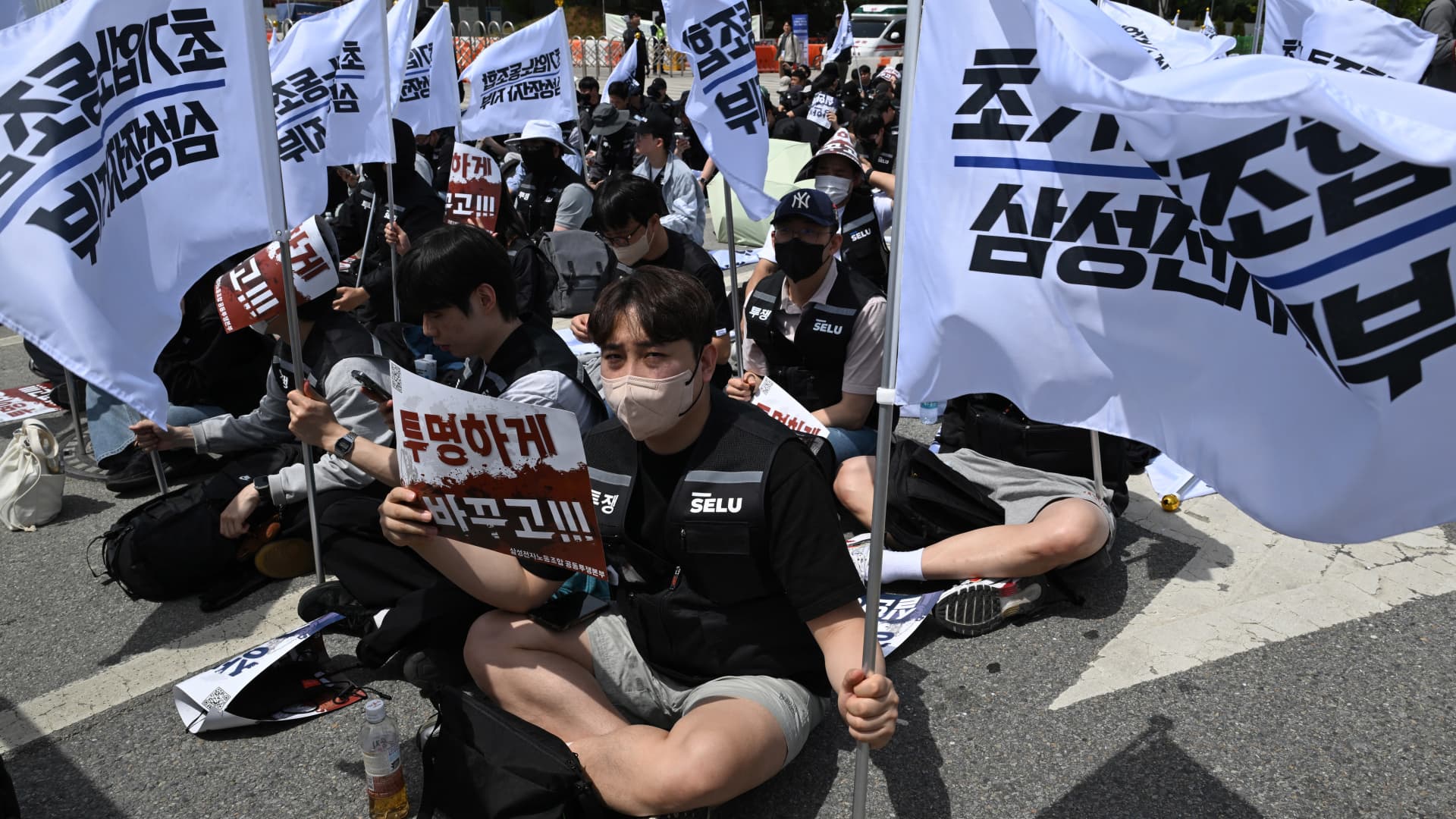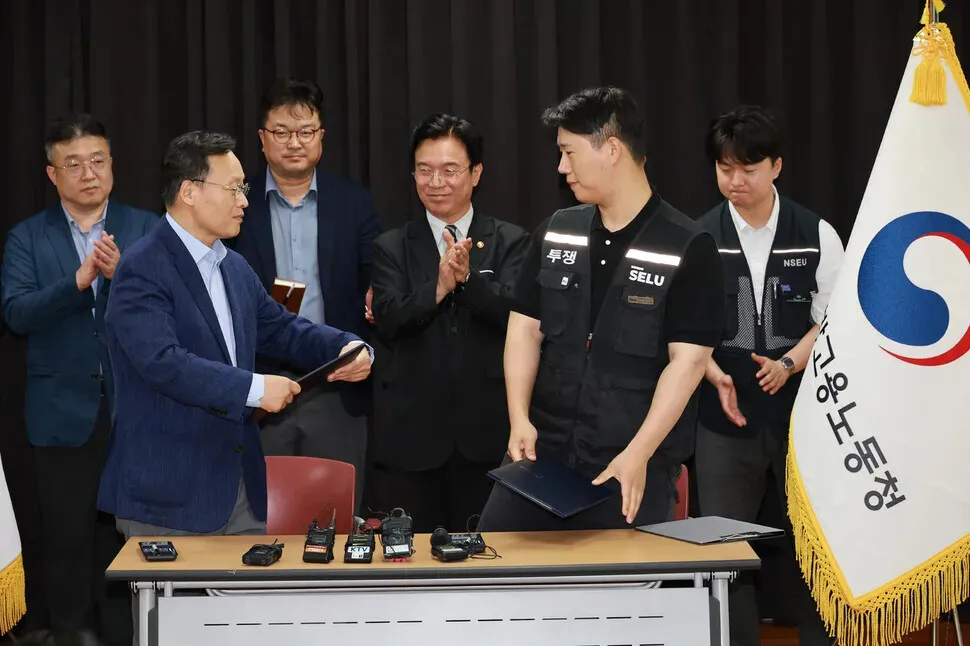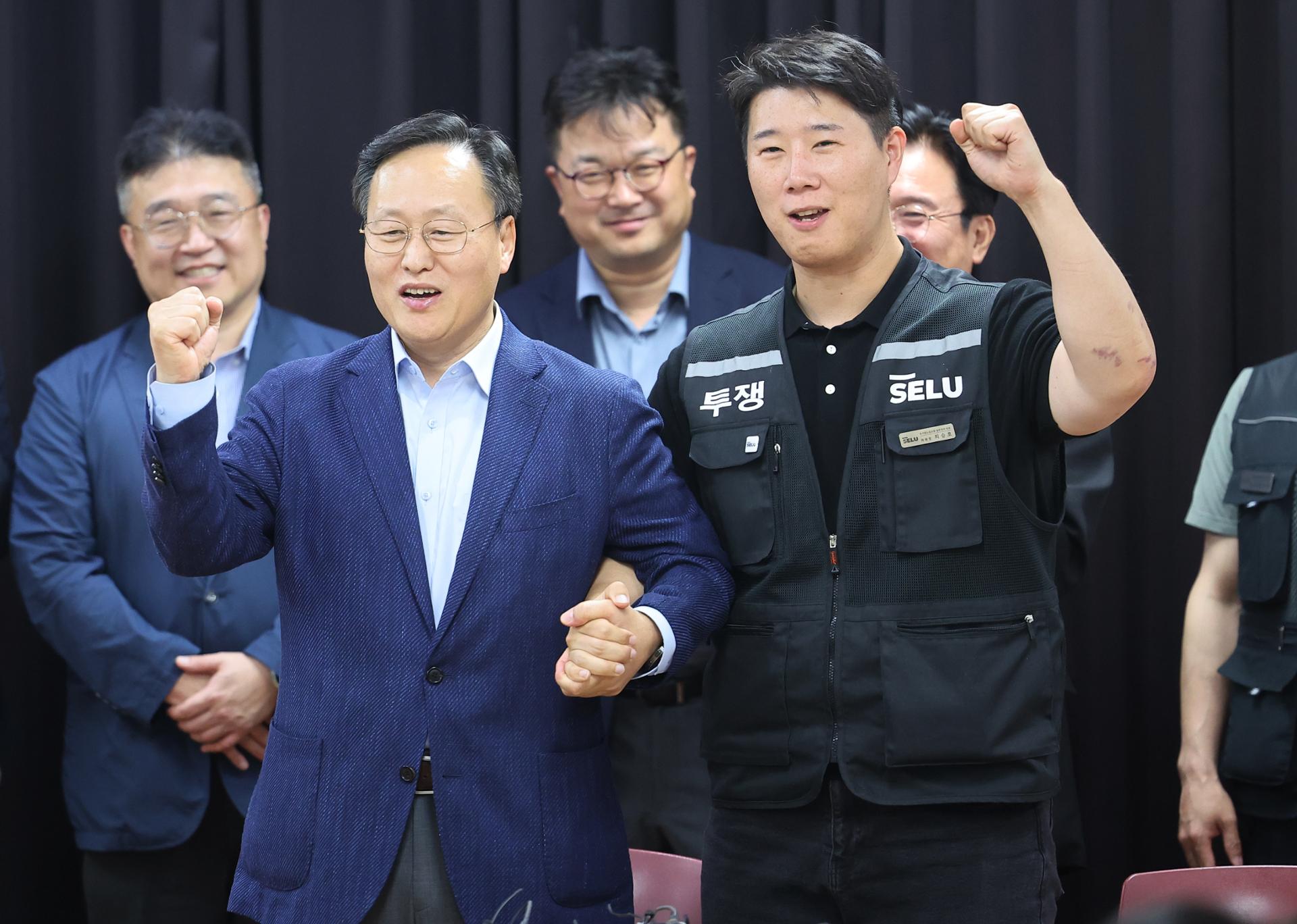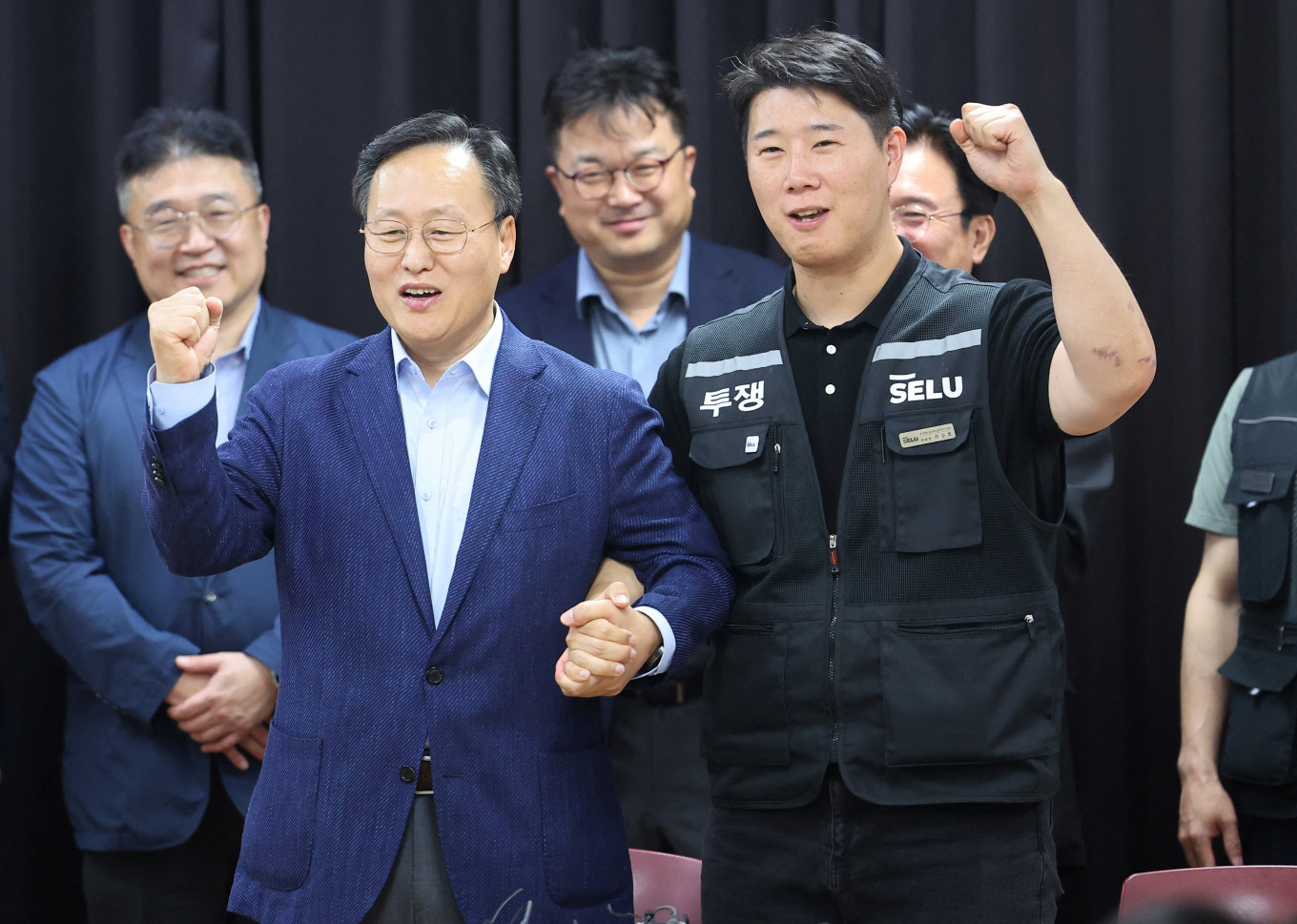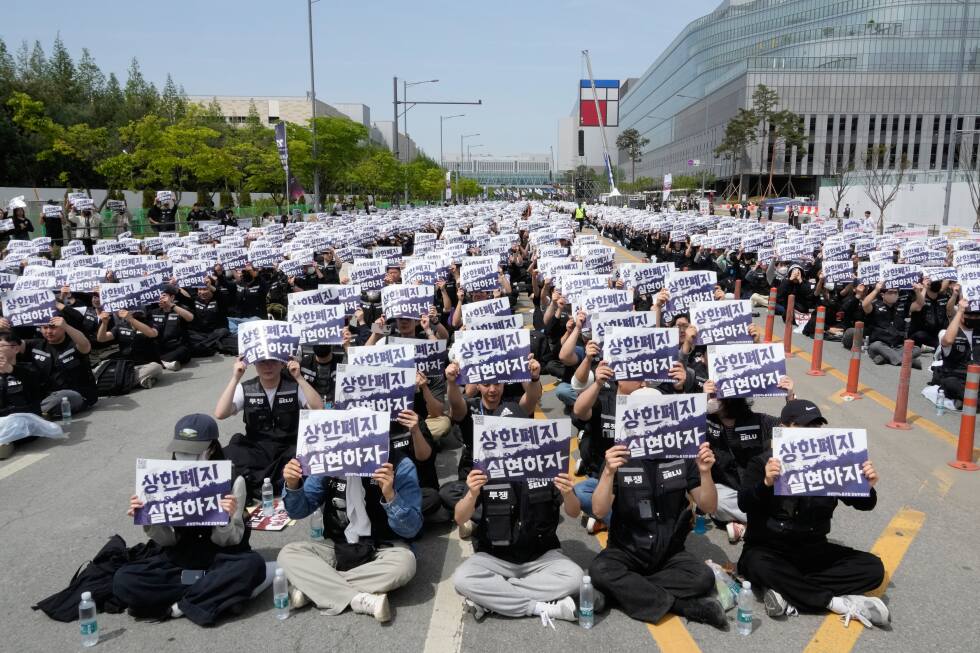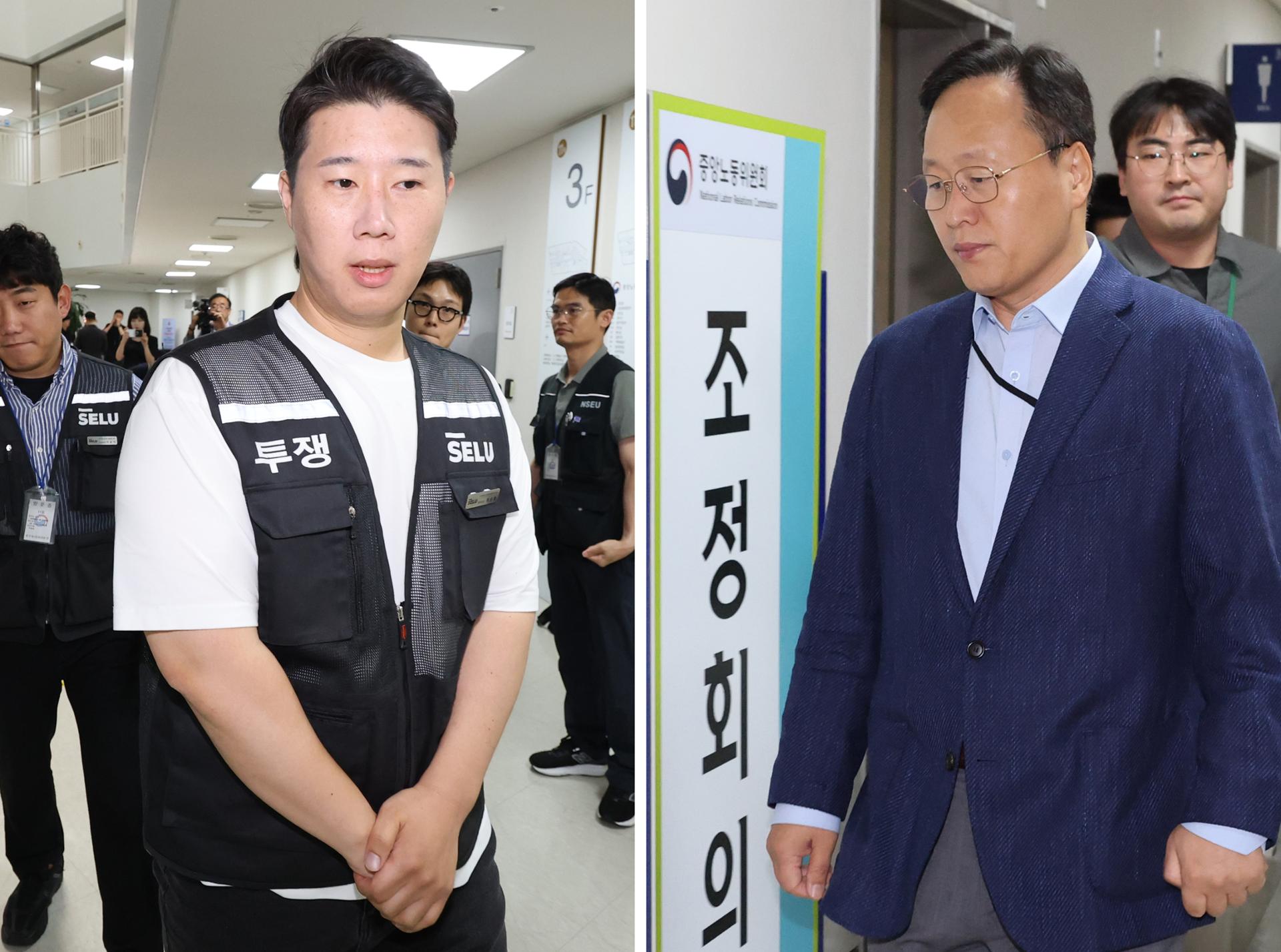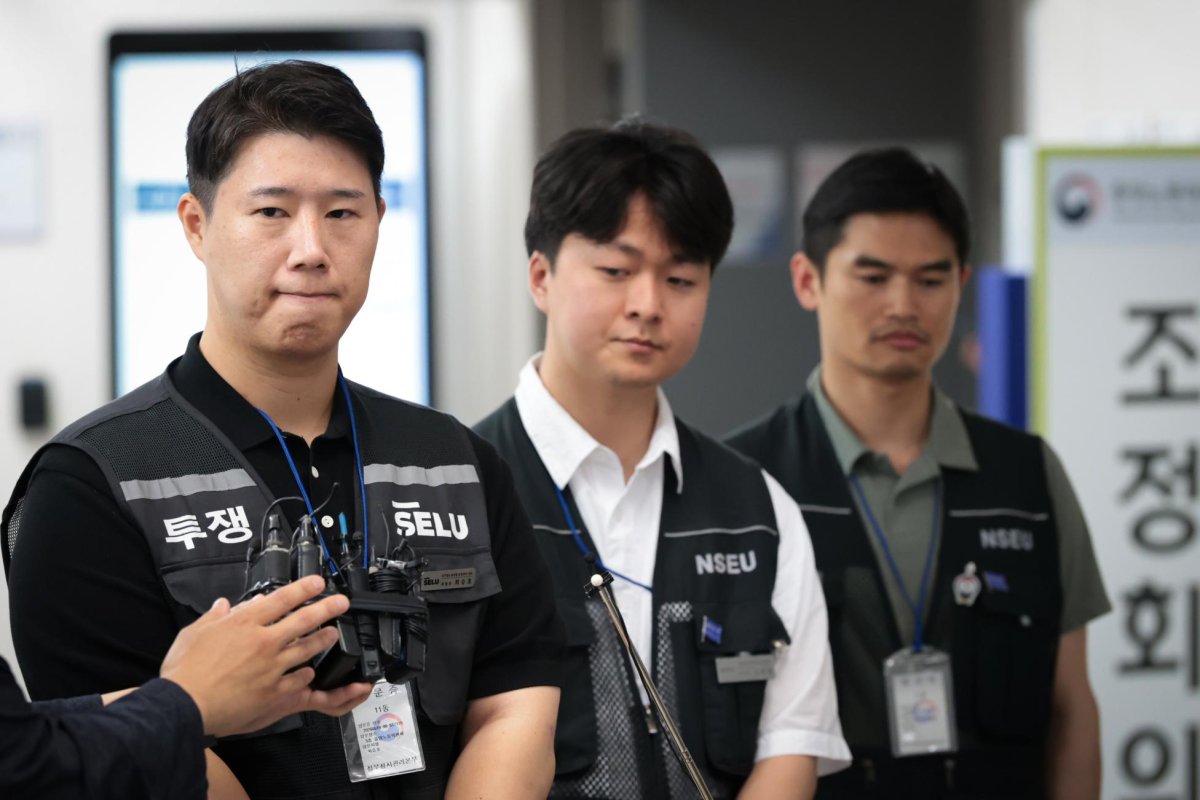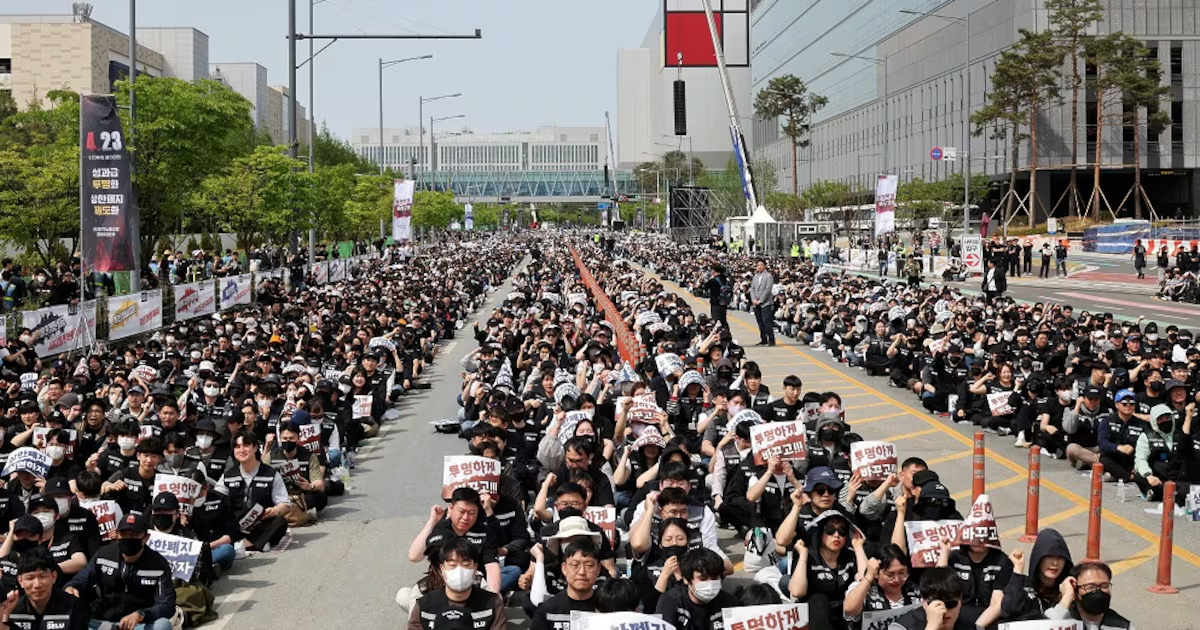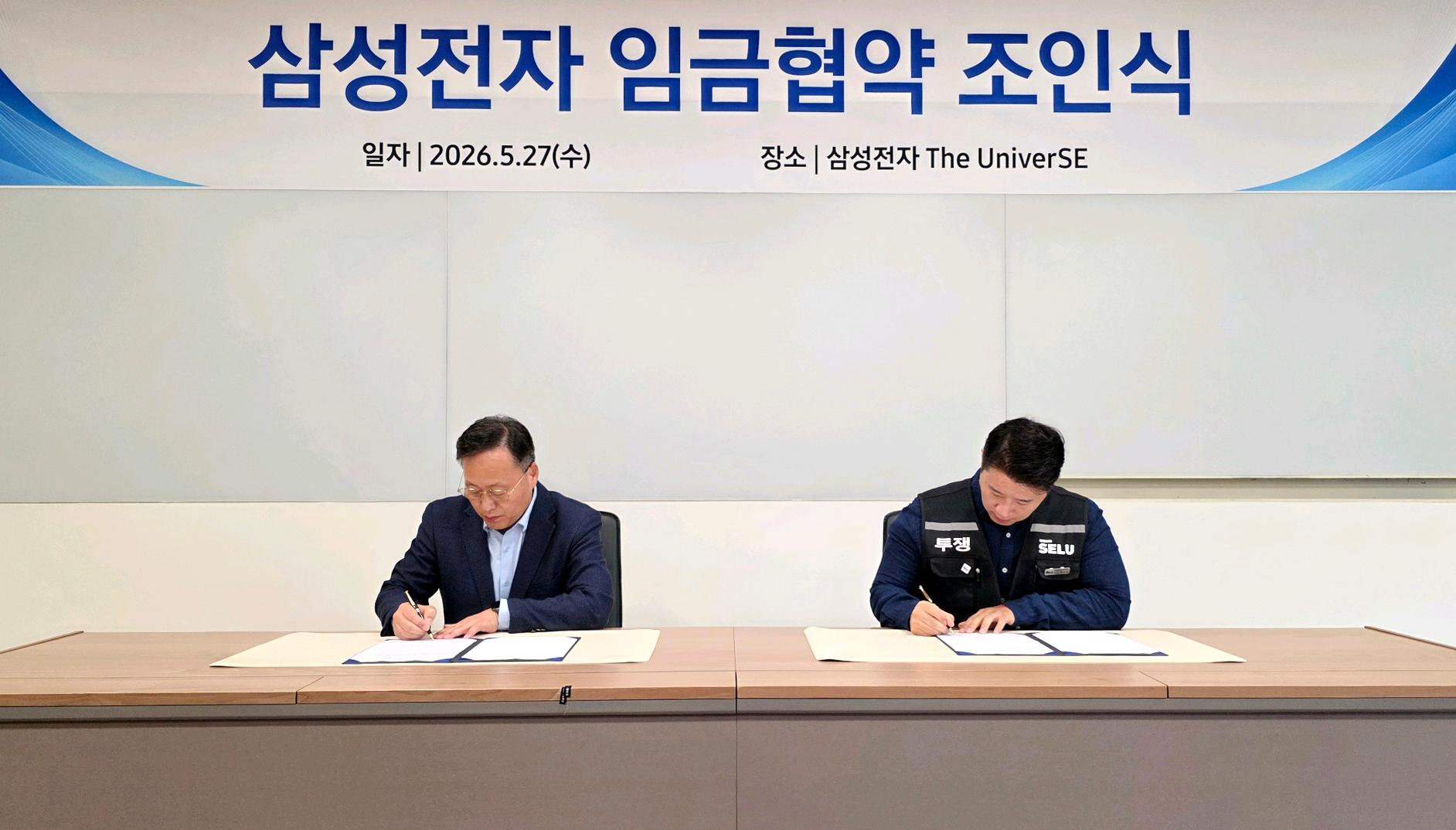
Strike threat fades, but internal tensions over profit-linked bonuses remain Samsung Electronics' headquarters in Suwon, Gyeonggi Province (Im Se-jun/The Korea Herald) A last-minute tentative wage agreement reached Wednesday between Samsung Electronics and its unions defused what had become the company’s biggest labor crisis since Chairman Lee Jae-yong took over the group and marked a major turning point in Samsung’s labor culture.The agreement, signed after marathon negotiations at the Gyeonggi Regional Employment and Labor Office in Suwon, led the union to suspend an 18-day strike planned to begin Thursday. The deal came 160 days after labor and management first opened wage negotiations in December, allowing Samsung to avoid a worst-case scenario involving disruptions to semiconductor production.Industry observers said the negotiations highlighted how sharply Samsung’s labor relations have changed since the company formally abandoned its decades-long “no-union” management policy in 2020. The latest dispute unfolded through public negotiations, government-led mediation and open pressure campaigns, culminating in a compromise brokered only hours before a full-scale strike.Union influence has expanded rapidly within Samsung since the end of the no-union era, particularly in the Device Solutions division, which oversees the company’s semiconductor business. At the center of the dispute was growing frustration over widening compensation gaps with rival SK hynix.Last year, SK hynix removed the cap on its profit-sharing system and fixed the bonus pool at 10 percent of operating profit. Within Samsung, however, complaints had mounted that performance bonuses remained capped and lacked transparency in how they were calculated. The dissatisfaction spread quickly inside the chip division as expectations for earnings recovery rose alongside the rebound in the memory semiconductor market.Under the tentative agreement, employees in Samsung’s DS division will receive a new special management performance bonus. Workers in the Device eXperience division, which oversees smartphones and home appliances, will receive Samsung Electronics shares worth 6 million won ($4,000). The agreement also postpones penalties for loss-making business units by one year.For the DS division, the new compensation framework combines Samsung’s existing overall performance incentive, set at 1.5 percent, with a newly created bonus tied to 10.5 percent of a separately agreed performance metric. Together, the two create a bonus pool equivalent to roughly 12 percent of operating profit.The special semiconductor bonus will have no payout cap and will be distributed entirely in Samsung Electronics shares after taxes. One-third of the shares can be sold immediately, while the remaining portions will be locked up for one year and two years, respectively. The framework will remain in place for 10 years if the semiconductor division meets minimum operating profit thresholds.The agreement also includes a 6.2 percent wage increase, consisting of a 4.1 percent base-pay raise and a 2.1 percent performance-based increase. Union members are scheduled to vote on the deal through May 27. The planned strike has been suspended until further notice.‘Two Samsungs’: Wage deal exposes divideBut even before the vote, the agreement has triggered fresh tensions among shareholders and employees, exposing deeper fractures inside Samsung.The Korea Shareholder Action Headquarters staged a protest near Lee Jae-yong’s residence Thursday, arguing that the operating profit-linked bonus structure could violate Korea’s Commercial Act.“The labor-management agreement to accumulate and allocate 12 percent of pretax operating profit is illegal,” the group said. “Without approval through a shareholders’ meeting resolution, it is legally invalid.”The shareholder group said it plans to challenge any board approval of the agreement in court and seek an injunction blocking implementation of the bonus scheme.At the same time, tensions between Samsung’s DS and DX divisions have intensified publicly.Some DX employees argue that negotiations became too heavily centered on semiconductor workers because Samsung’s largest union, which holds bargaining rights, is widely viewed as being dominated by DS employees.The backlash has become severe enough that some employees have begun describing Samsung as “two companies under one roof.” About 5,000 employees affiliated with a broader union group have reportedly applied to leave the union over the past month.Samsung has long relied on a structure in which its major businesses offset one another through market cycles, with smartphones and home appliances supporting earnings during semiconductor downturns and chips driving profits during industry upswings. The latest dispute, however, has exposed how sharply interests can diverge when compensation becomes directly tied to business-unit performance.Kim Dae-il said worker-to-worker conflicts can be even harder to resolve than traditional labor-management disputes.“Labor-management disputes can be settled through negotiation, but conflicts among workers involve trust issues and can last much longer,” Kim said.“If this is to become a fundamental solution for Samsung’s future, the company will also have to address differences among business units and refine its compensation system.”
Samsung labor truce marks shift from no-union culture
A last-minute tentative wage agreement reached Wednesday between Samsung Electronics and its unions defused what had become the company’s biggest labor crisis s
761 words~3 min read