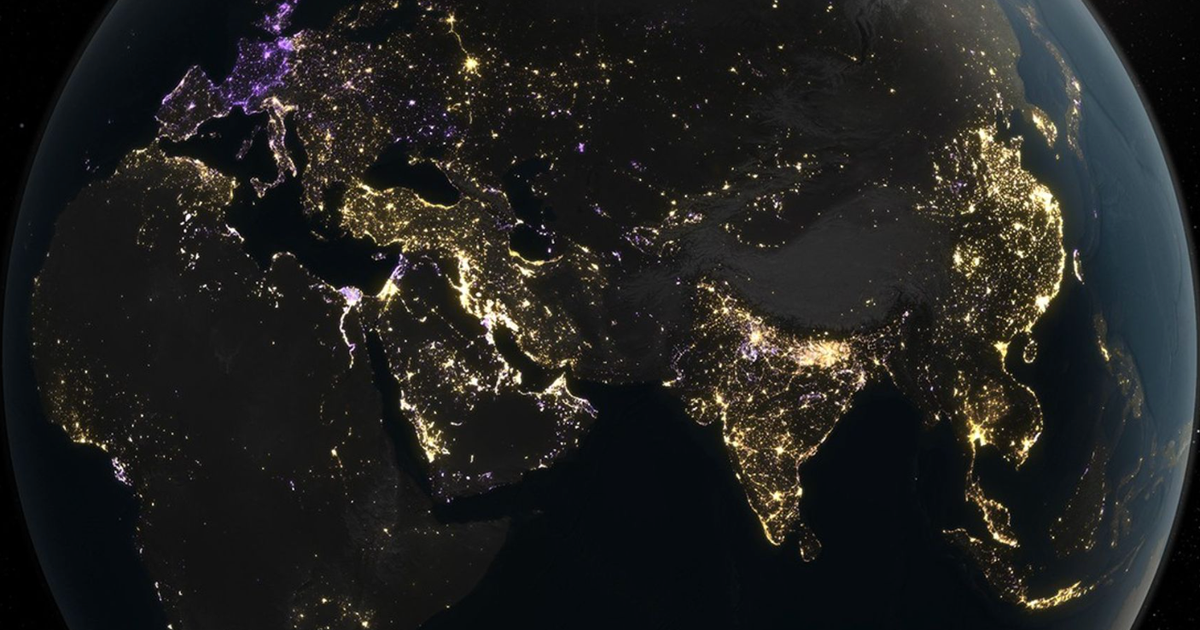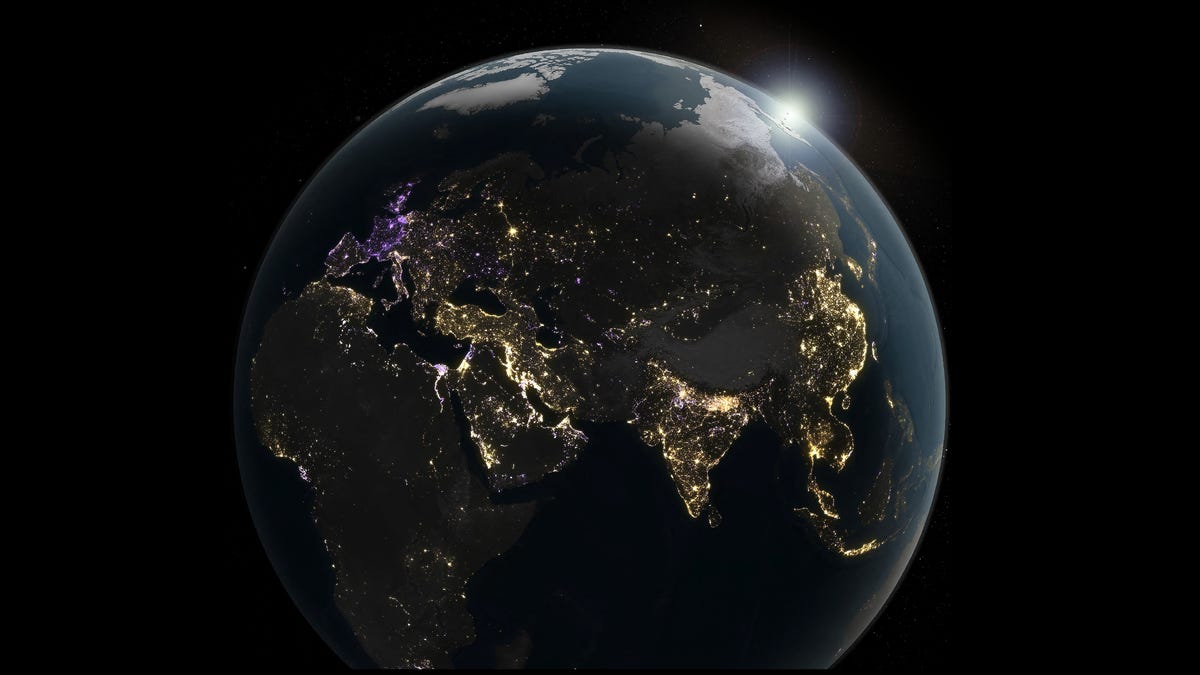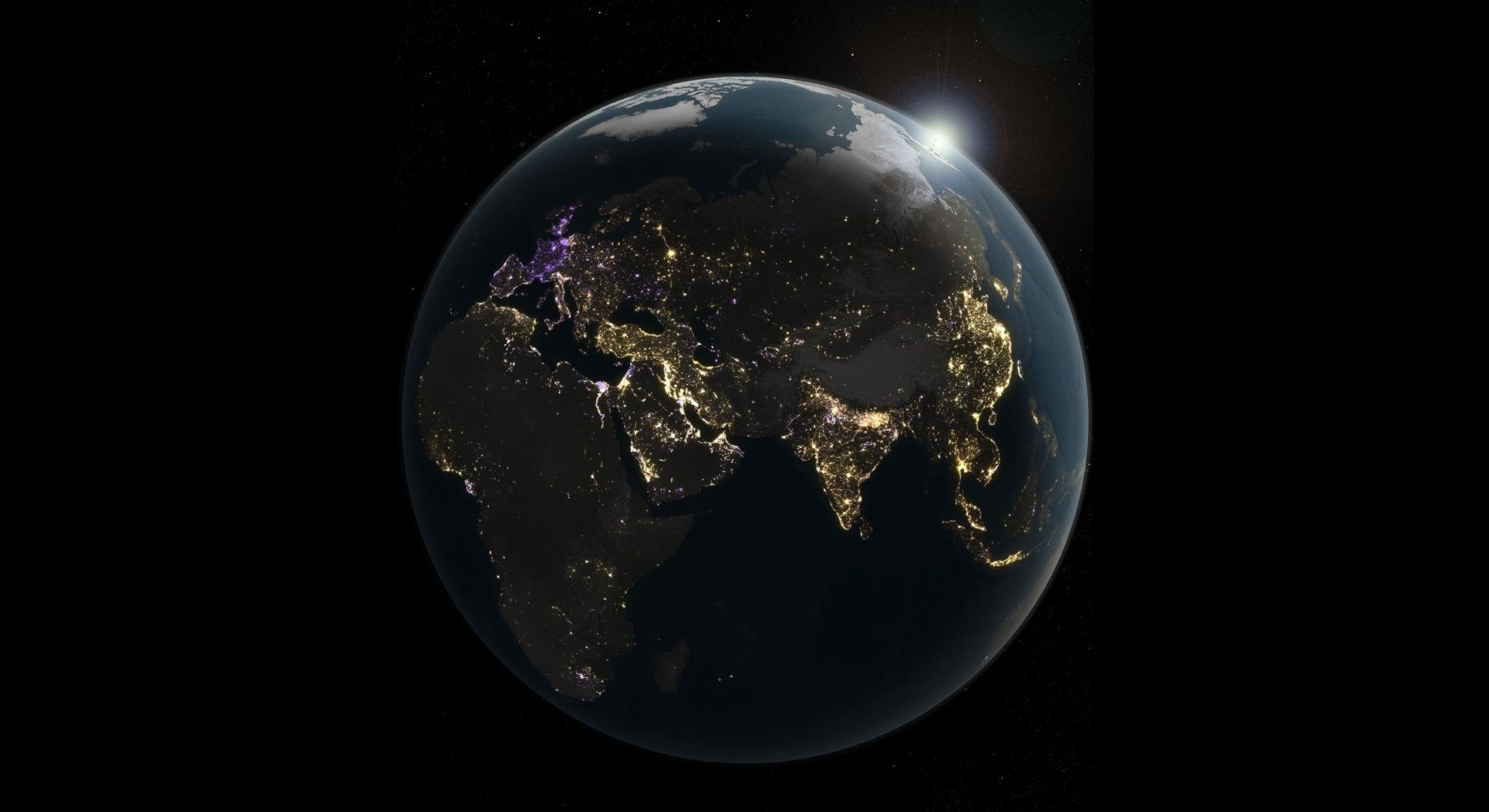
An analysis of nearly a decade of nighttime lights data (2014-2022) from NASA's Black Marble product revealed areas of brightening (gold) and dimming (purple) shown here across the Eastern Hemisphere.
(Image credit: NASA Earth Observatory/Michala Garrison)
A NASA study reveals that Earth is glowing brighter at night overall — but not everywhere, and not in the way scientists expected.A new analysis of nearly a decade of satellite observations from NASA's Black Marble project has revealed a surprisingly complex picture of how humanity's activities are reshaping how our planet looks after dark. Some regions have dramatically brightened due to urbanization and electrification, while others have dimmed because of energy-efficient lighting, economic decline, the effects of war or policy changes."In the U.S., for example, West Coast cities grew brighter as their populations increased, while much of the East Coast showed dimming, which the team attributed to the increased use of energy-efficient LEDs and broader economic restructuring," NASA officials said in the statement.Europe also showed notable declines in nighttime brightness, driven in part by conservation policies, energy-saving measures and efforts to reduce light pollution. France, in particular, stood out for aggressive dark-sky initiatives.Elsewhere, the maps captured the fingerprints of conflict and economic instability. Areas of Ukraine, Lebanon, Yemen, Afghanistan and Venezuela experienced sharp dimming associated with war, infrastructure damage or economic collapse. At the same time, emerging economies across sub-Saharan Africa and Southeast Asia grew substantially brighter as electrification and infrastructure projects expanded into previously dark regions. Asia overall recorded some of the strongest increases, particularly in China and northern India, according to the statement.