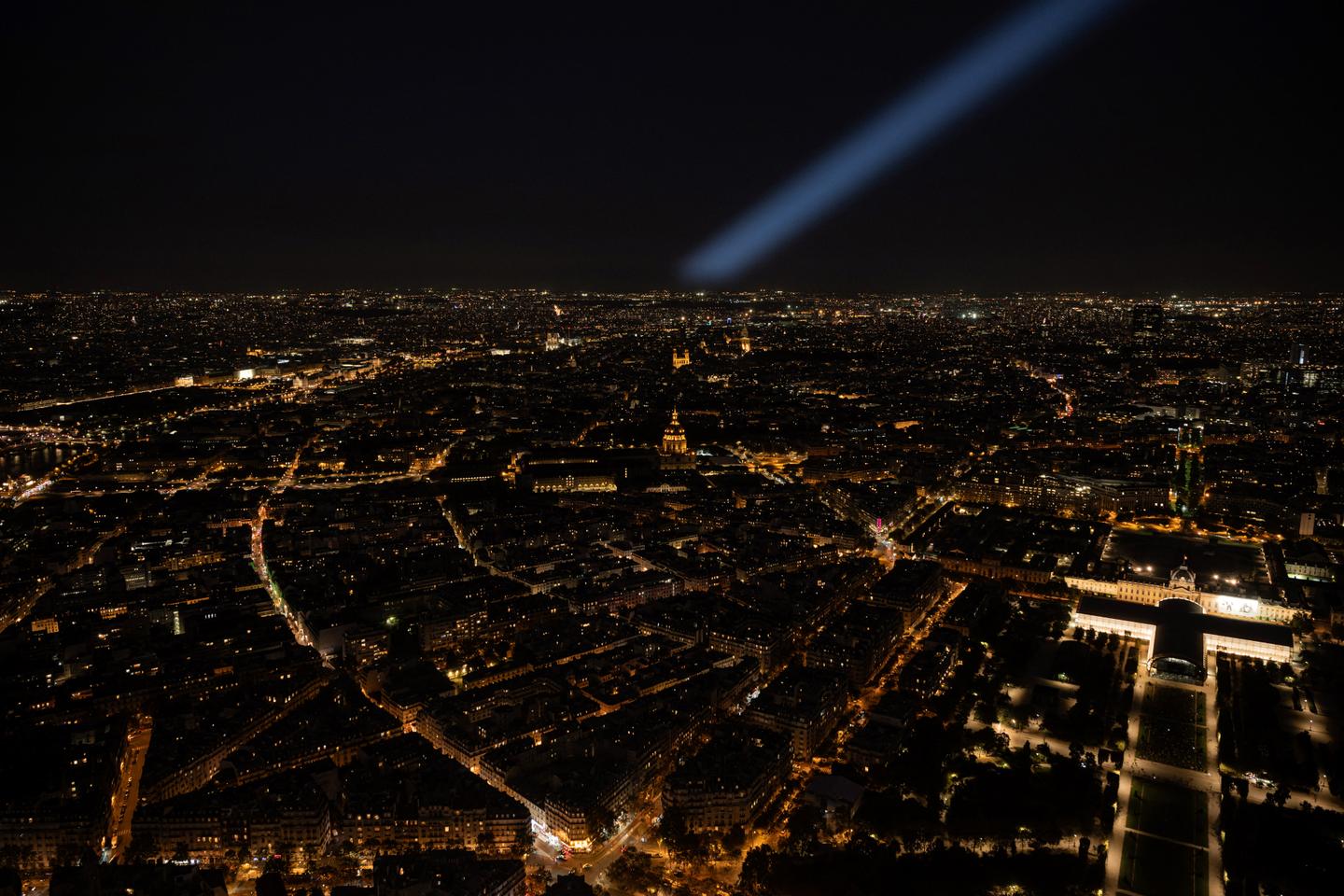
Paris by night, September 11, 2023. MIGUEL MEDINA/AFP
Light pollution continues to rise globally, according to a new study published in the journal Nature on Wednesday, April 8, but showes a significant decrease in some countries. Drawing on data from NASA's "Black Marble" project, which is informed by nighttime observations from three satellites (Suomi NPP, NOAA-20 and NOAA-21), a team of American and German researchers was able to produce the most precise map to date of the evolution of light pollution on the Earth's surface from 2014 to 2022.
Over nine years, light pollution increased by 16% worldwide, but this figure is a net result between regions where brightness increased and those where it decreased. It does not tell the whole story. In detail, the African and Asian continents saw the fastest growth in light pollution (up 21% and 38% respectively during the period), while Europe recorded a 4% drop in brightness as seen from space.
Changes in night-time light levels
observed by satellite between 2014 and 2022