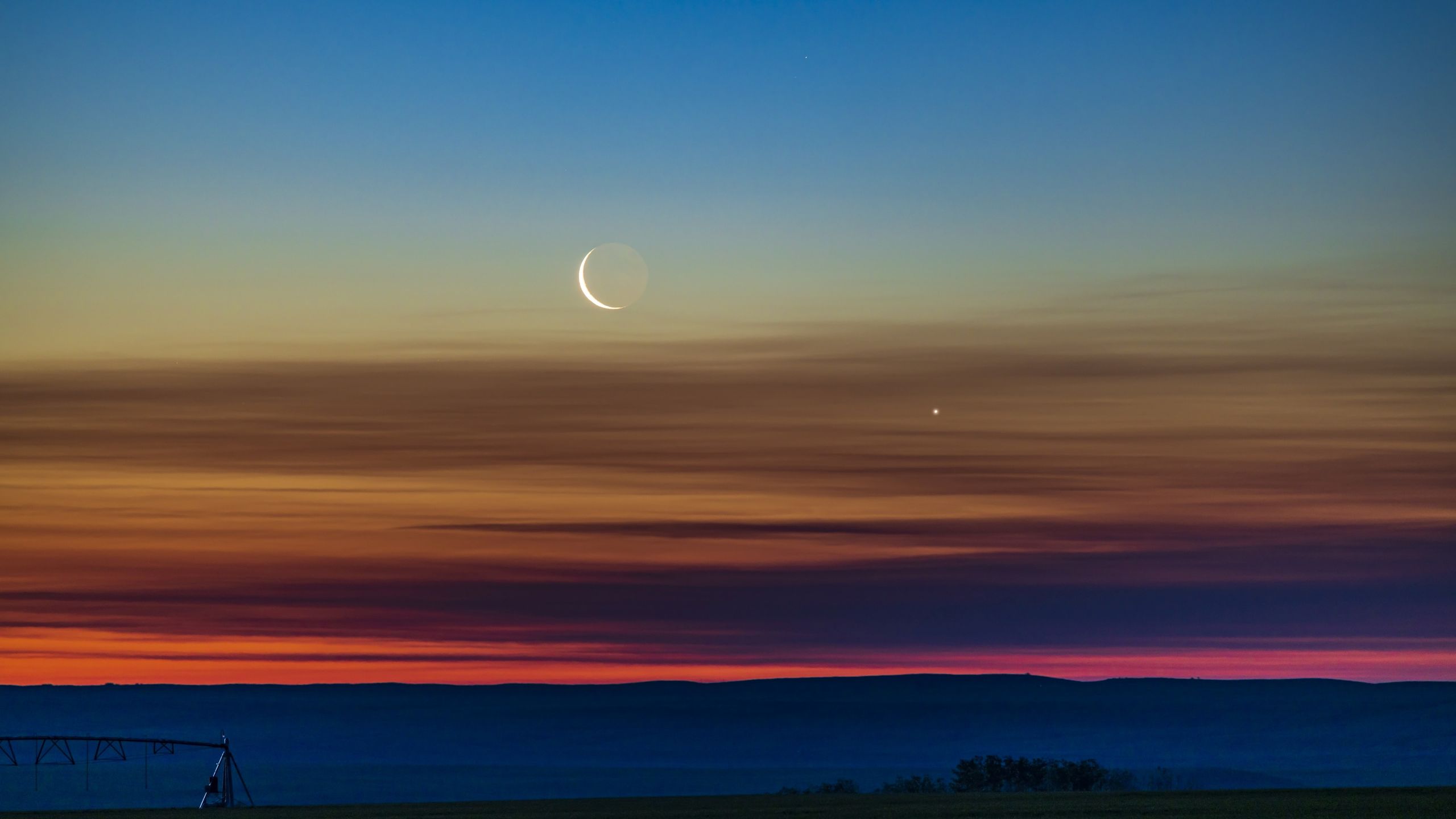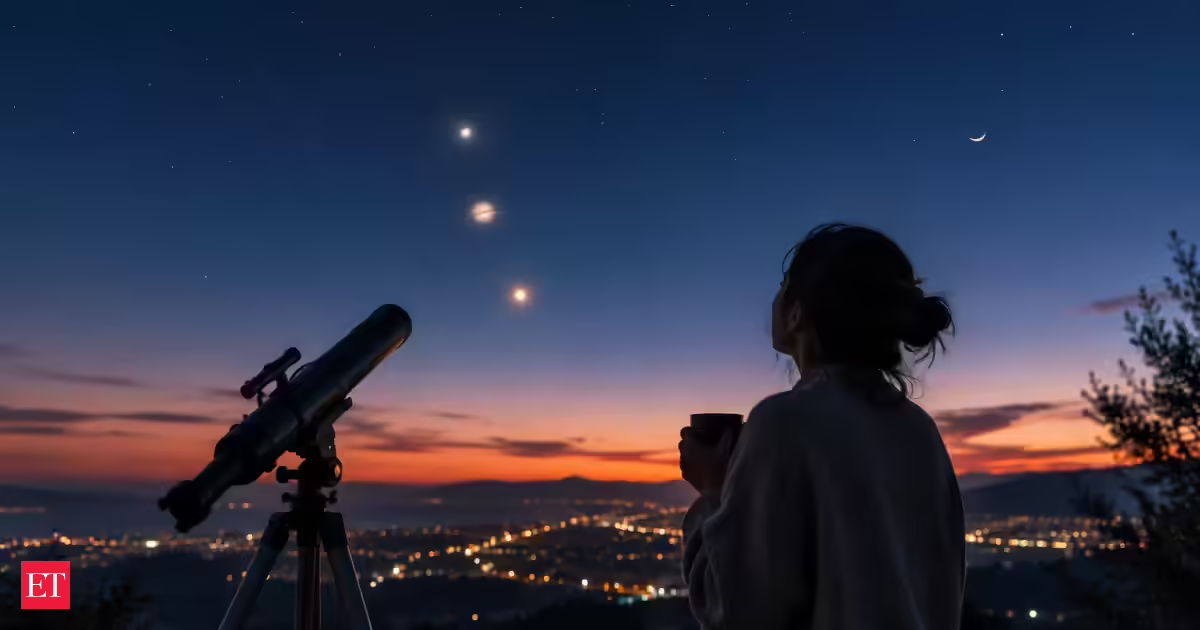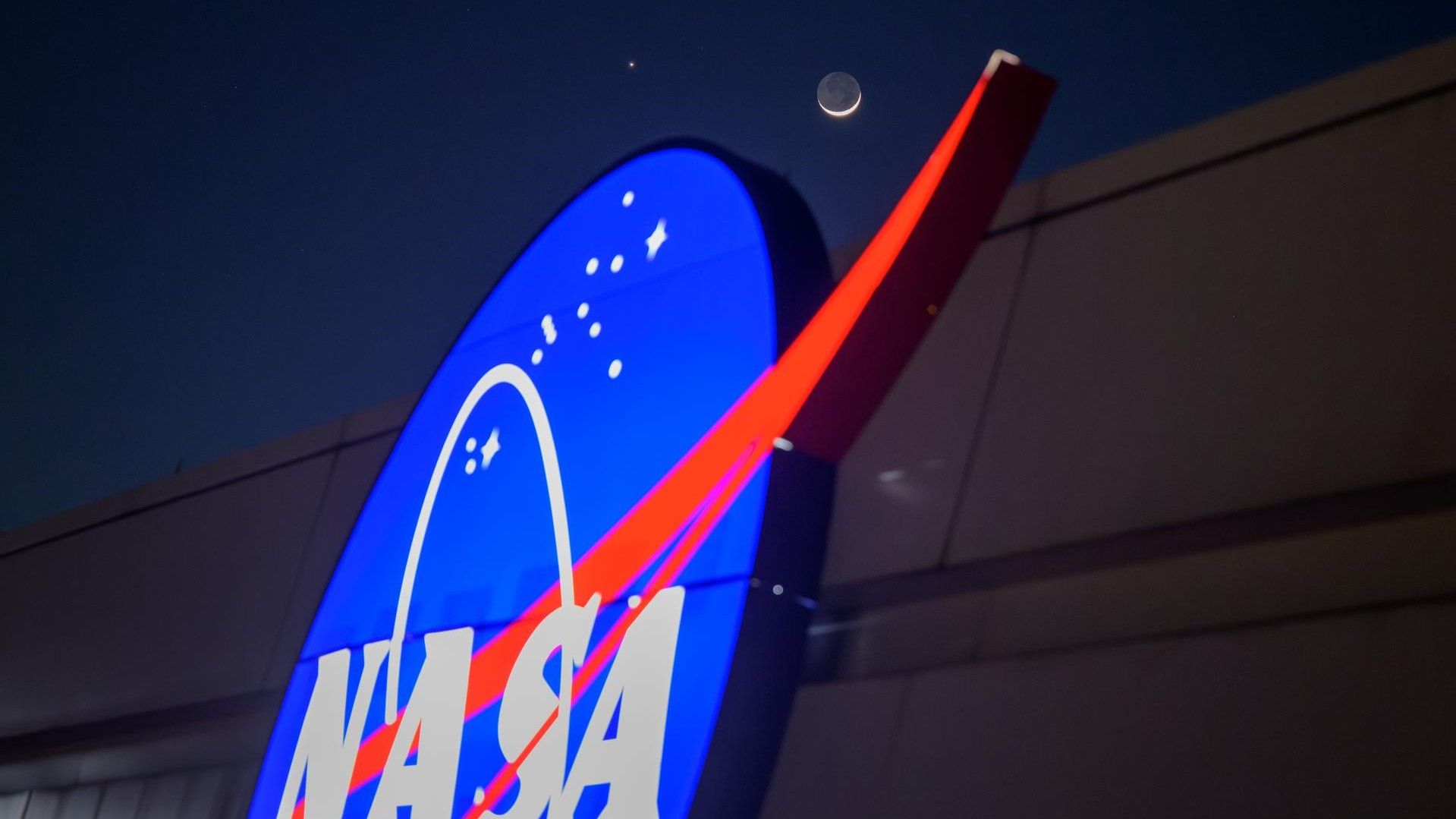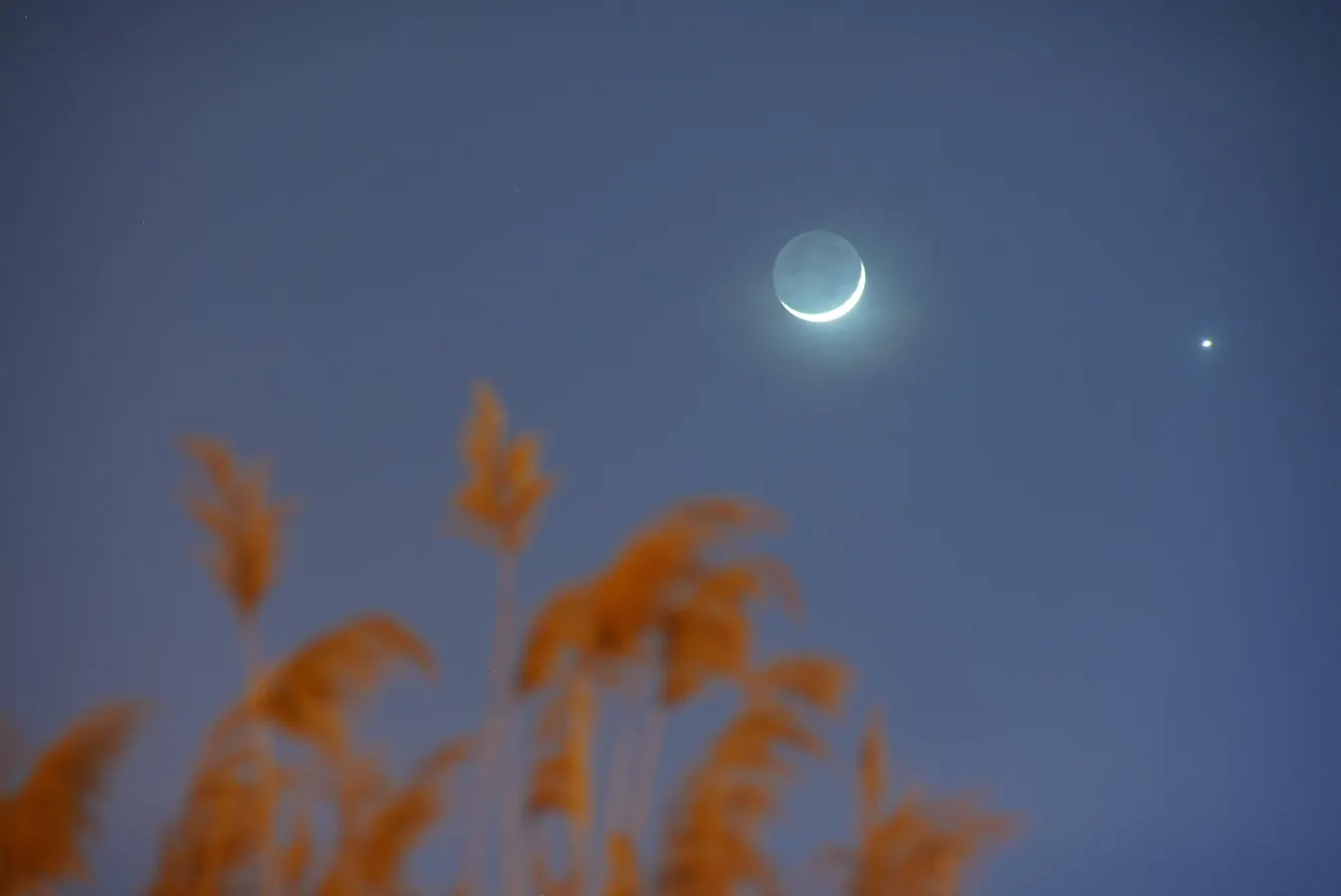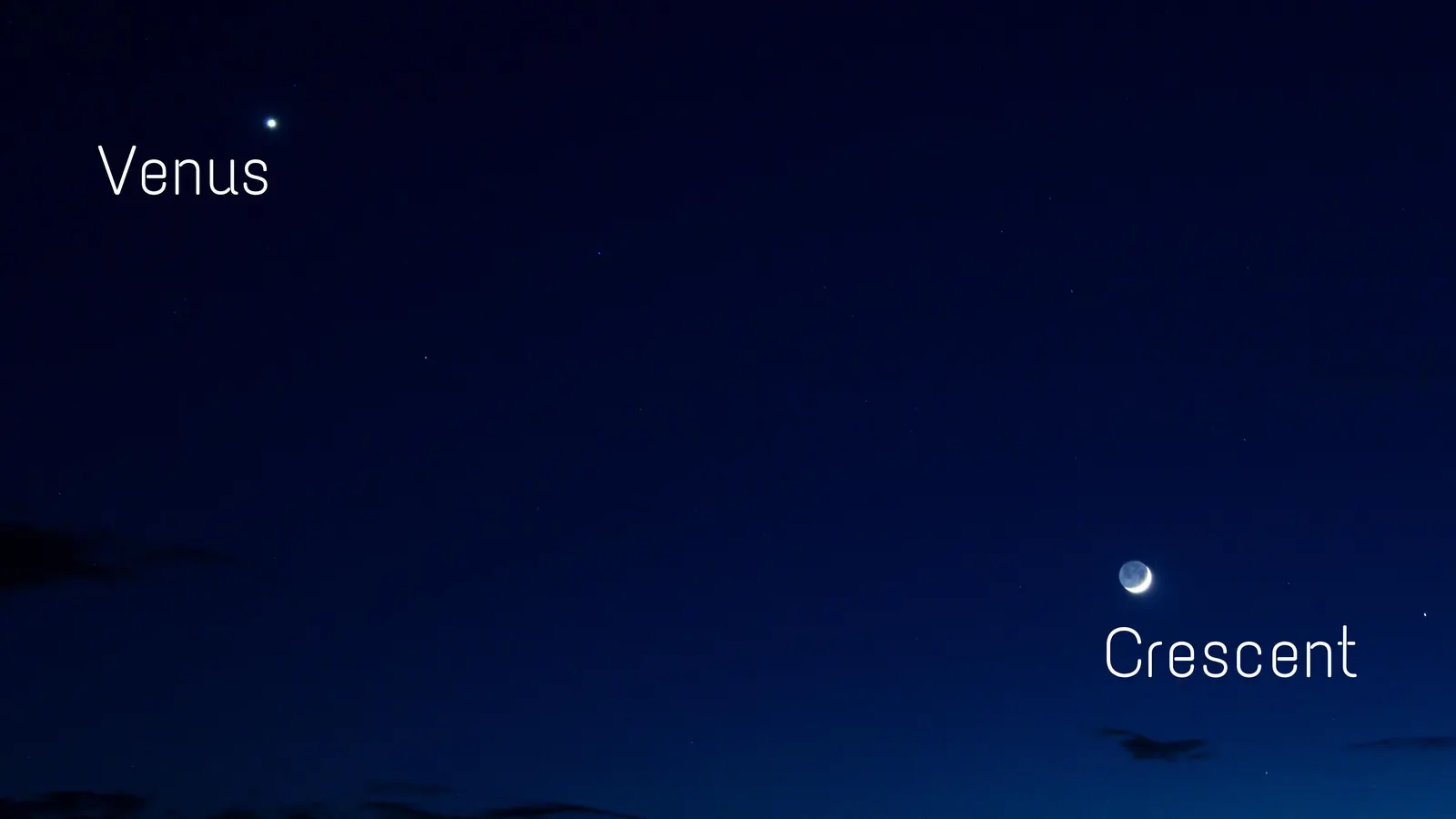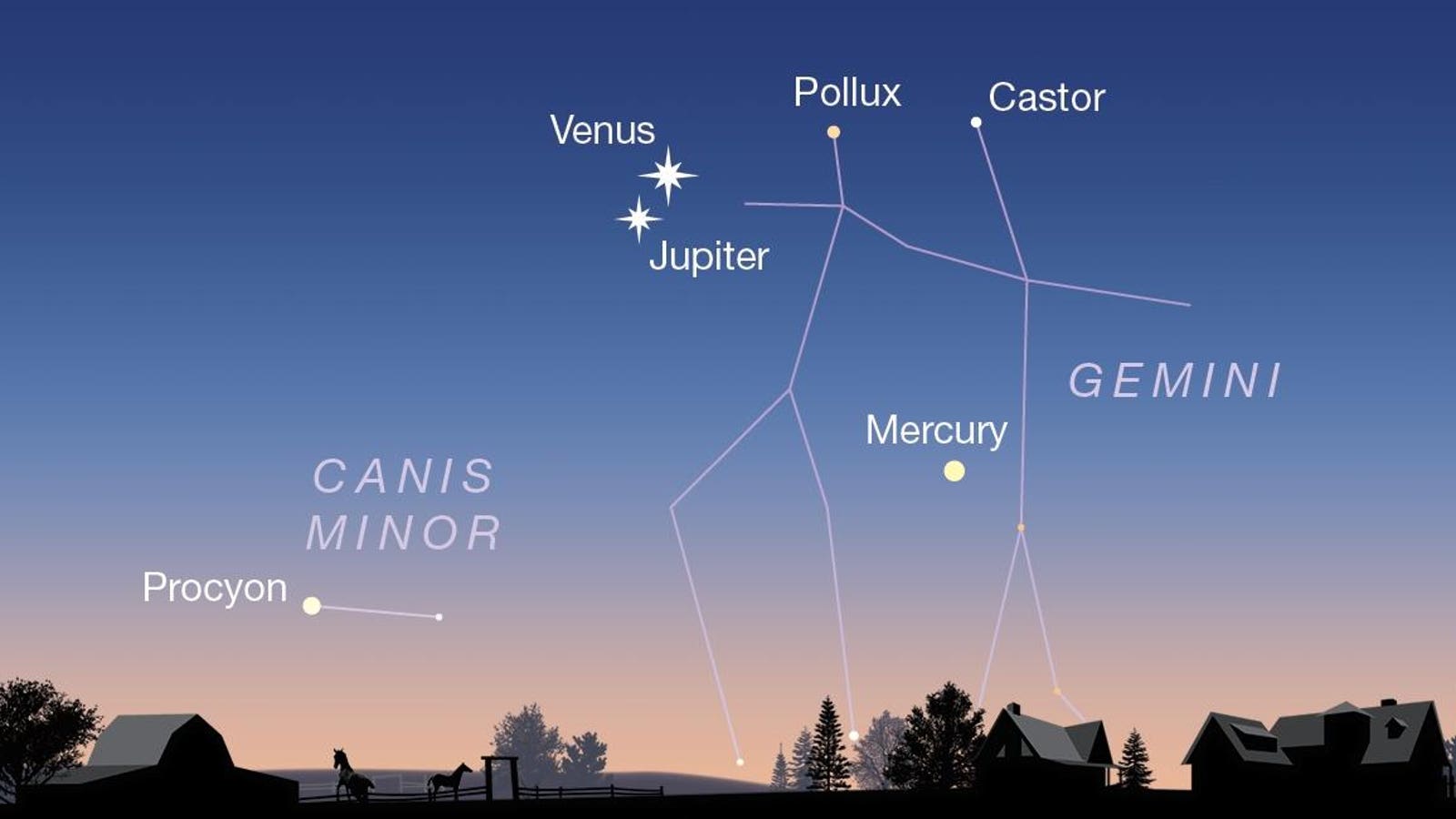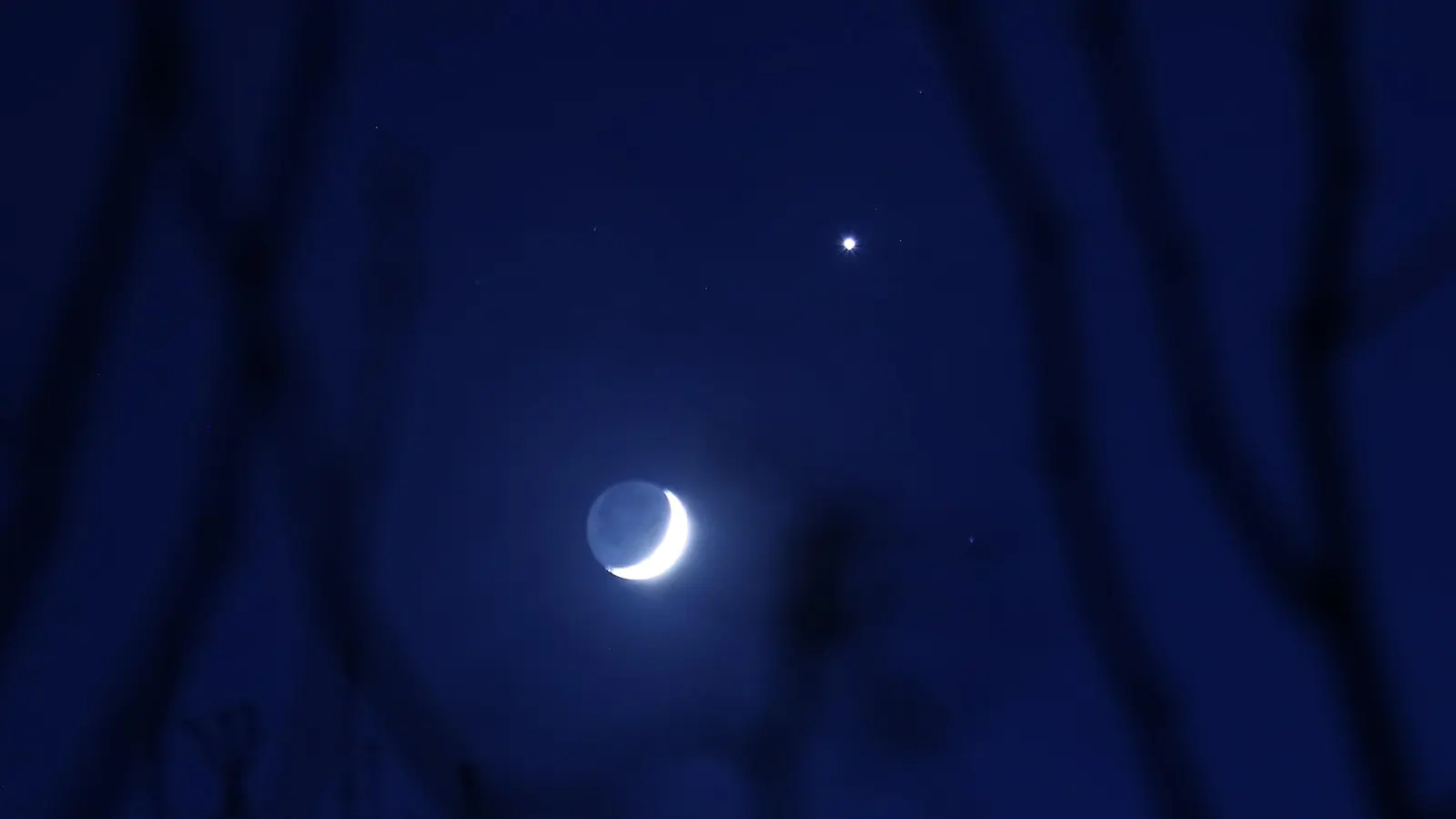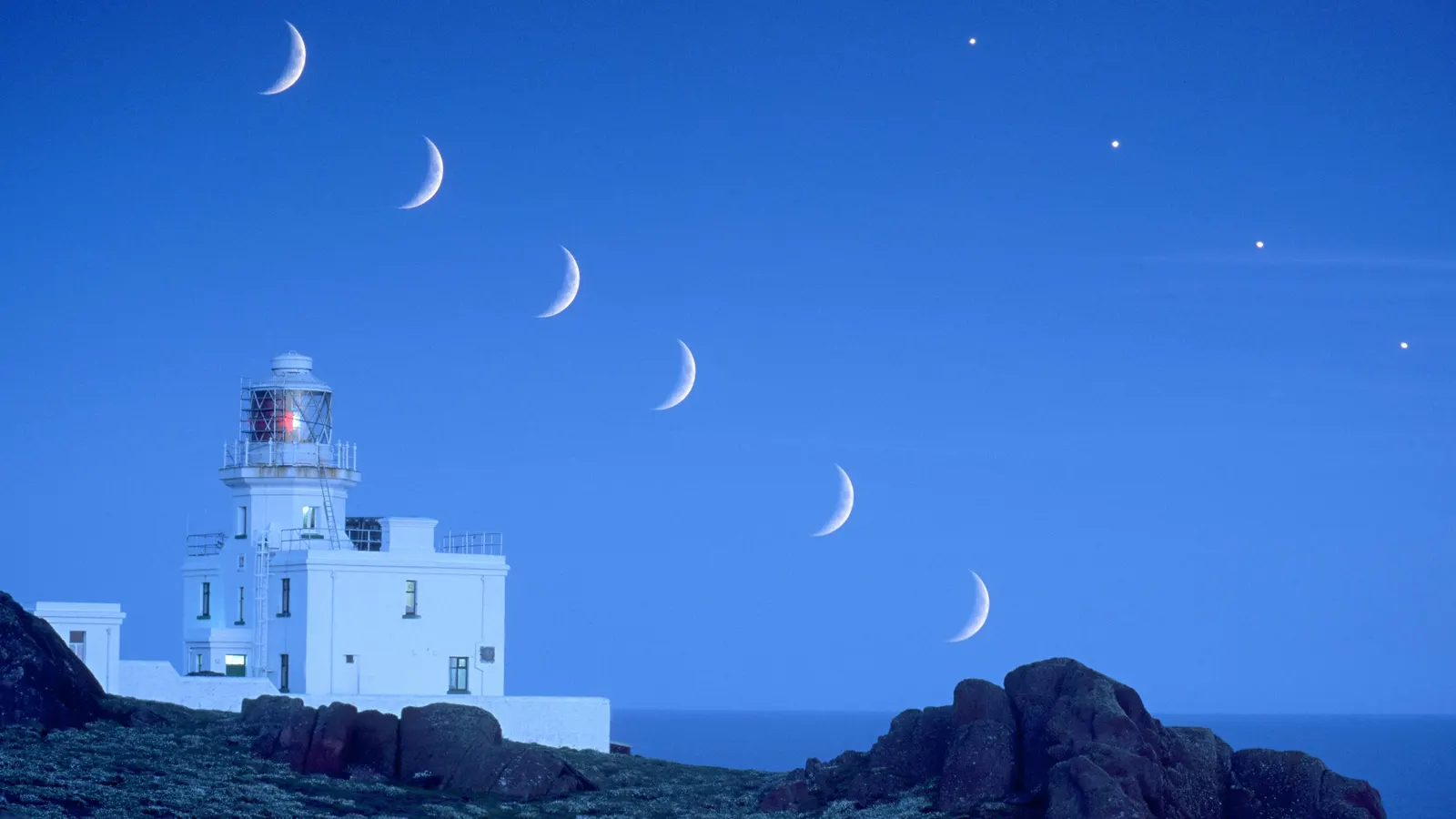
ToplineAfter last week’s New Supermoon, the night sky springs back to life with a series of delicate evening alignments. A young crescent moon returns to the western sky after sunset and passes the two brightest planets, Venus and Jupiter. Cue some of the most eye-catching naked-eye sights of the month. With dark skies still lingering early in the week, this is an ideal time to get outside and reconnect with the sky. Here’s everything you need to know about stargazing this week, May 18-24. A young crescent moon returns to the western sky after sunset and passes the two brightest planets, Venus and Jupiter.gettyTimelineMonday, May 18A very young 7%-lit waxing crescent moon appears low in the west shortly after sunset, sitting very close to brilliant Venus. The pairing is brief and requires a clear horizon, but it’s one of the most elegant sights of the month.Tuesday, May 19Now 15%-lit, the waxing crescent moon climbs slightly higher and is now halfway between Venus and Jupiter, above. The three objects begin to form a loose line in the twilight sky.Wednesday, May 20The now 24% waxing crescent has surged beyond Jupiter in daylight, and by sunset, it forms a line with two bright stars in the constellation Gemini — Castor and Pollux. Venus remains lower on the horizon, completing a striking trio of bright objects in the west after sunset.Friday, May 22The crescent moon waxes and moves eastward each evening, leaving the planets behind. As it grows brighter, it begins to interfere with darker skies, tonight reaching 45%-lit as it passes close to Regulus, the brightest star in the constellation Leo.May 18's close conjunction of the moon and Venus. NASA/JPL-CaltechA Planetary Story UnfoldsThis week offers a preview of one of the most impressive planetary events of the year. Venus and Jupiter are drawing closer together in the evening sky, becoming more tightly paired with each passing night. Venus, the brighter of the two (at -3.9 magnitude), shines low in the west just after sunset, while Jupiter (-1.8 magnitude) sits higher above it. Watch their separation shrink night by night, a slow-motion convergence that will culminate in a close conjunction on June 9. Observing their changing positions over several evenings is one of the simplest ways to appreciate the motion of the planets.Photo of the constellation Boötes with annotations from IAU and Sky & Telescope. Here is the non-annotated version.E. Slawik/NOIRLab/NSF/AURA/M. ZaConstellation Of The Week: BoötesDominating the eastern sky after dark, Boötes is one of the most prominent constellations of late spring. Its brightest star, Arcturus, is easy to spot thanks to its warm, orange hue. The rest of the constellation — seen beneath the Big Dipper, almost straight up— forms a loose kite shape extending upward from Arcturus. Boötes is often depicted as a herdsman, but its real value lies in its role as a guidepost.What’s Next In The Night SkyOn May 30, a nearly full moon — a Blue Moon, the second full moon in May — will rise shortly after sunset, appearing large and orange on the horizon. That same night, “Manhattanhenge” occurs at sunset in New York City. In early June, Venus and Jupiter will continue closing in on each other, culminating in a close conjunction on June 9-11.The times and dates given apply to mid-northern latitudes. For the most accurate location-specific information, consult online planetariums like Stellarium.Further ReadingForbesIn Photos: Full ‘Flower Moon’ Lights Up Night Sky Around The WorldBy Jamie CarterForbesWhat Is That Bright Star In The West After Sunset?By Jamie CarterForbesIt’s 100 Days Until A Total Solar Eclipse. Here’s How To See ItBy Jamie Carter
See A Jaw-Dropping Crescent Moon Join Planets After Sunset This Week
North America’s celestial highlights for the week ahead, which also apply to mid-northern latitudes in the northern hemisphere.
597 words~3 min read